Why Morocco's midfield could dismantle Ronald Koeman's Netherlands
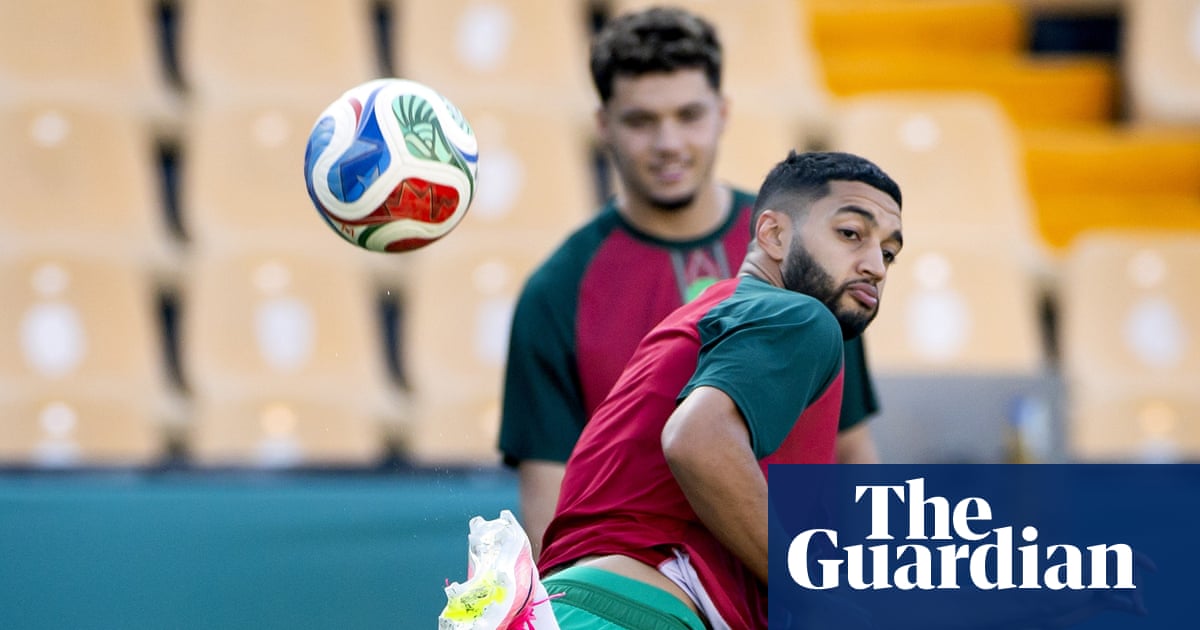
Heat and History in Monterrey
The Cerro de la Silla dominates the Nuevo Leon skyline like a warning. Below its double peak, Estadio Monterrey will host a Round of 32 match defined by tactical friction.
One team will find its tournament catalyst here. The other will board a flight home to face immediate, severe post-mortems.
Morocco and the Netherlands arrive here with deep historical connections. Exactly thirty-two years ago, the Citrus Bowl hosted their last World Cup meeting.
That hot afternoon in Orlando ended in a tight 2-1 victory for the Dutch. This week, the heat will be just as oppressive, with temperatures projected to hit 30 degrees Celsius at kick-off.
Tactics under these conditions cannot be separated from physics. Running at high intensity for ninety minutes is impossible in 86-degree heat.
The team that manages its physical output will survive. Ronald Koeman must adjust his game plan to protect his players from early exhaustion.
The local environment will also play a role. Monterrey has not forgotten the events of World Cup 2014 in Fortaleza.
The controversial late penalty by Klaas-Jan Huntelaar that eliminated Mexico still rankles. Dutch captain Virgil van Dijk has already faced sharp questions from local reporters about the expected hostility from the stands.
This hostility will only fuel the Moroccans. Mohamed Ouahbi has his squad playing with immense confidence.
As detailed in the pre-match analysis by The Guardian, the clash represents a meeting of two expansive, positive teams. Neither manager wants to retreat into a low block.
But someone must yield. A classic is possible, but only if both teams maintain structural integrity.
If they stretch the pitch too early, the match will devolve into a chaotic, error-strewn battle of attrition.
The Brobbey Shift and the Dutch Attack
Ronald Koeman has rebuilt the Dutch attack around a single focal point. Brian Brobbey has emerged as the definitive number nine for this team.
He entered this tournament under scrutiny from critics who questioned his Ajax pedigree. They saw him as a physical force lacking technical refinement.
He has answered those critics with ruthless efficiency. Brobbey scored with his first three shots on target this summer.
His physical dominance allows the Netherlands to bypass the opponent's first line of pressure. He pins center-backs, holds the ball, and allows others to run off him.
His presence has transformed Cody Gakpo. Gakpo was often isolated in previous matches, forced to create his own shots.
Now, he operates in the half-spaces, exploiting the gaps Brobbey creates by dragging defenders out of position. Gakpo has already scored twice in this tournament, most notably in the demolition of Sweden.
On the right wing, Crysencio Summerville provides a different threat. His trickery and pace force opponents to double-team him.
This opening creates space in the center for late runs from midfield. Summerville has also scored twice, proving that this Dutch attack is no longer one-dimensional.
Only France and Germany matched the Netherlands' 10 group stage goals. This attacking threat makes them a dangerous opponent.
But this aggression comes with a significant defensive cost. The Dutch wing-backs push high, leaving massive spaces behind them.
If Morocco can exploit these transition channels, the Dutch defense will buckle. Koeman has admitted that his team must defend better to prevent exposure.
Yet, his tactical history suggests he will not sacrifice offensive output for safety. This refusal to compromise is Koeman's greatest risk.
The Dutch-Born Midfield Trap
Morocco's tactical identity under Mohamed Ouahbi is built on controlled aggression. They do not wait for the opponent to make mistakes.
Instead, they trigger their press high up the pitch, forcing hurried clearances. This approach was highly effective in their recent draw against Brazil.
At the center of this strategy are three Dutch-born players. As noted in The Guardian's coverage, Noussair Mazraoui, Sofyan Amrabat, and Anass Salah-Eddine know the Dutch system intimately.
They grew up in the same academies and understand the passing patterns Koeman wants to implement. This familiarity is a major tactical advantage for Morocco.
Amrabat acts as the defensive anchor in a 4-3-3 formation. His positioning prevents opponents from playing vertical passes into the feet of Brobbey.
He must win his duels with the Dutch striker to stop the Oranje from establishing possession in the final third. If Amrabat gets pulled out of position, Morocco's defense will be exposed.
Alongside Amrabat, 18-year-old Ayyoub Bouaddi has been a revelation. The young midfielder plays with a maturity that belies his age.
He excels at escaping tight spaces and moving the ball forward quickly. His ability to resist the Dutch counter-press will be decisive.
The main attacking threat comes from Ismael Saibari. The forward has scored three goals already, including a spectacular strike against Brazil.
He is reportedly close to securing a transfer from PSV Eindhoven to Bayern Munich. Saibari operates in the left half-space, drifting between the lines to link up with the attack.
Saibari will target the space behind the Dutch right-back. If he can draw Virgil van Dijk out of the defensive line, he will create space for underlapping runs.
Morocco will look to exploit these numerical superiorities on the wings. It is a direct challenge to Koeman's defensive structure.
The Pressing Trap and the Space Behind
For all their attacking fluidity, Morocco are not without weaknesses. Their aggressive pressing system requires intense physical effort.
Against Brazil, this high line worked for sixty minutes before fatigue set in. In the final half-hour, the team stretched, leaving huge gaps between the midfield and defense.
This physical drop-off could be fatal in the Monterrey heat. If Morocco press too high in the first half, they will struggle in the second.
Ouahbi must decide whether to temper his team's natural instincts. If they drop into a mid-block, they risk giving the Dutch midfielders too much time on the ball.
The defensive tracking of the Moroccan wingers is also a concern. When Mazraoui pushes forward to join the attack, the right wing can become exposed.
Gakpo will look to exploit these moments on the counter-attack. The battle on this flank will dictate the flow of the match.
Netherlands also have their own structural issues. Their defensive transition has looked sluggish when possession is lost in the opponent's half.
If Bouaddi can find Saibari quickly after a turnover, the Dutch center-backs will be isolated. Van Dijk cannot defend these transition moments alone.
The Oranje supporters' bus had to travel 1,118 miles from Kansas City to Monterrey. This long journey mirrors the tactical distance this Dutch team has covered under Koeman.
They have evolved into a direct, physical side, but their defensive vulnerabilities remain unchanged. This match will expose those flaws.
Koeman must find a way to balance his team's attacking output with defensive security. If he fails to do so, Morocco's quick transitions will punish them.
The tactical chess match between Ouahbi and Koeman will be decided by these fine margins.
Tragedy and Resilience in the Oranje Camp
The tactical battle is only part of the story. The Dutch squad has had to deal with a profound personal tragedy.
Cody Gakpo and his partner recently lost their unborn son. This devastating news has hovered over the team's preparations for the match.
Gakpo has chosen to remain with the squad in Mexico. Ronald Koeman paid tribute to the forward's strength and focus during this difficult period.
The manager made it clear that Gakpo had the freedom to return home if he wished. His decision to stay is a powerful indicator of his commitment to his teammates.
How this emotional weight affects Gakpo's performance is a delicate question. On the pitch, he has been one of the tournament's standout players.
His movement and finishing have been essential to the Dutch attack. His teammates will look to support him both emotionally and tactically against Morocco.
The Moroccan players must also manage their own emotions. Playing against the country of their birth will be a unique challenge for Mazraoui, Amrabat, and Salah-Eddine.
They must separate their personal connections from their professional duties. Ouahbi has played down these concerns, but the pressure will be intense.
This match is a clash of two footballing cultures that have shaped each other. The Dutch influence on Moroccan football is clear, but this Morocco team has its own distinct style.
The blend of technical skill and physical intensity makes them a formidable opponent. In the heat of Monterrey, these cultural ties will be put to the test.
The Tactical Verdict
The outcome of this match will depend on who controls the tempo of the game. If the Netherlands can establish possession early, they will wear down the Moroccan defense.
Brobbey's hold-up play will be essential in keeping the ball in the Moroccan half. This control would deny Morocco the transition opportunities they crave.
But if Morocco's press can disrupt the Dutch build-up, the match will swing in their favor. Bouaddi and Amrabat must win the midfield battle to protect their defense.
If they can feed Saibari in space, Morocco's speed on the counter will be devastating. This threat will force Koeman's wing-backs to play more conservatively.
This conservative approach could stifle the Dutch attack. If Summerville and Gakpo are forced to drop deep to assist their defense, Brobbey will be isolated.
The Dutch striker cannot win the match on his own against a compact defense. This tactical adjustment is the key decision facing Ronald Koeman.
Morocco have the tools to pull off an upset in Monterrey. Their familiarity with the Dutch system and their tactical flexibility give them a slight edge.
They must survive the early Dutch pressure and exploit the spaces left behind. If they can do this, they will advance to the quarter-finals.
The Dutch team has the higher individual quality, but their defensive flaws are significant. In a match of this magnitude, these flaws are likely to be exposed.
The Atlas Lions have the tactical discipline and the motivation to exploit them. It will be a tight, dramatic match, but Morocco's tactical plan should see them through.
Read Next
- Why Morocco vs Netherlands is the ultimate tactical derby of World Cup 2026
- Top 10: Top Moments
- Morocco and the Netherlands are about to play the ultimate World Cup derby
- Why Spain should be terrified of Austria's chaotic transition game
- 🏆 World Cup 2026 — Full Coverage Hub
- 🇳🇱 Netherlands World Cup 2026 — Oranje Hub
- 🇲🇦 Morocco World Cup 2026 — Atlas Lions Hub
- 🇧🇷 WC 2026 Group C — Brazil, Morocco, Scotland, Haiti
The Mixer: The Story of Premier League Tactics, from Cantona to Guardiola
A must-read tactical deep dive into the history of modern English football.
Frequently Asked Questions
Where is the Morocco vs Netherlands Round of 32 match being played?
How will the weather in Monterrey affect the Morocco vs Netherlands match?
Who is the key striker in Ronald Koeman's Dutch attack?
Why is the Monterrey crowd hostile to the Dutch team?
How does Brian Brobbey's playing style benefit Cody Gakpo?
More Coverage

Tuchel's England look completely rattled by Man City's guilty verdict
1 day, 15 hours ago
Enzo Maresca's Socrates quotes won't hide Man City's 114 guilty verdicts
2 days, 2 hours ago
Sebastien Pocognoli's Scotland face immediate tactical test in Ljubljana
2 days, 10 hours ago
Ireland are heading into Hungary in crisis after their Pristina collapse
3 days, 22 hours ago
Jürgen Klopp got the chaos he expected in a wild debut against the Dutch
3 days, 22 hours ago
Andy Carroll's courage off the pitch redefines his role at Dagenham
4 days, 1 hour agoMore Analysis
Jürgen Klopp got the chaos he expected in a wild debut against the Dutch
3 days, 22 hours agoMorocco and Senegal are Africa's only real 2026 World Cup heavyweights
1 week, 1 day ago
Liverpool fans are spiraling over Virgil van Dijk's contract limbo
2 weeks, 1 day ago
Liverpool's sluggish start shows Andoni Iraola is running out of answers
2 weeks, 1 day agoThe Dutch World Cup Dream Is Back and It Will Break Your Heart Again
1 month, 1 week ago