The Clash of Tempos in Los Angeles
Spain's Midfield Dictation vs. Austria's Direct Press
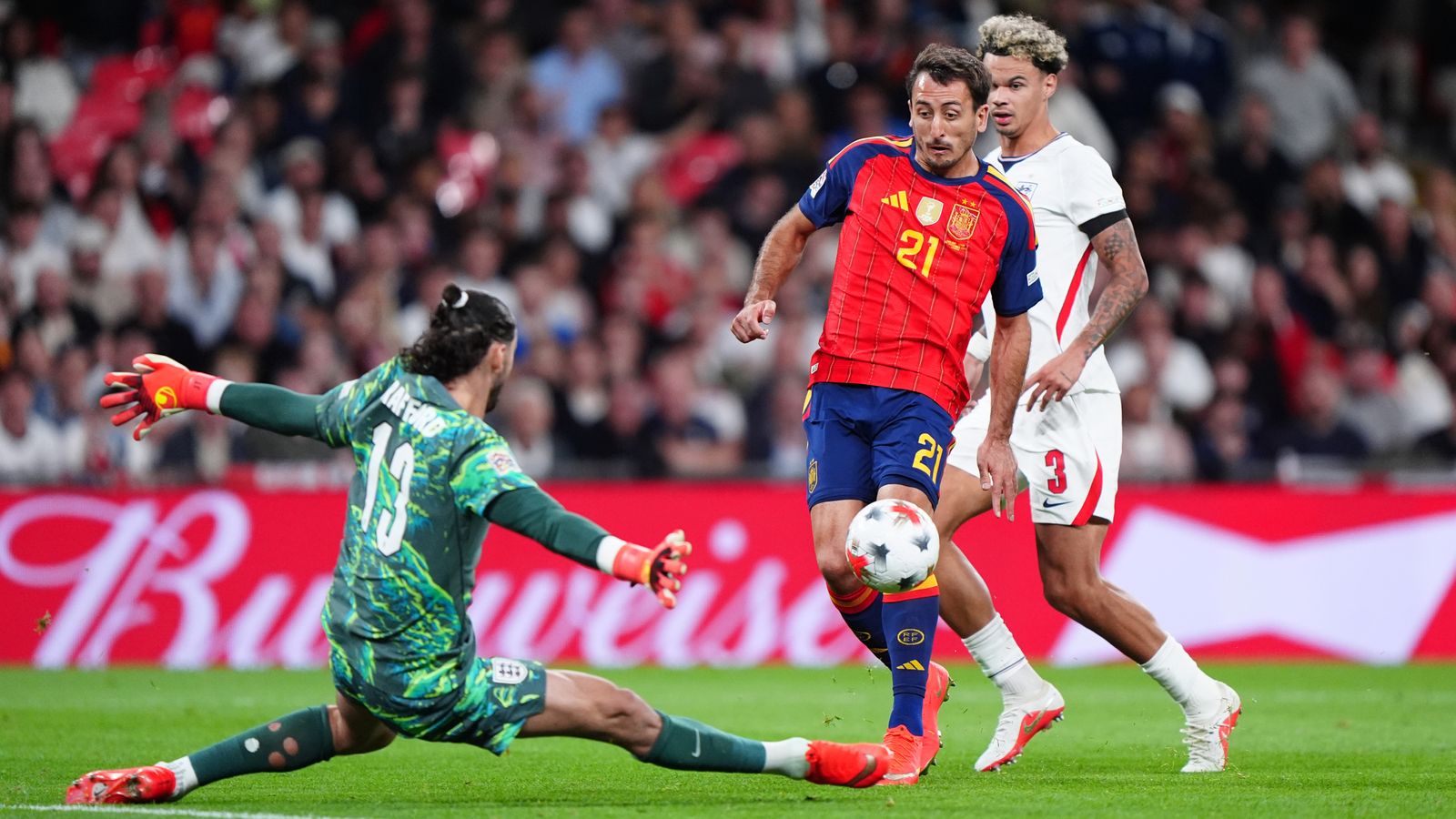
Spain enters the knockout stage having cruised through Group H with a quiet efficiency. Luis de la Fuente has polished a side that no longer hoards possession for its own sake. Instead, Spain uses possession to suffocate opponents before launching direct vertical attacks.
Their Round of 32 opponent, Austria, represents the absolute antithesis of this controlled approach. Under Ralf Rangnick, the Austrians play with a frantic, high-octane energy that thrives on disrupted possession. This match at SoFi Stadium will be a pure clash of tempos.
During the group stage, Spain's pass completion rate stood at a clean 89.2% across three matches. They starved Saudi Arabia in their second match, cruising to a comfortable 4-0 victory. Yet, their opening fixture against Cabo Verde exposed a familiar blueprint for stopping them.
De la Fuente has also established a clear defensive structure built around David Raya in goal. Raya's ability to sweep behind a high defensive line has allowed Spain to play with greater vertical aggression than in previous tournaments. His distribution from the back will be key in bypasses of Austria's first pressing line.
In that scoreless draw, Cabo Verde sat in a deep 5-4-1 block and limited Spain to just 0.38 xG from open play. Spain's midfielders, Rodri and Fabián Ruiz, circulated the ball side-to-side but struggled to find passing lanes through the middle. If Austria can mimic that defensive solidity while maintaining their pressing intensity, Spain will struggle.
But Rangnick's side does not sit deep. They press high. This aggressive approach will test Rodri’s ability to escape pressure under constraint.
How Austria's Stoppage-Time Madness Rewrote the Script
The Lessons of the Kansas City Rollercoaster
Austria reached this stage after surviving a match that will be discussed for decades. Their final Group J match against Algeria ended in a wild 3-3 draw that guaranteed advancement for both teams. As BBC Sport reported, the ghost of the 1982 "Disgrace of Gijón" (or Schande von Gijón) hung heavily over the pre-match buildup in Kansas City.
Many fans and commentators expected a dull, non-aggression pact to protect a mutual qualifying result. What they got instead was a breathless, chaotic encounter that stretched tactical discipline to its absolute limit. The final minutes of the match defied all pre-game expectations of collusion.
Algeria appeared to have snatched a victory when Riyad Mahrez scored in the 93rd minute. At that moment, Austria faced immediate elimination from the tournament. The Austrian defensive line, which had been caught too high, was completely carved open by a simple diagonal pass.
"If Alfred Hitchcock had written such a drama, I probably would have said he was completely mad."
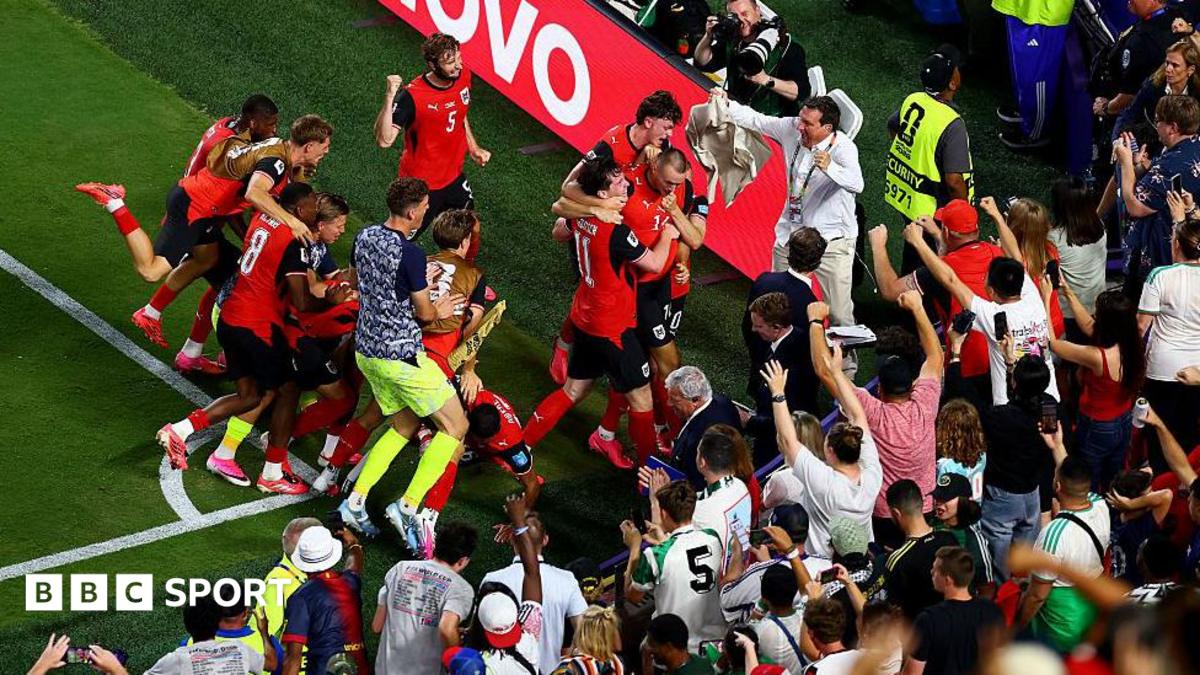
Yet, in the 96th minute, substitute forward Saša Kalajdžić rose to meet Marcel Sabitzer's desperate cross. His towering header salvaged the draw, saving Austria and sending both teams into the knockout rounds. The dramatic equalizer shattered any lingering theories of a pre-arranged agreement.
Ralf Rangnick was left stunned by the game's final sequence. The veteran manager admitted he had never experienced anything like those final ninety seconds in his long coaching career. He defended his players, arguing that the chaotic finish proved both teams were playing to win.
Algeria's manager Vladimir Petkovic agreed, calling the match a little crazy. He noted that the intensity of the play went beyond the limits of human endurance. While fans celebrated the entertainment, both coaches realized their defensive structures had collapsed under pressure.
Austria's progression to the Round of 32 was a turbulent journey. Their group stage results highlight the inconsistent nature of their performances under pressure:
- A convincing 3-1 victory over Jordan to open their tournament.
- A sobering 2-0 defeat against Argentina, where their press was systematically dismantled.
- The dramatic 3-3 draw with Algeria that secured their knockout spot.
The Key Tactical Matchups on the Pitch
Lamine Yamal vs. Alexander Prass
To defeat Spain, Austria must disrupt Rodri's distribution. The Manchester City midfielder completed 245 passes in the group stage, acting as the primary hub of Spain's build-up. Rangnick will likely deploy Konrad Laimer to shadow Rodri whenever Spain attempts to play out from the back.
Laimer's task is to block the central passing lanes and force Spain to play wide to their fullbacks. When Laimer jumps to press, Nicolas Seiwald must slide across to cover the space behind him. If Seiwald is late, Fabián Ruiz will exploit the gap between Austria's midfield and defensive lines.
Rangnick must decide between starting Michael Gregoritsch or Saša Kalajdžić as the central striker. Gregoritsch offers superior defensive work rate and counter-pressing intensity in the first phase. However, Kalajdžić provides a target-man presence that can hold up long clearances when Spain presses high.
This midfield duel will determine which team controls the rhythm of the game. Spain wants control. Austria wants chaos.
On the wings, Lamine Yamal will face Alexander Prass in a vital individual battle. The young Spanish winger has been de la Fuente's most dangerous attacking outlet. His ability to cut inside on his left foot demands constant double-teams from Austria's left-sided players.
Prass cannot afford to defend Yamal in isolated situations. He will need help from Sabitzer, who must track back diligently to prevent Spain from overloading the flank. If Austria fails to support Prass, Yamal will dismantle their defensive block.
The Alaba Dilemma
Neither team enters this match without significant tactical flaws. For Spain, the vulnerability lies in their transition defense when their counter-press fails. If Austria can bypass Rodri, they will find space to run at Spain's center-backs.
Robin Le Normand and Aymeric Laporte are comfortable on the ball but lack elite recovery pace. They are vulnerable. In their match against Uruguay, Spain looked shaky whenever opponents turned and ran directly at the central defenders.
Austria's defense has its own problems, particularly regarding the fitness and mobility of David Alaba. The veteran defender has struggled to recover his lateral speed after recent long-term injury layoffs. Against Argentina, Alaba was repeatedly exposed by quick, diagonal runs behind him.
Austria's right back Stefan Posch will also face a difficult task defending against Nico Williams. Williams has shown a willingness to dribble directly at his marker, completing 4.2 dribbles per ninety minutes in the group stage. Posch must receive cover from Konrad Laimer to prevent Williams from cutting inside.
If Spain can draw Alaba out of the defensive line, Nico Williams will have space to exploit. Rangnick's high defensive line requires defenders who can cover space quickly. If Alaba cannot run with Spain's forwards, Austria's defensive system will disintegrate.
Furthermore, Austria's reliance on a high-intensity press means they often tire in the second half. Against Algeria, their physical output dropped significantly after the seventy-minute mark. Spain's ability to maintain possession can exhaust pressing teams over the course of ninety minutes.
Prediction: The Tactical Verdict
This match will not be a comfortable possession exercise for Spain. Austria will make the early phases of the game incredibly difficult with their physical intensity. Expect Austria to create several early half-chances by forcing turnovers in Spain's defensive third.
However, Spain has the technical quality to weather the initial storm. Once Austria's pressing energy begins to fade, Rodri will take control of the midfield. Lamine Yamal will find the space he needs as the game stretches in the second half.
Austria's defensive line is simply too fragile to withstand ninety minutes of Spain's probing attacks. While Kalajdžić may cause problems from set pieces, Spain will dominate the open-play exchanges. The Spanish side will secure their place in the next round with a controlled victory.
My prediction is a hard-fought 2-1 victory for Spain. They will concede an early goal to Austria's high press but recover to score twice through Yamal and Alvaro Morata. The tactical discipline of de la Fuente's side will ultimately prevail over Rangnick's chaos.
Read Next
- Canada's high press is about to run into a South African wall
- Top 10: Top Moments
- Why Cape Verde's low block is the ultimate trap for Argentina
- Why Portugal will end Luka Modric's World Cup run next Friday
- 🏆 World Cup 2026 — Full Coverage Hub
- 🇪🇸 Spain World Cup 2026 — La Roja Hub
- 🇦🇹 Austria World Cup 2026 — Das Team Hub