Pull up a stool, grab a cold drink, and stop pretending Nigeria will magically figure it out in time. Every four years, sports bars fill with the exact same pitch about the Super Eagles and their endless attacking talent. Then administrative disarray strikes, three managers get fired in eight months, and the team collapses before July.
The 2026 World Cup in North America alters the math for African football. FIFA expanded the tournament to 48 teams, granting the Confederation of African Football 9 direct qualification spots alongside an inter-confederation playoff path. The brutal days of elimination during a five-team qualification meat-grinder on away goals in Abuja are over.
If a traditional powerhouse fails to qualify now, their front office belongs in a management manual on organizational collapse. Yet qualifying merely grants entry to the grounds. The actual test is whether any African nation can win knockout games when France, Brazil, and Argentina hit top gear.
The expanded format introduces a 32-team knockout round. You cannot drift through three group fixtures on good intentions and a solitary 1-0 counter-attacking win. Reaching the semi-finals requires surviving four straight knockout matches against disciplined tactical setups.
The 48-Team Expansion Kills Every Traditional Excuse
For decades, African sides entered World Cup tournaments under severe structural constraints. Five allocated slots meant top-ten continental squads frequently watched from home while others scraped through on penalty shootouts. Cameroon in 2002 and Ghana in 2014 both wasted peak rosters during group-stage disputes.
That margin of error no longer exists. Nine direct slots allow the continent to send its complete elite class to North America. Qualifying heartbreaks and regional group bad luck can no longer serve as shields for poor execution.
Sending more teams to the tournament does not automatically guarantee deeper bracket runs. Additional spots mean stiffer competition earlier in the knockout phase, punishing teams that lack tactical clarity.
Only two African nations currently show the structural rigor necessary for a seven-game tournament path. Everyone else remains prone to defensive lapses when top European or South American opponents raise the tempo.
Morocco Built an Elite Defensive Machine while Everyone Else Chased Vibes
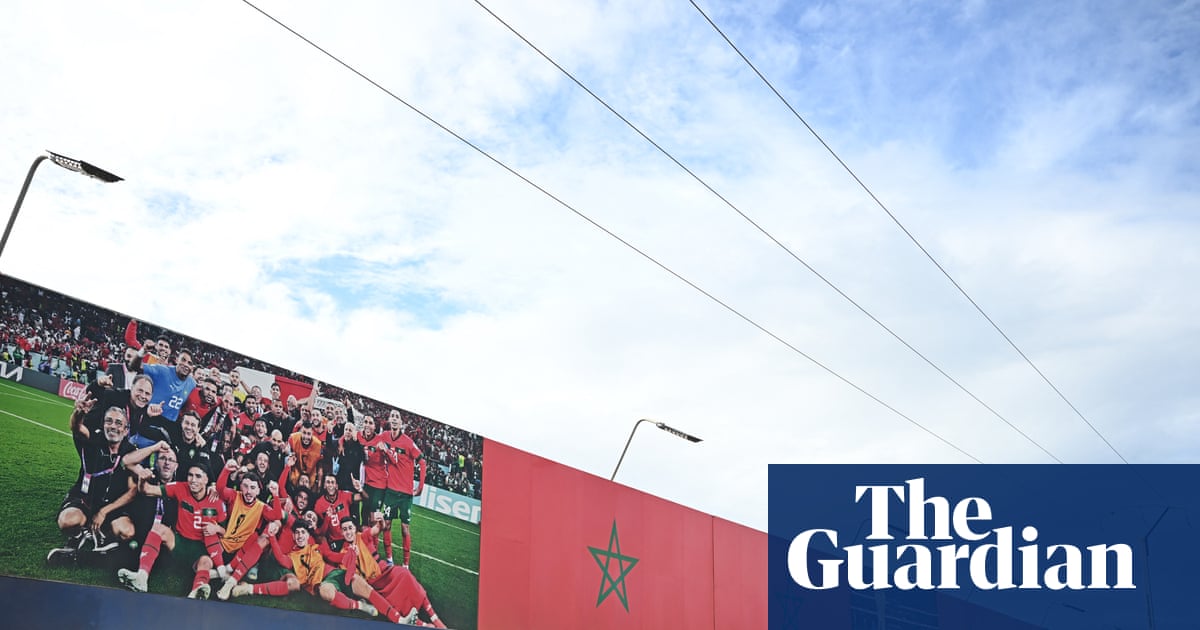
Morocco reaching the semi-finals in Qatar was no fluke or temporary hot streak. It was a cold-blooded tactical masterclass engineered by Walid Regragui.
Regragui took charge months before the tournament, assessed his squad, and instituted a compact mid-block system. Yassine Bounou provided elite shot-stopping, while Achraf Hakimi locked down the right flank with constant authority.
Sofyan Amrabat protected the central zone with relentless positioning. They held Spain through 120 minutes of scoreless torture before prevailing in the penalty shootout.
They followed that by securing a 1-0 victory over Portugal, sending Cristiano Ronaldo down the tunnel in tears. That victory reflected spatial discipline reminiscent of Jose Mourinho at Chelsea in 2004 or the 2004 Detroit Pistons locking down high-scoring teams.
Morocco retains that tactical foundation heading toward 2026. Azzedine Ounahi dictates tempo in tight central spaces, Nayef Aguerd controls the penalty box on aerial balls, and Youssef En-Nesyri leads the front-line press.
They do not depend on sporadic moments of individual genius. Their compact defensive shape frustrates elite opponents, making them custom-built for knockout bracket survival.
Skeptics point out Morocco's offensive limitations when forced to play from behind. If an elite opponent scores early and sits back, Morocco sometimes struggles to break down dense low-blocks without risking counter-attacks.
Yet their defensive reliability gives them a baseline that hides those attacking lulls. In tournament play, not conceding goals remains the single most reliable way to advance.
Senegal Brings Heavyweight Muscle and Big-Match Steel
If Morocco acts as the tactical chess master, Senegal functions as the physical powerhouse of African football. They walk onto the pitch, set a physical tone, and back it up with veteran composure.
Senegal forged their identity through painful defeats and ultimate triumph. Winning the 2021 Africa Cup of Nations against Egypt in a tense penalty shootout proved they handle high-stakes environments.
Kalidou Koulibaly anchors the backline with veteran physical authority. Edouard Mendy delivers reliable shot-stopping during high-pressure knockout moments and penalty shootouts.
In midfield, young talent like Lamine Camara adds box-to-box movement to complement established physical power. Up front, Nicolas Jackson provides direct channel running alongside Ismaila Sarr.
Sadio Mané has entered the Saudi Arabian stage of his career, but his big-game awareness remains dangerous when spaces open up. His positioning still draws attention away from secondary runners.
Senegal suffered a heavy 3-0 beating by England in the round of 16 at Qatar 2022. That match highlighted defensive transition problems when forced to chase against elite passing teams.
Under manager Pape Thiaw, Senegal has focused on fixing those transitional gaps. They maintain an aggressive presence that unnerves mid-tier European sides before the opening whistle.
However, Senegal's primary question mark is creative midfield output. If Mané gets double-teamed and Jackson faces tight central marking, Senegal can stall in open play against top-tier defensive units.
Nigeria Has Super Bowl Talent Run by a Sunday League Committee
Watching the Nigerian Football Federation handle the Super Eagles resembles peak WCW in 1999. World-class talent fills the roster, but backstage administrative friction and questionable decision-making undermine the pitch product.
On paper, Nigeria features an attacking group capable of threatening any defense. Victor Osimhen is an elite center-forward who overpowers center-backs in space.
Ademola Lookman showcased his big-match ceiling with a Europa League final hat-trick. Add Victor Boniface and Alex Iwobi, and the Super Eagles possess enviable attacking depth.
Despite those weapons, watching Nigeria often feels like viewing tactical disarray. The defensive unit remains exposed like a screen door in a hurricane.
William Troost-Ekong and the backline get stranded during 40-yard counterattacks because tracking back from midfield remains optional. The NFF hires and fires managers abruptly, delays staff payments, and turns team travel into public sagas.
Several clear factors explain why Nigeria will struggle to reach the quarter-finals despite their roster:
- Lack of midfield defensive structure leaves center-backs isolated against elite playmakers.
- Administrative disarray causing late coaching switches right before critical tournament windows.
- Over-reliance on individual Osimhen heroics instead of constructing repeated attacking routines.
A squad cannot expect to win a World Cup round-of-16 tie after landing at the airport four hours prior to kickoff. Until administrative stability takes hold, Nigeria's ceiling remains a group-stage exit.
The Wildcards: Ivory Coast Chaos and Egypt's One-Man Dependency
Ivory Coast delivered a wild narrative by claiming AFCON 2023 on home soil. They dismissed manager Jean-Louis Gasset mid-tournament following a 4-0 group-stage humiliation, appointed Emerse Faé on the fly, and somehow lifted the trophy.
Franck Kessie provided central midfield power, Sebastien Haller converted clutch knockout chances, and Simon Adingra troubled full-backs on the wing. Yet repeating that chaotic formula across seven games in North America is highly unlikely.
Ivory Coast relies on emotional momentum that catches fire in home stadiums. Operating in high-altitude environments against disciplined sides like Uruguay or Croatia will drain that emotional engine rapidly.
Egypt presents a different limitation. With Mohamed Salah on the pitch, Egypt can claim a result against high-caliber opposition on any afternoon. Omar Marmoush provides complementary movement up front to stretch opposing backlines.
Yet Egypt remains bound to low-block defending and shootout reliance. They missed out on Qatar 2022 after losing to Senegal on penalties, and their rigid shape struggles when forced to push forward against aggressive pressing.
The Bottom Line for 2026
Viewing African team performance at the World Cup as a feel-good story is an outdated habit. Morocco shifted expectations in 2022 by proving an African team can out-organize established football powers on the grandest stage.
Heading into 2026, baseline standards have risen across the board. Making the quarter-finals is no longer an unexpected bonus; it is the realistic benchmark for top continental teams in an expanded field.
Morocco holds the defensive setup and European-tested depth required to battle France, Spain, or Argentina. Senegal brings the physical authority, big-game experience, and frontline pace needed to push deep into the knockout rounds.
Disregard the perpetual hype surrounding Nigeria's individual stars and skip the sentimental Ivory Coast storylines. When the tournament kicks off in North America, Morocco and Senegal stand as Africa's only true heavyweights.
Read Next
- Why the USMNT 2026 World Cup Hype is Hitting a Reality Wall
- Tuchel says player exhaustion forced his defensive gamble against Argentina
- Argentina's obsession with 39-year-old Messi almost ruined their crown
- FIFA's 48-team group stage was a complete circus and we all know it
- 🏆 World Cup 2026 — Full Coverage Hub
- 🇲🇦 Morocco World Cup 2026 — Atlas Lions Hub
- 🇸🇳 Senegal World Cup 2026 — Lions of Teranga Hub
- 🇧🇷 WC 2026 Group C — Brazil, Morocco, Scotland, Haiti
- 🇫🇷 WC 2026 Group I — France, Senegal, Norway