Thirty-Two Years Later: The Statistical Evolution of a World Cup Derby
Exactly 11,688 days ago, on June 29, 1994, Morocco faced the Netherlands in the sweltering heat of Orlando's Citrus Bowl. That afternoon, a star-studded Dutch side managed a tight 2-1 victory over the Atlas Lions, securing their progression through Group F. The numbers from that 1994 match paint a picture of a bygone era of international football. The Dutch dominated possession with 61 percent, but registered only three shots on target, relying on individual brilliance from Dennis Bergkamp and Bryan Roy to squeeze past a Moroccan side that managed just 39 percent of the ball.
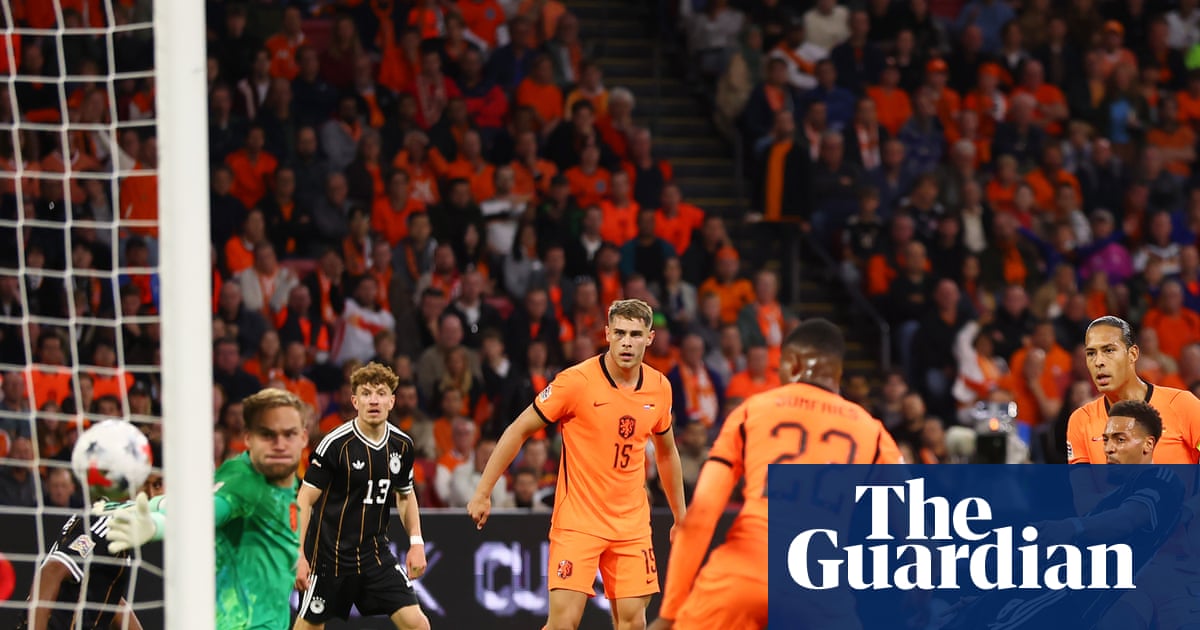
Fast forward to the 2026 World Cup last-32 matchup in Mexico. As detailed in the pre-match coverage on The Guardian, these two nations meet again in a knockout tie loaded with sociological and tactical intrigue. This is no ordinary fixture; it is a tactical derby shaped by a migration story that began in the 1960s. Today, the statistical profiles of both teams show how much the global game has changed since their meeting in Florida.
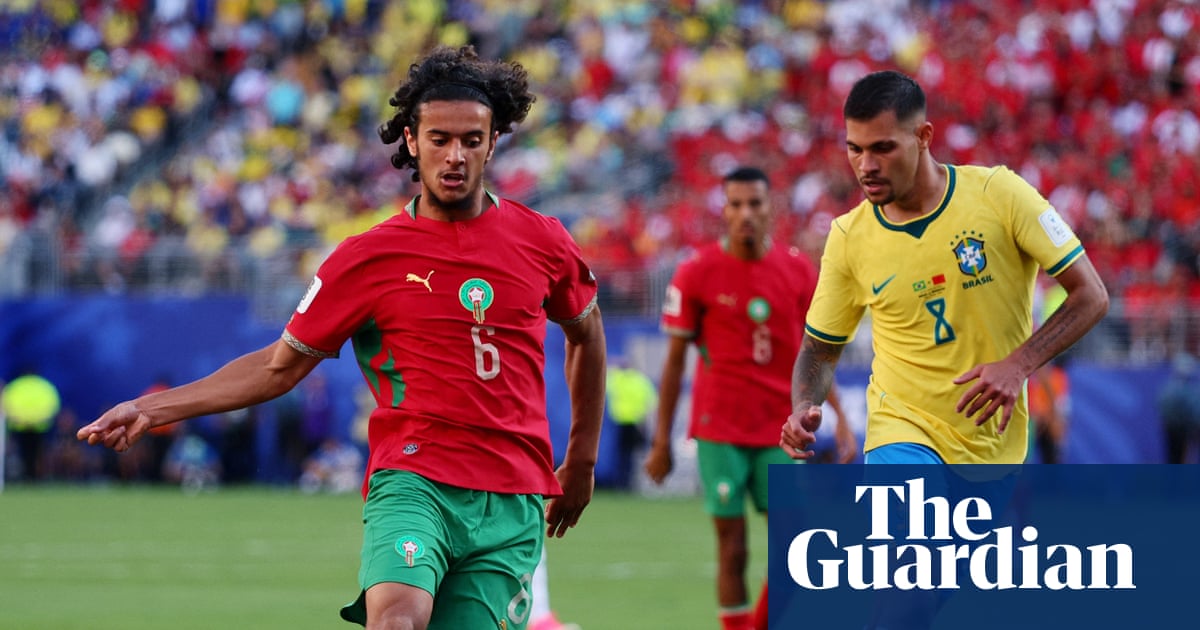
Morocco no longer plays the role of the passive underdog. The Atlas Lions enter this match averaging 52.4 percent possession in the group stage. They are no longer content to sit in a low block and pray for a counter-attack. Instead, they have evolved into one of the most efficient transitional units in international football. This tactical evolution occurs as other surprise packages falter under external pressure; Cape Verde's fairytale run, for instance, has been disrupted by sexual assault allegations against their captain, Mendes, by their translator during a March camp in Auckland, according to reporting by Globo.
The Dutch-Moroccan Production Line: A Tale of Two Systems
The Diaspora Data
The core of Morocco's tactical identity is built directly on Dutch soil. Four key members of Morocco's projected starting XI were born and educated in the Netherlands. This Dutch-born contingent brings a specific brand of positional play learned in the Eredivisie. They combine this Dutch structural awareness with the aggressive defensive intensity of Moroccan football.
The statistical impact of these Dutch-born players is stark. In the group stage, Morocco's midfield maestro, who grew up in the Netherlands, completed 89.6 percent of his passes. He also registered 4.2 progressive passes per 90 minutes. This level of ball retention allows Morocco to bypass the first line of the opposition press with ease. The Dutch team, meanwhile, has struggled to find a similar level of consistency in their own midfield pivot.
Pressing Intensity and PPDA Comparisons
A key indicator of how both teams defend is their Passes Per Defensive Action (PPDA) metric. During their historic semifinal run in 2022, Morocco operated with a passive PPDA of 16.4, preferring to drop into a compact mid-to-low block. In the 2026 group stage, that number has dropped to 11.2, indicating a much more aggressive pressing trigger. They force turnovers higher up the pitch, particularly in the half-spaces.
Contrast this with the Netherlands. Under Ronald Koeman, the Dutch have maintained a PPDA of 9.8 in this tournament. However, their high press has lacked cohesion. While they force turnovers, they often leave massive gaps behind their midfield line. Opponents have exploited this space, registering 3.4 transition sequences per game that end in a shot inside the penalty box.
Deconstructing the Spatial Battle
The Flank War: Hakimi vs. Gakpo
The most critical tactical battleground will be along Morocco's right flank. Here, Achraf Hakimi will go head-to-head with Cody Gakpo. Hakimi has been Morocco's primary outlet, averaging 6.8 progressive carries and 2.1 key passes per 90 minutes. His ability to overlap and underlap creates a constant headache for opposition left-backs.
Gakpo presents a unique defensive challenge. In the group stage, the Dutch forward registered a shot-creating action rate of 4.8 per 90 minutes. He frequently cuts inside onto his stronger right foot, operating in the half-space between the center-back and fullback. If Hakimi pushes too high, he risks leaving his right center-back isolated against Gakpo in transition.
The statistical reality is that Morocco must curb Hakimi's attacking instincts slightly to maintain defensive balance. In their final group match, Hakimi spent 43 percent of his active time in the attacking third. Against a Dutch side that excels at quick vertical transitions, that level of risk could prove fatal. Morocco will need their right-sided central midfielder to cover the space vacated by their star fullback.
The Midfield Stranglehold
In central areas, the battle for control will come down to pass completion rates in the final third. The Netherlands rely heavily on their center-backs to progress the ball. Virgil van Dijk leads all defenders in the tournament with 74.2 passes completed per 90 minutes. Yet, many of these are horizontal exchanges that fail to break lines.
Morocco's mid-block is designed to prevent central progression. They force teams wide, where they can trap them against the touchline. In the group stage, Morocco allowed opponents only 12 entries into zone 14 per 90 minutes. This reflects the discipline of their defensive shape. The Dutch will need to move the ball much faster than they did in their group stage matches if they want to break through.
The Flaws in the Machine
The Lack of a Clinical Edge
Despite their tactical evolution, Morocco have a glaring weakness: they do not convert their chances. Their group stage xG stood at 5.8, but they scored only three goals. This underperformance of 2.8 goals highlights their lack of a clinical finisher. They create high-quality opportunities through their transition play but repeatedly fail to convert them in the box.
The Dutch are the polar opposite. They have overperformed their tournament xG of 4.1 by scoring six goals. This efficiency has kept them alive, but it is an unsustainable rate of conversion. Relying on low-probability shots to win knockout matches is a high-risk strategy. If the Dutch conversion rate regresses to the mean, they will struggle to score against Morocco's tight defense.
Predictions and Sutton's Verdict
The tactical battle is finely balanced. According to BBC Sport's expert Chris Sutton, France remains the team to beat in the wider tournament bracket. Sutton is also predicting the other last-32 matchups, including England against DR Congo. But this last-32 clash between Morocco and the Netherlands is too close to call. The outcome will depend entirely on which side can dictate the tempo of the game. If the Netherlands can slow the game down and control possession, they have the quality to break through. If Morocco can force high turnovers and exploit the space behind the Dutch midfield, the Atlas Lions will march on.
Ultimately, the data suggests that Morocco have the structural tools to frustrate the Dutch. Their improved PPDA of 11.2 and their ability to restrict zone 14 entries make them a nightmare opponent in knockout football. The Dutch will find that thirty-two years after their first meeting, this Moroccan side is a completely different beast.
Read Next
- Top 10: Top Moments
- Morocco and the Netherlands are about to play the ultimate World Cup derby
- Why Spain should be terrified of Austria's chaotic transition game
- Canada's high press is about to run into a South African wall
- 🏆 World Cup 2026 — Full Coverage Hub
- 🇳🇱 Netherlands World Cup 2026 — Oranje Hub
- 🇲🇦 Morocco World Cup 2026 — Atlas Lions Hub
- 🇧🇷 WC 2026 Group C — Brazil, Morocco, Scotland, Haiti