Rotterdam delivered the wild transition circus Klopp expected
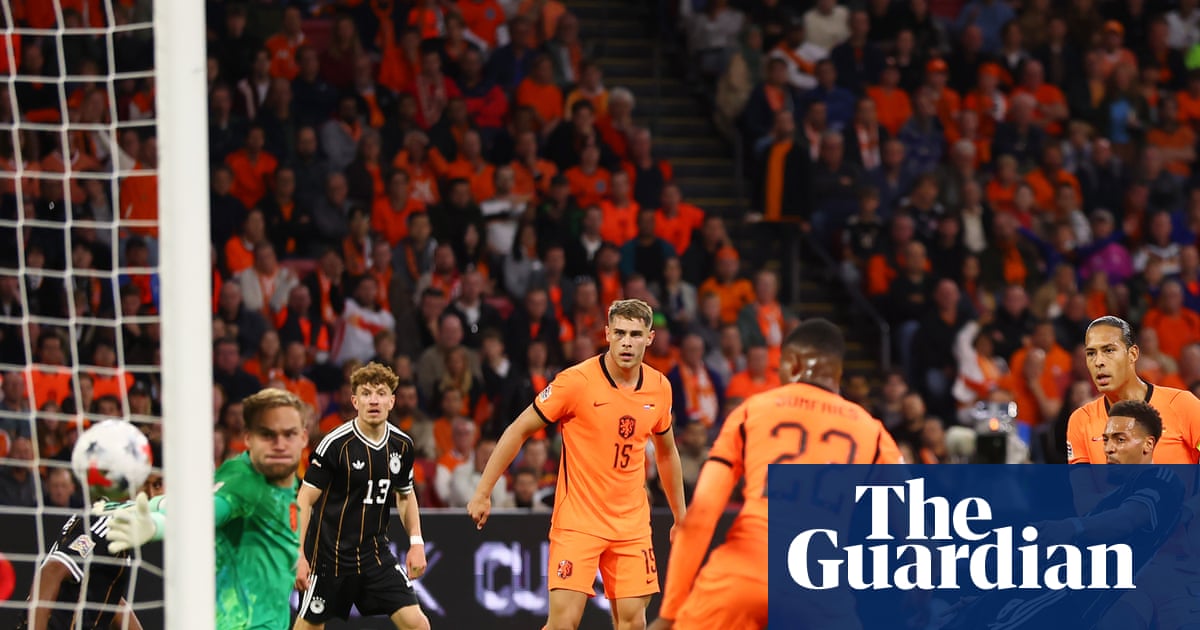
Jürgen Klopp promised his Germany debut would be wild. He got exactly that in Rotterdam on Thursday night, watching his side sprint through a chaotic 1-1 Nations League draw against the Netherlands. It was frayed, fast, and constantly on the verge of falling apart.
When Klopp's name was read out over the stadium public address system before kick-off, the travelling German supporters packed into the north-east corner yelled their loud approval. They wanted to see a bold new era kick off with energy and aggression. Instead, they witnessed a tactical laboratory where new ideas collided violently with real-match disorganization.
The match felt more like an unscripted Bundesliga transition drill than a controlled international fixture. Germany pushed their defensive block high up the pitch, leaving huge pastures of empty grass behind their double pivot. Every lost ball turned into a 50-yard footrace back toward Marc-André ter Stegen's penalty area.
Klopp set the tone for this international window by naming an extraordinary 44-man squad. He split his selection into two distinct groups across the Nations League break, assigning half the squad to the first two matches and the rest to the subsequent fixtures. The selection contained obscure names that made seasoned Bundesliga watchers double-take.
Freiburg right-back Philipp Treu was the only newcomer handed a starting spot in Rotterdam. Brentford winger Kevin Schade also earned a surprise start in attack. However, with so many unfamiliar combinations on the field, Germany struggled to maintain structural discipline under heavy Dutch pressure.
That lack of cohesion showed immediately in Germany's sluggish defensive spacing. The back line looked hesitant, unsure of whether to step forward or drop off to protect space. Without daily training sessions to drill pressing triggers, Klopp's system looked less like a coordinated machine and more like isolated individual sprints.
The pre-game disruption escalated when star playmaker Jamal Musiala pulled up lame during warm-ups with a thigh injury. Nadiem Amiri was thrown into the starting XI seconds before kick-off, stripping Germany of their primary link between midfield and attack. The last-minute swap left Germany scrambling for composure before the match even started.
Controversy, injuries, and Adeyemi's nightmare in front of goal
The Netherlands thought they had opened the scoring in the 13th minute. Virgil van Dijk rose above the German defense to glance in Tijjani Reijnders' curling corner, sparking wild celebrations among the home supporters. Van Dijk, captaining his side after Klopp persuaded him to keep the armband during their Liverpool days, looked to have struck a blow against his former club manager.
Instead, the video assistant referee stepped in to rescue Ter Stegen. The VAR decided that Dutch forward Brian Brobbey had impeded the goalkeeper inside the six-yard box. Ter Stegen, who recently returned to domestic football with Ajax, looked thoroughly unconvincing when trying to claim aerial deliveries and was fortunate to get a refereeing lifeline.
Germany's evening took another hit when Kai Havertz pulled up near halfway holding his muscle. Klopp was forced into his second unexpected substitution of the evening, sending on Eintracht Frankfurt forward Younes Ebnoutalib. The substitute immediately forced a diving save from Bart Verbruggen, but losing Havertz stripped away Germany's central focal point.
The match reached boiling point shortly before halftime through a fiery sportsmanship controversy. Brobbey went down requiring treatment, and the Dutch players expected Germany to kick the ball out of play. Joshua Kimmich ignored their gestures, playing on to spark a rapid German counter-attack.
Karim Adeyemi had his initial effort blocked at close range, but Felix Nmecha pounced on the rebound to smash Germany ahead. A heated scuffle broke out on the far touchline as Dutch players confronted Kimmich over the play. As The Guardian's match report from Rotterdam noted, classic international rivalry spite flared up in an instant.
Germany should have put the match beyond reach right before the interval. Left-back Nathaniel Brown broke free down the wing and squared a precise low pass across the six-yard box. Adeyemi found himself completely unmarked with an open goal ahead, but he spooned his shot horribly high into the stands.
It was a glaring miss that highlighted Adeyemi's persistent weakness on the big stage. He possesses raw speed, but his finishing under pressure remains wildly inconsistent. Leaving an opponent alive in Rotterdam after failing to convert a simple tap-in is the exact kind of wastefulness that punishes international teams.
Xavi's Dutch reset exposes Germany's fragile back line
The host nation re-emerged for the second half seething over Nmecha's controversial opener. New Netherlands head coach Xavi had been welcomed before kick-off by a massive banner from the home ends. His players responded by increasing their tempo, pushing Germany back with aggressive vertical passing.
“Welkom Xavi” read a banner from the Netherlands’ supporters, keen to embrace their own dawn.
Jan Paul van Hecke set a physical benchmark early in the half, picking up a yellow card for a crunching tackle on Schade. Crysencio Summerville and Cody Gakpo began isolating Germany's full-backs, forcing Treu into difficult recovery runs. Germany looked increasingly slack in possession, gifting loose balls back to the Dutch inside their own half.
Adeyemi squandered another golden opportunity after Schade intercepted a poor Dutch pass. Instead of passing to an open teammate, Adeyemi sliced a wild shot far off target from a wide angle. His visible frustration mounted, but his poor composure kept the Netherlands within striking distance.
Xavi lacks the depth of stardust available to top international squads, but his tactical structure was surprisingly sharp. He instructed his midfield to bypass Germany's initial pressing line by playing direct balls into wide channels. By avoiding midfield congestion, the Dutch consistently attacked Germany's exposed full-backs.
The Netherlands introduced debutant striker Mexx Meerdink on the hour mark to replace the injured Brobbey. Meerdink made an immediate impact, executing a brilliant backheel pass inside the penalty box to send Denzel Dumfries clean through. Ter Stegen reacted quickly to block Dumfries's effort with his foot, denying a certain goal.
Meerdink caused further panic in the German defense during a wild 10-minute spell. He bundled the ball into the net following a chaotic corner, but the referee blew his whistle for another foul on Ter Stegen. Meerdink then misjudged a Dumfries cross in front of goal, poking wide on the stretch when scoring looked easier.
Despite Meerdink's missed opportunities, Germany's back four was under constant siege. Ter Stegen proved imperious when stopping shots at close range, but his defense could not secure second balls. Without a dedicated holding midfielder screening the center-backs, Germany remained completely vulnerable to late Dutch attacks.
Why Klopp's international experiment will take months to settle
The Netherlands finally got their deserved equalizer deep into added time through a piece of pure skill. Young winger Ruben van Bommel picked up the ball on the left wing and measured his options inside the box. With a flick of his right foot, he delivered a curling cross using the outside of his boot.
Gakpo read the trajectory perfectly, meeting the ball on the volley to send the home fans into wild celebration. It was a fitting conclusion to a second half dominated by Dutch initiative. For Xavi, the late goal rewarded a courageous tactical approach that refused to accept defeat.
Klopp had naturally promised “intense football” but found his start beset by problems.
For Klopp, the result provided a clear view of the structural hurdles ahead. High-intensity pressing systems require precise synchronization and months of daily tactical repetition. In club football, a manager gets weeks of pre-season work to build pressing traps and cover shadows. In international football, managers get limited training sessions before facing elite opposition.
Germany's primary flaw is their complete lack of rest defense. When the full-backs push high to support the attack, the central defenders are left isolated against fast wingers. If the front line fails to win the ball immediately, opponents can slice through Germany's midfield with two simple passes.
The mounting physical toll will also worry Klopp. Musiala's thigh issue in warm-ups and Havertz pulling up lame near halfway will set alarm bells ringing at Bayern Munich and Arsenal. Losing two cornerstone attacking players forces Germany to rely on unproven international depth while still trying to learn a complex tactical system.
As highlighted in the detailed match report from Rotterdam, Germany showed plenty of energy but lacked tactical balance. They allowed the Netherlands to dictate terms late in the game because they could not control possession or slow down the tempo.
Klopp will bring passion and personality to the German national team, but enthusiasm cannot mask defensive structural flaws. German supporters expecting a flawless tactical revolution must prepare for a bumpy ride. Until Klopp fixes his team's rest defense, Germany will remain an entertaining, chaotic side that smart opponents will pick apart.
Read Next
- England keeps retreating when it matters most, and Harry Kane knows it
- Dan Ballard returns to a Northern Ireland team facing an impossible schedule
- James Garner got called off a Turkish beach to fix England's midfield
- James Garner's crazy England callback exposes Thomas Tuchel's midfield mess
- 🇳🇱 Netherlands World Cup 2026 — Oranje Hub
- 🏆 UEFA Nations League Final Four 2026 Hub — June 4-8, Lisbon