
Marco Rose has given Bournemouth the ruthless edge they always lacked
Football matches often hinge on whether a squad can overcome physical exhaustion. Bournemouth arrived at Portman Road on Sunday having barely unpacked their bags after a testing European trip to Sparta Prague. Three days of international travel could easily have dulled their competitive edge against an Ipswich Town side desperate for points.
Instead, Marco Rose watched his players grind out a 2-1 victory to equal a landmark record. The result marked eight consecutive wins in all competitions, matching the club milestone established by Eddie Howe during the 2012-13 League One promotion campaign. Back then, Bournemouth were clawing their way out of the lower divisions, whereas today they are mastering tight turnarounds in top-flight football.
Yet this was far from a comfortable afternoon on the road. The final twenty minutes turned into a desperate defensive retreat that exposed Bournemouth's lingering frailties under pressure. Rose took the points, but he also received a sharp warning about what happens when game management breaks down.
The Pressing Trap at Portman Road
Fixing the early sluggishness
Rose spent the build-up to this fixture addressing Bournemouth's habit of starting on the back foot. Four weeks ago at Stamford Bridge, his side found themselves two down after three minutes, completely dismantled before their defensive shape could settle. Even during last weekend's 2-0 home victory against Leeds, the visitors had an effort ruled out after eleven minutes.
Slow starts in the Premier League are fatal. Rose demanded an immediate tactical shift to ensure his players dictated the tempo from the opening whistle. The instruction was direct: press high, squeeze Ipswich into their defensive third, and force uncomfortable decisions before fatigue could creep in.
"Last week I said we start slow and this week I said we start quite quick and score an early goal," Rose noted with a smile. "I am a magician!" It was a lighthearted remark, but the underlying tactical adjustment was dead serious.
Bournemouth showed zero early lethargy. They shut down the central passing channels and forced Christian Walton into nervous backward touches right from kick-off.
Within five minutes, that calculated pressure shattered Ipswich's afternoon. Rose had drilled his side to hunt for immediate turnovers rather than waiting to feel their way into the contest. His players rewarded that aggressive posture instantly.
Walton's disaster and Evanilson's instinct
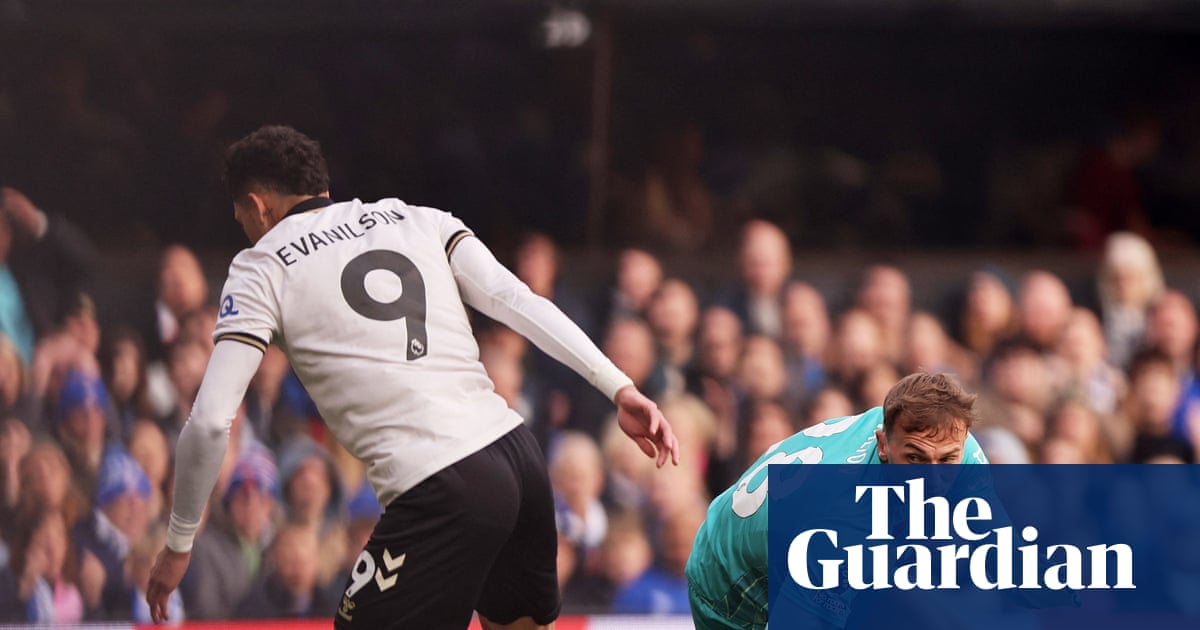
Christian Walton will not want to review the match tape. The Ipswich goalkeeper received a routine back-pass and hesitated under no immediate danger. Rather than clearing long into touch, Walton attempted a bizarre dribble to bypass Evanilson inside his own penalty area.
Evanilson never bought the trick. The Brazilian striker anticipated the heavy touch, stepped across the goalkeeper, and rolled the ball into an empty net after just five minutes. It was a calamitous error that instantly silenced Portman Road.
Evanilson is in blistering form right now. This strike marked his fifth successive Premier League match with a goal, underlining his status as one of the division's sharpest operators. With seven goals already this season, he has already beaten his tally from the whole of last season.
His development has transformed Bournemouth's attacking dynamics. Rather than waiting for creative service from the flanks, Evanilson acts as the first line of defence, snapping into tackles and forcing opposing backlines into hurried clearances. He turns half-mistakes into goals through sheer anticipation.
Gary O'Neil was visibly distraught on the touchline as his tactical preparation dissolved within minutes. His game plan had relied on defensive discipline, only for his goalkeeper to gift the visitors the easiest goal they will score all season.
As The Guardian noted in their match report, O'Neil could not hide his annoyance at how the contest slipped away. His squad matched Bournemouth in several statistical metrics, but individual lapses ruined their afternoon.
"To lose a football match you’ve not been outclassed in is hard to take. But if you give the ball to the opposition No 9 twice, it’s going to be difficult and that was the story of the game really."
The Second-Half Ambush and the Sudden Retreat
Twenty-seven seconds to double the lead
If Ipswich entered the interval planning a tactical resurgence, Bournemouth extinguished that hope before anyone could settle. It took exactly 27 seconds of the second half for Rose's side to double their advantage. The restart caught Ipswich completely asleep at the wheel.
Ryan Christie collected possession near the edge of the box and drilled a low effort toward goal. Leif Davis attempted to intervene, but his outstretched boot only managed to deflect the strike past Walton into his own net. It was a messy goal, but it stemmed directly from Bournemouth's sharp spatial awareness.
Teams returning from European travel typically drop their defensive lines at the start of a second half to manage their stamina. Rose's team did the exact opposite, swarming forward straight from Ipswich's kick-off to catch the hosts out of position. They flooded the half-spaces and won the second ball before Ipswich could organise their lines.
At 2-0, Bournemouth seemed to have total control. They dictated the tempo, controlled possession, and starved Ipswich of forward momentum for the first seventy minutes.
Rose was delighted with how his team executed their game plan during that dominant stretch. "I am pleased with the first 70 minutes because we went two up and I didn’t feel like we struggled or can get any problems," the German manager explained. Bournemouth looked every bit like an established European outfit.
Cook's rash challenge and the frantic finish
Then came the unravelling. What should have been a comfortable afternoon turned into a chaotic scrap because of a single careless decision. Lewis Cook lunged into a clumsy challenge on Abdoul Ouattara inside the penalty area in the 73rd minute.
Cook's tackle was completely unnecessary. Ouattara was moving away from goal near the edge of the box with multiple defenders positioned between him and the net. By committing himself to ground, Cook gave the referee an easy decision and offered Ipswich a lifeline they scarcely deserved.
Jack Clarke stepped up with seventeen minutes left on the clock. The winger remained cool under intense pressure, sending the goalkeeper the wrong way from the penalty spot to cut the deficit to 2-1. Suddenly, Portman Road erupted, and the visitors lost their tactical grip.
Bournemouth's structure evaporated over the final quarter of an hour. They abandoned their midfield passing circuits, dropped into an ultra-deep low block, and began hacking clearances toward the halfway line. The calm assurance that defined their opening seventy minutes vanished entirely.
Julio Enciso nearly made them pay for that retreat. The Ipswich substitute went close with two stinging free-kicks that had the Bournemouth defence scrambling frantically across their goalmouth. Each set-piece brought another wave of panic inside the penalty box.
Rose acknowledged how uncomfortable the finale became for his squad. His honest assessment reflected a manager who knows his team got away with one.
"That is why I am much more pleased with the last 20 minutes. We suffered but we did it together."
Suffering together makes for good camaraderie, but it makes for nervous coaching. A more clinical opponent would have turned Enciso's late set-pieces into an equaliser, punishing Bournemouth for surrendering territory so meekly.
The Tactical Fallout: Europe and Ipswich's Ceiling
O'Neil's systemic flaws
For Ipswich, this defeat reinforces a frustrating pattern that Gary O'Neil must fix immediately. His side has now won only one of their last seven matches across all competitions, dropping points repeatedly despite producing competitive spells of play. Their recent 2-2 draw with Hull exposed the exact same structural vulnerability.
O'Neil wants his team to build play patiently from deep areas, but his players lack the technical security to execute that style against aggressive pressing units. When a goalkeeper makes fundamental errors with the ball at his feet, tactical theories count for nothing. Ipswich are beating themselves long before opponents break them down.
O'Neil highlighted this exact dilemma in his post-match assessment. He pointed out that performance metrics showed little separating the sides over ninety minutes, yet the outcome was familiar.
"It’s the level so we have to find a way of not only being competitive in games, but can we now find a way to make sure these Hull and Bournemouth performances are four points and not one," O'Neil stressed. To achieve that, Ipswich must eliminate the catastrophic gifts they hand to opposing strikers. Until they develop defensive discipline, survival will remain a steep uphill climb.
Matching Howe under continental strain
Matching Eddie Howe's winning streak is a remarkable milestone, but the context makes Rose's achievement even more impressive. Howe's eight consecutive victories in 2012-13 came in League One, where Bournemouth faced third-tier opposition on standard weekly schedules. Rose is doing this while navigating the physical grind of top-tier football and continental travel.
Bournemouth had barely forty-eight hours to recover after returning from their victory against Sparta Prague. Competing in Europe demands immense physical expenditure and mental focus, and smaller squads frequently collapse when returning to domestic action. Rose recognized that risk before the match began.
"I said before this week that it’s going to be really demanding for a team that is not used to have this kind of situation," Rose admitted. He has relied on sharp preparation to keep his players competitive across both fronts.
The squad's physical conditioning deserves genuine credit. Even when their legs tightened in the closing minutes, they found the resolve to repel Ipswich's late crosses and secure three points. They are learning to win ugly when energy levels dip.
Evanilson's finishing touch provides the ultimate safety net. When a striker converts turnovers into instant goals, it relieves immense pressure on the rest of the team. He has become the focal point that allows Rose's tactical vision to flourish.
Eight consecutive wins is proof of genuine progress under Marco Rose. Bournemouth have eradicated their sluggish starts, developed a ruthless pressing trigger, and learned how to close out tight matches on hostile ground. They are a much more dangerous side than the one that conceded twice in three minutes at Stamford Bridge.
However, the manager cannot ignore the warning signs from the closing stages at Portman Road. Cook's rash challenge and the team's subsequent panic show that Bournemouth still lack the maturity to control games when opponents apply physical pressure. Better teams than Ipswich will not waste two free-kick opportunities in stoppage time.
For now, Rose can celebrate matching a club record that stood untouched for over a decade. His players passed a severe physical test after their European journey, proving their tactical discipline can withstand punishing schedules. If they can fix their late-game composure, this winning streak could be just the beginning.
Men in Blazers Present Encyclopedia Blazertannica: A Suboptimal Guide to World Soccer
The funniest deep-dive into soccer culture you'll ever read.
Frequently Asked Questions
What club record did Bournemouth equal against Ipswich?
How did Bournemouth score their opening goal at Portman Road?
Why did Marco Rose demand high pressing against Ipswich?
What previous slow starts prompted Bournemouth's tactical change?
What physical challenges did Bournemouth face before playing Ipswich?
More Coverage

Top 10: Top Moments
29 minutes ago
Chelsea are falling apart again and Xabi Alonso is in denial
an hour ago
Chelsea will miss the top four unless Xabi Alonso faces reality
an hour ago
Xabi Alonso has turned Chelsea into the Premier League's weirdest team
2 hours ago
Aberdeen are sliding toward the drop and Robinson has no answers
10 hours ago
Marc Guehi hooked at half-time as Man City hit a physical wall
21 hours agoMore Analysis

Bournemouth's Bench Just Bailed Out Marco Rose's Broken Prague Rotation
3 days ago
Arsenal are rushing to sign Junior Kroupi before PSG take control
5 days, 9 hours ago
Bournemouth roll on with six straight shutouts as Leeds unravel
1 week ago
Enciso rescued Ipswich at Hull, but both teams are heading for trouble
1 week, 1 day ago
Why rivals think Chelsea will win the £90m race for Alex Scott
1 week, 3 days ago