The Arithmetic of Relegation Pace
Conceding 24 goals in your opening 10 Premier League matches is not bad luck. It is structural failure on an industrial scale.
At 2.4 goals shipped per game, Crystal Palace are tracking to concede over 91 goals across a 38-game calendar. No side in modern top-flight history survives that defensive bleeding.
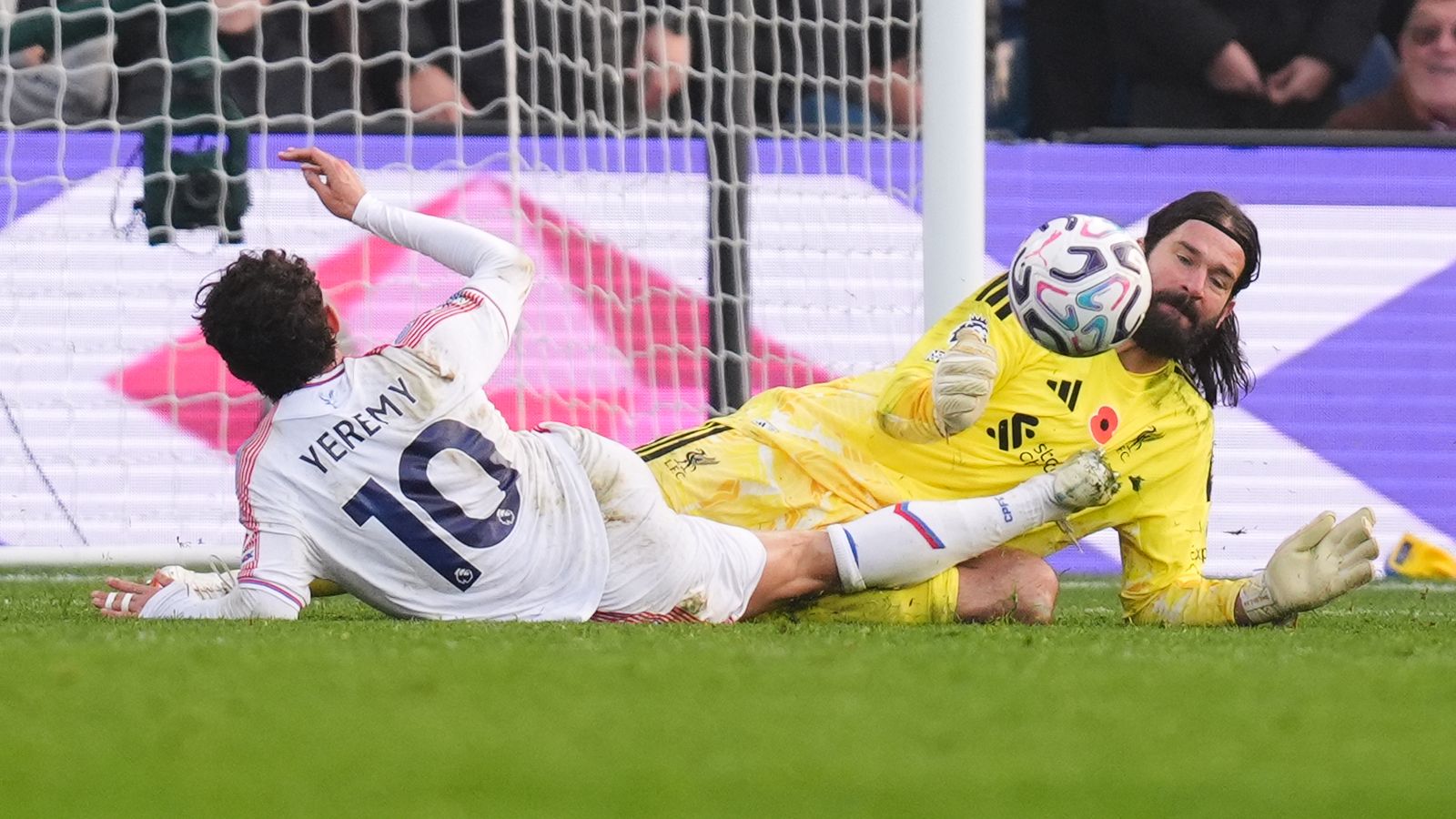
Sunday's 3-1 defeat to Liverpool at Selhurst Park cemented Palace's fourth straight league loss. It left Sage's side bottom of the table entering the international break.
Palace have taken just seven points from 10 matches. That 0.70 points-per-game pace projects to barely 26 points by May.
With a 20 percent domestic win rate, Palace have evaporated their summer optimism. Five months into a three-year contract, Sage is already facing dismissal.
As BBC Sport reported, internal discussions have begun regarding his potential replacement. Waiting any longer could make mathematical recovery impossible.
The 28-Day Collapse Since 11 October
Palace have been winless in the league since 11 October, enduring a four-week tailspin. The collapse has been as rapid as it is severe.
The catalyst was a humiliating 5-0 thrashing against Brighton. That afternoon at the Amex Stadium was not an isolated blip; it was an organizational unravelling.
Sage admitted to feeling "shame" after that derby embarrassment. Yet acknowledging the failure did nothing to plug the gaps, as three subsequent defeats swiftly demonstrated.
When a team loses four straight matches while shipping 2.4 goals per game, tactical theory ceases to matter. Opponents have recognized that Palace's defensive lines separate under the slightest transition pressure.
The Tactician's Dilemma: Glasner's Rigidity vs. Sage's Openness
The contrast with the previous regime is glaring. Oliver Glasner departed last season after winning both the FA Cup and the Europa Conference League.
Glasner, now managing Nottingham Forest, built his success on rigid spatial distances and ferocious rest defense. His side absorbed pressure before exploding through vertical channels.
Sage arrived from Lens with a radically different pedigree. He had guided the French club to second in Ligue 1 and secured their first French Cup in 120 years.
His philosophy prioritized expansive possession and aggressive positional rotations. In France, that system suffocated opponents through sheer territorial dominance.
In South London, that same expansive approach has left his center-backs utterly exposed. Premier League transitions are far more punishing than anything Sage encountered in Ligue 1.
By pushing full-backs high without counter-pressing locks, Sage has handed opposing wingers massive space. Palace are caught in tactical purgatory: too porous to defend, yet too disjointed to score.
The Illusion of Marginal Gains Against Liverpool
Against Liverpool on Sunday, defenders of Sage might point to misfortune. Palace struck the crossbar and had a goal ruled out before succumbing to a 3-1 scoreline.
In isolation, those moments suggest a team competing on level terms. In context, they merely disguise chronic instability at the back.
Sage attempted to frame the defeat around these near-misses in his post-match assessment. His diagnosis leaned on attacking intentions rather than defensive accountability.
"We have to be more competitive," Sage said on Sunday. "At the moment, we create some things, we expect a lot of things, but we don't have the results expected."
Expecting results while conceding three goals at home is analytical fantasy. Elite teams do not require dozens of chances to finish off a side that surrenders high-quality space in the box.
Palace have won just two of 10 matches because their defensive floor has caved in. Finishing variance cannot save a defense that spots the opposition two goals every ninety minutes.
The Mateta and Sarr Void: Broken Spacing and Zero Outlets
There is legitimate context behind Palace's drop-off, and figures behind the scenes acknowledge the difficult hand Sage was dealt. The simultaneous absence of Jean-Philippe Mateta and Ismaila Sarr has gutted the team's tactical spine.
Both forwards have been unavailable due to fitness hurdles and transfer-related friction. Losing them has destroyed Palace's attacking mechanics at both ends of the pitch.
Mateta provided the physical reference point Palace desperately need when pinned inside their own third. His aerial dominance and hold-up play allowed the midfield to advance fifteen yards.
Without Mateta, clearances instantly bounce back into the defensive zone. Palace spend long stretches trapped in their half because they lack an outlet capable of securing possession under duress.
Sarr's absence is equally destructive to Sage's spatial geometry. Sarr forces opposing full-backs to defend deep through his vertical sprint speed.
Without that deep threat, visiting backlines squeeze up to the halfway line. This compresses the pitch, suffocating Palace's technical midfielders and producing turnovers in dangerous positions.
The Continental Paradox: 21st in Europe While Sinking at Home
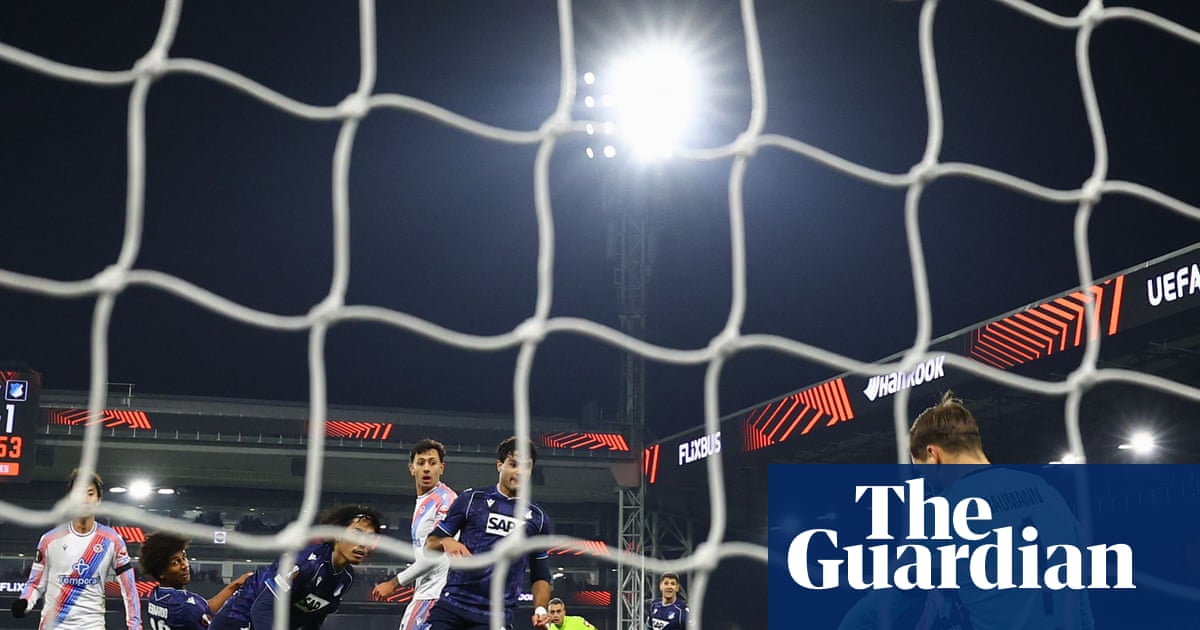
The most counterintuitive element of Palace's season is their continental standing. While sitting bottom of the Premier League, Palace currently sit 21st in the Europa League table.
In the revamped 36-team tournament format, 21st place is sufficient for a play-off qualification spot. With one victory from four European fixtures, Palace remain alive on the continent.
Yet that European campaign has turned into an operational burden that has broken their domestic form. Managing four additional mid-week matches with an unsettled squad has drained physical reserves.
A 25 percent win rate in Europe looks respectable until measured against domestic decay. Palace do not possess the squad depth to compete across Thursday-Sunday schedules.
Sage's players look leggy by the hour mark of league matches. The tactical intensity required for his pressing scheme simply does not exist on four days of recovery.
The Successor Dilemma: Frank's Precision vs. Dyche's Wall
With Sage on the precipice, Palace's board is already vetting potential alternatives to rescue the campaign. Two experienced managers have emerged as frontrunners: Thomas Frank and Sean Dyche.
Both men are unattached and available to take charge immediately. Yet they represent two entirely opposing schools of tactical thought.
Thomas Frank, recently departed from Tottenham following his celebrated tenure at Brentford, offers a sophisticated, modern blueprint. His teams excel at coordinated mid-press traps, aggressive counters, and set-piece routines.
Sean Dyche, most recently at Nottingham Forest, is the antithesis of Sage's expansive French football. Dyche prioritizes rigid 4-4-2 banks of four, penalty-box protection, and second-ball dominance.
Here is what the Palace board must weigh before sanctioning a change. Each profile addresses a different phase of the crisis.
- Frank preserves modern pressing while fixing rest defense, but needs time to drill patterns.
- Dyche provides immediate defensive triage by eliminating high-risk buildup, but limits attacking ceiling.
- Both candidates have proven survival records in the Premier League.
Choosing between Frank's tactical adaptability and Dyche's defensive triage will determine Palace's identity for years. They cannot persist with a system that concedes 24 goals in 10 games.
The International Break and the Coventry Deadline
The timing of the crisis gives Palace's hierarchy a rare operational window. The Premier League now pauses for two weeks, with Palace's next match scheduled for 21 November at Coventry.
Fourteen days is an eternity in football. It is enough time to install new staff and implement basic defensive shapes.
Sage's post-match statements following the Liverpool loss sounded like a manager fighting the inevitable. Rather than acknowledging structural flaws, he insisted on pressing forward with his philosophy.
"It's not from the dream to the nightmare," Sage stated on Sunday. "I'm not feeling this. I'm just in my job, and focusing on my job, and what I have to do to find the solution. The results are not at this level, and I know I have to push more on those things, especially in our way of playing, to make that move."
Doubling down on "our way of playing" when that way has produced seven points from 30 available is reckless obstinacy. A manager sitting 20th in the table does not have the luxury of ideological purism.
Coventry on 21 November represents a clean dividing line. If Palace travel to that fixture with Sage in charge, the board is gambling against the numbers.
Palace are leaking goals at a catastrophic rate, their key attackers are alienated, and their league win rate is 20 percent. The international break was designed for moments like this.