The 2.40 Goals-Per-Game Bleed
Crystal Palace have conceded 24 goals across their opening 10 Premier League matches. That averages out to an alarming 2.40 goals shipped every single weekend. No backline in England's top flight has leaked more.
The league standings reflect that defensive hemorrhage with brutal clarity. Palace sit bottom of the Premier League table as the November international break arrives, having gathered just seven points from a possible 30. That represents an extraction rate of barely 23.3 percent.
A return of 0.70 points per match is the mathematical signature of relegation. Maintain that pace over a 38-game schedule and a squad finishes on 26.6 points, a total that guarantees the drop. Five months into a three-year contract, Pierre Sage finds his tactical setup completely exposed.
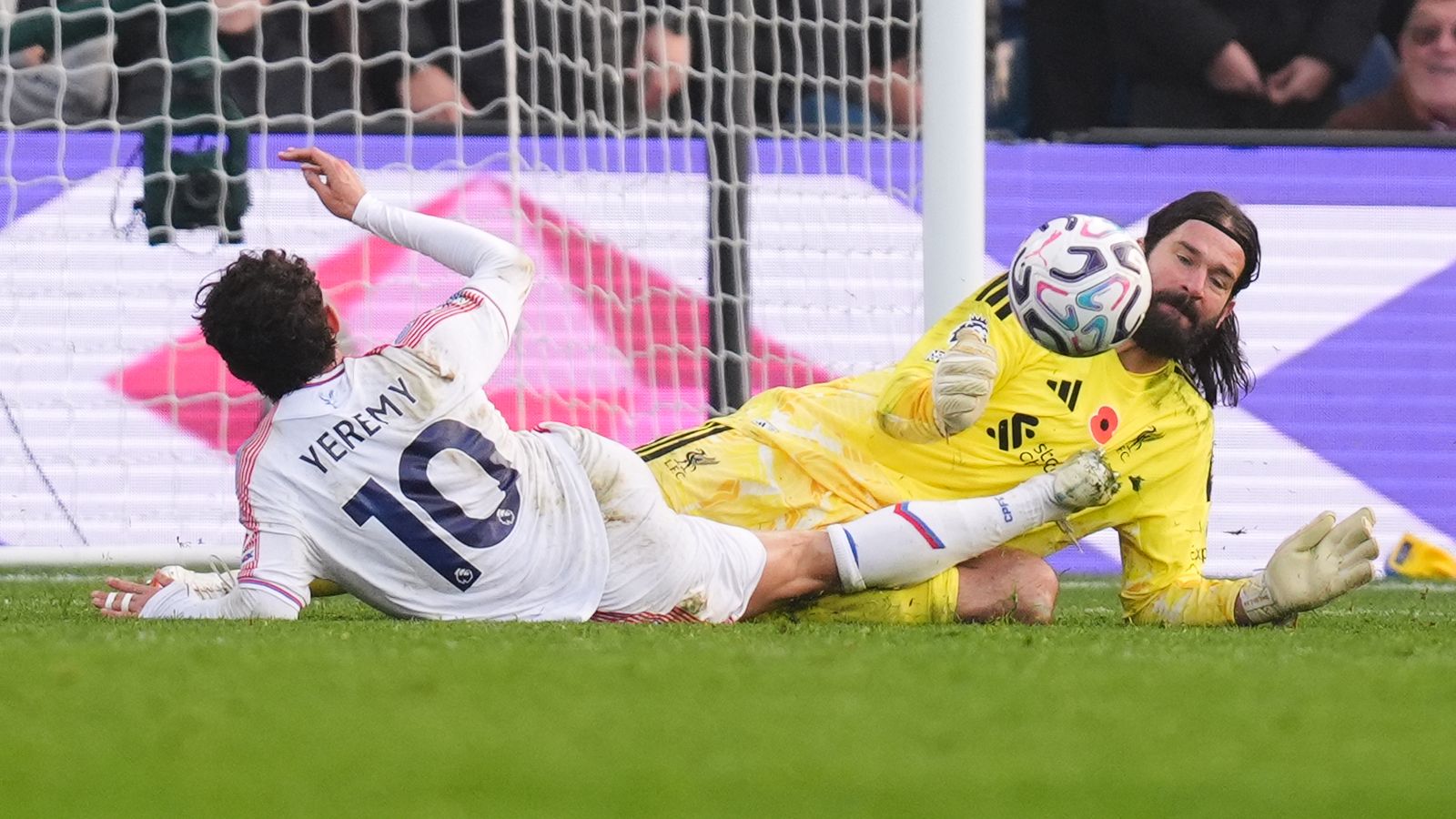
Sunday's 3-1 loss to Liverpool at Selhurst Park marked their fourth successive league defeat. It was another ninety minutes where defensive disorganisation wiped out any forward progress. You cannot survive in top-flight football when conceding multiple goals is your weekly baseline.
The Widening Gap to Safety
Premier League survival generally demands a baseline of roughly 1.00 point per game. Through 10 matches, Palace are already trailing that safety marker by three full points. That is not a minor slump; it is a structural deficit that widens with every matchday.
Winning just two of their opening 10 fixtures means Palace have failed to secure maximum points in 80 percent of their outings. When a side fails to win four out of every five matches, confidence erodes rapidly. The defensive frailties have turned routine fixtures into uphill battles.
The Post-Brighton Freefall
The current collapse has a clear inflection point on the calendar. Palace have not won a league fixture since 11 October. Their campaign shattered that afternoon during a humiliating 5-0 defeat against fierce rivals Brighton.
After that derby humiliation, Sage admitted he felt "shame" and questioned whether the board would grant him time to correct the trajectory. The numbers since that afternoon validate his darkest anxieties. Palace have played four league matches since the Brighton rout and taken zero points from a possible 12.
Before that trip to the Amex, the campaign looked salvageable. Palace had taken seven points from their first six matches, recording two victories along the way. Since then, the defensive shape has vanished entirely, leaving a shell-shocked squad that concedes at the first sign of pressure.
The Mirage of Selhurst Park
Selhurst Park was once renowned as an intimidating venue for visiting teams. Under Sage, that home advantage has evaporated. Sunday's loss to Liverpool followed an all too familiar script of promising spells undone by catastrophic transition defending.
Palace showed flickers of life against Liverpool, hitting the crossbar and having an equalizer ruled out. Yet they still walked away with a 3-1 defeat because their rest defence offered zero resistance. Chasing games after conceding soft goals has become their defining habit.
"We have to be more competitive. At the moment, we create some things, we expect a lot of things, but we don't have the results expected."
Sage's post-match comments point to a manager grappling with the gap between theory and execution. Expecting results without establishing basic defensive security is wishful thinking. In elite football, teams that concede 24 goals in 10 matches do not get the benefit of the doubt.
Personnel Vacuums and the European Paradox
A manager cannot steady a leaky defence when his attack is entirely destabilized. Palace have navigated this downward spiral without Jean-Philippe Mateta and Ismaila Sarr. Their absences stem from a disruptive mix of fitness problems, personal matters, and explicit transfer demands to leave Selhurst Park.
Losing two primary attacking outlets breaks the tactical balance of the entire team. Without physical focal points capable of retaining possession under pressure, Palace repeatedly turn the ball over in dangerous areas. That exposes an already nervous defensive backline to waves of direct transitions.
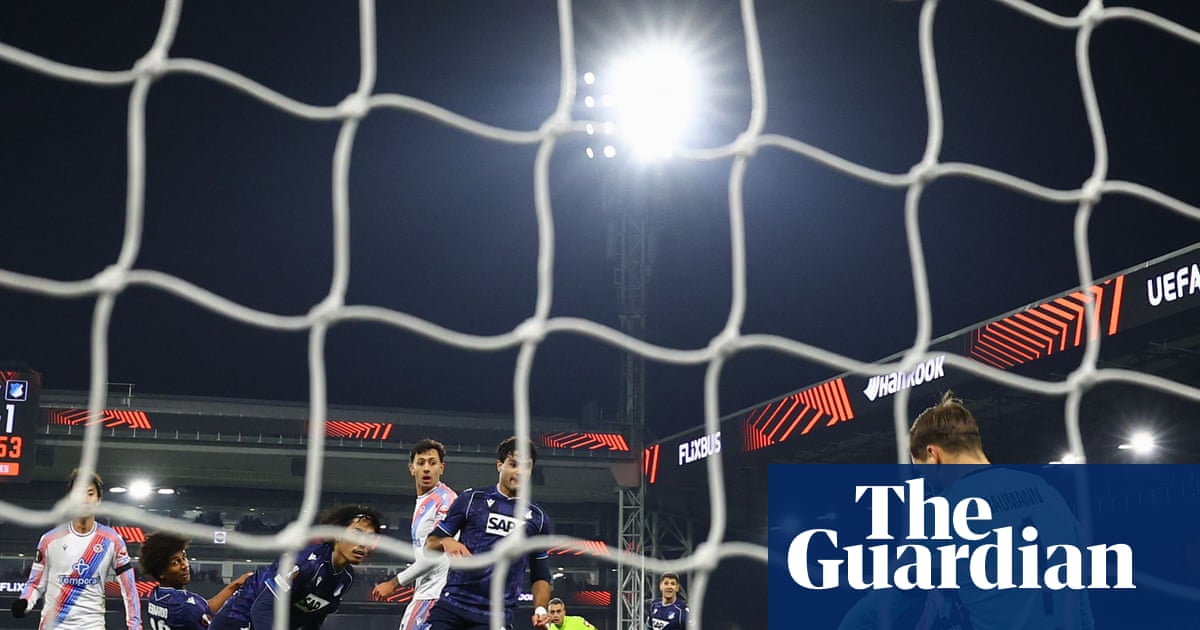
Yet amid this domestic misery sits a striking contradiction. As BBC Sport reported, Palace currently occupy 21st place in the Europa League standings. That position is technically sufficient to secure a knockout play-off spot.
The Cost of Continental Distraction
That continental standing provides false comfort. Palace have won just one of their four European matches, capturing barely 25 percent of the points available. Juggling Thursday night continental assignments with an unsettled squad has accelerated their domestic unravelling.
European competition requires depth and tactical maturity that Palace simply do not possess right now. Instead of building momentum, the midweek schedule has stretched Sage's squad past its breaking point. Navigating Europe while sitting 20th in the Premier League is a dangerous trap.
The Heavy Shadow of Oliver Glasner
Context makes Sage's situation far more dangerous than isolated statistics suggest. The 47-year-old was appointed in June on a three-year contract to replace Oliver Glasner, who departed for Nottingham Forest. Glasner left behind a historic legacy, having delivered an FA Cup triumph and a Europa Conference League title.
Replacing a manager who delivered two major trophies is an uphill battle under the best circumstances. Doing so while plunging to 20th position turns fan unease into open rebellion. The standards established during Glasner's tenure have made the current collapse impossible for supporters to accept.
Sage arrived with strong credentials after guiding Lens to a second-place finish in Ligue 1 and their first French Cup in 120 years. That Lens side was celebrated for defensive cohesion and collective work rate. At Palace, none of that tactical discipline has taken root.
"It's not from the dream to the nightmare. I'm not feeling this. I'm just in my job, and focusing on my job, and what I have to do to find the solution. The results are not at this level, and I know I have to push more on those things, especially in our way of playing, to make that move."
Sage may claim he does not view this slump as a nightmare, but the boardroom sees an emergency. Palace have won just two of their 10 league matches, and internal discussions regarding his future have already started. In the Premier League, patience runs out long before three-year contracts expire.
The International Break and the Replacement Market
The timing of this crisis could not be worse for Sage. The two-week November international hiatus represents the traditional window for Premier League dismissals. Palace do not play again until 21 November, when they travel to face Coventry.
That calendar gap gives chairman Steve Parish and the Palace board a clean 13-day window to make a change. Appointing a new coach during an international break allows for tactical recalibration before a vital fixture. Letting a manager limp into Coventry with four straight defeats is a massive gamble.
Two Proven Options Waiting in the Wings
The profiles being discussed internally reveal exactly what Palace feel they are missing. Former Tottenham and Brentford manager Thomas Frank brings proven Premier League tactical acumen and set-piece organisation. Meanwhile, former Nottingham Forest manager Sean Dyche offers the defensive pragmatism required to halt an alarming defensive slide.
Importantly, both Frank and Dyche are out of work and available immediately. That availability removes the delays and financial hurdles of negotiating compensation with rival clubs. When experienced Premier League managers are sitting by the phone, an incumbent coach averaging 0.70 points per game is living on borrowed time.
If Palace decide to act, Sage will become the first managerial departure of the Premier League season. That would represent a swift and painful unraveling for a manager appointed just five months ago. Yet in a division governed by cold mathematics, conceding 2.40 goals per game leaves no room for survival.