The Eternal Bridesmaid Returns to North America
Pull up a stool, order another pint, and let us talk about the greatest footballing tragedy of our lifetimes. The Netherlands are once again talking themselves into winning the World Cup. It happens every single tournament cycle like clockwork.
You can set your watch by it. The Dutch qualify, sweep through group stage matches playing gorgeous football, and their pundits start humming Het Wilhelmus with tears in their eyes.
Then the knockout rounds hit, penalties loom, and the entire nation collapses into existential dread.
No country in international football history produces more pure talent per square mile while accumulating more soul-crushing heartbreak. They are 0 for 3 in World Cup finals. They gave the world Total Football, Johan Cruyff, and Rinus Michels, yet their trophy cabinet contains a single 1988 European Championship.
Now heading into North America 2026, the narrative machine is whirring again. Pundits look at Xavi Simons, Cody Gakpo, and Ryan Gravenberch and whisper that this is finally the year. Do not fall for it.
I love watching Oranje as much as anyone in this bar. But I have seen this movie before, and it always ends with a Dutch defender staring blankly at the sky while Andres Iniesta or Emi Martinez celebrates.
The Cruyff Curse and the Heavy Shadow of History
To understand the Dutch psychosis, you have to rewind to Munich in 1974. Johan Neeskens converted a penalty in the second minute before West Germany even touched the ball. The Dutch were so vastly superior they spent the next thirty minutes mocking the Germans instead of scoring a second goal.
Gerd Müller punished their arrogance before halftime, and an entire national identity of glorious failure was born on the spot.
Four years later in Buenos Aires, Rob Rensenbrink hit the post in the 90th minute of the 1978 final against Argentina. If that ball sits two inches to the left, history changes forever. Instead, Mario Kempes killed them in extra time.
Fast forward to Johannesburg in 2010. Arjen Robben broke clear through on goal against Iker Casillas with the world title on his boot. Casillas stuck out a trailing toe, and Iniesta ripped their hearts out in the 116th minute.
Three finals, three near-misses, infinite therapy bills.
Even their recent exits read like horror scripts. In Qatar 2022, Wout Weghorst pulled off the most outrageous 101st-minute trick-shot free-kick in tournament history to tie Argentina 2-2. It was pure cinematic magic.
Ten minutes later, they lost the penalty shootout because Dutch players look at twelve yards like a firing squad.
Where Is the World-Class Number Nine?
Look closely at this 2026 squad under Ronald Koeman. There is serious structural talent here. Bart Verbruggen gives them their most promising young goalkeeper since Edwin van der Sar.
Nathan Aké, Jurriën Timber, and Micky van de Ven form a defensive unit capable of locking down any elite winger on earth.
In midfield, Frenkie de Jong remains a maestro when healthy, gliding past mid-blocks like a guy strolling through Schiphol Airport. Tijjani Reijnders and Ryan Gravenberch offer dynamic box-to-box muscle. Xavi Simons possesses that unpredictable spark that turns standard possessions into scoring chances.
Here is the fatal flaw nobody in Amsterdam wants to admit out loud. Where is the world-class striker?
Look at every team that actually lifts the World Cup trophy. They possess a stone-cold killer up front.
Argentina had Lionel Messi and Julian Alvarez. France had Kylian Mbappé. Germany had Miroslav Klose.
The Dutch used to feature Marco van Basten, Ruud van Nistelrooy, and Robin van Persie.
Today, they rely on Cody Gakpo shifting inward from the left wing and Memphis Depay drifting into midfield to look for passes.
Cody Gakpo is a splendid player who routinely elevates his game for the national team. But asking Gakpo to shoulder the entire central goal-scoring burden against a backline like France or Brazil in a semi-final is asking for trouble.
When games tighten up in July, you need a ruthless penalty-box predator. You cannot rely on a rotational winger playing out of position.
Koeman's Pragmatism vs Dutch Romanticism
Then we arrive at Ronald Koeman himself. Koeman was a legendary sweeper who struck the ball like a cannonball, but as a manager, he is pragmatism personified. He constantly wrestles with the ideological ghost of Total Football.
Dutch supporters demand floating 4-3-3 positional fluidity. Koeman looks at his squad depth and frequently retreats into a compact 5-3-2 or low-block counter-attacking system.
When it works, it looks pragmatic and solid. When it fails, he gets hammered by local media for betraying the sacred Dutch style.
This identity crisis causes hesitation at the worst possible moments. Against top-tier opposition, Koeman often waits too long to make tactical adjustments.
During Euro 2024, England exposed those defensive transition gaps in the semi-final when Ollie Watkins found space in the 90th minute.
Furthermore, Virgil van Dijk will be 34 years old when tournament play kicks off in North America. Van Dijk remains an elite leader and defensive organizer, but Father Time is undefeated.
Pushing a high defensive line across sticky summer afternoons in Atlanta or Dallas against 22-year-old wingers will test his mobility to the absolute limit.
The Twelve-Yard Psychological Barrier
Let us talk about the elephant in the room that every Dutch fan tries to ignore. Penalty shootouts. If football matches ended at 120 minutes, the Netherlands might already have two star patches on their jersey.
Their penalty history is a catalog of horror. Marseilles 1998 against Brazil. Amsterdam 2000 against Italy, where they missed five penalties in one afternoon including four in regulation and the shootout.
Sao Paulo 2014 against Argentina. Lusail 2022 against Argentina.
It is not just bad luck; it is an ingrained psychological hurdle. Other nations practice penalties with clinical detachment. The Dutch treat shootouts like an insult to their artistic principles.
They step up to the spot looking like men carrying an anvil on their shoulders.
In a 48-team tournament structure with an extra knockout round, the odds of navigating six straight knockout games without facing a single penalty shootout are mathematically minuscule.
The moment Bart Verbruggen faces five shooters in a quarter-final, 18 million people in Utrecht and Rotterdam will simultaneously hyperventilate.
Why 2026 Will End in Familiar Tears
Do not get me wrong. This Dutch team will be immensely fun to watch in the group stages. Jeremie Frimpong will burn grass down the right flank like a sprinter on a breakaway.
Denzel Dumfries will bully full-backs and celebrate like a heavyweight boxer.
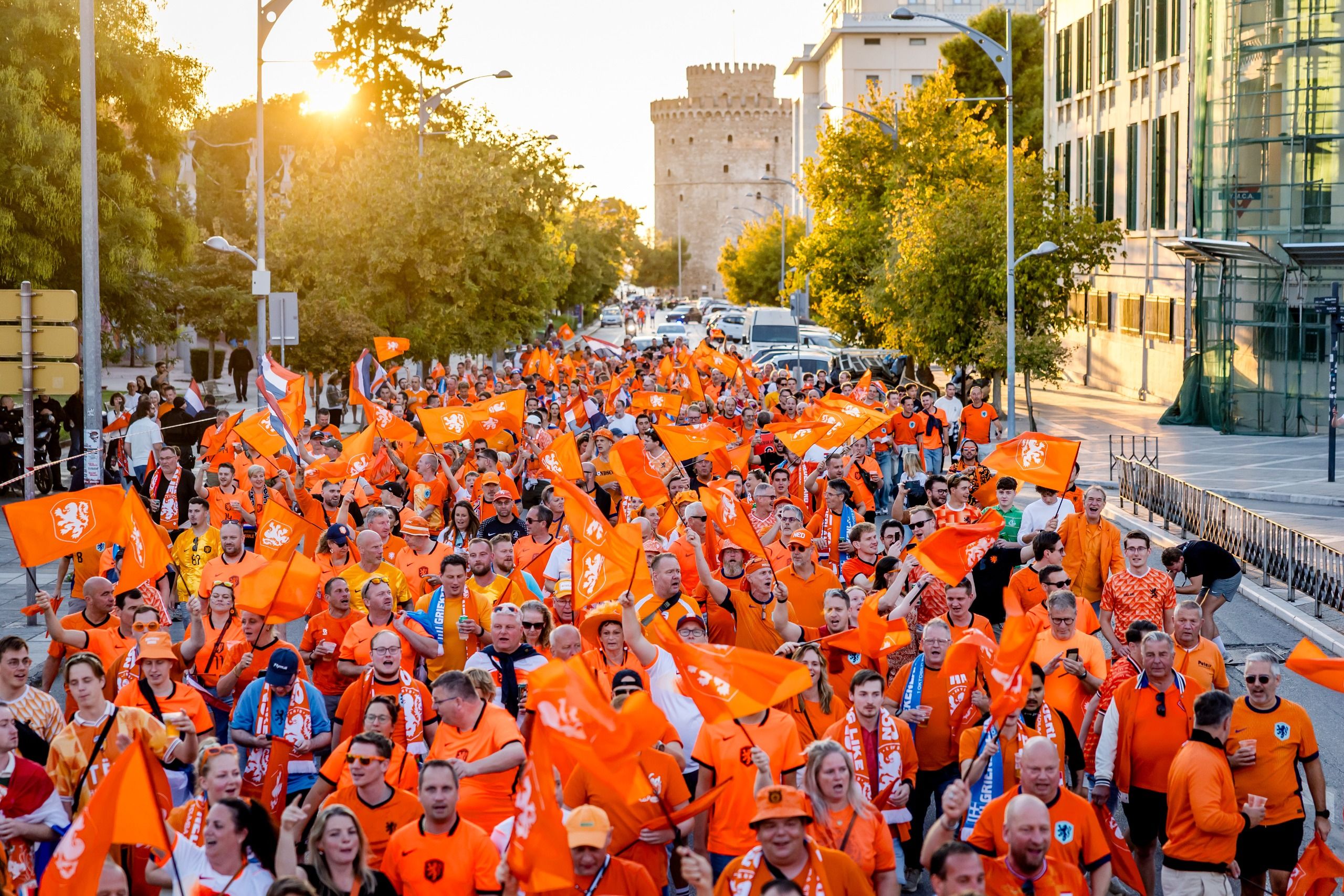
They will smash a couple of mid-tier nations 4-0 in heat-soaked American stadiums and dominate social media highlights. The orange shirts will fill the streets of Toronto, Los Angeles, and New York with unmatched party energy.
However, when the bracket shrinks to the last eight and the air gets thin, the old ghosts will step onto the pitch.
Without a ruthless goalscorer to finish half-chances and without the ice-cold nerve required for penalty shootouts, the dream will evaporate once again.
They are the most romantic team in world football history, and that is precisely why they break our hearts. Enjoy the show, buy the bright orange shirt, but keep your money away from the betting window.
The Dutch dream remains just that—a beautiful illusion.
Read Next
- FIFA's 48-Team World Cup Monster Was Pure Greed and Total Chaos
- Senegal turn to Patrick Vieira after World Cup meltdown and AFCON legal mess
- Baller League loses Sky Sports and faces a brutal YouTube reality check
- Hull City are back in the Premier League and nobody is ready for the chaos
- 🏆 World Cup 2026 — Full Coverage Hub
- 🇳🇱 Netherlands World Cup 2026 — Oranje Hub