
The Orlando Ghost and the Monterrey Heat
Pull up a stool, order a cold one, and let’s talk about a match thirty-two years in the making. On Monday, Monterrey is going to host a football match that is actually a family feud in disguise.
Morocco and the Netherlands face off in the last-32 of the World Cup. If you think this is just another generic knockout game between mid-tier nations, check your prescription.
This is a derby in the truest sense. It is played in the Mexican sun but forged on the concrete pitches of Amsterdam and Rotterdam. As The Guardian reported, this backstory gives Monday's game a layer of meaning that simply would not exist against any other opponent.
Thirty-two years ago, on June 29, 1994, these two countries met in the sweltering humidity of Orlando. The Dutch scraped a 2-1 victory that day. The world has spun a few million times since then.
Morocco is no longer the plucky underdog. The Atlas Lions are a genuine powerhouse, fresh off a historic semi-final run in Qatar four years ago.
They also hold the crown of Africa Cup of Nations champions. They do not fear the Oranje; they want to run them off the pitch.
There is poetry in the venue choice too. Monterrey is the exact city where Morocco played most of their matches in the 1986 World Cup. That was when they became the first African nation to ever survive the group stage.
The ghosts of 1986 are still whispering in the Mexican air. Morocco looks ready to answer them. But this story is not just about geographic coincidences or historical grudges.
It is about shared blood and street culture. It is about the migration patterns that turned a transatlantic World Cup fixture into a local neighborhood squabble.
The Cruyff Court Colonization in Reverse
To understand why this game feels so heavy, look at the team sheets. Moroccans began migrating to the Netherlands back in the 1960s to fill labor shortages. Now, their children and grandchildren are some of the most exciting football players on the planet.
But instead of wearing the famous orange jersey, a significant chunk of them chose the red and green of Morocco. It is a reverse colonization of the talent pool. This has left the Dutch football association, the KNVB, scratching their heads in absolute frustration.
Morocco’s squad features three prominent players who were born, raised, and trained in the Dutch youth system. Noussair Mazraoui, Sofyan Amrabat, and Anass Salah-Eddine are all Dutch by birth but Moroccan by choice.
Amrabat committed to the Atlas Lions all the way back at the Under-17 World Cup in 2013. Mazraoui joined at the under-20 level. Salah-Eddine is the latest recruit, pledging his allegiance just a couple of months before the most recent Africa Cup of Nations.
These are not backup players. They are the literal spine of this Moroccan team. Lose them, and the whole system collapses.
“The street football that Dutch and Moroccan kids once played against each other in Amsterdam’s neighbourhoods has, in a sense, arrived on the world stage,”says Hassan Bahara, a prominent Moroccan-Dutch author and journalist.
The concrete squares of Amsterdam-West are being transported to Monterrey. It is the ultimate validation of a style that has defined Dutch football for decades. The tight spaces, the nutmegs, the raw physicality, and the quick-thinking transitions are now the signature of both teams as they prepare for a highly anticipated knockout game.
The Bouaddi Factor and the AFCON Hangover
Let's talk about the football on the pitch. Both these sides finished the group stage with seven points. That is a serious haul that proves both belong in the conversation for the latter stages of this tournament.
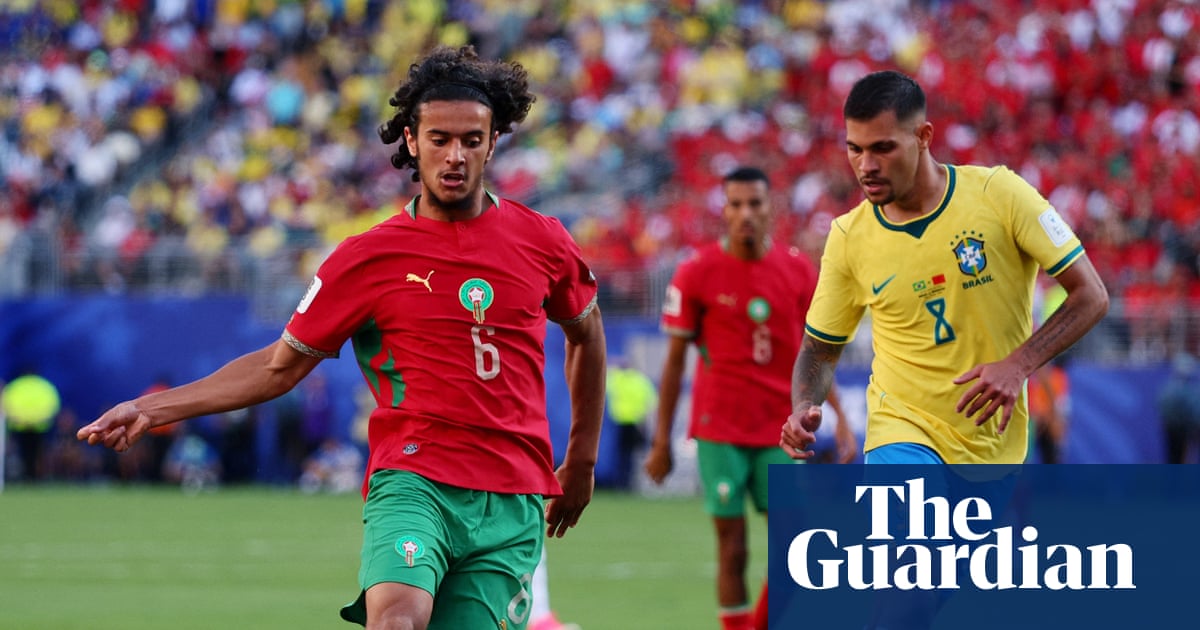
Morocco opened their campaign in Group C with a hard-fought 1-1 draw against Brazil. They matched the Selecao step for step in that match. The star of that game, and indeed their entire tournament, has been Ayyoub Bouaddi.
The 18-year-old midfielder has been a revelation. He plays with the poise of a thirty-year-old veteran and the energy of a teenager. He is the crown jewel of their midfield.
Yet, it is not all sunshine and roses in the Moroccan camp. While they won the Africa Cup of Nations earlier this year, they did so in a fashion that was both belated and highly controversial. The tournament was plagued by refereeing disputes and scheduling chaos.
That AFCON hangover is real. Their defensive solidity has looked shaky when pressed high. The Dutch, under Ronald Koeman, will certainly look to exploit those defensive gaps with their direct winger play.
The Netherlands team has their own flaws, of course. Their group stage run was far from convincing. They often relied on individual brilliance rather than cohesive team play.
The midfield partnership has looked slow to rotate. Their transitions are vulnerable to the kind of speed Morocco possesses. If Koeman thinks he can just park the bus and counter, he is in for a rude awakening.
Morocco has the technical quality to keep the ball and starve the Dutch of possession. They used this tactic to perfection against Brazil. It will be a chess match with baseball bats.
Wilders, Tabloids, and the Battle for the Streets
But we cannot talk about this match without addressing the social pressure cooker surrounding it. For the millions of Moroccan-Dutch citizens living in the Netherlands, this match is a double-edged sword. It is a celebration of their dual identity, but it is also a prime target for political opportunists.
The media environment in the Netherlands is already heating up. The far-right is salivating. It is an ugly backdrop to a beautiful game.
“The feeling is almost that of a derby,”says Jean-Paul Rison, a sports journalist based in Utrecht. He notes that while ninety-nine percent of the people will watch in total harmony, the political fringe is ready to pounce.
Far-right politicians like Geert Wilders have already started their campaign of provocation. Wilders has been posting AI-generated images on social media, clearly designed to stoke fear and anger against the Moroccan community. The tabloid media, led by De Telegraaf, is also expected to amplify any minor incident into a national crisis.
Bahara shares these deep concerns about the potential fallout.
“My concern is that certain right-wing media like De Telegraaf and far-right politicians like Geert Wilders will try to inflame tensions,”he warns. The hope is that the football will rise above the political noise.
When the referee blows the whistle in Monterrey, the focus must return to the pitch. It is a battle of styles, a clash of histories, and a celebration of a footballing bond that spans generations. Let the trolls talk; the real drama will be written in sweat and goals.
If you are looking for a sterile, corporate football match, go watch something else. Morocco and the Netherlands are going to give us ninety minutes of pure, unadulterated passion. Grab your popcorn, because this is going to be wild.
Read Next
- Why Ronald Koeman's Oranje are primed to run riot against Tunisia
- Why Alistair Brownlee's sports drink won't fix England's World Cup flaws
- Thomas Tuchel faces a right-back nightmare as England reach the knockouts
- Why DR Congo's low block is the ultimate test for Tuchel's England
- 🏆 World Cup 2026 — Full Coverage Hub
- 🇳🇱 Netherlands World Cup 2026 — Oranje Hub
- 🇲🇦 Morocco World Cup 2026 — Atlas Lions Hub
- 🇧🇷 WC 2026 Group C — Brazil, Morocco, Scotland, Haiti
- ⚽ Eredivisie 2025-26 — PSV, Ajax, Feyenoord Title Race Hub
.jpg)


