
Tariq Lamptey to QPR is the Championship's most fascinating tactical gamble
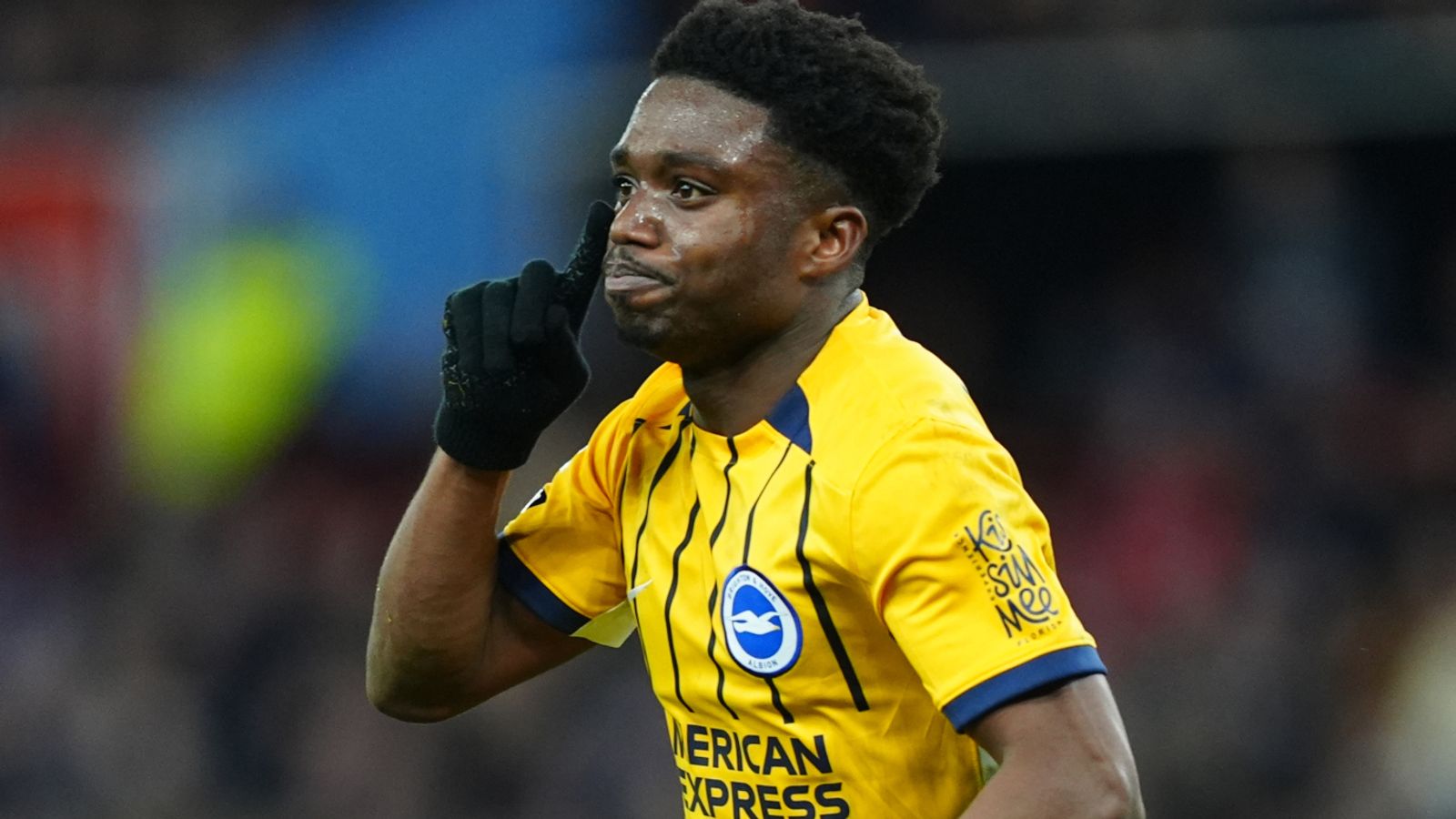
The high-wire tactical fit at Loftus Road
On July 21, 2026, Queens Park Rangers finalized one of the summer's most intriguing Championship moves. Tariq Lamptey arrived on a free transfer following his release from Fiorentina. It is a signing that redefines the tactical floor and ceiling of Loftus Road.
Lamptey's brief spell in Serie A was stalled by a severe ACL injury suffered in September 2025. He managed just two competitive appearances for Fiorentina before heading back to England. At 25, the Chelsea academy graduate returns to London needing both minutes and structural stability.
Julien Stéphan gains a full-back who distorts defensive lines through sheer speed. During his peak spell at Brighton, Lamptey ranked among Europe's most destructive wide ball-carriers. He averaged 4.12 progressive carries per 90 minutes, consistently forcing low blocks to collapse outward.
Modern Championship defenses thrive on narrow mid-blocks that compress space between the lines. They force opponents into slow, predictable horseshoe passing around the perimeter. Lamptey breaks that structural discipline by attacking the outside shoulder of the opposition full-back before the defensive block can shift.
He does not merely hold width; he weaponizes it. When receiving the ball isolated on the right touchline, his initial burst turns passive possession into instant panic. Defenders are forced to retreat five yards immediately to prevent being beaten on the inside track.
That immediate retreat creates a pocket of space right at the corner of the penalty box. A clever midfield operator can exploit that space for cutbacks or inverted runs. For QPR, that dynamic introduces an immediate tactical variation they completely lacked last season.
Stéphan's possession blueprint requires an explosive right-sided outlet. Without a genuine dribbling threat on the flank, opposition full-backs sit comfortably inside the defensive channel. Lamptey changes that geometry overnight.
As Sky Sports reported, Lamptey was convinced by the project outlined by Stéphan and CEO Christian Nourry. The long-term ambition is clear, but the immediate execution requires precise tactical recalibration.
QPR cannot simply drop Lamptey into a generic back four and expect Premier League production. His physical toolset requires a bespoke system designed to maximize his strengths while protecting his vulnerabilities. Stéphan's primary coaching challenge begins right here.
Build-up mechanics and wide isolation triggers
In possession, QPR build in a fluid 3-2-4-1 structure. The left-back tucks inside to join the central defenders, forming a resilient three-man rest defense. This asymmetrical shape frees the right-sided defender to push into the forward line as a wing-back.
This structural asymmetry suits Lamptey's natural instincts. He is not a traditional full-back who prefers early crossing from deep positions. He is a primary progressor who needs space to drive into the penalty box.
Watch how he manipulates the body shape of his marker. When the central midfielder receives on a half-turn, Lamptey holds a wide position on the chalk. The moment the ball travels across the pitch, he makes a sharp diagonal sprint toward the half-space.
This diagonal movement creates two distinct passing lanes. Either the midfielder slides a straight pass down the line, or they hit a crisp entry pass into the channel. In both scenarios, Lamptey receives the ball facing forward while moving at top speed.
Defending against an opponent moving at top speed inside the penalty area is a nightmare for Championship defenders. They cannot commit to a tackle without risking a foul or giving away a penalty. Lamptey drew 2.41 fouls per 90 minutes during his healthiest Premier League campaign.
Furthermore, his presence alters how opposition managers prepare their defensive setups. Teams can no longer tilt their defensive blocks heavily to the left side to overload QPR's playmakers. They must leave an isolated defender on the right, opening central spaces for midfielders to exploit.
According to recent BBC Sport tactical breakdown data, teams that maintain elite wide ball-carriers score 22% more goals from fast-break transitions. Lamptey gives QPR an instant transition threat whenever they win possession deep in their own half.
When QPR turn the ball over in midfield, Lamptey's transition speed is lethal. A two-pass combination releases him into 30 yards of vacant space before the opposition rest defense can organize. That speed forces backlines to drop deeper overall, creating more room for QPR's central playmakers.
However, successful execution depends heavily on passing quality from deep positions. If QPR's central defenders delay their distribution by half a second, the isolation window closes. Timing is everything in Stéphan's build-up mechanics.
The interaction between Lamptey and QPR's right-sided central midfielder will define their attacking output. That midfielder must act as a decoy, pulling opposition double-pivots away from the right channel. If they master that rotational movement, QPR will tear low blocks apart.
The defensive tax and structural exposure
No high-upside transfer comes without clear tactical trade-offs. Lamptey is an exceptional ball-carrier, but his defensive profile contains significant vulnerabilities that opponent analysts will target immediately.
His aerial duel metrics are a glaring weakness. Standing at 5-foot-4, Lamptey won just 31.4% of his aerial duels throughout his senior career. Opposition teams will target him relentlessly at the far post with deep back-column crosses.
When opposition teams win possession and launch long diagonal switches, Lamptey is naturally outmatched in physical duels. If a physical winger gets isolated against him on high balls, QPR will concede second-phase chances inside their own penalty box.
Positionally, Lamptey's aggressive attacking mindset leaves vast space behind him. When he drives deep into the opposition penalty box, he leaves a 40-yard corridor open down QPR's right flank. If the attack breaks down, QPR are immediately vulnerable to counter-attacks.
Last season, QPR struggled to defend wide transition channels when their full-backs were caught high upfield. Adding a player who spends 60% of his touch-time in the final third amplifies that structural exposure. Stéphan must build explicit defensive insurance into his system.
The defensive double-pivot must shift across quickly whenever possession is lost on the right wing. The right-sided center-back must be comfortable stepping out wide into the channel to delay the opposition's counter-attack. Without that immediate cover-shadow, QPR will concede high-xG opportunities.
There is also the matter of physical durability. Recovering from an ACL injury requires time to rebuild match fitness and sharp lateral movement. Neuromuscular confidence takes months to fully return after major knee surgery.
Can Lamptey sustain the intense physical demands of a 46-game Championship season? The Championship schedule is relentless, featuring Saturday-Tuesday turnarounds and grueling physical duels. Mismanaging his minutes early in the campaign could lead to secondary muscle injuries.
Stéphan cannot afford to rush Lamptey into consecutive 90-minute appearances immediately. Managing his workload through controlled 30-minute impact spells will be essential during the opening months of the season. Patience is required from both the coaching staff and the fans.
Moreover, Lamptey's crossing accuracy under pressure remains inconsistent. While his dribbling breaks defensive lines, his final ball often lacks precision. He completed only 21.3% of his open-play crosses at Brighton, frequently overhitting low deliveries into the block.
If he drives past his man only to hit the first defender with his cross, the attack breaks down uselessly. Improving his decision-making in the final third is a vital step in his tactical development. He must learn when to pull the ball back rather than blasting high crosses into overcrowded boxes.
A calculated gamble for QPR's long-term ceiling
Despite these tactical and physical risks, the logic behind Christian Nourry's recruitment strategy is sound. Championship clubs rarely have access to players with genuine Premier League speed and elite technical pedigree. Acquiring Lamptey without a transfer fee represents a calculated market inefficiency move.
If Lamptey regains 80% of his pre-injury physical burst, QPR possess a differential talent on the right flank. He provides a tactical solution against stubborn low blocks that frustrated QPR throughout their previous campaign. He turns passive possession into direct threat with a single touch.
For Stéphan, the challenge lies in balancing attacking freedom with structural security. Placing Lamptey in a flexible wing-back role within a three-at-the-back system minimizes his aerial exposure while maximizing his forward runs. It provides the ideal tactical safety net for his skillset.
Loftus Road has always responded to direct, fearless wingers who play with raw pace and verticality. Lamptey has the raw attributes to become an instant fan favorite in West London. His ability to eliminate defenders in one-on-one scenarios will elevate the entire stadium's energy.
The Championship is a grueling league where matches are often decided by individual moments of brilliance. Lamptey offers that rare spark of individual quality capable of turning tight draws into decisive victories. His arrival signals a bold statement of intent from QPR's leadership.
If QPR manage his physical recovery with discipline and cover his defensive deficiencies structurally, this signing could be remembered as the bargain of the summer. Tactical success in modern football is about maximizing high-value traits while masking inherent flaws. Stéphan now has the ultimate test piece to prove his tactical credentials.
The pitch will reveal the answer soon enough. When Lamptey takes his first touch on the Loftus Road touchline, QPR's new tactical chapter officially begins. All eyes will be on how quickly he can ignite their right flank.
Read Next
- Enzo Maresca is walking into a trap at Manchester City
- Nico Williams and the tactical evolution of Spain's 2026 squad
- Argentina's World Cup final collapse was written in the numbers
- Argentina's disgraceful final whistle brawl cannot hide their tactical defeat
- 🇬🇭 Ghana World Cup 2026 — Black Stars Hub
- 🏟 EFL Championship 2025-26 — Promotion Race & Play-Off Final Hub
G-Form Pro-S Blade Shin Guards
Ultra-low profile protection that feels invisible on the pitch.
Frequently Asked Questions
When did Tariq Lamptey join Queens Park Rangers?
Why was Tariq Lamptey's time at Fiorentina limited?
How does Tariq Lamptey impact defensive structures?
What is QPR's tactical formation when in possession?
What influenced Lamptey to sign with QPR?
More Coverage

Arsenal face Leeds with Arteta locked in and a point to prove
1 week, 5 days ago
Portugal are finally better off without Cristiano Ronaldo
2 weeks ago
Michael O'Neill's youth movement is ahead of schedule, but flaws remain
2 weeks ago
Arsenal's crisis deepens while London City redefine WSL pressing
2 weeks, 1 day ago
Renée Slegers is running out of time to fix Arsenal's tactical chaos
2 weeks, 1 day ago
Arsenal need an instant response against Leeds after the Brighton disaster
2 weeks, 1 day agoMore Analysis
Graham Alexander returning to Preston is classic Deepdale comfort food
3 weeks, 4 days ago
Top 10: Top Moments
3 weeks, 5 days ago
Tonda Eckert faces FA verdict as Southampton brace for Spygate ban
3 weeks, 5 days ago
Southampton face FA judgment as Tonda Eckert's Spygate saga hits D-Day
4 weeks, 1 day ago
John Mousinho threw his own fans under the bus and the internet is split
1 month, 1 week ago