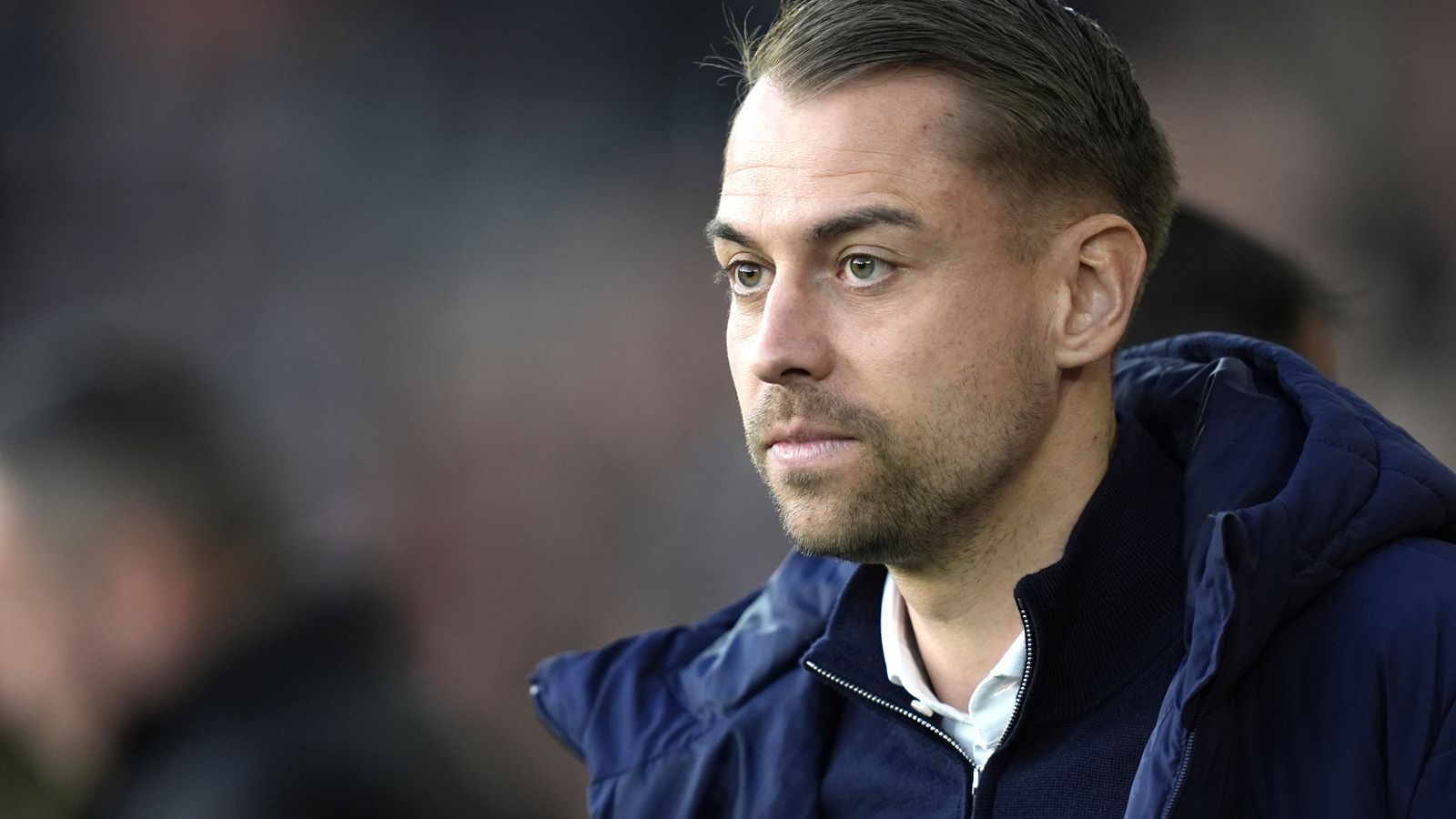
Southampton head coach Tonda Eckert sat across from a Football Association disciplinary panel for nearly four hours, outlining his defense in the final stage of English football's most bizarre surveillance scandal. More than four months after Spygate first erupted, the 33-year-old German manager faces a misconduct charge that could pull him off the touchline for months. As detailed in BBC Sport's report on the case, the long-awaited verdict is expected during the current international break.
The saga began when Eckert authorised an espionage scheme targeting three rival Championship clubs before last season's play-off semi-finals. Analysts gathered intelligence on Oxford United and Ipswich Town before the operation unravelled in spectacular fashion at Middlesbrough. A photographer caught junior analyst intern Will Salt crouching behind a tree outside Boro's training ground, camera in hand, trying to record tactical drills.
Eckert later offered a public apology in June after an independent commission concluded he had orchestrated a "contrived and determined plan" to spy on opponents. The manager claimed he did not realize his actions broke EFL regulations and maintained that the recorded footage provided zero competitive advantage. Yet, ignorance of the rulebook provides thin cover for sending junior staff members into bushes to film secret sessions.
Southampton ownership made the controversial choice to stand by Eckert despite intense public backlash. Chief executive Phil Parsons pointed to Eckert's impressive record after taking over a side languishing in 20th place and steering them into promotion contention. That loyalty, however, now faces its ultimate test as the FA decides whether to suspend the manager for the rest of the campaign.
Eckert described his four-hour testimony as a chance to lay out every detail transparently for compliance officers. He insists he feels no emotional hostility toward the governing body and simply wants a resolution so the club can focus on football. Still, until the FA delivers its ruling, Saints remain trapped in a state of self-inflicted limbo.
Expulsion, points deductions, and the £200m promotion cost
The financial and competitive damage already inflicted on Southampton makes Spygate one of the costliest scandals in Championship history. The EFL panel took drastic action prior to last May's play-off final by expelling Saints from the fixture entirely. That single administrative hammer blow wiped out a potential Premier League promotion opportunity valued at £200m.
The penalties did not stop at expulsion from the play-offs. Authorities also hit Southampton with a 4 points deduction for the 2026-27 campaign. On the pitch, Eckert's side has compiled enough wins to sit fourth in the standings, but the penalty drags them down to 13th position.
In his first extensive interview on the matter, Parsons made no secret of his frustration regarding the severity of past punishments. He argued that missing out on top-flight revenue while shouldering massive legal fees has punished local businesses as much as the club itself. From the executive suite's perspective, Saints have already paid a historic price for Eckert's tactical overreach.
"We don't know what the FA will actually hand out. It could be a long ban. It could be a short ban. It could be a suspended sentence." — Phil Parsons
Yet, Parsons' complaints about "very grey" regulations fall flat when measured against the details of the investigation. Spying on opponents from behind training ground perimeters is not a technical ambiguity; it is a blatant breach of sporting ethics. Middlesbrough head of football Kieran Scott publicly called Southampton's conduct "disgusting," reflecting the widespread anger across the league.
The EFL commission was equally scathing, describing Southampton's methods as a "particularly deplorable approach." The panel highlighted how senior figures placed junior employees under intense pressure to perform covert fieldwork. That detail makes the club's attempt to portray itself as a victim particularly hard to swallow for neutral observers.
Surprisingly, Southampton chose to retain and promote Salt, the intern caught in the Middlesbrough trees. The club handed him a permanent role as an analyst in their academy, claiming they needed to support a young employee thrust into a media storm. While supporting a junior worker is commendable, rewarding someone involved in an illegal spying operation leaves a confusing precedent inside St Mary's.
Rival supporters have not let Saints forget the controversy. During matches, opposing fans routinely serenade Southampton with chants mocking their surveillance habits. Even Wrexham's owners took a shot, releasing a biting social media advertisement referencing Spygate just days before their recent encounter.
Comparing FIFA's Olympic drone ban with Premier League fines
To gauge what Eckert might face from the FA panel, legal observers are pointing to recent international disciplinary cases. During the 2024 Paris Olympics, FIFA handed Canada women's head coach Bev Priestman a full one-year ban from all football activities. Her staff was caught using a drone to film New Zealand's private training sessions, establishing a strict precedent against covert observation.
Parsons insists that the Canadian Olympic case involved fundamentally different circumstances and should not dictate Eckert's outcome. However, both incidents share the same core offense: using unauthorized surveillance to gain a competitive edge. If the FA mirrors FIFA's hardline stance, Eckert's contract, which expires at the end of the season, may run out before he can return to the bench.
Southampton officials prefer to compare their situation to financial misconduct cases in the top flight. Earlier this year, the Premier League and FA fined Chelsea a combined £10m for secret payments totaling £47m made during Roman Abramovich's tenure. Saints executives argue that losing out on £200m dwarfed Chelsea's monetary fine, creating a glaring imbalance in how football authorities enforce rules.
That argument overlooks the fundamental difference between financial accounting breaches and pitch-level cheating. While financial improprieties require accounting adjustments and fines, active espionage strikes directly at the integrity of competition. Football authorities view covert spying as a toxic threat that requires clear deterrence, regardless of how much money a club claims to have lost.
As updates on Sky Sports' EFL coverage show, the Championship division remains tense while waiting for formal ruling documents. Parsons confirmed the club has not approached alternative managerial candidates yet, but admitted board members must prepare for every scenario. An appeal remains likely if the FA hands down an extended suspension.
"It's been a big, big punishment. Absolutely unheard of in the history of sports." — Tonda Eckert
A South Coast derby deadline and Southampton's siege mentality
The timing of the FA hearing provides a brief operational window for Southampton to prepare for whatever decision comes next. With league fixtures paused for the international break, Eckert can work with his squad without the immediate distraction of matchday preparation. That calm will not last long, as the Championship schedule presents a daunting return fixture.
Southampton return to action on October 11 when they travel to face fierce local rivals Portsmouth in a high-stakes South Coast derby. Facing Fratton Park's hostile atmosphere is tough enough under normal circumstances; doing so while learning your manager's fate adds immense psychological pressure. If Eckert is banned, assistant coaches will have to take charge of one of the club's most important games of the year.
To combat the ongoing noise, Eckert and Parsons have deliberately fostered a "siege mentality" inside the dressing room. Players have bonded over the perception that governing bodies and rival clubs are lined up against them. That us-against-the-world attitude helped Saints overcome the four-point penalty on the pitch, but maintaining that edge over a grueling 46-game season is exhausting.
Eckert's tactical acumen is undeniable; taking Southampton from 20th to play-off contention last season proved his coaching ability. Yet tactical talent cannot excuse managerial recklessness. By authorizing covert spying operations, Eckert gambled with the club's financial stability, reputation, and promotion status, leaving Saints to suffer the consequences.
Southampton fans have largely supported Eckert through the ordeal, appreciating his honesty and on-field progress. But fan support will not sway an independent FA commission tasked with enforcing discipline. If the ruling goes against him, Saints will find out whether their newfound unity can survive without the man who created the crisis in the first place.
Read Next
- Ruben Amorim's Milan Confession Proves He Wasted 14 Months at Man United
- Pochettino's Roster Revolution: Analyzing Scuffed #727 & USMNT Youth Shift
- FIFA turned the 2026 World Cup into a 28-hour junk food infomercial
- Anatomy of an Upset: Brighton's Masterclass, Arteta's Crisis, and the Premier League Meta
- 🏟 EFL Championship 2025-26 — Promotion Race & Play-Off Final Hub