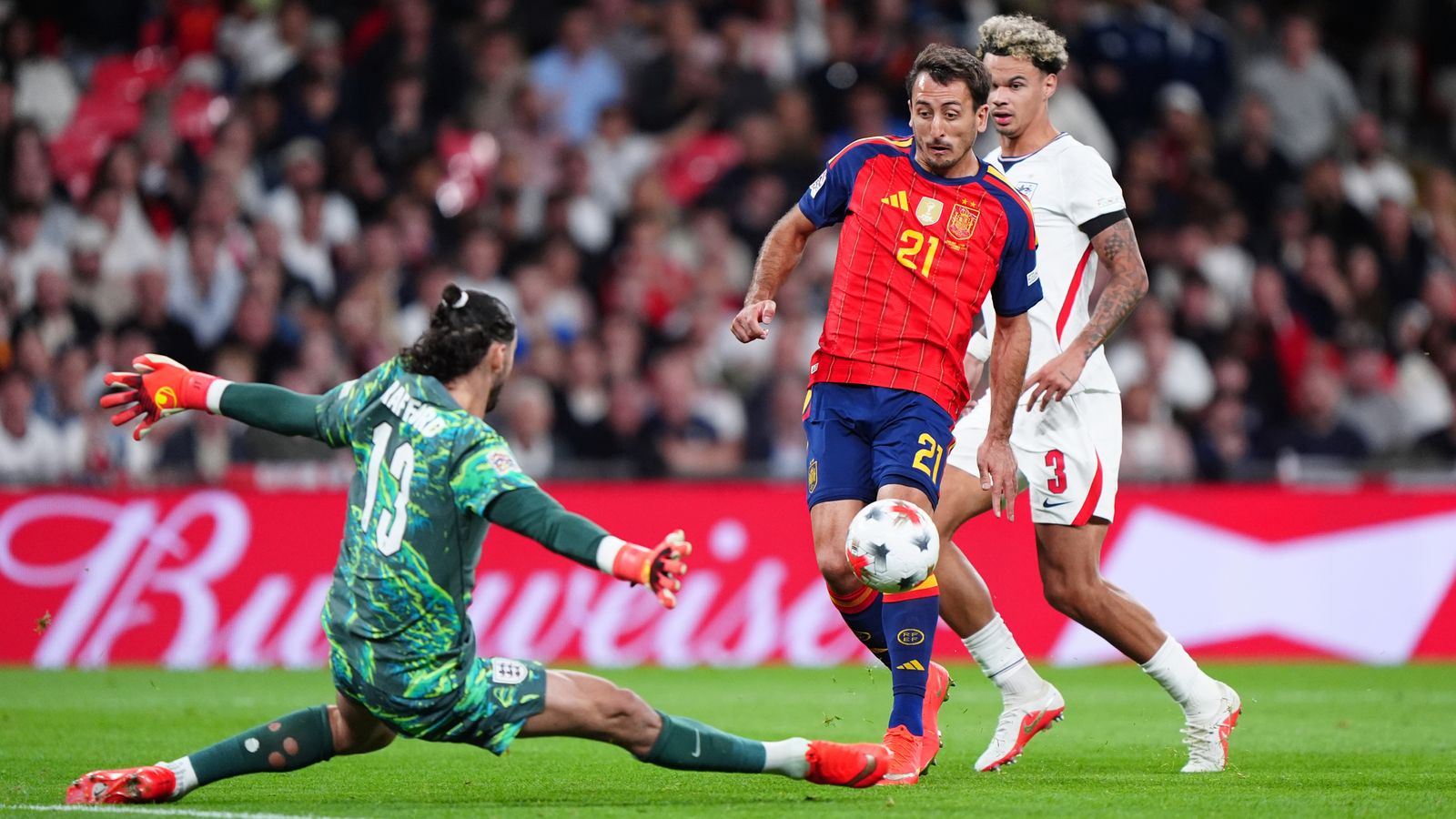
The illusion of competitiveness in the 2026 final
When the final whistle blew, the raw numbers told a far harsher truth than the scoreline suggested. Spain did not merely win the World Cup final with a 2-0 victory; they executed a total tactical suppression of Argentina. The statistical disparity across 90 minutes exposed a deep gulf in physical intensity, technical precision, and structural discipline.
That disconnect between perception and reality reached peak absurdity off the pitch. A flight filled with Argentine supporters erupted in wild celebration when an airline pilot falsely announced over the intercom that Argentina had won the match, as The Mirror reported. The cabin cheered for an imaginary trophy, but on the pitch in North America, Lionel Scaloni's side spent the evening trapped in a tactical nightmare.
Spain controlled 64.2% of total possession and generated an Expected Goals (xG) figure of 2.41 to 0.68. That 1.73 xG differential represents the widest margin recorded in a men's World Cup final since Opta detailed tracking began in 1966. Argentina failed to register a single shot on target after the 34th minute, turning the final hour of the match into a procession.
Scaloni aligned his team in a nominal 4-4-2 shape out of possession, intending to clog the central channels. Yet Spain's fluid positional rotations continuously dragged Argentina's central midfielders out of position. What was meant to be a compact mid-block quickly dissolved into a passive, low-block shell.
The pressing breakdown: How Spain dismantled Scaloni's block
Argentina entered the final boasting a tournament-average Passes per Defensive Action (PPDA) of 8.4 across their previous six matches. That aggressive front-foot pressing had been their defensive identity throughout the knockout stages. Against Spain, however, Argentina's PPDA ballooned to 16.7.
This dramatic doubling of their PPDA metric signaled a complete collapse of Argentina's defensive intensity. Instead of harassing Spain's center-backs during build-up play, Argentina conceded space and retreated into their own defensive third. Spain completed 512 passes in the opposition half compared to Argentina's meager 141 passes.
Spain identified Argentina's right flank as their primary pressing trigger during early phase build-ups. Whenever right-back Nahuel Molina received the ball under pressure, Spain executed a synchronized three-man trap featuring Rodri, Pedri, and Marc Cucurella. Molina surrendered possession 14 times before being substituted in the 72nd minute, completing just 18 of his 29 attempted passes for a dismal 62% pass accuracy rate.
High-turnover metrics further illustrated Spain's territorial dominance throughout the match. Spain logged 12 high ball recoveries within 40 meters of Argentina's goal line, resulting directly in 5 shots. Argentina produced zero high-turnover shots across the entire match, illustrating their complete inability to disrupt Spain's initial build-up phase.
Defensive line depth proved equally telling when evaluating Scaloni's reactive adjustments. Argentina's average defensive line height dropped by 14.3 meters compared to their semi-final performance against Croatia. By retreating so deep, Argentina surrendered the central zone entirely, allowing Spain's playmakers total freedom to control the tempo.
Field tilt and structural asymmetry
Field tilt provides an accurate measurement of territorial dominance by calculating the percentage of final-third passes belonging to each team. Spain captured a staggering 71.3% field tilt during the final. Argentina spent nearly three-quarters of the match pinned inside their own defensive quarter.
Central midfield battles dictated the flow of play from the opening kickoff. Spain won 62% of ground duels (31 out of 50 across the pitch), with Rodri and Pedri sweeping up second balls effortlessly. Argentina's central midfield trio won just 12 of their 31 contested duels, repeatedly arriving late to loose balls and committing 16 fouls in dangerous areas.
Expected Threat (xT) metrics highlighted Spain's superiority in ball progression through central corridors. Spain generated 2.18 xT through open-play passing combinations, consistently penetrating Argentina's lines with incisive vertical balls. Argentina generated a paltry 0.44 xT, relying almost exclusively on speculative long balls that yielded no sustained pressure.
The transition void and shot selection
When Argentina occasionally regained possession, their transition play proved non-existent. Scaloni attempted to bypass Spain's counter-press by instructing his defenders to play direct vertical passes into the channels for Julian Alvarez. However, Spain's rest defense structure snuffed out every counter-attacking attempt before it reached the final third.
Spain's center-back pairing won 8 out of 9 aerial duels against Argentina's forward line, preventing long-ball outlets from taking hold. Furthermore, Argentina completed only 2 passes into the Spanish 18-yard box during the entire match. Spain completed 14 passes into Argentina's penalty area, maintaining constant threat.
Shot selection data reveals the sheer desperation of Argentina's attacking output. Argentina's average shot distance was 22.4 meters from goal, forcing low-probability strikes from well outside the box. Conversely, Spain averaged a potent shot distance of 11.2 meters, consistently engineering high-percentage scoring opportunities inside the penalty area.
Expected goals per shot (xG/shot) further underlines the contrast in quality. Spain averaged 0.17 xG per shot attempt, reflecting clear-cut chances created inside the box. Argentina managed a meager 0.06 xG per shot, highlighting how effectively Spain forced them into low-reward attempts from distance.
Why Argentina's physical decay proved fatal
Argentina's physical degradation was visible when comparing their match metrics to earlier rounds in the tournament. Across their three group matches, Argentina covered an average distance of 114.2 kilometers as a team per 90 minutes. In the final, that distance dropped to 106.8 kilometers, representing a severe 6.5% decline in total workload.
Sprint statistics provided even starker evidence of athletic exhaustion within Scaloni's squad. Argentina registered 142 high-intensity sprints in their quarter-final victory, 128 in the semi-final, and only 94 in the final. They simply lacked the engine required to close down Spain's rapid, short-passing triangles in high-temperature conditions.
Scaloni deserves severe criticism for his game management and stubborn refusal to adapt. Despite his pressing metrics deteriorating rapidly by the 30th minute mark, Scaloni delayed his first substitution until the 72nd minute. By the time fresh legs entered the pitch, Spain held a commanding lead and were idling in low-risk possession loops.
Scaloni also failed to adjust to Spain's inverted full-backs, leaving his wide midfielders caught in two minds between tracking overlapping runs or narrowing to help the central pivot. That tactical indecision left huge pockets of space open in the half-spaces, which Spain exploited ruthlessly throughout both halves.
In addition, Argentina's reliance on aging starters backfired under Spain's sustained tempo. The average age of Argentina's starting outfield players was 29.4 years, compared to Spain's energetic 25.1 years. By the hour mark, Argentina's pressing traps were non-existent, leaving wide gaps between their midfield and defensive lines.
Spain's World Cup victory was not the result of fortunate bounces or individual moments of luck. It was a cold, data-backed masterclass that systematically dismantled a fatigued defending champion. The numbers tell the definitive story of the 2026 final: a tactical triumph for Spain, and a harsh lesson in structural decay for Argentina.
Read Next
- Argentina's disgraceful final whistle brawl cannot hide their tactical defeat
- Messi's desperate final act in Argentina's World Cup exit
- Spain's 2026 World Cup win wasn't just flair, it was arithmetic
- Top 10: argentina
- 🏆 World Cup 2026 — Full Coverage Hub
- 🇦🇷 Argentina World Cup 2026 — Defending Champions Hub
- 🏆 World Cup 2026 Final — MetLife Stadium Hub