A Fortress Built Ahead of Schedule
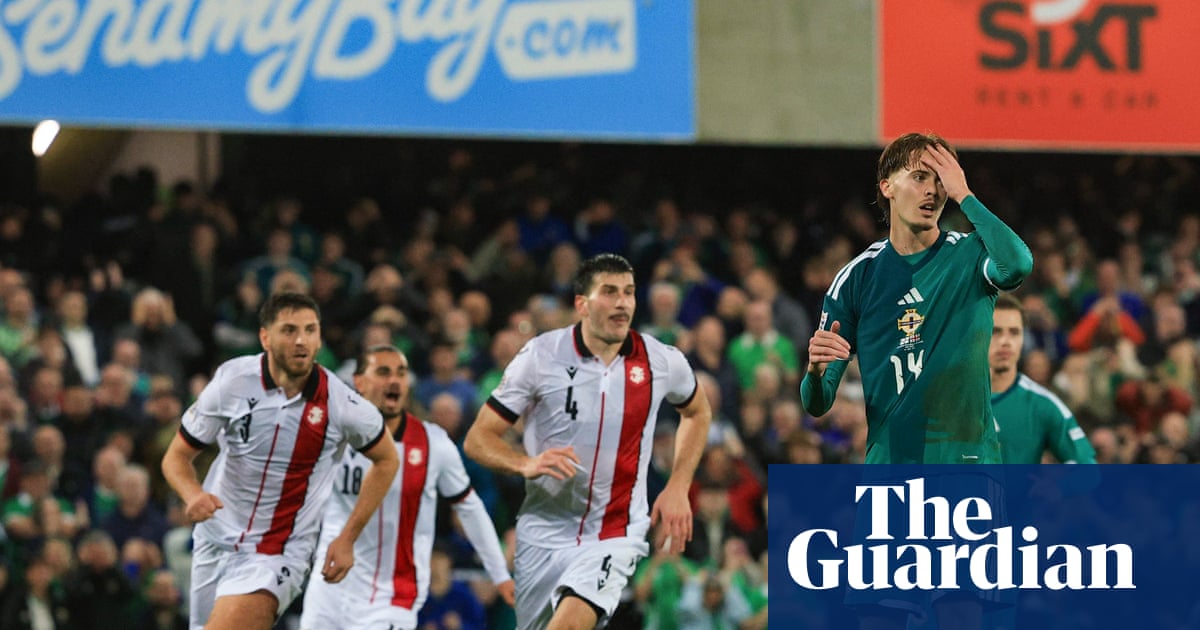
Frustration can be a strange indicator of progress. When the final whistle blew and Northern Ireland were held to a scoreless draw by Georgia, irritation echoed around the stadium. Fans wanted three points, players dropped to the turf in disappointment, and Michael O'Neill stood on the touchline wearing a grimace.
That annoyance tells you everything about how expectations have shifted. This is a young squad originally projected to peak around qualification for Euro 2028. Instead, they find themselves sitting unbeaten atop their Nations League group after a grueling four-game stretch. They have accomplished this while maintaining a defensive record that boasts zero goals conceded across the entire section.
Consider the age profile of the defensive structure O'Neill deployed against Georgia. With Conor Bradley still out through long-term injury, the oldest starter in the backline was 28-year-old Ciaron Brown. Lining up alongside Brown were two central defenders aged 20 and 21. Ruairi McConville, at just 20, played with the calmness of a seasoned veteran.
Behind them, Pierce Charles gave another mature performance between the posts. The Manchester-born keeper was called into action when Zuriko Davitashvili found space for a sharp effort in the first half. Charles reacted instantly, pushing the effort away to maintain parity. Later, he calmly collected a tricky deflected strike from substitute Giorgi Tsitaishvili.
This defensive resilience is not an accident of fate. O'Neill has drilled his three-man backline to maintain strict distances between the central block and the wing-backs. They step up in unison, forcing opposing forwards into congested wide areas. Georgia arrived with reputation, yet spent most of the evening passing harmlessly across their own back four.
Midfield Control and the Bloodline Pipeline
The structural engine of this team sits in midfield, where Shea Charles captained the side with authority. He broke up transition attempts and dictated the tempo of play. Next to him, Ethan Galbraith demonstrated why his reputation as a Belfast prodigy took him to Manchester United years ago. Now playing his club football for Stoke City in the Championship, Galbraith showed press resistance that constantly unpicked Georgia’s defensive shape.
Galbraith’s sharp reading of the match was obvious from the opening minutes. He seized on sloppy passes from Georgia's midfield, instantly turning defense into forward movement. His ability to wriggle out of tight spaces gave Northern Ireland an early territorial advantage. When he limped off with 25 minutes remaining, O'Neill lost his primary tactical link between midfield and attack.
The squad assembly highlights Northern Ireland’s meticulous recruitment strategy. Isaac Price, born in Yorkshire, epitomizes the diligence of tracking bloodline eligibility. Beside him, both Pierce and Shea Charles represent the same deliberate scouting network. This is not a thrown-together group of convenience, but a cohesive unit bound by clear tactical roles.
Width was consistently provided by Trai Hume on the right channel. Hume repeatedly overlapped to drag Georgia’s left-back out of position. His precise line-breaking passes created the host nation's cleanest opening of the first half. Justin Devenny added set-piece quality, whipping in dangerous deliveries from wide areas.
Devenny's curling cross midway through the first period almost broke the deadlock. McConville rose highest in the box to connect with a firm header. Giorgi Mamardashvili looked far from convincing as he parried the ball away. It was a warning shot that Georgia struggled to answer for long spells.
Hesitation and the Missing Clinical Edge
For all the structural elegance, Northern Ireland remain flawed in the penalty area. Control without penetration is a dangerous game at international level. O'Neill's side produced moments of real promise, only to collapse when the final action demanded conviction.
The clearest evidence of this weakness arrived four minutes before the interval. Hume cut Georgia open with a brilliant vertical pass that sent Patrick Kelly racing through on goal. Kelly had time, space, and options. Yet he froze, caught in two minds between taking the shot himself or squaring for a teammate. The hesitation allowed Georgia’s recovery defenders to close the angle, snuffing out the chance entirely.
That moment highlighted a recurring problem. Good teams punish indecision in the final third. Northern Ireland also wasted a series of first-half set plays, failing to test a nervous Mamardashvili. Isaac Price curled a free-kick into the wrong side of the side-netting when a cross into the six-yard box was required.
The contrast between midfield build-up and penalty-box sharp practice became glaring as fatigue set in. As exhaustion mounted after four matches in quick succession, O'Neill turned to 36-year-old Stevenage striker Josh Magennis to introduce physical presence. Magennis, earning his 93rd cap, immediately offered a target in the air, but the substitution emphasized the lack of youthful depth up front.
Magennis almost won it late on when he forced Mamardashvili into a sharp reflex save. The resulting goalmouth scramble saw the crossbar struck before Budu Zivzivadze kicked McConville in the face. The referee missed the initial foul, but VAR intervened to award a clear penalty in the 87th minute.
Up stepped Isaac Price with the match on his boot. His spot-kick was struck low but lacked power and corner placement. Mamardashvili guessed correctly, diving to his right to push it away. Shea Charles picked up the rebound but curled his effort wide. The chance to seal a famous victory evaporated in seconds.
Shackling Kvaratskhelia and the Road Ahead
Neutralizing world-class talent requires discipline, and Northern Ireland executed that game plan against Khvicha Kvaratskhelia for almost eighty minutes. The Paris Saint-Germain attacker was starved of space. Early in the match, Kvaratskhelia looked disengaged, gifting possession directly to Galbraith and later to Jamie Donley.
Yet elite players require only half a second to alter a narrative. In the 79th minute, Kvaratskhelia finally found space between Northern Ireland's midfield and defensive lines. He drove forward from deep and unleashed a 20-yard strike that whistled barely an inch over Charles' crossbar. It was a stark reminder of the razor-thin margins at this level.
According to The Guardian's match report, the disappointment at full-time was a direct result of how far this group has come in a short window. Following Friday’s impressive 3-0 win over Ukraine and an earlier away triumph in Georgia, O'Neill has established a defensive platform capable of competing in League B.
However, topping the group will require solving the scoring problem against low-block defenses. Teams will now treat Northern Ireland with respect rather than underestimating their youth. When opponents sit deep and surrender possession, O'Neill's side must find a way to translate dominance into goals.
Tactical maturity comes in stages. Phase one was fixing the defense and building physical endurance. Phase two is finding the killer instinct in front of goal. Until Kelly, Price, and the forward line learn to decide faster in the box, tight matches will continue to slip into frustrating draws.
Expect O'Neill to stick with his 3-5-2 system in the next fixture window, but look for tactical adjustments in how the central midfielders make late runs. If Galbraith recovers quickly from his injury, his pairing with Shea Charles gives Northern Ireland the composure needed to control games away from home. Expect a tight 1-0 win in their next outing as this young core learns the brutal lessons of international football.
Read Next
- Northern Ireland bullied Hungary in Belfast, but missed chances cost them
- Northern Ireland Turning Into 2004 Chelsea Is Peak Nations League
- Why Scotland will finally break their goal drought in Skopje tonight
- Dominik Szoboszlai targeted in Belfast as Hungary's Nations League slumps
- Northern Ireland at the 2026 World Cup — Full Coverage Hub