The Illusion of Control
England progressed to the World Cup quarter-finals by recording just 31% possession against Mexico, their lowest share of the ball in any World Cup match since 1966. Meanwhile, the United States dominated possession at 51.5% in Seattle, only to be systematically dismantled 4-1 by Belgium.
These two Round of 16 matches demonstrate that holding the ball in knockout football is often a trap. Tactical control is no longer about who has the ball, but who controls the spaces where the ball is allowed to go.
This statistical divergence highlights a growing trend in the modern game. Teams that surrender the ball and defend the central channels are finding more success than those that cycle possession without penetration. The Americans went home with a high passing accuracy, while the English moved on with a defensive blueprint.
Let us analyze the numbers behind these contrasting approaches. The data reveals a clear picture of why possession without purpose is a fatal flaw in tournament play.
The Seattle Post-Mortem
Passive Possession and Transition Disasters
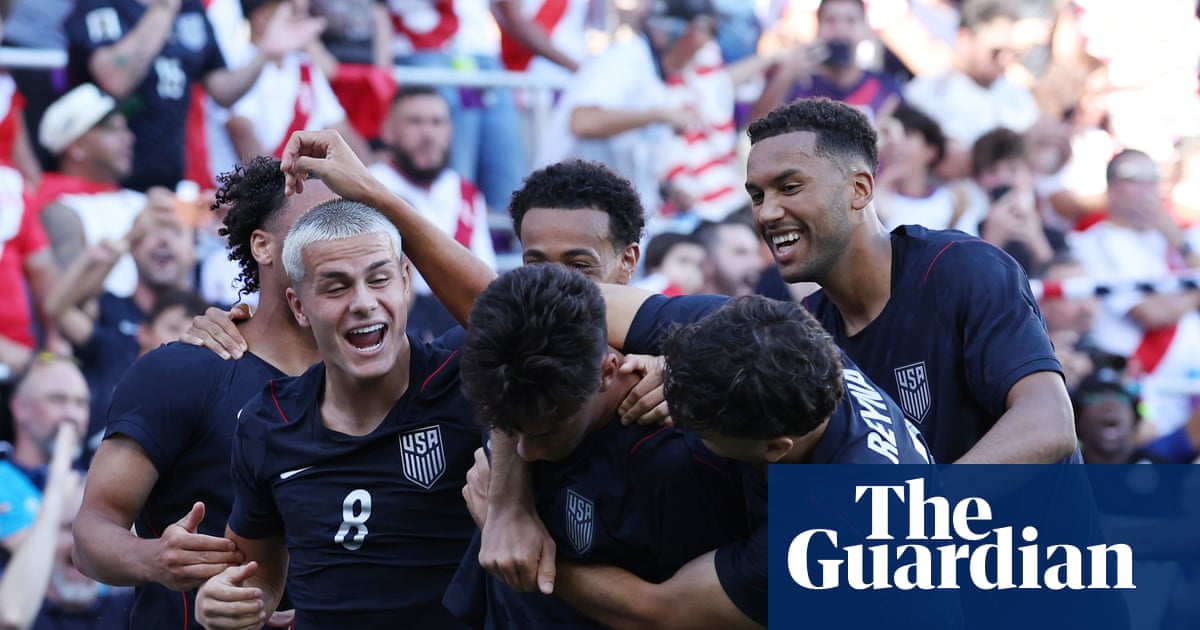
In Seattle, Gregg Berhalter's side finished their match against Belgium with 51.5% possession. They completed 394 accurate passes compared to Belgium's 379.
Yet, the final scoreline was a brutal 4-1 defeat. The possession statistic was a mask for structural passivity.
The Americans circulated the ball in a predictable, low-tempo U-shape. Tim Ream and Chris Richards completed 114 passes between themselves, rarely attempting to break Belgium's compact mid-block. While the U.S. cycled the ball harmlessly, Belgium's double pivot of Amadou Onana and Orel Mangala waited for pressing triggers.
When the turnovers occurred, the U.S. defensive transition was non-existent. Belgium took 21 shots, with 10 hitting the target.
By contrast, the U.S. generated only 12 shots, many of them desperate efforts from distance. The average shot distance for the U.S. was 22.4 yards, illustrating their inability to enter the penalty area.
Charles De Ketelaere was the chief beneficiary of this tactical chaos. He scored in the 9th minute, exploiting a massive gap between Ream and left-back Antonee Robinson.
Malik Tillman briefly equalized in the 31st minute with a spectacular direct free kick. However, the American defensive line collapsed again just two minutes later, allowing De Ketelaere to strike again in the 33rd minute.
The Balogun Circus
This tactical collapse was compounded by a pre-match political circus. Following Folarin Balogun's red card against Bosnia and Herzegovina, U.S. President Donald Trump contacted FIFA President Gianni Infantino to demand a review.
FIFA subsequently invoked Article 27 of the Disciplinary Code to suspend Balogun's ban. This bizarre intervention, as detailed in The Guardian's coverage of the Trump-FIFA controversy, proved to be a costly distraction.
Balogun started but looked entirely isolated. He completed just 2 passes in the final third and registered zero goals.
He was physically neutralized by Wout Faes and Zeno Debast, only registering two late shots that were easily saved by Thibaut Courtois. The political maneuvering yielded nothing on the pitch.
Berhalter's decision to start Balogun over Haji Wright—who had scored two goals in the group stage—disrupted the tactical cohesion of the front three. The U.S. front three registered a combined 0.12 expected goals from open play. This lack of threat allowed Belgium's wing-backs, Timothy Castagne and Arthur Theate, to push high and pin the American wingers back.
Belgium's clinical execution exposed the U.S. high line. Hans Vanaken scored a third in the 57th minute after a bad turnover by Weston McKennie.
Romelu Lukaku added a fourth in the 93rd minute to seal the U.S. exit. The Americans had the ball, but Belgium had the goals.
The Azteca Resistance
Surrendering the Ball to Save the Tournament
One day prior to the Seattle disaster, England faced their own tactical crisis. Playing in the altitude of Mexico City against a hostile crowd, Gareth Southgate's side faced a rampant Mexico team. Instead of fighting for possession, England surrendered it, finishing with only 31% of the ball.
This was a historic low, but it was accompanied by extreme efficiency. England took only 6 shots in the entire match. Remarkably, 5 of those shots were on target, and 3 ended up in the back of the net. Mexico, meanwhile, took 20 shots but hit the target only 5 times.
Jude Bellingham ran the show in the first half. He scored two goals in quick succession, finding the net in the 36th and 38th minutes. Both goals came from rapid vertical transitions, exploiting the space behind Mexico's aggressive wing-backs.
Harry Kane then converted a penalty in the 60th minute to give England a 3-1 lead. This penalty came after a rare English foray into the Mexican box resulted in a handball by Johan Vásquez.
The Red Card Collapse
The tactical plan was disrupted when Jarell Quansah was sent off in the 54th minute. A high-foot challenge, spotted by Video Review, reduced England to 10 men. Southgate immediately ordered his team into a deep low block.
Mexico dominated the remaining minutes, finishing with 59% possession. Julián Quiñones had scored in the 42nd minute, and Raúl Jiménez converted a penalty in the 69th minute to make it 3-2.
The final 20 minutes were a relentless assault. England's midfield completed only 14 passes in the final third during the second half, demonstrating how deep they were pinned during the dramatic Round of 16 clash that sent England into the quarter-finals.
It was ugly. It was chaotic. But it worked.
The Geometry of the Low Block
Why 49 Clearances Matter
To survive the Mexican onslaught, England recorded 49 clearances. This was their highest clearance count in a World Cup match without extra time since 1990. John Stones and Marc Guéhi led the defensive line, accounting for 28 of those clearances.
This is the key difference between England and the United States. England accepted their defensive duties and contracted their lines. They allowed Mexico to have the ball on the flanks but packed the penalty area. This forced Mexico into low-quality shots from distance.
The statistical evidence supports this. Mexico's 19 non-penalty shots yielded a cumulative expected goals (xG) value of just 1.09. That is an average of 0.057 xG per shot. Mexico had the ball, but they were forced to shoot through a forest of English defenders.
By contrast, the U.S. defensive shape was porous. They allowed Belgium's attackers to receive the ball inside their box 28 times.
England, playing with 10 men, allowed Mexico only 15 entries into their penalty area. England controlled the space; the U.S. merely watched the ball.
The Midfield Void
However, Southgate's survivalist tactics are a dangerous gamble. England's midfield was completely bypassed in the second half, with Declan Rice and Kobbie Mainoo struggling to retain possession.
England's midfield completed just 58% of their passes in the second half. Declan Rice, who usually registers a 91% pass completion rate, dropped to a career-low 68% as the Mexican press choked his passing lanes. Kobbie Mainoo was equally isolated, winning only 2 of his 9 ground duels. Without the ball, England were a defensive machine; with it, they were a headless panic.
Against a team with superior technical quality, like Norway in the quarter-finals, this passive defensive structure will be tested. Allowing Martin Ødegaard and Erling Haaland that much space would be suicidal.
England's lack of ball retention is a major red flag. They cannot rely on Stones making a dozen clearances every match if they hope to lift the trophy.
Tactical Realism Beats Vanity
The Round of 16 highlighted a fundamental truth about modern tournament football. Possession is a vanity metric unless it is accompanied by penetration and structure. The United States went home with the ball, while England advanced without it.
In knockout football, defensive organization and clinical execution will always triumph over empty possession. England must find more midfield control, but their defensive pragmatism has kept them alive. The tournament now moves to the quarter-finals, where tactical realism will be tested once again.
Read Next
- US Soccer got exactly what it deserved in Seattle
- Why the USMNT is falling into a tactical trap against Belgium
- USA and Belgium face a high-stakes tactical chess match in Seattle
- Spain face a tactical puzzle in Los Angeles after Dallas drama
- 🏆 World Cup 2026 — Full Coverage Hub
- 🏴 England World Cup 2026 — Three Lions Hub
- 🇧🇪 Belgium World Cup 2026 — Red Devils Hub