Haiti drew an average crowd of 297 fans across two Nations League qualifiers at Sabina Park in Kingston. On November 14, when they face the United States in their Concacaf Nations League quarter-final first leg, they will walk out at Nu Stadium in Miami before 26,700 supporters. Surrendering nominal home status to stage a knockout tie inside your opponent's borders reads like an immediate tactical forfeit, yet the underlying numbers reveal a ruthless calculation.
As detailed in The Guardian's report on the relocation, Concacaf ratified this decision under an "exceptional hosting arrangement." Haiti have spent over five years searching for temporary shelters across the Caribbean basin due to domestic strife. By shifting this marquee match directly to South Florida, the Haitian federation traded illusory territorial neutrality for massive demographic backing.
Modern international football places heavy physical demands on underdog squads who defend without the ball for sixty-five minutes. Running twenty kilometers in low-block defensive shifts without crowd energy is an exhausting mental grind. A packed stadium transforms tired legs into coordinated defensive lines.
The 297-Fan Ghost Town vs The Miami Megaphone
The attendance delta between Jamaica and Florida is not a marginal upgrade; it represents an eighty-nine-fold surge in live backing. Sabina Park served as Jamaica's primary national football venue until 1962 before reverting primarily to international cricket. Playing football on a cavernous cricket oval with 297 dispersed spectators creates an eerie training-ground dynamic that strips away competitive tension.
Nu Stadium offers the exact opposite sensory profile. When Haiti faced Peru in a pre-World Cup friendly in South Florida, 26,700 fans packed the stands to capacity. For ninety minutes, the Grenadiers operated inside a cauldron that rattled an established South American opponent.
The demographic foundation beneath this relocation is massive. Nearly half a million Haitians and their direct descendants live concentrated across South Florida. That community provides Haiti with an authentic home terrace that simply cannot be replicated anywhere in the West Indies.
Prior to landing in Kingston, Haiti cycled through three separate Caribbean hosting sites during their preliminary World Cup qualifying fixtures:
- Stade Guillermo Prospero Trinidad in Oranjestad, Aruba
- Ergilio Hato Stadium in Willemstad, Curaçao
- Wildey Turf in Bridgetown, Barbados
None of those neutral venues generated ticket revenue or vocal disruption. Shifting north to Florida instantly solves the financial and emotional voids that have plagued Haiti throughout their prolonged displacement.
Sixty-Four Months of Nomadic Exile
Haiti have not played an international match within their own borders since July 2021. That marks sixty-four months of forced wandering across neutral stadiums. The United Nations estimates that violent armed gangs now control 90% of Port-au-Prince, including the Sylvio Cator national stadium itself.
Exile forces national teams to endure relentless logistical drag. When the Nations League fixture schedule placed both Curaçao and Jamaica at home on the exact same matchday as Haiti, the Grenadiers were displaced without recourse. Haiti lost their preferred secondary venue and wound up relegated to Sabina Park's uneven surface.
Nomadic schedules destroy tactical continuity. Coaching staffs lose preparation sessions to international connections, customs delays, and substandard municipal pitches. Miami eliminates that travel nightmare by providing premier training facilities, direct flights, and top-tier sports science support.
The contrast between Port-au-Prince's paralyzed streets and South Florida's athletic complexes could not be starker. For five years, Haitian players have absorbed grim news from home while attempting to execute complex defensive structures in empty foreign grounds. Having an entire metropolitan area singing their national anthem provides rare stability.
The 21st-Century Gulf: Six Matches, Zero Victories
Nostalgia often clouds the tactical reality of this North American matchup. Haitian supporters frequently reminisce about 1969, when Haiti famously eliminated the United States to end their World Cup qualifying journey. That historic victory remains immortalized in Caribbean football lore, but modern data shows the gap has widened substantially.
In the twenty-first century, Haiti have managed zero wins from six matches against the United States. The Americans captured four victories, while the remaining two contests concluded in draws. Across those six encounters, the United States consistently controlled territorial possession and restricted Haiti to isolated transitional moments.
Surrendering geographical sovereignty against an opponent you haven't beaten in twenty-five years is a massive sporting gamble. The United States national team avoids international customs, passport checkpoints, and unfamiliar regional pitch quirks. American players step off domestic charter flights directly into a climate and stadium environment they navigate regularly.
Concacaf underdogs typically survive by weaponizing environmental friction against superior opponents. Heavy tropical humidity, choppy turf, and hostile central Caribbean travel usually degrade American passing tempo. By inviting the Americans to play in Miami, Haiti forfeit those traditional equalizers in exchange for vocal support from the stands.
World Cup Deficits and Diaspora Support
Haiti's journey to the 2026 World Cup proved both their remarkable defensive resilience and their severe technical limitations. It marked their first World Cup appearance in 52 years, ending a frustrating absence that stretched back to West Germany in 1974. Yet once the tournament kicked off, the mathematical ledger turned unforgiving.
The Grenadiers dropped all three group stage matches, suffering consecutive defeats against Morocco, Scotland, and Brazil. They conceded significant spatial advantages between their defensive and midfield lines, leaving their central defenders isolated against elite ball carriers. Playing against world-class opposition exposed structural flaws that regional qualifiers had previously masked.
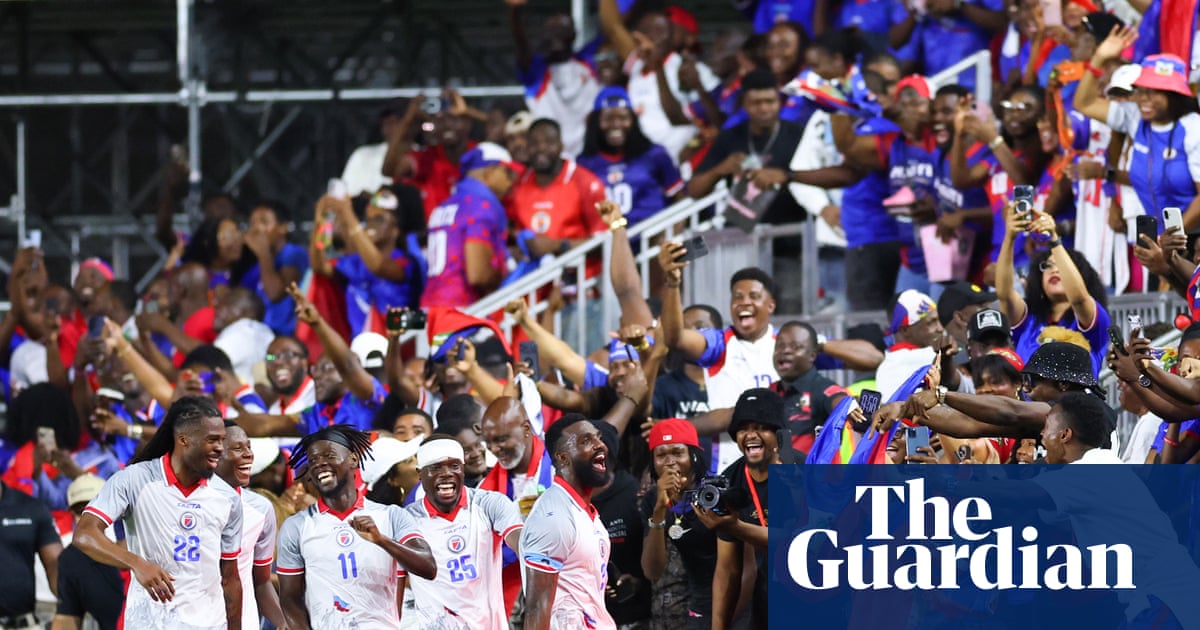
Yet the tournament also revealed the latent strength of the Haitian diaspora. Haitian fans turned out in enormous numbers at matches staged in Massachusetts, Philadelphia, and Atlanta, out-singing rival fanbases regardless of scorelines. That sustained enthusiasm confirmed that the national team commands fierce loyalty whenever it plays within American borders.
The tactical lessons from those three World Cup losses must inform Haiti's setup on November 14. If Haiti deploy a high defensive line against the United States in Miami, American wingers will exploit the space behind their full-backs. The Grenadiers need a compact 5-4-1 block that absorbs pressure and attacks through rapid vertical counters into open channels.
Concacaf's Precedent and the Ethics of Competitive Balance
From a purely administrative standpoint, Concacaf's ruling represents an unusual concession to geopolitical reality. The governing confederation stipulated that Haiti must request separate approval each time they attempt to host fixtures in "the territory of its opponents." As reported by The Guardian, it marks a radical departure from traditional neutral-site bookings in the Caribbean.
Concacaf also made sure to maintain executive authority over the arrangement. Official statements clarified that the hosting protocol "may be amended or withdrawn by the Concacaf Council at any time." That caveat ensures the confederation can revoke permissions if other member nations protest compromised sporting integrity.
The governing body explicitly linked the measure to ongoing territorial violence:
"This flexibility will remain in place for as long as the security situation in Haiti persists."
That statement acknowledges the harsh truth that Haitian football cannot return to Port-au-Prince anytime soon.
Still, purists will rightfully point out the structural flaw of this series. The United States now effectively receives two home legs in a critical two-match quarter-final. Even with 26,700 Haitian fans making noise, the Americans operate entirely within their own domestic borders, surrounded by familiar medical, lodging, and logistical amenities.
If Haiti secure a draw or snatch a single-goal victory on November 14, the Miami experiment will be hailed as a tactical and promotional masterpiece. But if the Americans dominate possession and coast to a comfortable two-goal win, the federation's choice will face harsh scrutiny. In international tournament football, the spreadsheets provide context, but the final scoreline remains the only currency that matters.