The Physical Deficit in Atlanta
Playing 120 minutes of knockout football in the stifling mid-summer heat of the United States leaves a deep scar on any squad. When Argentina and Egypt walk out at the Atlanta Stadium on Tuesday, they will do so with heavy legs and battered lungs. Both sides were pushed to their absolute limits in the Round of 32, leaving their tactical frameworks compromised by physical exhaustion.
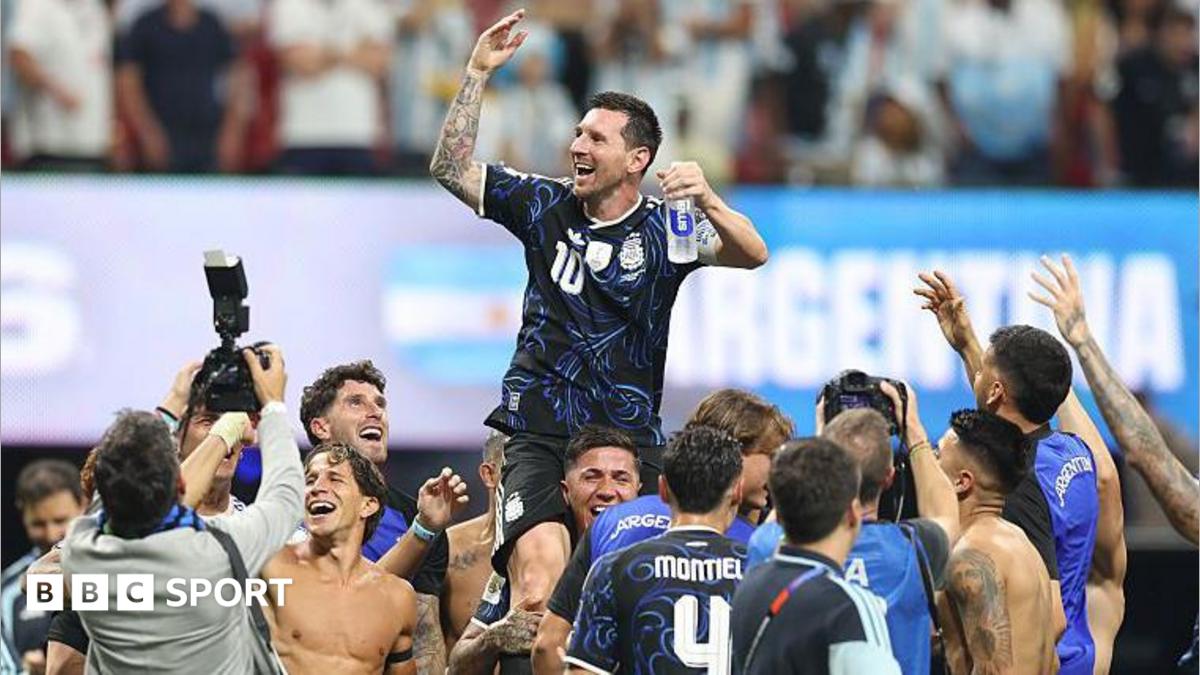
Lionel Scaloni's men survived a chaotic 3-2 extra-time thriller against Cape Verde in Miami, as detailed in Sky Sports' live coverage of the match. The defending champions looked sluggish in possession and alarmingly vulnerable during defensive transitions, eventually needing a Cristian Romero header to secure passage after Lionel Messi had scored his 20th career World Cup goal. It was a match that exposed the structural cracks in Argentina's aging core, particularly in how they manage defensive depth when their press fails.
Egypt's path was no less grueling. Hossam Hassan’s team fought through a tense draw with Australia in Arlington, prevailing 4-2 in a penalty shootout after the match finished 1-1 in regulation time. The Pharaohs showed immense defensive discipline but were forced to run themselves into the turf to protect their shape during those extra-time minutes.
Argentina's Half-Space Conundrum
With only four days of recovery, the team that manages their energy reserves more efficiently will dictate the terms of this encounter. Argentina's primary tactical issue lies in the asymmetry of their defensive organization, which is directly related to Lionel Messi's role. At 39, Messi is naturally exempt from defensive duties, occupying a passive role when Argentina lose the ball.
This forces Rodrigo De Paul into a double shift, covering the right flank while trying to squeeze the central spaces. In the game against Cape Verde, this space became a playground for opposing wingers. The Cape Verde transition repeatedly targeted the space behind Nicolas Tagliafico, dragging Lisandro Martinez out of the central channel.
This tactical defect was highlighted during the Round of 32 live commentary when Sidny Lopes Cabral scored Cape Verde's second goal, capitalizing on a disorganized defensive line that lacked midfield cover. Scaloni must find a way to plug these gaps, or Mohamed Salah will exploit them ruthlessly. Egypt will watch that tape with immense interest.
Hassan's defensive block is designed to constrict space in the middle third and force opponents wide, where they can be doubled. If Argentina cannot move the ball quickly through Alexis Mac Allister, they will find themselves passing laterally into a defensive trap. The key for Scaloni will be whether Giovani Lo Celso or Julian Alvarez can start to provide the vertical runs that Messi no longer makes.
Hassan's Block and the Salah Outlet
Egypt under Hossam Hassan do not pretend to be protagonists. They operate in a compact mid-block that can drop into a deep low block if the opponent pinches their full-backs high. Marwan Attia and Hamdy Fathy provide the physical shield in front of the center-backs, offering little space between the lines.
This compact defensive structure was highly effective against Australia, restricting them to low-value shots from distance. When Egypt win the ball, the transition plan is simple: find Mohamed Salah. Salah remains one of the most dangerous transition threats in world football, capable of running off the shoulder of the last defender.
Against Australia, his gravity drew two defenders, opening up spaces for Emam Ashour to advance from deep. Ashour's opening goal came from exactly this pattern, showing how quickly Egypt can exploit a disjointed opposition midfield. However, Egypt have a clear quality deficit once you look past their superstar captain.
If Salah is isolated or double-teamed, their attacking threat drops off precipitously. Their lack of alternative creative outlets makes them highly predictable, and an own goal by Hany showed they can lose focus under sustained pressure. If Argentina can isolate Salah, Egypt will find it incredibly difficult to transition out of their own half.
The Key Matchups on the Grass
Romero's Rustiness vs. Salah's Speed
Cristian Romero returned to the starting lineup against Cape Verde after recovering from a knee injury that kept him out of the final group match. While he scored the winning header, his defensive performance was far from his usual dominant standard. He looked heavy in his recovery runs and committed three fouls in dangerous areas, suggesting his knee is still not at 100 percent.
Salah will test Romero's lateral agility immediately, attempting to isolate him in one-on-one situations on the counter. If Lisandro Martinez is forced to cover for Tagliafico's forward runs, Romero will be left on an island against Egypt's captain. This is a matchup that could decide the tie.
Romero must show better positioning than he did in Miami, where he was repeatedly caught ball-watching on Cape Verde's crosses. His inability to track back quickly was a primary vulnerability that Cape Verde exposed with direct diagonal balls. If Scaloni does not provide defensive cover on the right channel, Salah will run riot in the spaces behind Romero.
The Battle for the Midfield Transition
The central zone in Atlanta will be a battlefield of contrasting styles. Enzo Fernandez will attempt to control the tempo from deep, but he will face immediate pressure from Egypt's central trio of Attia, Fathy, and Ashour. If Enzo is denied time on the ball, Argentina's build-up will stall, forcing Messi to drop deeper to retrieve it.
When Messi drops deep, Argentina lose their main threat in the final third, playing directly into Egypt's hands. De Paul's energy will be vital in matching Ashour's box-to-box runs. Ashour has been Egypt's breakout performer of the tournament, driving the team forward with powerful runs through the center.
De Paul must balance his defensive duties on the right with the necessity of tracking Ashour's vertical movements. This will not be a free-flowing football match, as tactical fouling will disrupt any rhythm. The physical exhaustion of both squads, combined with Egypt's defensive posture, points to a low-scoring, cagey affair.
A Tactical Prediction
Hassan will instruct his team to sit deep, minimize risks, and wait for Argentina's tired midfielders to make a mistake in possession. Egypt proved against Australia that they are comfortable defending for long stretches and possess the composure to win on penalties. Argentina have the superior technical quality, but they must find a way to break through without exposing their defense.
Scaloni's squad is experienced, but their physical drop-off in extra time against Cape Verde was alarming. If they cannot score early, the anxiety will build, and the spaces behind their full-backs will grow larger. It will require another moment of individual genius to decide this contest.
Expect Egypt to frustrate Argentina for the first hour, keeping the score level. However, Argentina's bench depth will ultimately make the difference. The introduction of Lautaro Martinez or Julian Alvarez in the second half will inject the necessary energy to break Egypt's resistance.
Argentina will edge this by a single goal, avoiding extra time but finishing the match on their knees. My prediction is a hard-fought 1-0 victory for Argentina, with a late goal unlocking a stubborn Egyptian defense. This tactical victory will send Scaloni's men through to the quarter-finals, but it will raise more questions than answers.
Read Next
- Argentina's walking icon and Cape Verde's three-point miracle collide in Miami
- Why Argentina are in for a tactical nightmare against Cape Verde
- How a tactical breakdown and a concussion farce saved the Socceroos
- Why Egypt will edge a physical Dallas dogfight against Australia
- 🏆 World Cup 2026 — Full Coverage Hub
- 🇦🇷 Argentina World Cup 2026 — Defending Champions Hub
- 🇪🇬 Egypt World Cup 2026 — Salah's Last Dance