The 20-Minute Blitz in Singapore
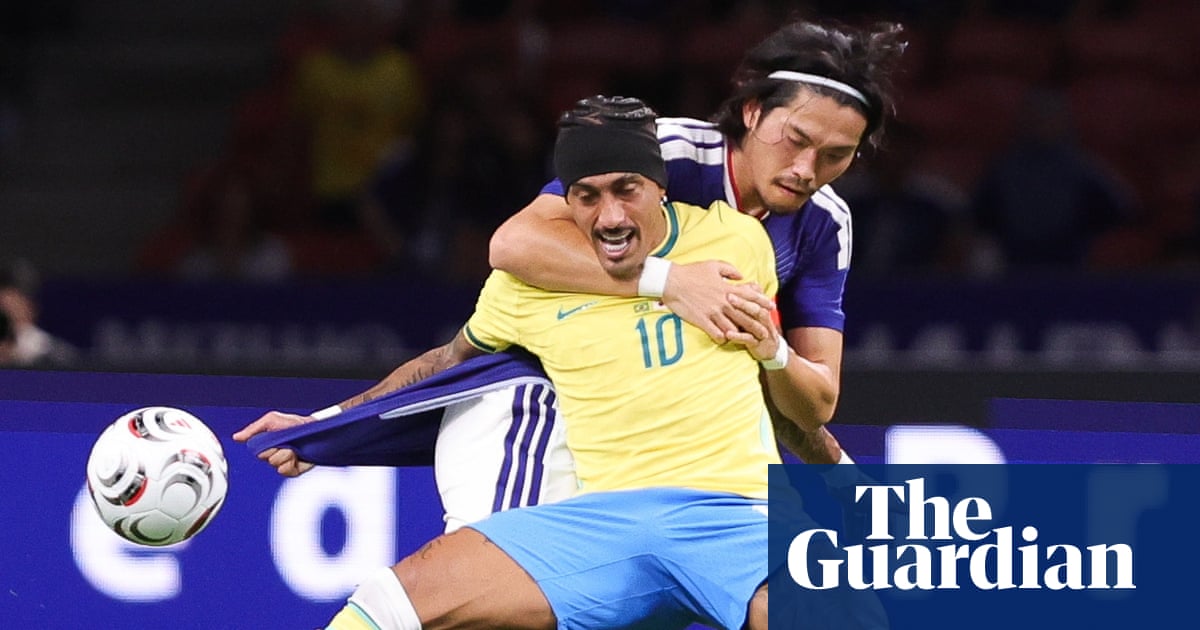
Japan needed just 20 minutes to expose the structural cracks in Brazil's defensive shape. Takefusa Kubo and Keito Nakamura sliced through the lines before the match had settled into any discernible rhythm. It was a brutal opening spell.
Brazil looked startled by the speed of Japan's transitional breaks. Carlo Ancelotti set his backline high, yet the spacing between the central defenders and the midfield pivot was far too wide. Japan exploited those gaps instantly.
Vinicius Junior offered Brazil an individual lifeline in the 33rd minute to cut the deficit to one. His driving run from the left wing bypassed two defenders, reminding everyone that elite individual skill can mask tactical deficiencies. For an hour, that individual brilliance seemed sufficient.
The turning point arrived in the second half through a sequence of tactical adjustments. Ancelotti chose to withdraw Barcelona winger Raphinha after 71 minutes to alter his attacking angles. Four minutes later, in the 75th minute, Vinicius scored his second of the match to level the score at 2-2.
Then the tactical structure completely evaporated. In stoppage time, Tatsuhiro Sakamoto pounced on another transition to deliver a dramatic winner for Japan, securing an extraordinary 3-2 victory. Brazil had clawed back from two goals down, only to implode when match management mattered most.
Discipline Evaporates on the Touchline
The aftermath revealed a troubling loss of composure from Brazil's leadership. Raphinha, already sitting on the bench following his substitution, received a straight red card for his furious protests against Sakamoto's goal. Ancelotti was also shown red by the referee moments later.
Elite teams cannot lose their heads over a friendly result. Brazil finished the match without their head coach on the touchline and their star winger banished to the tunnel. As reported by The Guardian, the chaotic ending turned an exhibition into a full-blown crisis meeting.
Conceding inside 20 minutes is a tactical failure. Conceding in stoppage time after leveling the match is an operational failure. Leaving the stadium with two red cards on the bench is pure indiscipline.
Five Minutes of Madness at La Bombonera
Across the globe in Buenos Aires, Argentina suffered their own defensive unraveling. Facing neighbours Uruguay in an international friendly, Lionel Scaloni's team controlled possession throughout the first half without threatening. Then the second half started.
Within a span of five minutes, Argentina threw away the contest. Central defender Leonardo Balerdi turned the ball into his own net in the 48th minute under heavy pressure. Before Argentina could reset their defensive shape, Maximiliano Araújo struck in the 53rd minute to double Uruguay's advantage.
Diego Forlán, in his early days coaching Uruguay, had identified a clear pressing trigger. Uruguay pressed aggressively the moment Argentina's centre-backs received back-passes facing their own goal. That pressure yielded two quick goals and broke Argentina's rhythm entirely.
Julián Álvarez halved the deficit in the 73rd minute with a sharp finish. Yet that strike was Argentina's only genuine moment of penalty-box penetration. Uruguay closed out the 2-1 win with compact low-block defending.
The Empty Number Ten and the Stagnant Final Third
This match marked Argentina's first fixture since Lionel Messi's international retirement in early October at 39 years of age. Without their talisman, the Argentine attack looked devoid of vertical ideas. The ball circulated horizontally without incision.
Scaloni made a symbolic decision before kickoff by assigning the number 10 shirt to nobody. He stated clearly that he has not yet selected a successor and preferred to leave the jersey vacant. That vacant shirt felt like an accurate representation of the team's creative void on the pitch.
Neither Nicolás Paz nor Thiago Almada could generate the central penetration required against Forlán's structured lines. Both players drifted wide, crowding the spaces Álvarez wanted to attack. When the creative burden fell on their shoulders, the tempo slowed to a crawl.
The statistical disconnect between territory and quality was striking. Argentina dominated the ball in Uruguay's half, yet produced just one goal from open play over 90 minutes. Possession without penetration is merely defensive rest for the opposition.
A Counterintuitive Turn in the Stands
The most surprising data point of Friday night did not appear on the scoreboard. La Bombonera, historically one of world football's most guaranteed sellouts, failed to reach capacity. For a clásico rioplatense in Buenos Aires, empty seats are an astonishing anomaly.
Supporters in attendance still wore the albiceleste jersey bearing Messi's name and number. Even Scaloni signing a long-term contract extension through 2030 earlier this week could not generate the customary ticket rush. The public reaction was quiet, skeptical, and detached.
Fans know when an era has ended. The aura that carried Argentina to international dominance has dissipated, leaving behind a transitional squad still trying to establish an attacking identity. As noted in The Guardian's coverage, Scaloni has years of job security, but the tactical problems will not wait.
Comparing the Two Failures
Comparing Brazil's breakdown with Argentina's defeat highlights two distinct tactical vulnerabilities across South America's traditional giants:
- Brazil possess explosive attacking firepower through Vinicius Junior, who scored twice at the 33rd and 75th minute marks, but suffer from catastrophic transition defense that yielded goals at 20 and 90+ minutes.
- Argentina retain structural defensive possession but lack any dynamic spark in the final third, collapsing during a five-minute interval between the 48th and 53rd minutes while failing to replace central progression.
- Both coaching setups failed basic game management tests, with Ancelotti's bench collecting two red cards while Scaloni watched his side sleepwalk through the opening ten minutes of the second half.
Brazil's issue is chaos. Argentina's issue is stagnation. Both profiles are fatal against disciplined international opponents.
Tactical Forecast: What Tuesday Demands
Both teams have an immediate opportunity to respond on Tuesday, but the margins for error are shrinking. Argentina travel to Córdoba to host Costa Rica, where Scaloni must rethink his central midfield dynamics. Leaving the number 10 vacant is fine as a gesture, but leaving the central zone vacant is tactical suicide.
Paz and Almada need clearer instructions on who occupies the half-spaces. If Álvarez remains isolated between opposing centre-backs, Argentina will struggle against any well-drilled defensive shape. Costa Rica will have watched Uruguay's compact block and taken detailed notes.
Uruguay, meanwhile, return home to host the Dominican Republic full of confidence under Forlán. Their quick strikes at 48 and 53 minutes showed an opportunistic sharpness that will serve them well throughout the international cycle. Forlán outmaneuvered Scaloni in every tactical phase.
For Brazil, the problems run deeper than tactical adjustments. Ancelotti must restore discipline to a squad that allowed frustration to boil over into touchline ejections in a friendly match. When your veteran leaders lose composure after conceding a stoppage-time winner, the tactical structure is not the only thing breaking down.
International football offers very few windows to fix structural errors. Brazil conceded twice inside 20 minutes before losing their heads, while Argentina surrendered two goals in five minutes and generated nothing for 70 minutes. Reputation alone will not win matches in the post-Messi reality.
Read Next
- Argentina are finding out how brutal the post-Messi era will be
- England face Spain in Madrid with everything on the line for Tuchel
- Why the Dutch will punish Klopp's reckless German press in Berlin
- Lee Carsley has an England U21 problem after painful Portugal loss
- 🇦🇷 Argentina World Cup 2026 — Defending Champions Hub
- 🇧🇷 Brazil World Cup 2026 — A Seleção Hub