The MetLife Prize
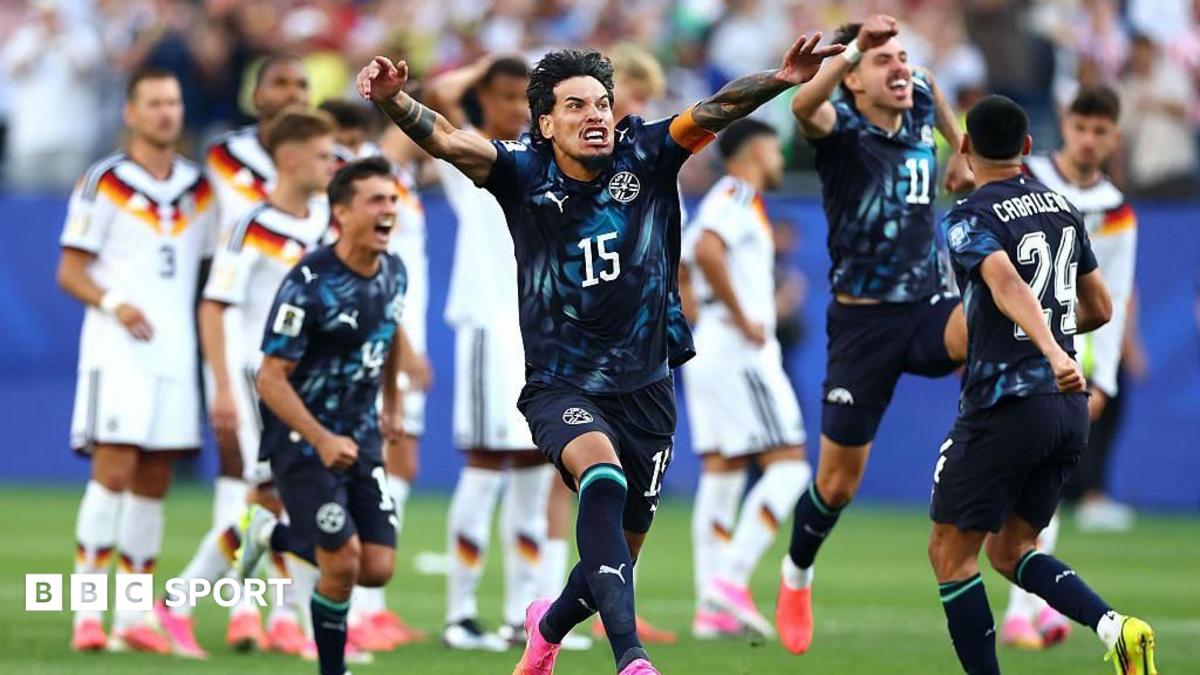
The bracket has cracked wide open in New Jersey. Yesterday, Foxborough witnessed the unthinkable as Gustavo Alfaro's Paraguay dragged Germany into sudden death, securing a seismic shootout victory. Suddenly, the winner of tonight's Round of 32 clash between France and Sweden at MetLife Stadium does not face a dreaded quarter-final collision with the four-time world champions.
Instead, the prize is a date with the tournament's most stubborn low block. It is a golden ticket, but only for the side that can solve the tactical puzzle in front of them tonight.
Paraguay's defensive masterclass yesterday was a blueprint in structural discipline. They limited the Germans to just six shots on target despite Germany dominating 75.3% of possession and completing 719 accurate passes to Paraguay's 161.
Germany failed to break down the block, falling behind to a Julio Enciso header in the 42nd minute before equalizing through Kai Havertz in the 54th minute. After Jonathan Tah saw a go-ahead goal in extra time disallowed for a foul on keeper Orlando Gill, he missed the decisive penalty in sudden death. Germany is out.
The tournament's path has altered. As highlighted in the post-match analysis, the bracket has been turned on its head.
France enters this match with the weight of expectation. Didier Deschamps is back in the dugout after missing the final group game against Norway due to his mother's funeral. In his absence, Guy Stéphan oversaw a 4-1 victory, but Deschamps' return brings tactical clarity, as noted by BBC Sport.
The French have been efficient, but they are not yet perfect. They must avoid complacency in East Rutherford, as any slip-up will send them home.
Deschamps and the Hybrid Engine
France's group stage campaign was a study in controlled dominance. They dispatched Senegal 3-1 in their opener on June 16, dismantled Iraq 3-0, and finished with a 4-1 thrashing of Norway. Through those three matches, they racked up a combined 6.8 Expected Goals (xG) while limiting opponents to a stingy 1.4 xG.
This defensive solidity remains the bedrock of Deschamps' tournament football. It allows the team to absorb pressure before striking with efficiency.
The attacking system is built around the fluid rotation of Kylian Mbappé and Ousmane Dembélé. Against Norway, Dembélé was electric, netting a hat-trick by repeatedly exploiting the space behind the left-back. He completed eight of his ten attempted dribbles, cutting inside onto his left foot with devastating speed.
When Dembélé stretches the pitch, it creates massive interior channels. Mbappé is quick to exploit these zones.
Mbappé remains the focal point of the French transition game. He scored twice in the opening match against Senegal, registering a top speed of 35.6 km/h during a counter-attack in the 74th minute. The Swedish center-backs will face a relentless physical challenge.
If they drop too deep to counter Mbappé's pace, they invite Antoine Griezmann to dictate play. Griezmann will happily operate from the half-spaces.
Griezmann's role is vital. He operates in a hybrid midfield role, dropping deep to form a trio with Aurélien Tchouaméni and Eduardo Camavinga, then pushing forward into the zone between the lines. His pass completion rate in the group stage was 89.4%, with 12 key passes.
He is the connector that turns French possession into penetration. He picks out runs with absolute precision.
However, France has shown a vulnerability when transitioning from attack to defense. In the match against Norway, when Tchouaméni pushed forward, Norway's midfield repeatedly found joy in the space behind him. Dayot Upamecano is also prone to aggressive stepping, occasionally leaving William Saliba isolated in 2-on-2 situations.
If Sweden can exploit these moments of structural disconnect, they have the weapons to hurt Les Bleus. It is the one chink in France's armor.
Graham Potter's Structural Dilemma
Sweden's path to the Round of 32 has been chaotic. They qualified as one of the best third-placed teams, but their defensive record is alarming. While they began with a 5-1 thrashing of Tunisia, they were subsequently torn apart by the Netherlands in a 5-1 defeat on June 20.
A final 1-1 draw against Japan did little to quieten critics of their defensive organization. Anthony Elanga secured the equalizer in the 62nd minute of that game.
Graham Potter has attempted to instill a fluid, possession-based system since his appointment in October 2025. Yet, the balance between defense and attack remains deeply flawed. The Swedish side is caught between two identities.
They want to press high. However, their backline lacks the recovery speed to cover the space left behind.
Against the Dutch in Houston, Sweden's high line was repeatedly exposed. Brian Brobbey and Cody Gakpo ran riot, exposing a massive gap between the Swedish midfield and the center-back pairing of Victor Lindelöf and Isak Hien. When the Dutch turned over possession, they needed only two vertical passes to bypass the Swedish press.
Lindelöf, in particular, struggled in isolated footraces. He completed only 60% of his defensive duels in that match.
Sweden's full-backs also present a significant problem. Emil Holm and Ludwig Augustinsson are pushed high up the pitch to provide width in possession. This leaves Hien and Lindelöf to defend massive channels against some of the fastest wingers in the world.
If Potter does not adjust his defensive line tonight, Mbappé and Dembélé will have a field day. The open spaces of MetLife Stadium will become a running track.
The Firepower of Isak and Gyökeres
If Sweden is to cause an upset, it will be through their elite forward line. Alexander Isak and Viktor Gyökeres are one of the most potent strike partnerships in the tournament. Isak's ability to carry the ball under pressure complements Gyökeres' physical presence and direct running.
They are supported by Dejan Kulusevski. He operates as a creative outlet on the right wing.
Against Tunisia, this frontline was devastating. Gyökeres and Isak combined for three goals, registering 14 shots inside the penalty box. Gyökeres is particularly effective when running the channels, using his body to shield the ball and bring others into play.
He will look to target Upamecano. His goal is to draw the Bayern Munich defender into making rash challenges.
Isak's movement will also test Saliba. The Newcastle striker likes to drift into the left channel before cutting inside, a movement that yielded a goal against Tunisia. If Sweden can win the midfield battle and feed Isak early, they can bypass the French press.
The problem is getting the ball to them. Hugo Larsson and Yasin Ayari have struggled to control games against elite midfields.
Against the Netherlands, the Swedish midfield duo was overrun. They completed only 72% of their passes in the opposition half. Without control in the center, Isak and Gyökeres will be starved of service, forced to chase long balls against a physical French defense.
Tactical Battlegrounds
The first key matchup will be Theo Hernandez against Dejan Kulusevski. Hernandez is a constant attacking threat for France, often underlapping to join the attack. This leaves space behind him, which Kulusevski will look to exploit on the counter.
If Kulusevski can pin Hernandez back, it will limit France's attacking options on the left wing. It shifts the tactical balance of the match.
The second battleground is the space behind the Swedish midfield. Griezmann will target the zone occupied by Larsson. If Larsson fails to track Griezmann's lateral movements, it will force Hien to step out of the defensive line.
This is exactly what Deschamps wants. It opens up the space for Mbappé to run into from the left channel.
Finally, we have the battle of the benches. Deschamps has a wealth of options, including Bradley Barcola and Kingsley Coman, who can inject pace late in the game. Potter's squad depth is far more limited.
If the game is tight after 70 minutes, France's ability to introduce fresh, elite attacking talent will likely tip the scale. Sweden has no equivalent game-changers on the bench.
A Convincing Victory for Les Bleus
This match is a tactical mismatch. Sweden's defensive vulnerabilities are too severe to ignore. A team that conceded five goals to the Netherlands cannot expect to keep a clean sheet against Mbappé and a resurgent Dembélé.
Potter will likely try to play a more conservative game. However, Sweden's natural instinct is to attack, and they will eventually leave gaps.
France will control the tempo from the whistle. Tchouaméni and Camavinga will dominate the midfield, while Griezmann pulls the strings. Sweden's defense will hold out for a while, but the pressure will eventually tell.
Once France breaks the deadlock, Sweden will be forced to chase the game. This will leave them open to devastating counter-attacks.
Expect France to seal a comfortable victory in New Jersey. They will exploit Sweden's disjointed transition game, winning the match 3-1.
Mbappé will get on the scoresheet, and Dembélé will continue his fine form. France will march on to face Paraguay in the Round of 16, while Sweden heads home to rebuild their defensive structure.
Read Next
- France must block out FIFA drama to survive Sweden's dual-striker threat
- Germany's penalty myth died against Paraguay's low block
- Why Morocco's Dutch-born stars are about to haunt their creators
- Moises Caicedo's captaincy shift faces the ultimate test against Mexico
- 🏆 World Cup 2026 — Full Coverage Hub