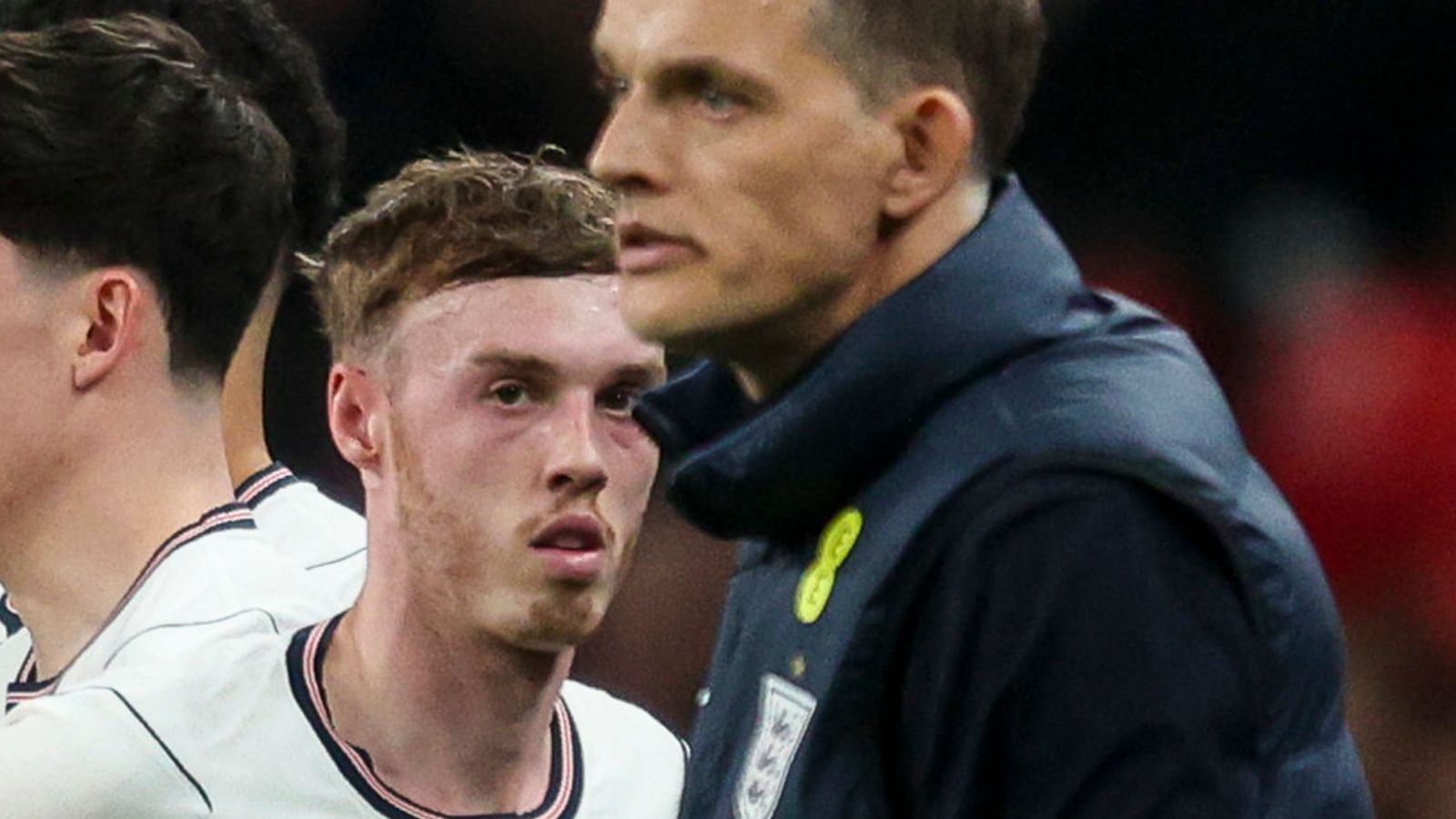
Thomas Tuchel leads England into the Metropolitano Stadium tonight with zero room for romantic excuses. Spain are waiting. The reigning world champions do not yield territory lightly on their home patch, making this fixture Tuchel's first definitive tactical examination since taking the national post.
Friendly or not, the context around this trip is suffocating. England spent years collecting silver medals and near-miss accolades under Gareth Southgate, culminating in yet another agonising semi-final collapse over the summer. If Tuchel was appointed for one singular mission, it was to eradicate that systemic hesitation against the world's best.
Madrid has hosted English triumph before. Thirty-nine years ago, Sir Bobby Robson marched a squad into this city and dismantled Spanish pride with clinical precision. Tonight, Tuchel must channel that exact defiance.
The Blueprint from 1987 and Madrid's Mud
History offers a sharp tactical template here. On February 18, 1987, Robson took England into the Santiago Bernabéu to square off against Emilio Butragueño and a heavily favored Spanish lineup. The pitch was an atrocious, waterlogged swamp after relentless winter downpours.
England refused to hide behind defensive conservatism. Instead, Gary Lineker exploited Spain's flat back line ruthlessly, bagging four goals in a stunning 4-2 triumph. That chaotic night also marked the senior debut of nineteen-year-old Tony Adams, thrown directly into battle alongside Terry Butcher.
As Butcher detailed in a recent Mirror Football interview, that victory was forged through relentless opportunism. England embraced the brutal conditions, punished Spanish turnovers instantly, and refused to let the hostile crowd dictate their tempo.
Robson built his legacy on giving his match-winners tactical clarity. When he took over Barcelona and signed Ronaldo, he built a solid foundation and let his superstar forward destroy defensive structures. Tuchel faces an identical assignment tonight: construct an organized base that gives England's dynamic runners license to strike.
Guéhi, Konsa, and the Defensive Spacing Trap
The core tactical dilemma for England sits directly at center-back. Ezri Konsa and Marc Guéhi enter tonight as Tuchel's established first-choice central defensive pairing. They possess recovery pace and technical composure, but Spain represents a profoundly different challenge.
Spain do not play with static targets. They overload the inside channels, rotating attacking midfielders to drag center-backs out of position before slipping runners through the vacated space.
Guéhi cannot afford to get caught between two minds. If he steps out aggressively to challenge Spain's dropping attackers, he leaves gaping holes for diagonal runners to exploit. If he drops too deep, Spain will simply pin England inside their own defensive third and shoot from the edge of the box.
Konsa's role as the covering sweeper is just as demanding. When England crumbled in the summer semi-finals, Southgate's backline retreated so far back they were virtually standing on their goalkeeper's toes. That deep, reactive posture invited relentless pressure and led directly to elimination.
Here lies the uncomfortable truth about this English setup. Neither Guéhi nor Konsa is a dominant aerial brawler who can clear fifty crosses a match under sustained siege. If England get pinned against their own eighteen-yard box tonight, this defensive unit will crack under the pressure.
Tuchel must avoid an isolated low block. England need a disciplined forty-meter compact block where the defensive line stays connected to the midfield pivot. Deny space between the lines, or Spain will pass England into exhaustion.
Overcoming the Mental Barrier: Butcher's Warning
Technical quality is not what holds England back in matches of this magnitude. The deficit has always been mental: a creeping paralysis that strikes whenever the stakes peak against an elite international opponent.
Butcher identified that flaw while discussing Robson's legacy and his collaborative book project, Almost Immortal. The former England captain did not pull his punches regarding the mentality gap between England and tournament winners.
Spain have got a real belief about them. Argentina always got a belief about them. We don't seem to have that belief. Winners have a really strong mind and a really strong belief. It's not arrogance. They just know they can win.
Butcher's diagnosis is biting and accurate. Too often, England players appear overwhelmed by the weight of historical failure, creeping into games hoping to survive rather than demanding victory.
Against Spain in Madrid, that defensive hesitation will be fatal. Spain feed on hesitation, recycling possession until their opponents chase shadows and make positional mistakes. If England back off and show too much respect, they will be picked apart ruthlessly.
Tuchel's job is to inject cold tactical confidence. The German manager has forged a career on outsmarting possession-heavy sides by structuring lethal, vertical transition patterns that strike before opponents can set their counter-press.
What to Watch in the Metropolitano and the Verdict
When play gets underway, watch England's pressing structure against Spain's deep buildup. If the forwards press haphazardly, Spain will slice through them with crisp, triangular passing sequences.
England need coordinated traps. Let Spain play wide to their fullbacks, clamp down on their central exit lanes, and spring forward into transition the second possession turns over.
Watch the spatial management behind England's fullbacks. If Spain isolate Guéhi or Konsa in wide one-on-one duels, England will be in serious danger. Konsa must read danger early and slide across before Spanish wingers build a head of steam.
Look at the speed of England's vertical distribution. In 1987, Robson's team did not waste time with twenty sideways passes. They fired direct balls into Lineker's stride and let him punish Spain's disorganization.
- The turnover trigger: Winning the ball inside Spain's half to launch immediate vertical counter-attacks.
- The high defensive line: Konsa and Guéhi holding their ground rather than retreating into their six-yard box.
- Central midfield compactness: Smothering Spain's half-space combinations before they penetrate the penalty area.
The margins tonight are razor-thin. A momentary lapse in concentration from Guéhi or a miscalculated pass under pressure will be punished without mercy.
England have spent too long playing like anxious understudies on European football's biggest stages. Southgate restored respectability and tournament longevity, but he consistently failed to crack the tactical code against football's reigning superpowers.
Tuchel represents a clean break from that cautious lineage. He does not care about consensus or moral victories. He cares about tactical execution, ruthless efficiency, and silencing partisan foreign stadiums.
Spain are formidable, organized, and deservedly favored on home soil. They will monopolize the ball for long stretches and force England to defend with extreme discipline.
Yet this matchup favors England's transition profile if Tuchel holds his nerve. Guéhi and Konsa have the recovery speed to neutralize Spain's high defensive line, while England's forwards possess the sharp acceleration to punish Spanish over-commitment.
Expect a bruising, calculated chess match where England absorb early Spanish pressure before striking with clinical precision on the counter. The ghost of 1987 is ready to be summoned once again in Madrid.
Prediction: Spain 1, England 2. Tuchel delivers an opening tactical masterclass, walking out of Madrid with a defiant 2-1 statement victory that changes England's psychological trajectory forever.
Read Next
- Top 10: Top Moments
- Thomas Tuchel is playing a dangerous game by dropping Cole Palmer
- Why the Dutch will punish Klopp's reckless German press in Berlin
- Lee Carsley has an England U21 problem after painful Portugal loss
- 🏴 England World Cup 2026 — Three Lions Hub
- 🇪🇸 Spain World Cup 2026 — La Roja Hub