The Misery of Post-Tournament Friendlies
International football used to suffer from a predictable and depressing post-World Cup hangover. Supporters and players alike were dragged into meaningless August friendlies played inside half-empty stadiums, where bored crowds entertained themselves by floating paper airplanes down from the Wembley upper decks.
That emotional comedown is naturally inevitable after major international tournaments. Whether a team experiences a glorious victory, a thrilling semi-final defeat, or an ignominious group stage exit, major tournaments represent sport played at maximum emotional intensity. Everything that follows immediately after feels like an unavoidable slump.
Look back at the restart following the 2010 World Cup in South Africa. England returned home from their brutal 4-1 humiliation against Germany in Bloemfontein to play a lifeless friendly against Hungary at Wembley. England won 2-1, but the atmosphere was flat and nobody in the stands cared about the result.
Four years later, the scene after the 2014 World Cup in Brazil was even grimier. Following an embarrassing group-stage exit, England managed a dismal 1-0 friendly win over Norway thanks to a solitary Wayne Rooney penalty. That was not the formidable Norway side of Erling Haaland, Martin Ødegaard, and Antonio Nusa. That was a struggling team featuring Joshua King, Håvard Nordtveit, and Tarik Elyounoussi.
During those years, fans voted with their feet, leaving thousands of seats empty while paper airplanes swooped down onto the pitch during dull second halves. The spectacle felt disconnected from top-tier professional football.
Those traditional post-tournament friendlies offered zero competitive stakes and zero tactical value. Managers made half a dozen substitutions at the break, players avoided heavy tackles to stay healthy for their clubs, and supporters questioned why the Premier League season had been paused.
Compare those dull nights with England’s return after the 2022 World Cup in Qatar. Instead of hosting a low-key friendly, England traveled straight to Naples to face Italy in a fierce European qualifier, securing a gritty 2-1 victory on foreign soil.
The contrast could not be clearer. Replacing aimless friendlies with structured competition gave international football its edge back, transforming pointless post-tournament fixtures into matches that actually matter.
What Saturday’s Wembley Collapse Showed About Tuchel’s England
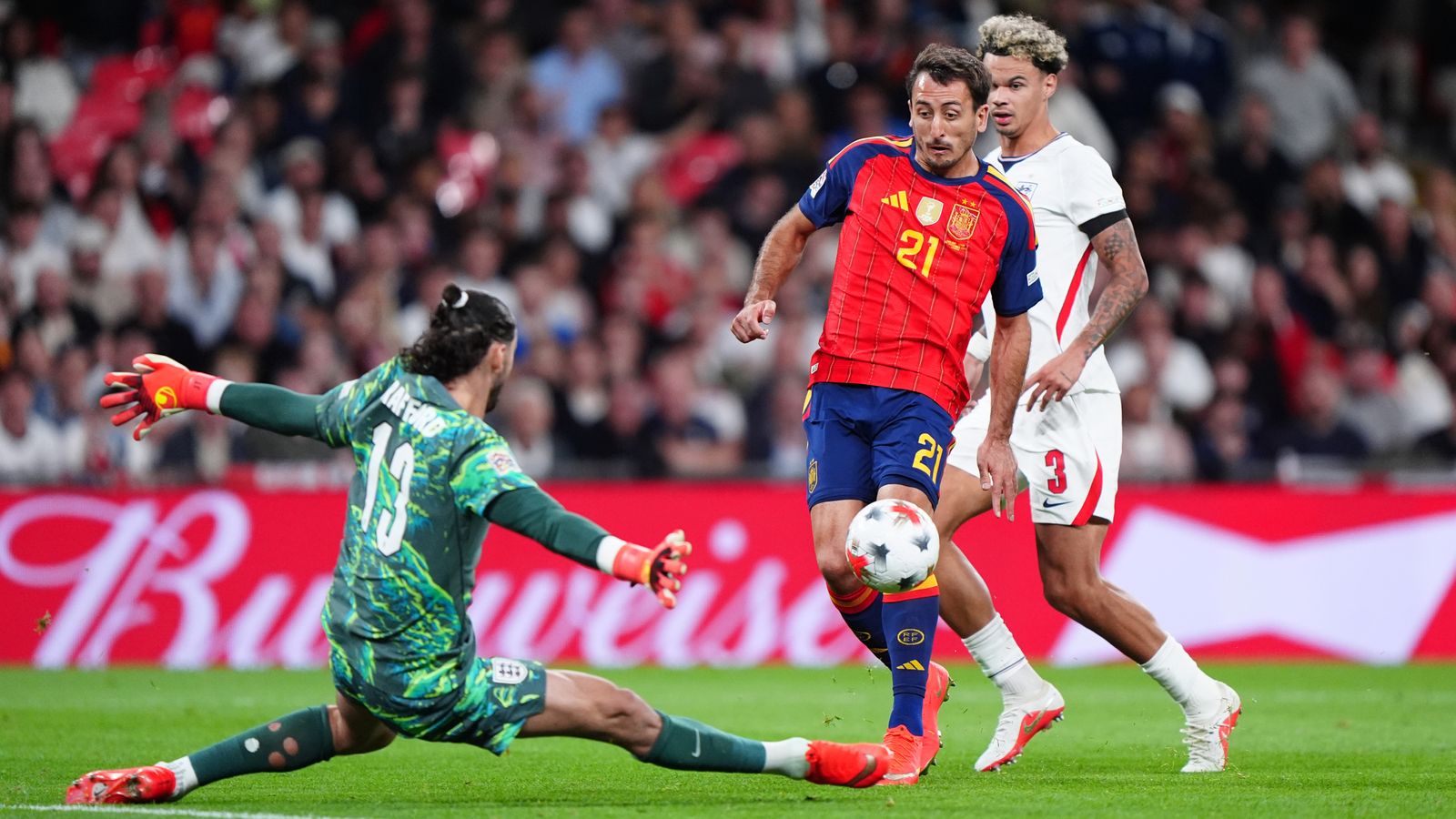
That competitive intensity was on full display at Wembley on Saturday. Fresh off an intense week of domestic football headlines, England welcomed world champions Spain for a Nations League clash that quickly took on a life of its own.
For nearly an hour, Thomas Tuchel’s side matched Spain’s elite possession style. England took the lead and held a single-goal advantage at the 55th minute, looking poised to claim a marquee victory over the reigning world champions.
Then came the match's defining turning point. England earned a penalty with a golden chance to double their lead and seize total control. Harry Kane stepped up, lost his footing on the Wembley turf, and smashed his strike against the crossbar.
Kane is usually lethal from twelve yards, making the slip all the more dramatic. A successful penalty to make it 3-1 almost certainly puts the game out of reach. Instead, Kane’s slip completely flipped the momentum, deflating the home crowd and giving Spain an invitation to take over.
Spain accepted the gift ruthlessly. They adjusted their press, pinned England into their own defensive third, and capitalized on two glaring individual errors to score twice in quick succession, walking away with a 3-2 victory at Wembley.
The outcome closely mirrored England’s World Cup semi-final heartbreak against Argentina in Atlanta. In both matches, England held a one-goal lead over a reigning world champion past the hour mark before surrendering two late goals to lose.
Yet Saturday’s performance was far from a total disaster. While Spain missed chances late on and could have expanded their margin, England also created enough opportunities that they might easily have scored four goals on a different afternoon.
Against a team as accomplished as Spain, no nation can hope to shut them out completely. Making it a tight contest that either side could have won represents meaningful progress for Tuchel’s developing side.
However, defensive fragility remains a key problem that Tuchel must address immediately. As reported by The Guardian, two of Spain’s three goals resulted directly from individual errors by Manchester City players in the backline.
The timing raised eyebrows across the press box, coming just 24 hours after breaking news regarding Manchester City’s off-field legal case surfaced on Friday. Whether caused by mental fatigue or outside distractions, elite international opponents punish those lapses without mercy.
The Carabao Cup of International Football
When UEFA introduced the Nations League back in 2018, critics dismissed it as an unnecessary administrative creation. Many questioned whether supporters or players would ever take the competition seriously.
Early fixtures did little to silence those skeptics. When Spain handed England a 2-1 defeat at Wembley shortly after England's 2018 World Cup semi-final run in Russia, fans treated the result as little more than an glorified exhibition game.
Even winning the trophy has produced awkward political moments. When Roberto Martínez defended his managerial record with Portugal by pointing to his 2025 Nations League title, it sounded somewhat desperate to skeptical supporters.
Yet over time, the tournament has carved out a distinct and valuable role. It occupies a position similar to domestic football's Carabao Cup: it is not the ultimate prize, but it is certainly not meaningless either.
Importantly, the introduction of promotion and relegation tiers introduced genuine jeopardy to the international calendar. Teams can no longer sleepwalk through autumn breaks without risking demotion to lower leagues.
In the international calendar, the Nations League operates as an essential palate-cleanser. It provides a structured space where a manager can experiment safe in the knowledge that a loss will not cause widespread panic among fans.
That balance between experimentation and competition is precisely why the Nations League works. A manager can trial tactical variations against Spain or Croatia without risking their country's direct qualification standing for the next tournament.
Winning on Saturday would not have magically erased the lingering pain of the Argentina defeat. However, as The Guardian's analysis noted, the game allowed Tuchel to begin learning from semi-final mistakes against top-tier opposition.
England now turn their focus to upcoming Nations League fixtures against Croatia and Czechia. Qualifying for next March’s quarter-finals would offer vital competitive testing as the team continues preparing for Euro 2028.
Friendly matches simply cannot deliver that caliber of preparation. Competing in matches where winning carries a real prize accelerates tactical development far faster than low-tempo summer exhibitions where nobody tackles.
How European Football’s Smallest Nations Won Big
While major powers debate squad rotation and League A prestige, the Nations League’s most significant success has occurred at the lower levels of European football.
Under the traditional qualifying format, smaller nations like Andorra and Liechtenstein endured miserable international windows. They spent entire campaigns pinned inside their own penalty area, defending desperately to avoid heavy hammerings from World Cup contenders.
That dynamic suited nobody. Heavyweights gained nothing from walking through ten-man defensive blocks, while smaller teams spent years without attempting a meaningful attack or experiencing the joy of a competitive win.
By organizing countries into tiered divisions, UEFA ensured that smaller nations play regular matches against teams at roughly their same level. For the first time, those squads have a genuine chance to build possession, attack, and win proper games.
Furthermore, UEFA linked Nations League group performance directly to European Championship playoff spots. A gifted generation of players from a smaller country no longer has to wait a decade for national coefficient points to accumulate.
They can earn a backdoor route to Euro qualifying playoffs through strong group results, short-cutting a process that previously required years of incremental progress.
Football administrators are rightly criticized when they tamper with match calendars or invent new tournament formats. Most expansions are commercial moves that overload players and dilute match quality.
Rather than diluting the sport, the tournament proved that well-designed competition can raise standards at both ends of the spectrum. For once, administrators delivered an international format that fans can genuinely appreciate.
The Nations League is a rare exception to that rule. As The Guardian highlighted in its analysis, UEFA created a structure that delivers compelling games for elite nations and meaningful progress for minnows alike.
Read Next
- England lost to Spain again, so why is nobody screaming at Thomas Tuchel?
- Top 10: Top Moments from England's 3-2 Nations League Thriller Against Spain
- Jordan Pickford's two-match absence exposes Thomas Tuchel's defensive gamble
- Tuchel's England collapse again as Spain expose a familiar 55-minute flaw
- 🏴 England World Cup 2026 — Three Lions Hub
- 🇪🇸 Spain World Cup 2026 — La Roja Hub
- 🏆 UEFA Nations League Final Four 2026 Hub — June 4-8, Lisbon