The distraction trap in tournament football
Tournament football is a game of cold, mechanical efficiency. Yet, the build-up to England’s World Cup quarter-final clash with Norway has been dominated by the usual peripheral noise. We have spent the last fortnight dissecting the off-field habits of key players instead of looking at the tactical setups.
Consider the contrasting narratives. While Norway's captain Martin Odegaard has faced scrutiny following reports of his recent wedding in Norway, England's captain Harry Kane has had to defend his public round of golf with Donald Trump. Right now, England look deeply vulnerable to a highly organized opponent.
Norway are not here by accident. Their 2-1 victory over Brazil in the round of 16 was a tactical masterclass in space exploitation. Erling Haaland scored twice at the New York-New Jersey Stadium, exposing a sluggish, aging Brazilian defensive line.
Norway's transition blueprint
Brazil fell into a tactical trap that England must avoid. Carlo Ancelotti kept his 34-year-old veterans Casemiro and Danilo on the pitch for the full ninety minutes. They looked heavy-legged and slow to transition, leaving vast pockets of space in the half-spaces.
Norway's mid-block squeezed the central areas, forcing Brazil into wide, low-value crosses. When Bruno Guimaraes missed an early penalty, the tactical blueprint for a Norwegian upset was set in stone.
England’s route to the quarter-finals was less convincing. They scraped past Mexico in the round of 16 in a match that eventually forced Javier Aguirre to resign. While Mexico look to a new era under Rafael Marquez, England must address their structural flaws.
Against Mexico, England’s build-up was painfully slow, averaging 5.4 passes before entering the final third. They lacked verticality and struggled to bypass Mexico’s front three press.
The English media will point to their defensive record. But a deeper dive into the numbers reveals a team living on the edge. England conceded 1.45 expected goals (xG) against a limited Mexican side.
They were saved by poor finishing and desperate last-ditch blocks rather than defensive solidity. If they allow Norway the same quality of transitions, Haaland will punish them ruthlessly.
England's structural paralysis
To understand the danger, we must look at how Norway transition from defence to attack. When out of possession, they drop into a compact 4-4-2 block. The distance between their defensive line and midfield line is rarely more than twelve yards.
This compactness denies opponents the ability to play through the lines. It forces central midfielders to play lateral passes, slowing the tempo.
Once they win the ball, the trigger is immediate. Odegaard becomes the focal point of the transition. He operates in the right half-space, looking to receive the ball on the half-turn.
His first touch is almost always progressive, looking to release Haaland early. In the match against Brazil, Odegaard completed seven progressive passes, four of which found Haaland in stride.
This is where England's midfield configuration becomes a concern. The double pivot has struggled to cover the lateral space when the full-backs push high. Declan Rice has been asked to do the work of two players.
If he is dragged wide to cover the overlapping fullback, the space in front of the centre-backs will be exposed. Odegaard will sit in that space and pick his passes.
The battle between Haaland and England's centre-backs will be physical. Haaland does not just rely on his pace; his movement is exceptionally clever. He frequently makes blind-side runs behind the central defenders.
He waits for the opponent to shift their weight before sprinting into the space. Against Brazil, his second goal came from a simple diagonal run that completely bypassed the defensive line.
England’s centre-backs cannot afford to play a high line. If they drop deep, however, they create a gap between the midfield and defence. This is the classic tactical dilemma that Solbakken’s team exploits.
They force you to choose between defending the space behind or the space in front. Either way, they have the players to hurt you.
Meanwhile, the wider tournament has already punished tactical rigidity. Germany suffered a shock exit in the round of 32, leading to Julian Nagelsmann's departure. The German FA is now in negotiations with Red Bull to secure Jurgen Klopp.
Even the traditional giants are realizing that reputation alone does not win matches in 2026. Reputations are easily shredded when the defensive structure collapses under high-intensity transitions.
A glance at the tournament statistics reveals the shifting realities of international football:
- Morocco's Ismael Saibari signed for Bayern Munich after scoring three World Cup goals.
- Brazil exited the tournament after allowing Erling Haaland to score twice at the New York-New Jersey Stadium.
- Real Madrid paid £17.3m to Inter Milan to activate Denzel Dumfries' release clause.
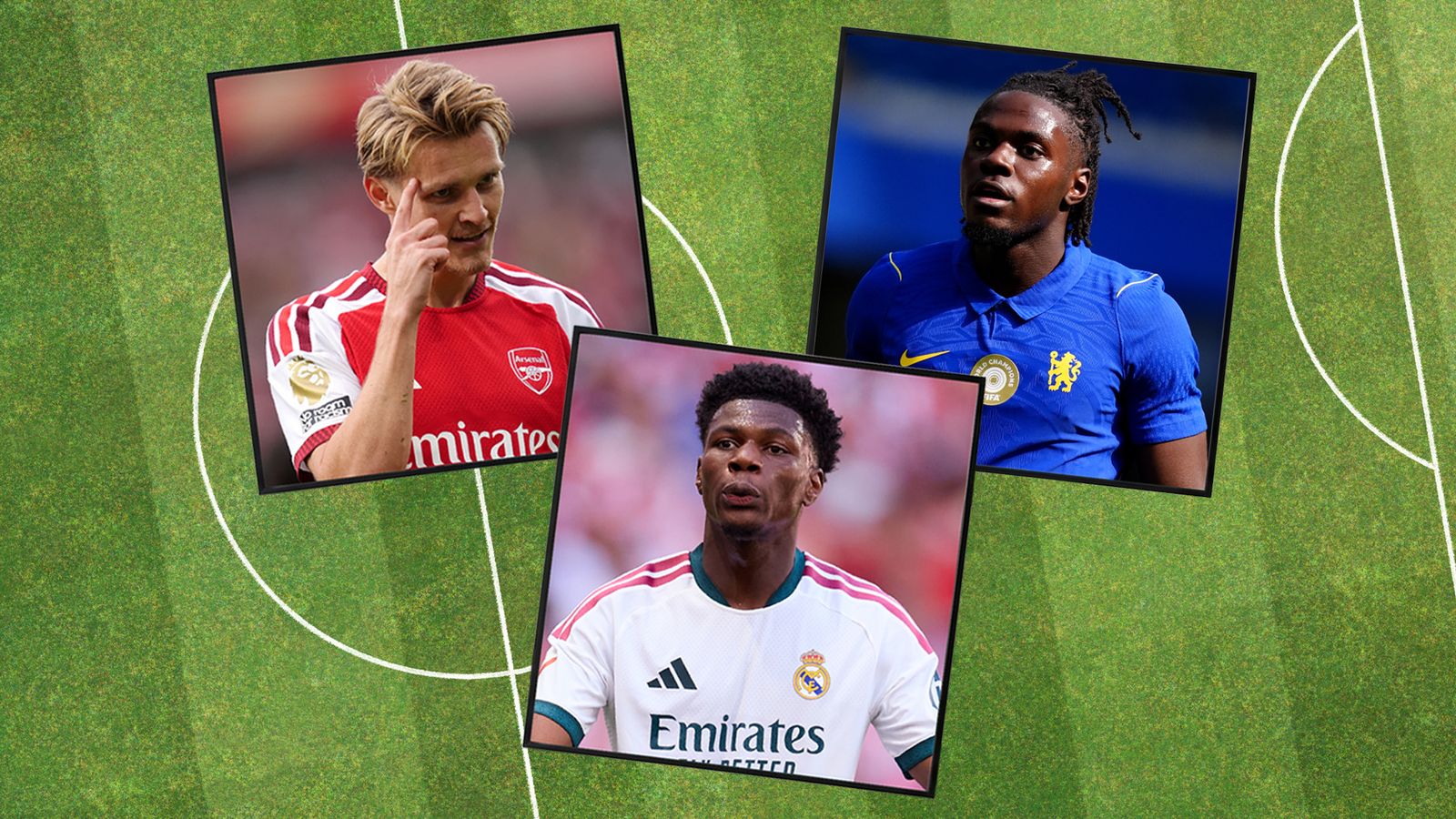
The transfer market reflects this shift toward specific tactical profiles. Real Madrid under Jose Mourinho have completed the signing of Denzel Dumfries from Inter Milan for a fee of £17.3m. Dumfries is their fourth summer signing, following Konate, Bernardo Silva, and Cucurella.
Mourinho is building a physical, transition-heavy team designed to dominate space. Bayern Munich have similarly secured Morocco striker Ismael Saibari after his impressive World Cup campaign, where he scored the winner against Scotland.
This tournament is highlighting the importance of athletic, tactically disciplined profiles. Teams that rely on static possession are being systematically picked apart. England must adapt their approach or face the same fate.
The key for England lies in how they use Harry Kane. In the group stages, Kane has frequently dropped deep into his own half to link play. While this can create overloads in midfield, it often leaves England without a focal point.
The box becomes empty, allowing opposition centre-backs to defend comfortably. Kane must remain high to pin Norway’s central defenders.
If Kane drops deep, the wide forwards must make diagonal runs into the space he leaves. Against Mexico, these runs were non-existent. The wingers stayed wide, making England predictable and easy to defend against.
A repeat of this passive attacking structure will play directly into Norway's hands. Norway's low block thrives on predictable, slow-paced horizontal recycling.
There is also the question of refereeing. The English game has recently seen a major overhaul, as detailed in Sky Sports' live coverage, with the PGMO rebranding to Pro Ref. This change, merging Select Groups into a Professional Referee Group, aims to raise standards.
In a high-stakes World Cup quarter-final, the officiating will be under intense scrutiny. England cannot rely on soft decisions or home-nation bias in these neutral venues.
The tactical prediction
So, how does this match play out? England will likely dominate possession in the early stages, hovering around sixty percent. They will circulate the ball slowly, attempting to tire the Norwegian block.
Norway will be comfortable with this, keeping their shape and waiting for the trigger. The first transition will be the critical moment.
If England lose the ball in the middle third, Norway will transition with speed. A single vertical pass from Odegaard to Haaland will test England's recovery pace. If they fail that first test, the game plan will disintegrate.
I expect England to struggle to break down the low block. They have shown a persistent inability to play quick, combination passes in tight spaces. Their attacking play has been static, relying on individual brilliance rather than collective patterns.
Norway, by contrast, look cohesive and highly motivated. The prediction here is bold but grounded in the tactical evidence.
Norway will repeat their Brazilian blueprint. They will cede possession, compress the space, and strike with lethal efficiency on the counter. England's tournament journey ends here, exposed by a superior tactical plan.
My call is a 2-1 victory for Norway, with Haaland scoring the decisive goal in the second half. England will look back on missed opportunities and familiar structural flaws. The notebook does not lie; the patterns are clear.
Norway are ready for the semi-finals, while England will head home to begin another painful post-mortem. The tactical shift has already begun, and England have been left behind.
Read Next
- England vs. Norway is a psychological warfare masterclass
- England face their biggest test yet against Norway in Miami
- Thomas Tuchel has England playing like a tournament machine
- Haaland is the outlier in the England-Norway tactical clash
- 🏴 England World Cup 2026 — Three Lions Hub
- 🇳🇴 Norway World Cup 2026 — Can Haaland Lead the Vikings?