
Why Andoni Iraola is drawing a line in the sand at Liverpool
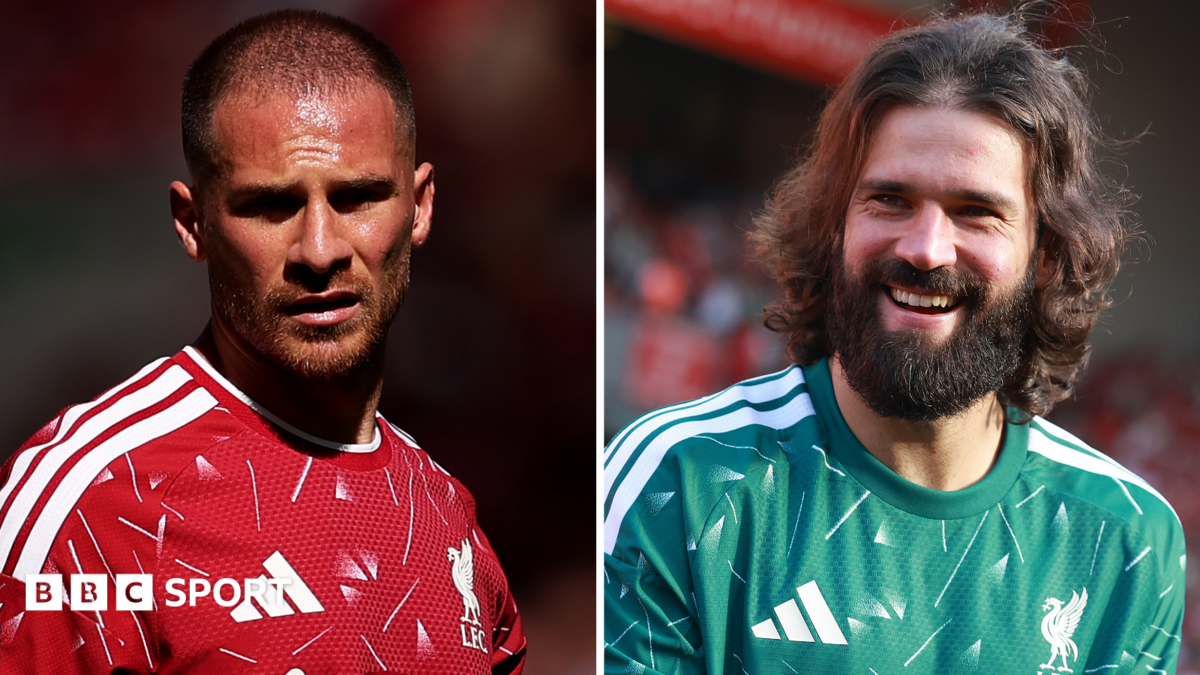
The summer transfer window is entering its final month, and Anfield is suddenly facing a structural threat. Reports linking Alisson Becker to the Saudi Pro League and Alexis Mac Allister to Real Madrid have forced Andoni Iraola into a public defense of his squad, as BBC Sport reported this week. The Basque manager knows that losing either player would compromise the tactical foundation he has spent the last year building.
Iraola's high-pressing, vertical philosophy demands specific profiles in central midfield and goal. Without them, the system does not just suffer; it breaks down entirely. The manager's public stance is not a standard pre-season platitude, but a warning to the boardroom.
Replacing elite talent late in the window is a notoriously difficult task. Finding players who understand Iraola’s complex pressing triggers is nearly impossible under time constraints. Liverpool's season hinges on whether the hierarchy listens to their manager's demands.
The Tactical Weight of Alexis Mac Allister
Under Iraola, Mac Allister has evolved from a versatile midfielder into the absolute hub of Liverpool’s transition play. In the hybrid 4-2-3-1 system, the Argentine occupies the left-sided pivot position during build-up phases. He averaged 74.2 passes per ninety minutes last season, completing 88.4% of them under high pressure.
Mac Allister’s primary value lies in his resistance to the press. When opponents commit two players to close him down, he uses body feints to turn into space. This opening creates immediate passing lanes to the attacking midfielders occupying the half-spaces.
Consider the home match against Newcastle last March. In the 28th minute, Mac Allister received a zipped pass from Ibrahima Konate with his back to goal. Despite Bruno Guimaraes pressing his left shoulder, he executed a first-time flick to Dominik Szoboszlai.
That single touch bypassed Newcastle's entire midfield line. It initiated a four-on-three counter-attack that resulted in a high-value shot. Without Mac Allister's quick recognition of space, the move would have stagnated into lateral possession.
His defensive work is equally indispensable. Iraola's system utilizes an aggressive mid-block that relies on hunting the ball in packs. Mac Allister registered 3.1 tackles and 1.8 interceptions per ninety minutes last season.
He does not just run to cover ground; he runs to close passing lanes. He watches the opponent's hip orientation to anticipate where the ball is going. This cognitive speed allows Liverpool to sustain pressure in the final third.
Losing Mac Allister would force Liverpool into the market for a high-volume progressor. Players with his combination of defensive bite and technical security are rare. A replacement would likely cost upwards of £80m, with no guarantee of immediate adaptation.
Moreover, his relationship with Curtis Jones and Szoboszlai has matured over two seasons. Midfield cohesion is built on non-verbal cues and shared spatial awareness. Disrupting this trio now would set the tactical progression back by months.
The Deep Build-Up Mechanics
During the first phase of build-up, Iraola prefers to drop Mac Allister between the central defenders. This action creates a temporary back three, freeing the full-backs to push high and wide. The opponent's wingers are then forced to make a difficult defensive choice.
If they press the full-backs, Mac Allister has time to carry the ball forward. If they tuck inside to block his path, the passing lane to the touchline opens up. It is a simple numerical game that Mac Allister executes with metronomic efficiency.
His pass map from last season shows a high concentration of diagonal balls to the right flank. These passes targeted Mohamed Salah in isolated one-on-one situations. The speed of the transfer is what makes these switches dangerous.
If the ball travels slowly, the defensive block shifts across to cover. Mac Allister's passes have a flat trajectory that minimizes travel time. This detail allows Salah to receive the ball before the opposition left-back can get tight.
Alisson Becker: More Than a Shot-Stopper
If Mac Allister is the engine of the outfield team, Alisson is the insurance policy that makes Iraola’s aggressive defensive line possible. Liverpool maintained an average defensive line height of 52.4 meters from their own goal last season. This high line leaves vast spaces behind the center-backs.
Opponents routinely attempt to exploit this space with direct balls over the top. Alisson’s sweeping ability mitigates this threat before it develops into a shot. He recorded 2.4 defensive actions outside his penalty area per ninety minutes, putting him in the 99th percentile for European goalkeepers.
In the away fixture at Tottenham, this proactive positioning saved Liverpool multiple times. In the 64th minute, Brennan Johnson raced onto a through ball behind Virgil van Dijk. Alisson was already twenty yards off his line to slide-tackle the ball into the stands.
A less aggressive goalkeeper would have remained on his line, inviting a high-xG shot. Alisson’s anticipation turns dangerous situations into routine clearances. This role requires immense courage and flawless timing.
His shot-stopping metrics remain elite despite the physical demands of his sweeping role. Last season, Alisson recorded a Post-Shot Expected Goals minus Goals Allowed (PSxG-GA) of +5.2. This number indicates he saved over five goals more than the average keeper would be expected to concede.
In tight matches, that differential is the difference between Champions League qualification and finishing fifth. Liverpool cannot afford to replace that level of individual saving capacity. The market for elite goalkeepers is currently barren.
Furthermore, Alisson is a primary playmaker during attacking transitions. His side-winder half-volley distribution is famous for launching instant counter-attacks. He reads the game like a midfielder, spotting runners before they even cross the halfway line.
His assist for Salah against Manchester United a few seasons ago was not an anomaly. It was the result of a deliberate tactical routine. When Alisson catches the ball, the forward line immediately sprints into space, knowing the delivery will be precise.
The Psychological Security Blanket
The presence of Alisson in goal has a direct effect on the behavior of Liverpool's defenders. Knowing they have an elite shot-stopper behind them allows Van Dijk and Konate to be aggressive. They can step up to contest aerial duels, knowing Alisson will clean up any missed headers.
If a backup goalkeeper is introduced, the defensive line naturally drops five yards deeper out of caution. This deeper positioning stretches the space between midfield and defense. Opponents then find it easier to play between the lines.
A deep defensive line also runs contrary to Iraola's entire tactical philosophy. He wants his team to press high and keep the opposition pinned in their own half. Losing Alisson would force a compromise on this fundamental principle.
The Cracks in Iraola's Tactical Framework
While Iraola’s system is highly effective when functioning correctly, it is not without significant flaws. The extreme physical demands placed on the players often lead to late-game fatigue. Last season, Liverpool conceded 14 goals after the 75th minute, many of which stemmed from midfield turnovers.
Mac Allister, for all his quality, is occasionally guilty of defensive lapses when tired. His tracking run on Chelsea's equalizing goal in November was sluggish. He allowed Cole Palmer to drift across his path without offering a challenge.
This vulnerability is exacerbated by Iraola's reluctance to alter his tactical plan during matches. He insists on pressing even when his players are visibly exhausted. This dogmatic approach has cost Liverpool valuable points in title races.
The center-backs are also frequently left exposed in isolated two-on-two situations. When the counter-press fails, opponents have a straight run at the defense. This setup places an unfair burden on Alisson to perform miracles weekly.
If Alisson’s form drops even slightly, Liverpool’s defensive record will collapse. The system relies too heavily on the goalkeeper maintaining world-class levels of concentration. It is a high-wire act that offers little margin for error.
Iraola must address these defensive vulnerabilities if he wants to win trophies. A more flexible mid-block option would help preserve leads without destroying the players' energy levels. Relying solely on high-intensity running is unsustainable over a nine-month season.
The Boardroom Dilemma
The Liverpool hierarchy must decide whether they want to back their manager or pursue a policy of asset maximization. Selling Alisson and Mac Allister would generate massive funds, but the cost of replacing them would be higher. The club’s recent transfer history shows that finding immediate quality is difficult.
The failed pursuit of Martin Zubimendi last summer highlights the challenges of signing top-tier talent. Liverpool spent weeks negotiating only to be rejected at the final hurdle. They cannot afford another summer of recruitment stagnation.
Keeping Alisson and Mac Allister sends a clear message to the rest of the squad. It shows that Liverpool is committed to competing for the biggest trophies immediately. Selling them would suggest a transition phase that many senior players might not tolerate.
Salah and Van Dijk are in the final stages of their prime years. They want to win now, not wait for young prospects to develop. Losing the spine of the team would likely accelerate their own departures.
Iraola’s public comments are designed to force the board's hand. He has made it clear that he wants both players to remain at the club if Liverpool are to challenge at the highest level. The board must now deliver the support their manager deserves.
The upcoming season will be the ultimate test of Iraola's tactical vision. If he has the tools he needs, Liverpool can challenge Manchester City for the title. If the spine is sold, the Basque manager will find himself fighting a losing battle.
Frequently Asked Questions
Which clubs are linked with Alexis Mac Allister and Alisson Becker?
What role does Alexis Mac Allister play in Iraola's tactical system?
What are Alexis Mac Allister's passing statistics under pressure?
How much would it cost Liverpool to replace Alexis Mac Allister?
What defensive statistics did Mac Allister record last season?
More Coverage

On This Day in Football: October 21
an hour ago
Liverpool beat Villarreal in a seven-goal thriller but Iraola rode his luck
4 hours ago
Eberechi Eze is learning the hard way how Mikel Arteta operates
7 hours ago
Howard Webb backs Botman escape but PGMOL logic leaves fans baffled
9 hours ago
Arsenal face Leeds with Arteta locked in and a point to prove
1 week, 6 days ago
Why Tottenham Are Screwed and Man City's Perfect Start Means Nothing
1 week, 6 days agoMore Analysis
Liverpool beat Villarreal in a seven-goal thriller but Iraola rode his luck
4 hours ago
Premier League Clubs Want Man City Stripped of Titles and Banned From Transfers
2 weeks ago
Liverpool pay price for thin squad depth after Vivien Endemann injury
2 weeks, 1 day ago
Chiesa ready for Liverpool exit as Serie A trio prepare January moves
2 weeks, 4 days ago
Dominik Szoboszlai targeted in Belfast as Hungary's Nations League slumps
3 weeks ago