Immediate Physical Audit: 180 Minutes in 72 Hours
Dominik Szoboszlai and Milos Kerkez completed back-to-back 90-minute outings for Hungary inside 72 hours this week. The Liverpool duo absorbed heavy physical contact, rapid travel, and relentless vocal hostility across two grueling Nations League B2 fixtures.
The physical demand started on Friday, September 25 in Budapest. Both players logged every minute in a frustrating 1-0 defeat against Ukraine, who held firm despite going down to ten men in second-half stoppage time.
Hungary pushed frantically during those final minutes in Budapest, forcing Szoboszlai and Kerkez into maximum-effort sprint efforts late in the match. That late surge elevated physical strain right before a long flight to Northern Ireland over the weekend.
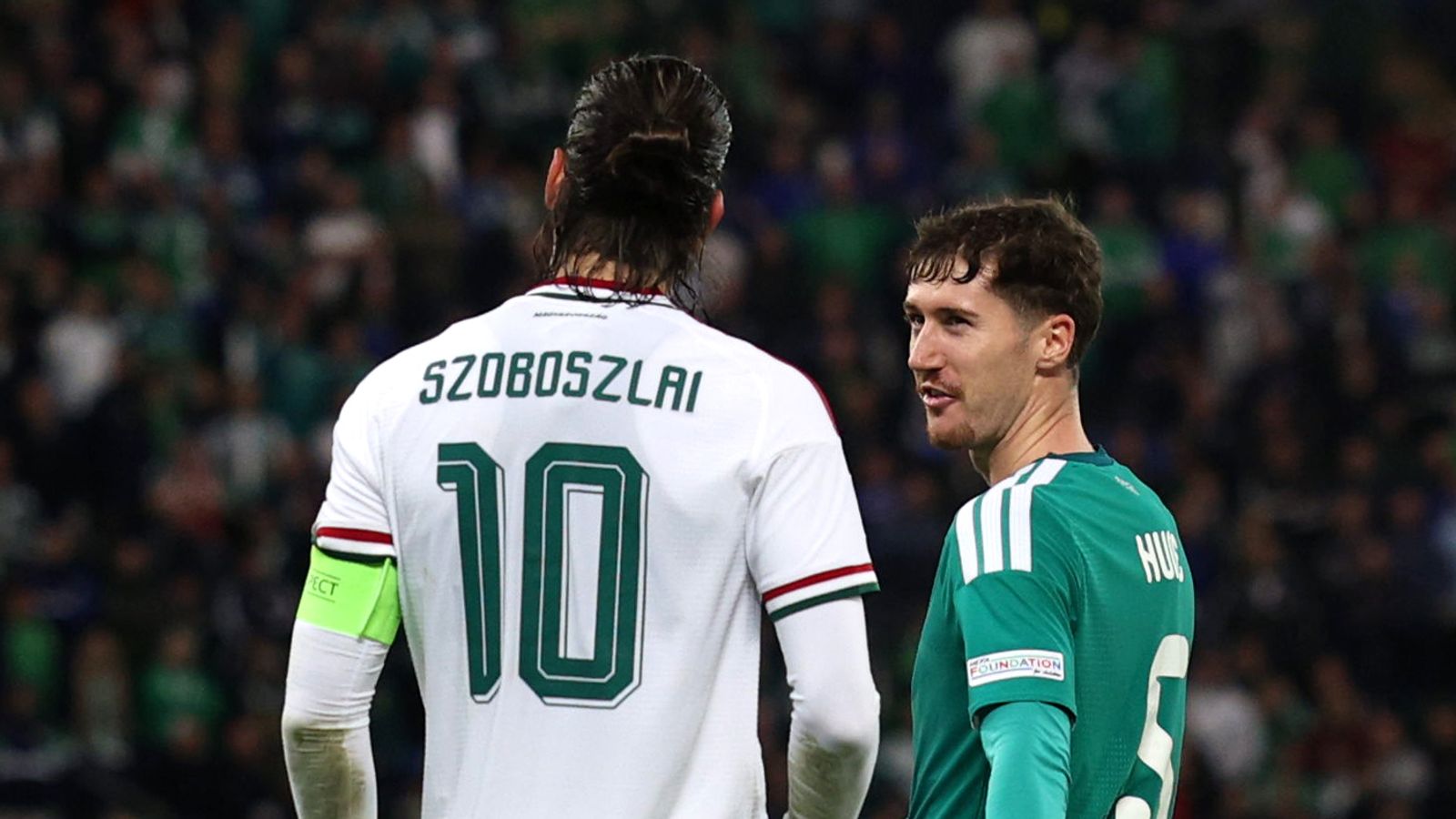
Three days later on Monday night, September 28, Szoboszlai and Kerkez were back on the pitch at Windsor Park in Belfast. A physical battle against Northern Ireland ended in a scoreless 0-0 draw, leaving Liverpool's medical staff evaluating player recovery profiles.
Logging 180 minutes across two high-intensity international matches creates immediate physical workload concerns. Rapid turnarounds between international fixtures elevate muscle fatigue markers and increase susceptibility to soft-tissue strain.
Hungary captain Szoboszlai and left-back Kerkez showed no visible structural injuries at full-time in Belfast. However, the sheer volume of high-speed running and defensive duels will require careful monitoring ahead of domestic play.
Windsor Park Collision Course: Physicality, Antics, and O'Neill's Scathing Assessment
The physical test at Windsor Park started early for both Liverpool starters. Northern Ireland targeted Hungary's left side during a dominant opening half, putting Kerkez under immediate pressure.
Paddy Kelly delivered a sharp first-half performance on Northern Ireland's right flank. His direct running forced Kerkez into multiple defensive recovery sprints and heavy tackles along the touchline.
Szoboszlai faced relentless pressure in central midfield. Northern Ireland closed down passing channels so effectively that Szoboszlai was forced to drop back to the edge of his own penalty box simply to initiate build-up play.
Windsor Park supporters greeted every touch from the Liverpool pair with loud jeers. As The Mirror reported, local media in Belfast noted that booing visiting Anfield stars remains a long-standing tradition at the venue.
"Some traditions are worth preserving, even I'll admit. One of those is the relentless booing of Liverpool players, even before they do anything wrong."
Hostility reached a peak when Szoboszlai stepped up to take a second-half corner at the Kop end. Deafening boos rang out from the home stands as the Hungarian captain set the ball down.
The physical intensity escalated further midway through the second half. Northern Ireland midfielder Shea Charles went through a heavy challenge, taking both ball and man to bring Szoboszlai to the turf.
Szoboszlai popped up instantly and gestured toward the crowd, firing up both the home fans and the vocal Hungarian section in the North Stand corner. Moments later, the midfielder floated a cross-shot high and wide of the far post.
Beyond the physical duels, Northern Ireland manager Michael O'Neill voiced sharp frustration over Hungary's conduct on the pitch. O'Neill criticized perceived simulation and dramatic reactions to standard physical contact.
"I was disappointed with some of the Hungarian players' behaviour on the pitch, holding their faces and screaming."
O'Neill doubled down after the final whistle, urging referees to control match tempo and eliminate theatrical reactions. He emphasized that the fixture was an honest, physical contest that required no extra antics.
According to reports from the Hungarian media, outlet Csakfoci reacted quickly to the criticism from Belfast. They pushed back against local reporting that labeled Szoboszlai as "evil," pointing out that their captain stood firm despite constant target tackling from Northern Ireland's midfield.
Biomechanical Load and Fatigue Mechanics in Modern International Windows
From a sports performance perspective, competing in consecutive full matches within a 72-hour window places immense metabolic strain on elite footballers. The physiological recovery cycle for high-intensity muscular exertion typically spans 48 to 72 hours.
When players undergo intense physical contact without substitution, glycogen depletion accelerates dramatically. That metabolic deficit directly impairs motor unit recruitment during late-stage match actions.
When Szoboszlai drops deep to receive ball possession near his own penalty area, his overall distance covered increases significantly. That extra positional movement demands repeated acceleration and deceleration cycles that load the hamstrings and calf complex.
Late-game execution often suffers under intense neuromuscular fatigue. Szoboszlai's late cross-shot floating high and wide of the post demonstrated how fatigue impacts fine motor control during high-impact actions.
Kerkez experienced similar physical fatigue dynamics at full-back. Defending against direct wingers requires high-frequency eccentric contractions in the quadriceps and adductor groups to change direction quickly.
Physical contusions from challenges like the tackle from Charles introduce localized tissue inflammation. While contusions are rarely structural, micro-trauma to muscle tissue delays full recovery by 24 to 48 hours.
Liverpool's medical staff will utilize GPS tracking data and blood lactate measurements to assess total physical load. Post-international recovery protocols prioritize cryotherapy, active recovery sessions, and targeted manual therapy.
Strategic Implications for Hungary and Liverpool's Tactical Rotation
The scoreless result in Belfast leaves Hungary in a difficult spot within Nations League B2. Marco Rossi's squad sits fourth in the group with just one point after two matches.
Northern Ireland hold second place with four points, backed by their earlier 1-0 victory against Georgia in Tbilisi. Northern Ireland now prepare to face Ukraine in Slovakia on Friday before playing Georgia again.
Hungary face upcoming fixtures against Georgia and Ukraine in the next international window. Rossi cannot afford physical breakdowns among his primary creators if Hungary hope to avoid group relegation.
For Liverpool, managing player workload following this international window is paramount. Szoboszlai and Kerkez have proven their physical durability, but accumulating heavy minutes across international and domestic calendars demands strategic rotation.
Arne Slot must balance immediate selection needs with long-term squad fitness. Protecting key starters from overuse injuries during heavy autumn schedules remains vital for maintaining squad performance standards.
Szoboszlai and Kerkez survived a punishing week in Budapest and Belfast without major structural injury. Their ability to recover quickly will dictate their availability and sharpness for upcoming club action.
Read Next
- Northern Ireland are building a defensive fortress under Michael O'Neill
- Northern Ireland bullied Hungary in Belfast, but missed chances cost them
- Northern Ireland's 0-0 draw with Hungary has fans split down the middle
- Thomas Tuchel is playing with fire after England's Wembley disaster
- 🏆 UEFA Nations League Final Four 2026 Hub — June 4-8, Lisbon