The High-End Reckless Defense
Howard Webb stepped in front of the cameras Tuesday to defend the indefensible. Appearing on Match Officials Mic'd Up, the chief refereeing officer insisted there was nothing clearly wrong with Jarred Gillett handing Sven Botman a mere yellow card for his wipeout on Nicolas Jackson. The decision sparked outrage across the sport over the weekend, but Webb stood firm behind the review process.
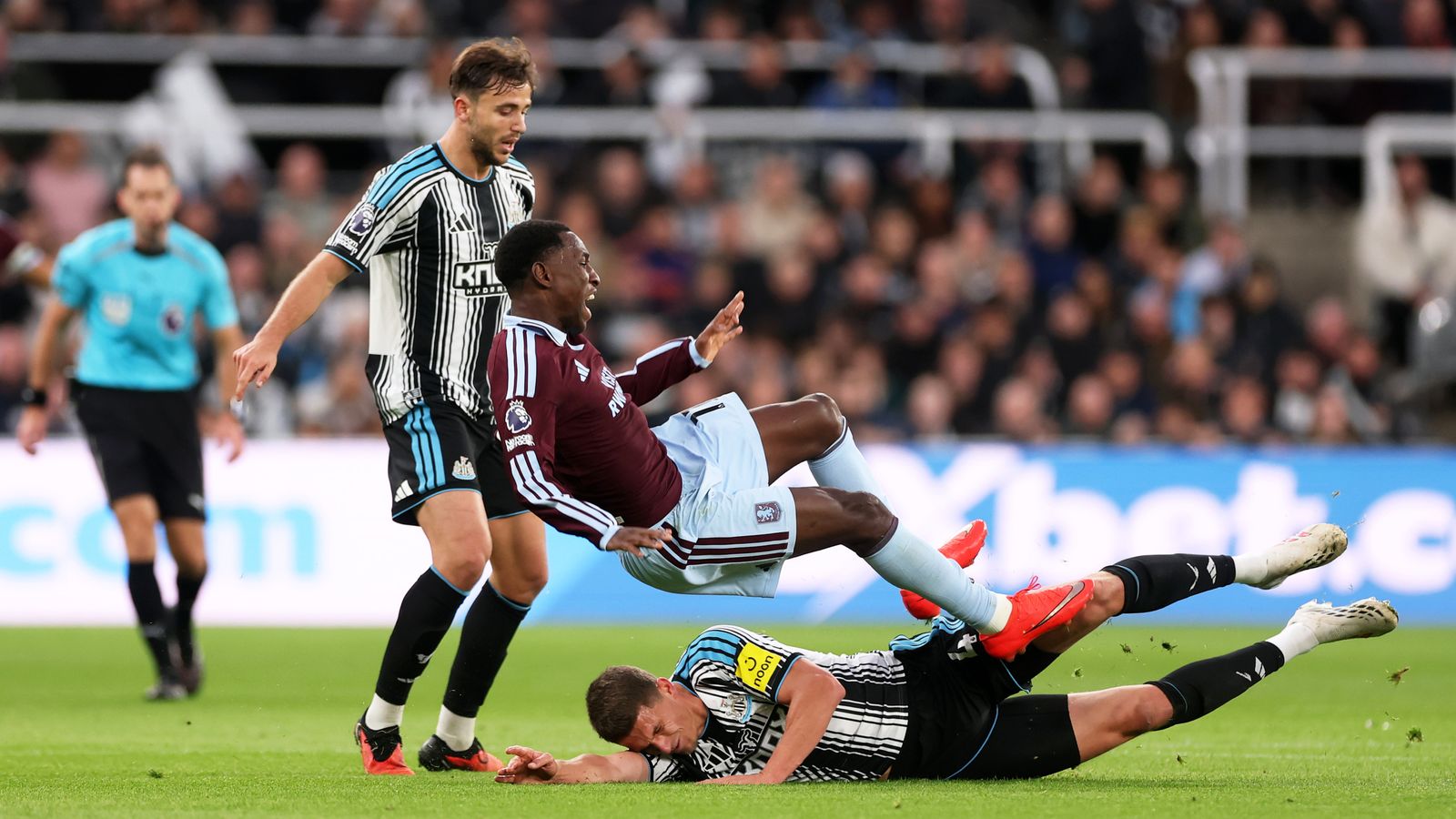
The incident took place during Newcastle's 1-0 defeat to Aston Villa on Saturday. Botman charged into Jackson with terrifying force, scissors flying and studs high, right after Joelinton committed an unpunished foul of his own. Jackson hobbled away fortunate to avoid a hospital visit.
According to Webb, the match officials operated precisely as instructed under this season's directives. Referees are told to own their calls on the pitch. Unless an error jumps off the screen as an undeniable mistake, the video assistant stays quiet.
"The referee in the moment, on the ground, sees it as a reckless challenge - no doubt a high-end reckless challenge - as Botman comes in and gets a touch on the ball," Webb said on Match Officials Mic'd Up. "So if the VAR had seen strong stud contact from Botman's extended leg into the ankle or shin of Jackson, or there had been a closing of the scissor, I think we'd have probably come out with a different outcome after the VAR had looked at it."
That rationale feels detached from reality. When a defender flies in at breakneck speed and wraps both legs around an opponent, debating whether the scissor snapped fully shut is pure administrative hair-splitting. It exposes a flaw in how PGMOL evaluates dangerous play.
What Attwell and Taylor Saw
The released audio between VAR Stuart Attwell and assistant VAR Craig Taylor reveals the convoluted thought process inside Stockley Park. Attwell immediately winced at the challenge before looking for reasons not to intervene. That hesitation defined the entire sequence.
"I don't like that," Attwell noted as he watched the replays. "Right, so he hits the ball; he goes over the top of the ball. He doesn't go studs into the leg, but he goes round it with a scissor challenge."
Taylor chimed in with reassurance, arguing Botman played the ball with limited contact on Jackson's leg. Attwell then asked if there was secondary scissor action, concluded there was not, and confirmed two bookings for Botman and Joelinton. They talked themselves out of an obvious red card.
Webb admitted that had Gillett shown red initially, Stockley Park would have backed that judgment as well. "Equally, if that had been a red card, for sure it would've been check complete by the VAR as well," Webb confessed. That admission undermines the entire premise of video review.
If the exact same horror tackle can be validated as both a yellow and a red depending on a split-second whistle, players are left guessing what constitutes serious foul play. That is not consistency. It is arbitrary cover for on-field blunders.
Pundits Revolt Over Player Safety
The studio reaction to the tackle was instant and blistering. As detailed in the post-match breakdown on Sky Sports, former players and referees refused to buy the official party line.
Jamie Redknapp did not mince words when assessing the non-intervention. "If VAR can't see that's a red, we're in trouble," Redknapp remarked. "It is so dangerous. How he's not broken his leg there... I like to see aggression. I want to see 50/50 tackles, but you can't do that anymore."
Former Premier League referee Dermot Gallagher echoed those thoughts on Ref Watch. Gallagher pointed to the combination of speed, intensity, and scissor mechanics as textbook criteria for a sending-off. Jay Bothroyd went even further, comparing it unfavorably to Yehor Yarmoliuk's headbutt at Brentford and stating Botman committed a more violent act.
Jackson spoke out after the final whistle with an unsettlingly calm reaction to a near-disaster. The striker survived the impact, but his words carried serious weight.
"The referee said it was a yellow card but it was so high," Jackson told Sky Sports. "Hopefully next time it is a red card. I nearly broke my leg, but it's fine. It's part of football."
Footballers should not have to rely on good luck to leave the pitch in one piece. When the victim of a tackle openly states he nearly suffered a fracture, the governing body cannot simply shrug its shoulders.
Convenient Omissions on Mic'd Up
Match Officials Mic'd Up claims to provide complete transparency, yet what gets left on the cutting room floor speaks volumes. The Tuesday broadcast completely bypassed another pair of contentious incidents from the weekend schedule.
During Chelsea's 2-0 win at Everton, Morgan Rogers escaped a dismissal following a dangerous challenge that mirrored Botman's recklessness. Rogers had already picked up a booking, meaning any punishment would have resulted in his removal. Cole Palmer also skirted a second yellow card later in that match for a clumsy late lunge.
Former referee Mike Dean stated on Soccer Saturday that Rogers deserved at least a second caution. Bothroyd and Tim Sherwood argued the challenge warranted a straight red. Webb chose not to address either moment during the show.
This selective agenda frustrates supporters more than the mistakes themselves. When the refereeing body only showcases incidents they can twist into semi-plausible justifications, the transparency feels heavily staged. Fans want explanations for every flashpoint, not curated defense briefs.
The Bentancur Standard
Webb did address one red card from earlier in October, defending the dismissal of Rodrigo Bentancur during Tottenham's 1-1 draw at Manchester United. Bentancur received his marching orders after reacting to a shove from Luke Shaw by thrusting his head forward.
Shaw received a yellow card for initiating the confrontation with a push to the chest, while Bentancur walked. Webb maintained that the officiating crew reached the right conclusion by strictly separating chest contact from head contact.
"When players make contact with their head, they're running a really high risk," Webb explained. "It's seen as a violent act. When we apply the laws of the game, we differentiate between the neck, face and head compared to contacts into the chest. For us not to send off for contact into the face or head, it has to be deemed negligible and in this case it's not."
Webb emphasized that pushes to the chest rarely merit a dismissal, even if forceful. "A yellow card for Luke Shaw, but it has to be a red card for Bentancur reacting in the way he does with his head," he concluded.
The ruling makes technical sense under the letter of the law. Violent conduct with the head has zero tolerance. Yet the contrast between punishing a petulant head nudge and excusing a full-throttle leg-breaking tackle summarizes the Premier League's twisted disciplinary scale.
A Lighter Touch With Heavy Consequences
Webb framed the entire weekend as an endorsement of English football's physical heritage. He reiterated that supporters love robust challenges and claimed referees want to embrace that intensity without compromising player well-being.
That balance is currently broken. By raising the bar for VAR intervention so high, PGMOL has effectively handcuffed its own technology. Video assistants now spend five minutes searching for technical loopholes—whether studs grazed leather or scissors pinched halfway—instead of fixing glaring blunders.
If Botman's lunge is what passes for acceptable contact under the new lighter-touch philosophy, the league is playing with fire. Referees will keep making split-second errors under match pressure. But when the safety net in Stockley Park actively chooses to look the other way, someone will eventually pay the price on a stretcher.