
Spain's midfield puzzle is the key to their World Cup survival
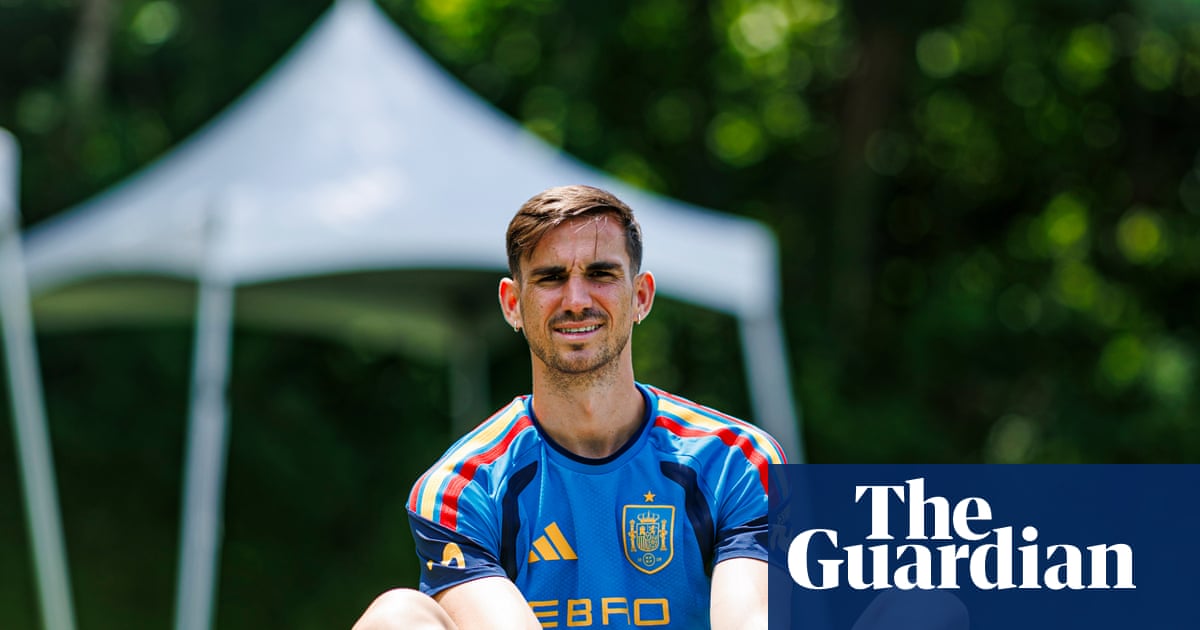
The Chattanooga departure and the tactical storm
The vans have finally pulled out from the Embassy Suites on Broad Street in downtown Chattanooga. For three weeks, this quiet corner of Tennessee served as the base camp for a Spanish national team trying to find its path. Outside the gates, local kids climbed trees and barriers, waving placards and pleading for a final glimpse of the players.
Inside, Luis de la Fuente was finishing his last training session at the Baylor School before boarding a flight to Los Angeles. They won't be back.
On the surface, everything is calm as Spain prepares to face Austria in the round of 32. Yet underneath the serene Tennessee facade lies a tactical dilemma that has plagued De la Fuente throughout the group stage. Spain enters the knockout rounds with far more structural questions than answers.
The comfortable predictability of their Euro 2024 triumph has vanished, replaced by a series of compromises in the center of the pitch. At the center of this storm is Fabián Ruiz.
The Paris Saint-Germain midfielder is a fascinating case study in modern international football. He was arguably Spain's most outstanding player during their victorious Euro 2024 campaign.
He arrived at this tournament having won the past two Champions Leagues in France. Yet, after starting the opener against Cape Verde, he has not seen a single minute of starting action.
De la Fuente's midfield selection has become a game of musical chairs. Against Cape Verde, he opted for Fabián. For the second group match, Dani Olmo was inserted into the starting lineup.
In the third group game, Mikel Merino took the role. This constant shuffling is not a sign of squad depth, but rather a symptom of a deeper structural identity crisis.
The geometry of the double pivot
In the opening match against Cape Verde, the inclusion of Fabián forced Spain into a 4-3-3 shape. This adjustment pushed Pedri higher up the pitch, closer to the opposition penalty area.
The tactical fallout was immediate and negative. Pushing Pedri into the forward line stripped Spain of their primary controller in the initial phases of possession. He found it significantly harder to run the game from deep, and Spain's build-up play became sluggish.
Fabián himself is a player who thrives on verticality and space. At his best, he is a box-to-box engine who uses late runs to exploit defensive gaps.
But in De la Fuente's system, his natural movements often crowd the zones Pedri wants to occupy. When both players are on the pitch, Spain's possession sequence slows down. The direct, vertical threat that defined their recent success is replaced by sterile, sideways circulation.
To understand the current midfield friction, one must look at the passing networks from the Cape Verde match. During that ninety-minute opening fixture, Rodri and Fabián completed over ninety passes between themselves.
Yet only three of those passes penetrated the opponent's defensive line. The majority of their interactions were lateral, five-yard exchanges that allowed the opposition defense to shift and reset.
This lateral circulation is precisely what Spain sought to avoid under De la Fuente. During Euro 2024, Spain was lauded for their verticality, using quick transitions to release their wingers in isolated 1v1 situations.
But with Fabián occupying the left half-space and Pedri pushed into the number ten role, the passing lanes to the wings became congested. The wingers were forced to drop deep to collect the ball, neutralizing their main attacking threat.
Against Cape Verde, Spain managed a possession share of 68%, yet their expected goals value was a meager 0.94. It was a warning sign that went largely unheeded because of the final result.
In the knockout stages of a World Cup, however, such inefficiency in possession is fatal. A well-organized mid-block like Austria's will happily cede possession to Spain if the ball remains in non-threatening areas.
The search for balance
The second group match with Dani Olmo's inclusion offered a different set of problems. While Olmo's movements between the lines gave Spain more attacking depth, his reluctance to drop deep left Rodri isolated during the build-up phase.
The opposition was able to press Rodri with two players, forcing him into hurried clearances. It became clear that without a balanced partner, Spain's midfield pivot is easily disrupted.
Mikel Merino's start in the final group game was a clear attempt to restore defensive solidity. Merino completed four tackles and won six aerial duels during his time on the pitch, providing a physical shield for the back four.
However, his ball progression statistics were underwhelming, completing just 72% of his forward passes. Against an aggressive pressing team, his slow decision-making on the ball could be a significant liability.
This tactical indecision contrasts sharply with club football, where managers demand absolute profile clarity. As reported, Xabi Alonso went all-in on Atalanta right-back Marco Palestra for a reported £47m to secure his tactical system. Spain's coaching staff, however, is still trying to fit square pegs into round holes.
The search for a functional third midfielder has only highlighted the lack of a cohesive plan. It remains a stark reminder that international managers rarely have the luxury of buying their way out of tactical problems.
Fabián's return to the starting lineup would seem to be the most logical solution, provided he can find the form that made him so effective in Germany. During Euro 2024, he completed 92% of his passes under pressure, a stat that put him in the top percentile of European midfielders.
If he can replicate that press-resistance against Austria, Spain will have the foundation they need to control the match. But that requires Fabián to be physically ready for the intensity of a knockout match.
His recovery from a difficult knee injury has been a slow process, and he has spent the last month trying to regain his match sharpness. The coaching staff has worked closely with him in Chattanooga, building specific drills to improve his lateral agility and acceleration.
The upcoming match will be the ultimate test of that rehabilitation program. If Fabián is not fully fit, De la Fuente faces a selection headache that could define his legacy.
The manager has built his reputation on tactical pragmatism, but his reluctance to adapt his system to his players' current physical limitations is a worrying sign. He has repeatedly insisted that his players are in peak condition, a claim that is contradicted by their sluggish performances on the pitch.
The physical toll and the leadership vacuum
Spain's tactical problems are compounded by a severe lack of match fitness. Fabián, Nico Williams, Lamine Yamal, and Mikel Merino all missed substantial portions of the domestic season due to injury.
Rushing these players back for a tournament has severely limited their physical output. The high-pressing intensity that De la Fuente demands is impossible to sustain with a half-fit squad.
Lamine Yamal, now 18, had been sidelined since April and only returned on the eve of the tournament. The entire team spent the spring waiting for his recovery.
While his talent is undeniable, expecting a teenager recovering from a long-term injury to carry the creative burden is a massive gamble. Nico Williams has similarly struggled to find his explosive pace, leaving Spain's wings uncharacteristically quiet.
Fabián admits the recovery process has been grueling. Speaking with Sid Lowe on the eve of the last-32 match, Fabián noted the difficulty of returning to full fitness.
"It has been hard to get my pace and rhythm back, but I am 100% now," he said. He added: "There were long-term injuries and it is true that to start with it is hard to get up to pace and adapt when you come back."
Tactics are not the only area where Spain looks diminished. The team that won the European Championship was anchored by a triumvirate of distinct leaders.
Álvaro Morata provided emotional guidance and led the press from the front. Dani Carvajal brought a fierce, combative competitiveness that set the defensive standard. Rodri ran the footballing side of the operation.
Of that trio, only Rodri remains on the pitch. The loss of Morata's selflessness and Carvajal's aggressive leadership has left a visible void.
Spain looks mentally fragile when pressed high, lacking the character to weather difficult spells in matches. When things go wrong, there is no one screaming at the backline or demanding the ball in tight spaces.
Rodri has taken on the mantle of first captain, but he cannot carry this team alone. Other senior players must step forward.
Unai Simon and Aymeric Laporte have the tournament experience, but neither possesses Carvajal's combative personality. Mikel Oyarzabal is respected within the dressing room, but his quiet, imposing demeanor does not translate to on-field authority when the pressure mounts.
Fabián, too, is naturally reserved and prefers to let his football do the talking. Within the group, he tries to help his teammates, especially the younger ones, rather than speaking to the media.
The Austrian gauntlet
Austria will not offer Spain a gentle transition into the knockout rounds. They are a physical, highly organized side that specializes in turning matches into chaotic battles.
Under Ralf Rangnick, their mid-block press is designed to trap midfielders who linger on the ball. If Spain struggles to progress the ball cleanly through the middle, Austria will punish them on the counter.
The slow build-up play seen in the latter group stages will play directly into Austrian hands. If Fabián starts, he must move the ball much faster than he did against Cape Verde.
Spain's possession must have a purpose, rather than just accumulating passes for the sake of it. The tendency to circulate the ball slowly between the center-backs and Rodri must be corrected.
De la Fuente must make a definitive choice before the whistle blows in Los Angeles. If he starts Fabián, he must accept a flatter, more rigid midfield that limits Pedri's influence.
If he starts Olmo, he gains creativity between the lines but loses defensive stability. Merino offers physical presence and aerial dominance but slows down the transition from defense to attack.
It is a classic coaching dilemma, but time has run out for experimentation. The relaxed days in Chattanooga are over. The team has traded the quiet streets of Tennessee for the intense pressure of Los Angeles.
If Spain cannot resolve the spacing issues between Pedri, Rodri, and the third midfielder, their stay in California will be brief. The flight to Dallas will remain a dream, and the post-mortem of a failed campaign will begin.
Fabián insists that the squad is united and ready for whatever the manager decides. But team spirit alone will not solve structural tactical flaws. Against Austria, Spain must find their footballing identity, or they will find themselves on an early flight back to Madrid.
Read Next
- Mauricio Pochettino faces the ultimate vibes test against Bosnia
- Why Morocco vs Paraguay will be a brutal chess match in the Round of 16
- The tactical trap waiting for the USMNT in Santa Clara
- Nagelsmann has run out of excuses for Germany's latest World Cup disaster
- 🏆 World Cup 2026 — Full Coverage Hub
- 🇪🇸 Spain World Cup 2026 — La Roja Hub
- 🇦🇹 Austria World Cup 2026 — Das Team Hub
EA Sports FC 24 (Standard Edition) - PlayStation 5
The ultimate digital pitch where you build your dream squad and own the Premier
Frequently Asked Questions
What location did Spain use for their World Cup base camp?
Who will Spain play in the World Cup round of 32?
How did Spain rotate its midfield during the group stage?
Why did starting Fabián Ruiz against Cape Verde impact Pedri?
What was the issue with the Rodri and Fabián passing partnership?
More Coverage

Man City's £900m scandal casts a long shadow over the A-League launch
7 hours ago
Thomas Tuchel is still overthinking Trent Alexander-Arnold
13 hours ago
Why Ruben Amorim is misusing Goncalo Ramos at AC Milan
1 day, 2 hours ago
England lost to Spain but the Nations League is actually working
1 day, 21 hours ago
Liverpool's £90m Van Dijk replacement comes with a massive tactical catch
2 days, 2 hours ago
England lost to Spain again, so why is nobody screaming at Thomas Tuchel?
3 days agoMore Analysis
Man City's £900m scandal casts a long shadow over the A-League launch
7 hours ago
Thomas Tuchel is still overthinking Trent Alexander-Arnold
13 hours ago
Why Ruben Amorim is misusing Goncalo Ramos at AC Milan
1 day, 2 hours ago
England lost to Spain but the Nations League is actually working
1 day, 21 hours ago
Liverpool's £90m Van Dijk replacement comes with a massive tactical catch
2 days, 2 hours ago