
Nagelsmann has run out of excuses for Germany's latest World Cup disaster
Germany's early departure from the 2026 World Cup was not a sudden burst of bad luck or a freak occurrence. When Paraguay's captain Gustavo Gomez wheeled away in celebration after a tense penalty shootout, it marked the end of another broken campaign. The German national team has once again collapsed on the grandest stage, extending a cycle of failure that began in Russia eight years ago.
The reaction in Munich and Berlin has been swift and unsparing. On television screens across the country, commentators struggled to explain how a nation with such resources could look so completely toothless. The defeat represents a systemic collapse that requires immediate, cold-blooded analysis.
As Sky Sports reported from the tournament, the post-match fallout has been immediate and intense. The German public is no longer willing to accept excuses about rebuilding phases or transition periods. The post-mortem of this failure will dominate sports columns and national broadcasts for months.
At the center of this storm stands Julian Nagelsmann. The 38-year-old manager was hired to restore order and modern tactical efficiency to a side that had lost its identity under Hansi Flick. Instead, his team looked bloated, confused, and utterly incapable of breaking down a disciplined South American defensive block.
The tactical over-complication that paralyzed the team
Germany dominated possession against Paraguay, registering a massive 68% of the ball over the course of the match. Yet, this control was entirely superficial, consisting of slow passing around the opposition's mid-block. The German midfield repeatedly failed to find passing lanes into the final third, leaving their forward line isolated and frustrated.
Paraguay sat in a narrow 4-4-2 shape, daring Germany to beat them out wide. Nagelsmann's side refused the invitation, constantly funnelling play back into the congested central channel where Gustavo Gomez stood waiting. The resulting shot map tells a damning story of 19 attempts with a total expected goals (xG) value of just 0.84.
Germany took 14 shots from outside the penalty box, most of which were desperate efforts blocked by the first defender. This was not a side playing with positional coordination. They looked completely lost.
The lack of physical presence in the opposition penalty area made Paraguay's assignment remarkably straightforward. Gomez did not have to worry about tracking runs in behind or competing for headers against a physical center-forward. Germany's possession was entirely in front of the Paraguayan defense, allowing them to shift laterally without losing their shape.
The tactical vulnerability was not limited to Germany's attack. On the rare occasions when Paraguay intercepted a pass, Germany's counter-press was non-existent. The distance between the midfield lines was too wide, leaving the center backs exposed to direct counter-attacks.
Germany's ball-carriers suffered from a complete lack of movement ahead of them. Static players stood in their zones, waiting for the ball to be delivered to their feet rather than making runs to drag defenders out of position. This static approach allowed Paraguay to maintain their compact shape without any threat of defensive dislocation.
The warning signs that were ignored
The lack of cohesion should not have surprised anyone who followed Germany's preparation for this tournament. Earlier in the month, Jurgen Klopp questioned the manager's team selection, specifically calling on Nagelsmann to drop Jamal Musiala for the group stage opener against Curacao. While Nagelsmann ignored the advice, Klopp's underlying point about balance and directness has been vindicated.
Musiala is a brilliant dribbler, but his tendency to carry the ball through congested zones slowed Germany's transition play to a crawl. Against deep defensive lines, a team needs quick, one-touch passing to shift the opponent's block and create gaps. Instead, Germany's forwards took three or four touches, allowing Paraguay to reset and consolidate their defensive positions.
By playing multiple creative midfielders who all wanted to occupy the same central space, Nagelsmann congested his own team's attack. There was no direct threat in behind and no winger stretching the pitch. The plan failed completely.
The contrast of Norway's direct efficiency
Germany's struggle with false-nines and lateral possession stands in stark contrast to other teams in this tournament. Norway has secured a place in the last 16 by embracing a direct, physical style of football built around Erling Haaland. While Germany passed themselves to death, Norway used Haaland's directness to bypass opposition midfields entirely.
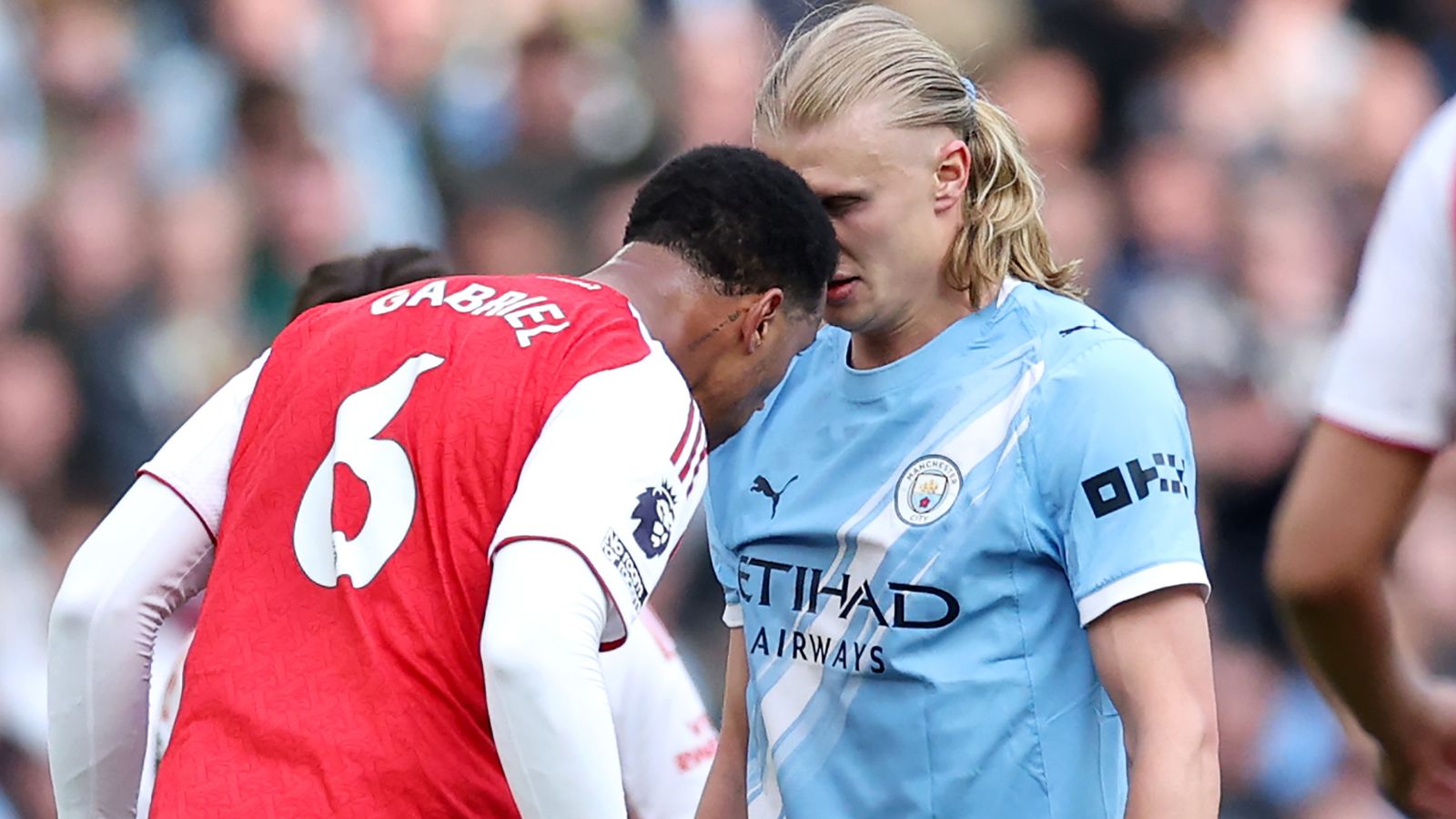
This direct approach will face its ultimate test on Sunday when Norway takes on Brazil. The match will reunite Haaland with his Premier League rival Gabriel Magalhães in a highly anticipated battle. Their history of physical confrontations suggests that the game will be won in the duels, rather than through complex tactical rotations.
The Premier League meetings between the two have been fiery, with Gabriel recently avoiding a red card for an attempted headbutt on Haaland in April. Haaland's ability to act as a physical focal point is exactly what Germany lacked against Paraguay. While Germany over-complicates the game, Norway's simplicity has carried them into the knockout rounds.
The physical demands of this tournament have exposed the limits of static possession. Teams that pass for the sake of passing are quickly worn down by the intense North American summer heat and humidity. The teams that survive are those that play with verticality, pace, and physical presence.
The DFB's expensive contract trap
While the fans demand immediate change, the German Football Association (DFB) finds itself in a difficult financial position. Nagelsmann is currently under a contract that runs until 2028, which was signed with the hope of building a long-term project. The deal guarantees him an annual salary of €8m gross, making him one of the best-paid coaches in international football.
This massive financial commitment limits the DFB's ability to act swiftly. Sacking Nagelsmann now would require a substantial payout, which the association's board is reluctant to approve. The contract does contain a release clause, but it cannot be activated until the summer of 2027.
Nagelsmann himself showed no intention of walking away in his post-match press conference. He told reporters that he is not someone who runs away and wants to continue if the DFB supports him. The defiance is staggering.
"I am not someone who runs away. This is not the first time this has happened, and there are some things about today that need to be changed. But if the DFB wants me to continue I am going to continue."
DFB sporting director Rudi Völler also offered a cautious defense of the manager. Völler told reporters that Nagelsmann is still a top coach and the right man to continue. But he also admitted that the decision is not his alone to make, revealing the growing divisions within the national setup.
The DFB has a long history of making this exact contract mistake. They extended Joachim Löw's contract before the 2018 World Cup disaster, only to find themselves trapped in a similar financial deadlock. They repeated the error with Flick, proving that the association's leadership has failed to learn from its past institutional mistakes.
The financial strain of these decisions is starting to affect the DFB's wider operations. With falling television ratings and disgruntled sponsors demanding changes, the association cannot afford to carry an inactive €8m manager through another dry spell. Sacking Nagelsmann is as much an economic necessity as it is a sporting one.
The shadow of Jurgen Klopp and the path forward
As the pressure mounts on the current coaching staff, one name dominates every conversation in German football. Jurgen Klopp, currently working as the Head of Global Soccer for Red Bull, is the obvious choice to lead a national rebuild. His high-intensity transition football is the exact opposite of Nagelsmann's slow, possession-heavy style.
Klopp has been careful to avoid fuel-injection into the media firestorm. Speaking to MagentaTV after the defeat, he stated that he had not thought about the job and that it was not the time to talk about it. Yet, his refusal to rule out a future move has only increased the speculation surrounding his availability.
"It's a complete disaster again. After the World Cup in Russia, after the World Cup in Qatar, now the next embarrassment."
The contrast between the two managers could not be sharper. Nagelsmann treats the pitch like a laboratory with complex hybrid roles. Klopp prefers simple intensity.
Klopp's current position at Red Bull gives him a unique view of systemic football development. He oversees a network of clubs that prioritize vertical, high-intensity transition play above all else. This philosophy is precisely what the German national team lacks in its current slow, possession-based setup.
International football is not club football; managers have weeks, not months, to prepare their squads. Nagelsmann's insistence on club-level tactical complexity has repeatedly backfired when facing organized defensive teams. The DFB needs to decide whether they can afford to waste another two years before his release clause becomes active.
The DFB's youth academies have spent a decade producing comfortable, technically gifted midfielders who lack physical intensity. The national team is now suffering from this systemic profile imbalance. Without a shift toward producing direct wingers and physical forwards, no manager will succeed in this role.
Germany's failure is also a warning to other European giants who rely too heavily on reputation rather than tactical adaptability. The Czech Republic's exit at the bottom of Group A with just one point, following Tomas Soucek's ankle injury, shows that reputation counts for nothing. Until Germany accepts this reality, they will remain spectators at their own party.
Read Next
- Julian Nagelsmann has run out of excuses for Germany's tactical decline
- Germany's Historic World Cup Penalty Collapse Has Fans in Absolute Meltdown
- Why Germany's World Cup exit was a disaster of Nagelsmann's own making
- The tactical trap waiting for the USMNT in Santa Clara
- 🏆 World Cup 2026 — Full Coverage Hub
- 🇩🇪 Germany World Cup 2026 — Die Mannschaft Hub
Amazon Fire TV Stick 4K
The ultimate cord-cutter's weapon for streaming every single match.
Frequently Asked Questions
How was Germany eliminated from the 2026 World Cup?
Why did Germany struggle to score against Paraguay?
Who is the manager of the German national team?
What tactical vulnerabilities did Germany show in defense?
How did Paraguay set up defensively against Germany?
More Coverage
Thomas Tuchel is still overthinking Trent Alexander-Arnold
an hour ago
Why Ruben Amorim is misusing Goncalo Ramos at AC Milan
14 hours ago
Liverpool's £90m Van Dijk replacement comes with a massive tactical catch
1 day, 14 hours ago
Jürgen Klopp got the chaos he expected in a wild debut against the Dutch
5 days, 4 hours ago
Why Xabi Alonso and Roberto De Zerbi are already facing a tactical wall
5 days, 6 hours ago
Disney treated the Women's Champions League like CBBC and paid the price
5 days, 11 hours agoMore Analysis
Thomas Tuchel is still overthinking Trent Alexander-Arnold
an hour ago
Why Ruben Amorim is misusing Goncalo Ramos at AC Milan
14 hours ago
Liverpool's £90m Van Dijk replacement comes with a massive tactical catch
1 day, 14 hours ago
Jürgen Klopp got the chaos he expected in a wild debut against the Dutch
5 days, 4 hours ago
Why Xabi Alonso and Roberto De Zerbi are already facing a tactical wall
5 days, 6 hours ago