The geopolitical circus at the border
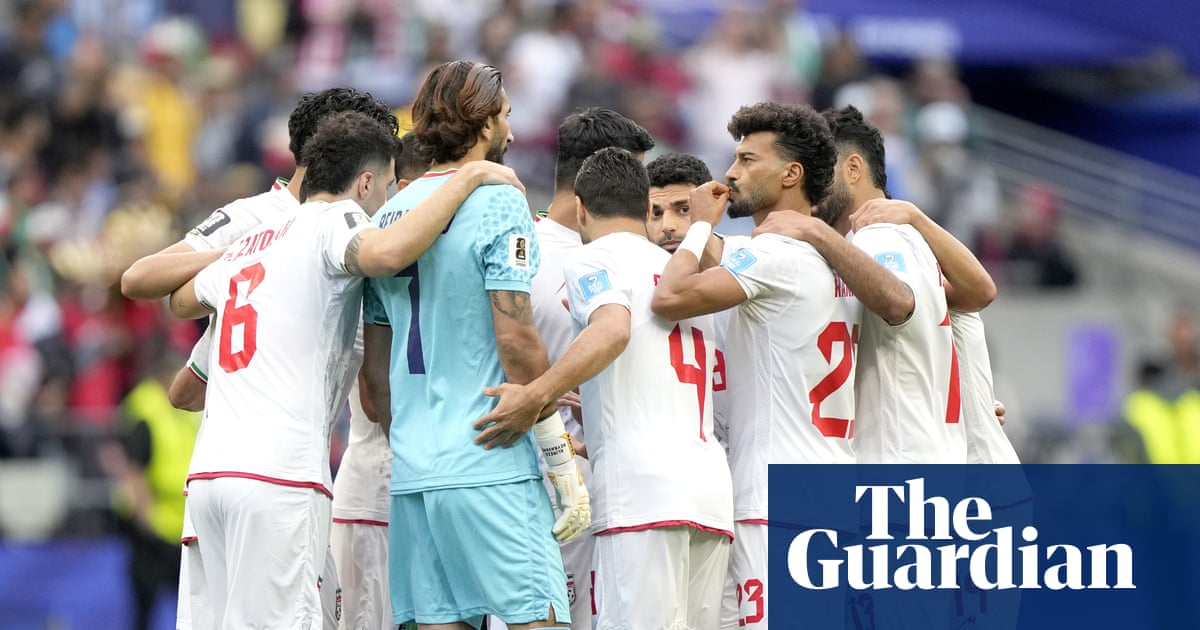
Today is June 30, 2026, and the World Cup knockout stage has finally arrived. Yet, the build-up to the U.S. Men’s National Team's Round of 32 clash in Santa Clara is being dominated by a diplomatic firestorm. U.S. Homeland Security Secretary Markwayne Mullin ignited a massive row yesterday by celebrating the elimination of the Iranian national team.
Mullin admitted he was glad to see the team leave, stating he was pleased when visas were pulled. The Iranian football federation immediately hit back, accusing the American hosts of peddling lies and mistreatment. The geopolitical circus has officially arrived at the border, overshadowing the tournament's football at a critical moment.
Iranian officials detailed travel restrictions that forced them to relocate their training base from Arizona to Tijuana. They also pointed out the visa denials that kept their federation president from entering the country. Mullin countered by claiming that almost half of the Iranian delegation had ties to the Islamic Revolutionary Guard Corps.
It is a reminder of how quickly a tournament can get swallowed by decisions made far from the pitch. We saw similar institutional ruthlessness earlier today when Forest Green Rovers scrapped their women's team to funnel money into the men's side. In both cases, the football is forced to sit in the shadow of executive politics.
“I was so happy when we said they could leave US soil”
The pressure on Pochettino is immense. He was brought in specifically for matches like this, where tactical rigidity must be replaced by knockout pragmatism. The American public will not accept a Round of 32 exit on home soil, regardless of the political noise surrounding the tournament.
The U.S. squad cannot afford to let this political noise breach their locker room. If they lose focus now, their home tournament will end before the real drama begins.
Pochettino’s tactical design and the transition trap
Pochettino’s tactical framework has been clear since he took the job in late 2024. He wants a high-intensity, vertical side that transitions from a basic 4-2-3-1 into a fluid 3-2-2-3 in possession. In the opening match, this shape dismantled Paraguay in a 4-1 victory.
During that Paraguay match, the U.S. recorded an impressive 89.2% pass completion rate in the opponent's half. The system relies on overloading the final third with five distinct attackers. Antonee Robinson and Sergiño Dest push high into the wing channels, allowing the nominal wingers to tuck into the half-spaces.
When Tyler Adams and Weston McKennie recycle possession quickly, this shape suffocates opponent midfields. Christian Pulisic drifts inside from the left wing, operating as a left ten, while Gio Reyna occupies the right ten space. This movement creates a numerical superiority that forces opposing backlines to contract.
The vulnerabilities exposed by Turkey
However, the final Group D match against Turkey exposed the structural risk of this design. Turkey exploited the massive space behind Dest on quick transitions to secure a 3-2 win. During that match, the U.S. double pivot failed to cover the lateral gaps left by the advancing full-backs.
The U.S. finished the game with a higher expected goals value, registering 1.82 xG to Turkey's 1.45 xG. Yet, the raw numbers mask the defensive fragility during transitions. Turkey’s second goal in the 58th minute was a direct consequence of a turnover by McKennie in the middle third.
Turkey’s winning goal in the 78th minute came from a direct counter-attack down the right flank. Dest was caught in the opposition penalty box, leaving the center-backs isolated in a two-on-two situation. If Pochettino does not adjust his counter-pressing triggers, the U.S. will keep conceding these high-value chances.
On the left, Antonee Robinson's role will be equally critical. Unlike Dest, Robinson must balance his overlapping runs with defensive recovery sprints to prevent Bosnia's wingers from exploiting the wide areas. In the Paraguay match, Robinson covered 11.2 kilometers, a work rate that will be required again in Santa Clara.
Deciphering the Bosnian defensive wall
Bosnia and Herzegovina will not play open football in Santa Clara. Under Sergej Barbarez, the Bosnians have perfected a low-block 4-4-2 designed to choke the central channels. They advanced as a third-place team from Group B after a resilient 3-1 win against Qatar.
Their central defenders, Sead Kolašinac and Tarik Muharemović, excel at defending inside the eighteen-yard box. They completed 14 clearances combined during their 1-1 draw with Canada on June 12. They want the opponent to play wide and send crosses into a crowded box where they hold a physical advantage.
In their 4-1 loss to Switzerland, however, the Swiss showed how to break this defense. By pressing high and forcing 18 turnovers in the middle third, Switzerland scored three goals in a devastating 20-minute spell. This performance proved that the Bosnian block can crumble under sustained, high-intensity pressure.
Furthermore, Bosnia's goalkeeper Nikola Vasilj has been in outstanding form. He made seven saves against Canada, including a vital penalty stop in the 74th minute. To beat him, the U.S. attackers must produce shots of high quality rather than relying on volume from distance.
The threat of Edin Džeko’s hold-up play
The real danger for the U.S. lies in the quick transition to captain Edin Džeko. The 40-year-old forward still possesses immense gravity, holding up long vertical balls and bringing midfielders like Amir Hadžiahmetović into the game. In the 34th minute against Switzerland, Džeko’s hold-up play created Bosnia’s best chance of the match.
Džeko is the focal point of a direct attack that averaged 45 long passes per match in the group stage. If the U.S. center-backs commit too high to press Džeko, the space behind them will be targeted by Kerim Alajbegović. Bosnia’s wingers do not look to dribble past fullbacks, preferring diagonal routes into the half-spaces.
This direct verticality is precisely what troubled the U.S. defense against Turkey. If Miles Robinson and Chris Richards cannot win their initial aerial duels against Džeko, the second balls will fall directly into the path of Bosnia's oncoming midfielders.
The keys to unlocking Levi's Stadium
Pochettino must resist the temptation to throw bodies forward too early. The U.S. will likely dominate possession, aiming for over 65% of the ball. However, the key will be the patience of the double pivot in maintaining a rest-defense structure.
If McKennie and Adams get sucked into the attacking box, Bosnia will spring their trap. The U.S. must keep at least three defenders behind the ball at all times. A slow, possession-based buildup that stretches the Bosnian low block will be far more effective than high-risk vertical passes.
The U.S. must also utilize the half-spaces more effectively than they did against Turkey. By placing Pulisic and Reyna in the pockets between the Bosnian midfield and defensive lines, they can force Kolašinac to step out of the backline. This movement will create the vertical gaps needed for Folarin Balogun to run behind.
A confident prediction for the Round of 32
I expect an incredibly physical match with very little space in the final third. The U.S. will struggle to break down the block early and might even fall behind. But the depth of the American bench should prove decisive in the final twenty minutes.
My prediction is a tight 2-1 victory for the U.S. Men's National Team. Džeko will score first in the 28th minute on a transition header. The U.S. will respond with a set-piece equalizer from a corner in the 58th minute, before Christian Pulisic finds the winner in the 82nd minute.
Read Next
- Nagelsmann has run out of excuses for Germany's latest World Cup disaster
- The tactical trap waiting for the USMNT in Santa Clara
- Ronald Koeman under fire after Dutch World Cup capitulation in Monterrey
- Deschamps' new Mbappe role will destroy Sweden's low block
- 🏆 World Cup 2026 — Full Coverage Hub
- 🇺🇸 USMNT World Cup 2026 — Team USA Coverage Hub
- ⚽ MLS 2026 Season Hub — World Cup Year Guide