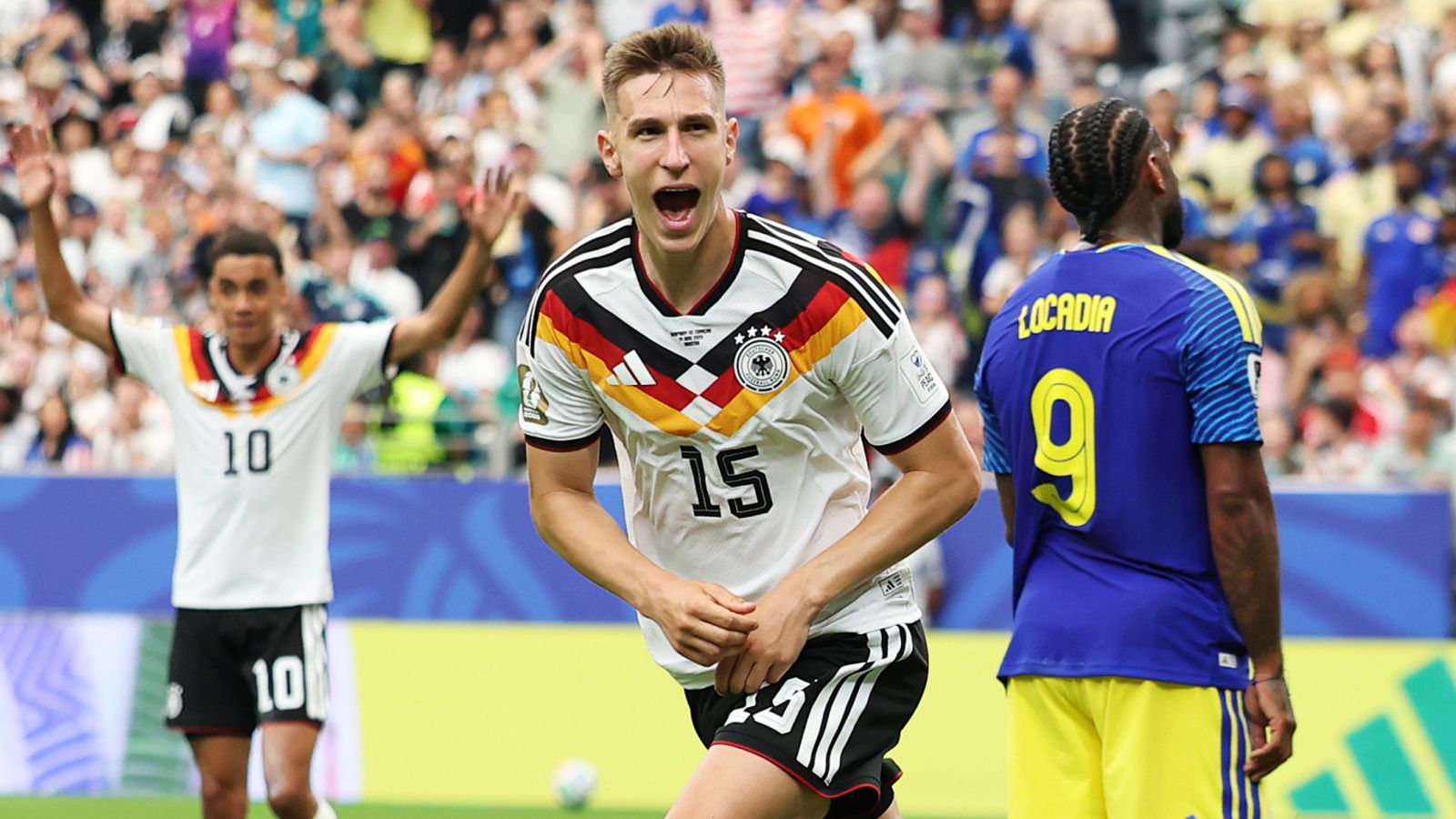
Defensive stability shifts as World Cup 2026 kicks off
Germany has lost central defender Nico Schlotterbeck to injury just as the 2026 tournament intensity begins to spiral upward. The Borussia Dortmund player was expected to anchor the backline, given his form in the Bundesliga over the last eighteen months. His absence scrambles Julian Nagelsmann's tactical board heading into the group stage openers.
International tournaments remain unforgiving environments for late roster adjustments. Rotating a back four requires familiarity that few teams can manufacture under the pressure of a global stage. The German FA has yet to confirm the full length of the recovery window, leaving the defensive rotation wide open for speculation.
The cost of high-intensity selection
Nagelsmann previously emphasized the importance of aggressive, vertical transitions. Losing a ball-playing defender like Schlotterbeck forces Germany to reconsider their high press or risk leaving the holding midfielder exposed against faster counter-attacks. It is a tactical headache that no coaching staff wants during these initial tournament windows.
We are watching Germany navigate a high-stakes landscape in North America, where logistics and squad depth dictate success as much as pure talent. Beyond the pitch, the logistical noise surrounding ticket access and high-profile attendees like डोनाल्ड ट्रम्प has dominated the daily headlines. Players effectively have to block out the media circus to focus on the basics of tournament fatigue management.
Tactical ripple effects
The immediate fallout involves who steps into that left-sided central role. If the backup options lack the requisite passing range, the entire buildup structure from the back will stagnate. Expect opponents to identify this gap and overload the wing, forcing the remaining center-backs to cover more ground horizontally.
This injury represents more than a single player loss. It is a reality check for a German side that viewed its defensive depth as a relative strength entering the summer. A roster weakness exposed this early in the competition often leads to rigid booking decisions in the group stage, where coaches become afraid to rotate even when players look gassed.
Tournament volatility remains the primary narrative
Tournament football is a game of marginal gains and injury management. One bad challenge in a scrimmage can derail a year of planning. Watching Nagelsmann scramble to find a stable pairing for the opening match highlights the fragility of any team's tournament run.
Critics often point to the heavy schedule of modern club football as the root cause of these cascading fitness issues. Players enter these tournaments after exhausting campaigns in European competitions, and the toll is finally showing during these training camps. If this level of attrition continues, the later stages of the 2026 bracket will be decided by who has the most serviceable depth rather than the highest individual skill ceiling.
We will monitor how Germany adjusts their shape in the next 48 hours. The team now faces the immense challenge of maintaining their press without the security Schlotterbeck provided in individual duels. Matches in the heat of a North American summer add an extra layer of difficulty to these defensive rotations.
Expectations were high for a deep run from this German squad, but this development forces a more conservative tactical approach. A deep run requires a base, and currently, that base looks far more permeable than it did a month ago. Failure to adjust effectively during the opening fixtures could see them chasing points before they reach the knockout rounds.
The tournament is officially under way, and the margin for error has narrowed significantly for the favorites. Fans looking for consistency may find this summer to be a volatile affair as squads struggle to maintain rhythm amid these unexpected disruptions. Germany must prove they have the bench depth to survive the group stage shuffle, or they will be facing an early exit in a tournament they intended to define.
Read Next
- Germany lose Nico Schlotterbeck to tournament-ending injury
- Top 10: Defining Moments of the 2026 World Cup Through June 22
- Top 10: Defining Moments of the 2026 World Cup Cycle
- Geopolitics hits the pitch as Iran faces the US in Salt Lake City
- 🏆 World Cup 2026 — Full Coverage Hub
- 🇩🇪 Germany World Cup 2026 — Die Mannschaft Hub