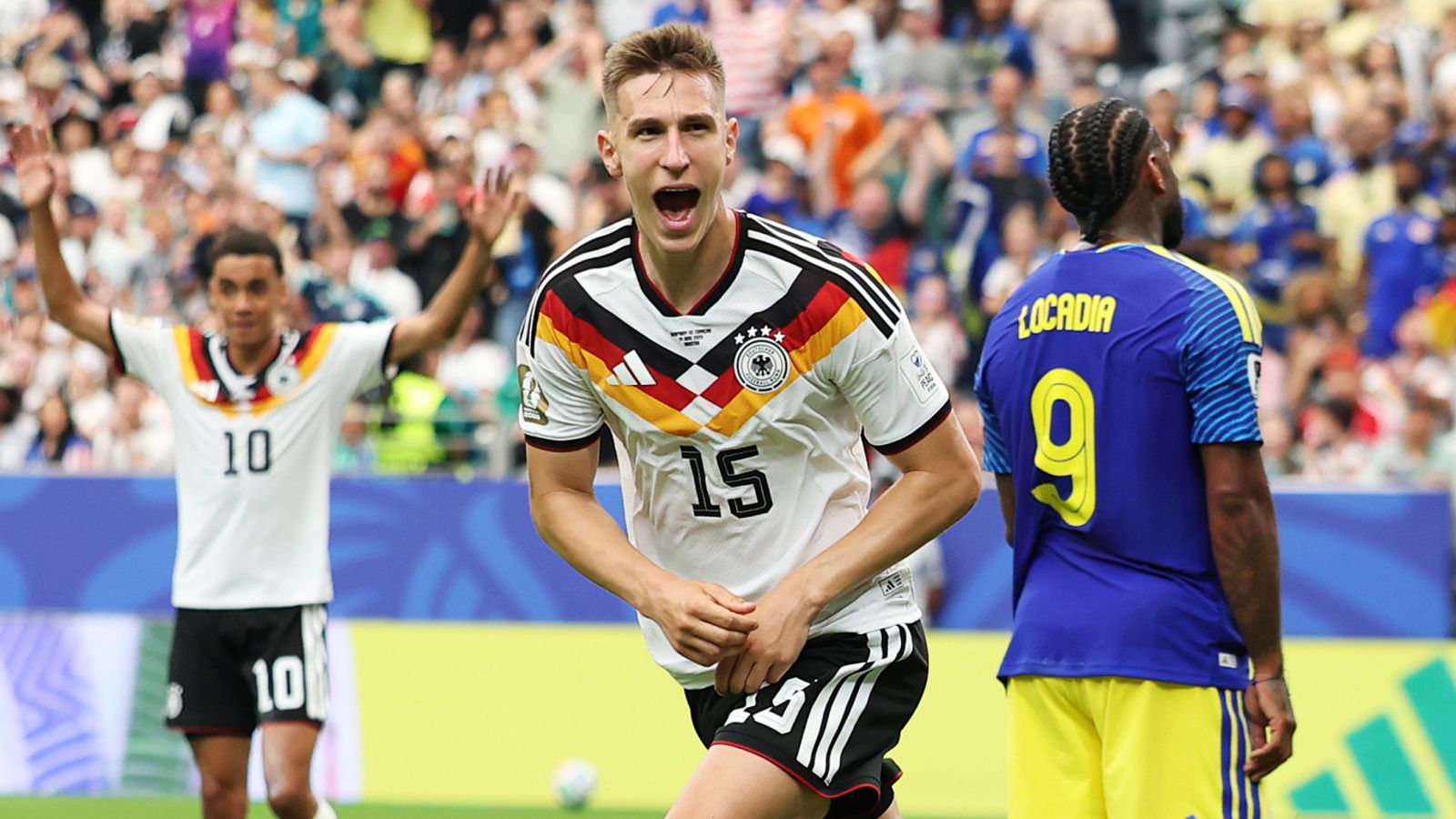
Defensive stability shifts as World Cup 2026 kicks off
Germany has officially confirmed the loss of Nico Schlotterbeck due to an injury sustained during the lead-up to their opening match. The Borussia Dortmund defender was expected to serve as the team's defensive lynchpin. His exit scrambles the tactical approach Julian Nagelsmann finalized over the last eighteen months of preparation.
Schlotterbeck was a lock for the starting XI before yesterday's training session. The injury surfaced as the squad adjusted to host conditions, severely limiting Nagelsmann's options in the buildup to the tournament's first knockout-style pressure cooker. Sources within the German camp confirmed the diagnosis late yesterday, effectively ruling him out for the duration of the 2026 competition.
The vacuum left at central defender
Losing Schlotterbeck is a tactical nightmare. He provided the necessary recovery pace for a high defensive line, allowing wing-backs to push high without fearing simple clearances into space. Without him, Nagelsmann must choose between a more conservative, low-block strategy or gambling on a replacement who lacks the same chemistry with the established unit.
History is unkind to teams losing starting centre-backs on the eve of major tournaments. The 2014 experience remains a reference point for Germany, though the current squad lacks the sheer depth in that particular position they carried a decade ago. It forces a reshuffle that invariably disrupts the collective rhythm required to lift the trophy.
Strategic ripples and squad impact
The absence forces an immediate change in the hierarchy of the backline. Expectations now fall on the remaining pool of central defenders to compensate for the lost aerial dominance and progressive passing ranges Schlotterbeck brought to the pitch. It is a significant negative for a team aiming to transition from recent frustrations to a deep run.
The physical toll on the remaining players increases immediately. With no possibility of a late call-up once the tournament registration window shuts, the squad is locked into their current roster. This injury creates a liability in set-piece defense, a department where Schlotterbeck statistically outperformed most of his peers during the 2025-26 Bundesliga campaign.
Contextualizing the blow
International managers often carry a thin margin for error when relying on specific individuals to enact a tactical philosophy. Nagelsmann’s system hinges on ball-playing defenders. Dropping a player who records a high volume of progressive passes from the back 90 minutes per game disrupts the entire transition flow. The drop-off in output is likely to be visible as early as the first group stage fixture.
As reported by Sky Sports, the tournament buzz in host cities is already reaching a deafening crescendo. Germany's camp now has to navigate this media swarm while dealing with internal squad instability. The timeline for recovery will be evaluated once the team returns to Germany, but for this tournament, the window is closed.
Managerial pressure mounts
Julian Nagelsmann has publicly emphasized the need for adaptability, yet this specific personnel loss pushes his management capabilities to their limit. Managing match fitness during the condensed 2026 schedule was already a concern; now, the starting rotation is compromised before the first whistle blows. The staff must pivot to a defensive structure that protects the weakest links of the new formation.
Competitors monitoring the German camp will see this as a tactical vulnerability to be exploited. Teams pressing with high intensity will likely focus their energy on the modified backline, testing their communication and coordination. Whether the replacements can absorb that pressure without committing costly defensive blunders is the immediate challenge for German staff.
Assessment of the defensive rotation
The tactical planning for the group stage matches needs a complete overhaul. Relying on players with limited tournament experience at the international level puts unnecessary stress on the captain. The loss of Schlotterbeck removes a key communicator on the field, forcing a total reorganization of the tactical layout, specifically regarding how the team tracks runners from midfield.
Failure to adequately replace his defensive contributions will result in a shorter tournament stay than the German federation expected. This level of uncertainty is rarely a hallmark of championship-winning squads. Unless a primary replacement steps into the role with immediate impact, Germany enters this opening fixture at a statistical disadvantage compared to the rest of the favorites contending for the title.
Performance metrics and historical precedents
Schlotterbeck’s impact was predicated on his ability to transition from defense to attack. By removing his distribution, the German midfield has to drop deeper to collect the ball. This effectively shortens the pitch for the opposition and puts more pressure on the goalkeeper to initiate attacks. It is a cascading effect that disrupts the tactical geometry the coaching staff has spent the last year refining.
Looking at past tournaments, nations often struggle to identify internal replacements once the squad hits the ground, leading to fragmented performances that cost points in simple group stage games. Germany must overcome this hurdle quickly to avoid a repeat of previous disappointments. The margin for technical errors has evaporated, leaving no room for a slow start to the opening match.
Read Next
- Germany take Nico Schlotterbeck hit ahead of World Cup opener
- Germany’s defensive cracks appear as Schlotterbeck exits the tournament
- Lionel Messi Injury Watch: Argentina's campaign faces critical setback
- Jeremy Doku ruled out for Belgium as group stage pressure mounts
- 🏆 World Cup 2026 — Full Coverage Hub
- 🇩🇪 Germany World Cup 2026 — Die Mannschaft Hub