
Jurgen Klopp called out AfD idiocy, but Germany's pitch problems are real

The Changing Room vs The Culture War
When Jurgen Klopp faced the microphones in his first international camp, the questions were not about defensive rest structure or half-space occupation. They were about race, culture, and a bad-faith social media post from far-right AfD politicians targeting his starting eleven in Augsburg.
Kay Gottschalk, deputy leader of Alternative für Deutschland, had reshared side-by-side images comparing West Germany's 1990 World Cup final squad with the side Klopp selected on Sunday. Gottschalk pointedly claimed that "character traits, certain virtues, and team spirit are cultural values that develop over centuries and are shaped by shared historical experiences."
Klopp refused to take the bait, labelling the entire discourse as pure idiocy. "There is absolutely no reason to pay attention to these people," the 59-year-old manager declared. "You won’t get my thoughts on this. I have little time in everyday life for idiocy – and even less on social media."
It was a classic Klopp response — sharp, authentic, and utterly dismissive of political opportunism. He pointed out that elite sporting environments operate on merit and shared purpose rather than prejudice. "The world could learn a thing or two from a sports changing room," he added. "There, everyone is respected based on the facts and not discredited based on false opinions."
"There is absolutely no reason to pay attention to these people. You won’t get my thoughts on this. I have little time in everyday life for idiocy – and even less on social media." — Jurgen Klopp
This isn't a new playbook from the AfD, who targeted the national side back in 2016 when Beatrix von Storch asked on social media if "the German NATIONAL TEAM should play again next time?" But Klopp's approach since taking the job on a four-year deal over the summer has been proactive rather than purely reactive, as Mirror Football reported. He has openly advocated for a concept he calls "positive patriotism."
"I don’t want to entrust national pride to the wrong people," Klopp explained last month, framing his vision for Die Mannschaft around unity rather than division. "From the perspective of someone in sport, I’d like to reclaim the flag for myself and for us. When we wave it, I don’t want that someone thinks: ‘What’s going on with you?’ I want that they think you’re happy and you understand how lucky you are to be born in this wonderful country or to have moved here and live here."
Klopp's moral clarity makes him a formidable cultural ambassador for German football. Yet while his off-pitch leadership is bulletproof, his early tactical footprint tells a far more troubled story.
Greece Exposed Die Mannschaft's Transition Trap
Taking four points from your first two international matches is rarely cause for celebration, but drawing with the Netherlands and losing to Greece in Augsburg represents a stark reality check. The defeat on Sunday exposed the inherent friction between Klopp's high-octane tactical identity and the constraints of international football. Die Mannschaft did not just lose to Greece; they looked completely unstitched in defensive transition.
At club level, Klopp's Gegenpressing relies on sub-second reaction times and micro-spatial compactness. His Liverpool sides maintained roughly 12 to 15 meters of vertical distance between the front line and the center-backs when out of possession. In Augsburg, that gap repeatedly ballooned to over 30 meters as the forwards jumped to press while the backline retreated in panic.
When Klopp selected a starting line-up containing eight non-white players on Sunday, the tactical balance was far more concerning than any political noise. The mid-block pressing triggers were mismatched, leaving giant central corridors wide open for Greece to exploit on the counter.
Greece bypassed Germany's first line of pressure with simple diagonal passes into the wide channels. With the full-backs pushed aggressively high into the half-spaces to assist build-up, Germany’s central defenders were left isolated against dynamic runners. The defensive rest structure was non-existent, forcing recovery sprints that burned out the midfield by the 65th minute.
Against the Netherlands, similar structural flaws were evident during long spells of central possession. Germany dominated the ball but generated low-quality chances, failing to breach a low-block while remaining fragile against quick turnovers. Klopp’s trademark heavy metal football requires months of daily repetition, something an international calendar simply cannot provide.
The Mechanics of International Gegenpressing
The fundamental issue facing Klopp is that international management is an exercise in tactical reduction, not tactical sophistication. Managers like Gareth Southgate or Lionel Scaloni succeeded by simplifying structural demands, prioritizing defensive shape, and minimizing high-risk pressing sequences. Klopp is trying to install a complex physical engine during three-day training windows.
When a club team presses, every player acts on a synchronized visual trigger — a ball played back to a goalkeeper, a bouncing pass, or a defender turning toward his own goal. If one player hesitates by half a second, the entire trap collapses. Against Greece, Germany's forward line pressed individually rather than collectively, allowing easy wall passes out of pressure.
The numbers reflect a side caught between two tactical philosophies. Germany surrendered 14 open-play shots to Greece in Augsburg, allowing an expected goals (xG) against figure that far exceeded their own creation.
"From the perspective of someone in sport, I’d like to reclaim the flag for myself and for us. When we wave it, I don’t want that someone thinks: ‘What’s going on with you?’" — Jurgen Klopp
Even more troubling was the drop in high turnovers. At Liverpool, Klopp’s teams averaged over 10 ball recoveries in the final third per 90 minutes. Against Netherlands and Greece combined, Germany managed less than half that output, frequently committing fouls when late to challenges instead of winning clean possession.
Transitioning from daily pitch work to sparse international breaks demands a fundamental shift in coaching methodology. At 59 years old, Klopp has spent his entire career on the grass every morning, fine-tuning body angles and pressing distance. Learning to coach through video session slides rather than pitch drills may be his hardest adaptation yet.
The Half-Space Bottleneck and Midfield Isolation
Germany's offensive setup in their first two Nations League fixtures suffered from severe spatial congestion. Klopp attempted to invert his full-backs to create a 3-2-5 attacking shape, but the positioning lacked fluidity. Instead of stretching the opponent's defensive line, Germany clustered five players in the central channel, playing directly into Greece's compact low block.
This spatial clutter reduced ball movement speed significantly. Passes were played to feet rather than into space, allowing Greece to slide their defensive horizontal block with minimal effort. When Germany did turn the ball over in central areas, the inverted full-backs were completely caught out of position, leaving wide lanes exposed for counter-attacks.
The central midfield pairing looked overwhelmed whenever the first pressing wave was broken. Without a defensive anchor capable of covering vast lateral distances, Germany's back four was constantly subjected to direct running at high speed.
In the Netherlands fixture, Germany showed moments of individual brilliance, but the collective shape remained disjointed. The pressing triggers were chaotic, with midfielders pushing up to engage while the defensive line stayed deep to cover space behind. This disconnect created a massive pocket of space between the lines that Dutch playmakers exploited at will.
Pragmatism vs Principles: Klopp's Next Move
Klopp’s four-year contract gives him the runway to build toward major international tournaments, but early Nations League warning signs cannot be ignored. International football rarely rewards tactical perfectionists who refuse to adapt to squad limitations. If Germany continue to concede soft transition goals against mid-tier opposition, public patience will erode regardless of Klopp's popularity.
Reclaiming national pride on the pitch means building a team that wins matches convincingly. Klopp was absolutely right to shut down political bad-actors and protect his squad from racist dog-whistles. But his primary responsibility remains fixing a defensive structure that currently looks like a leaky sieve.
The coming international windows will test Klopp’s willingness to compromise. He must decide whether to strip down his aggressive counter-pressing model in favor of a compact mid-block, or double down on high-intensity demands that risk exhausting his players. The changing room may be a sanctuary of mutual respect, but the pitch demands ruthless tactical clarity.
Jurgen Klopp has never shied away from a fight, whether against far-right politicians or tactical orthodoxy. If he can bridge the gap between his ideological vision and international reality, Germany will be a force once more.
Read Next
- Scotland's attacking promise died in the 11th minute against Switzerland
- Scotland fans are already losing their minds over the Pocognoli era
- England win in Prague but Thomas Tuchel still has tactical puzzles to solve
- Tuchel got his win in Prague, but Trent and VAR are still causing arguments
- 🇩🇪 Germany World Cup 2026 — Die Mannschaft Hub
- 🏆 UEFA Nations League Final Four 2026 Hub — June 4-8, Lisbon
Frequently Asked Questions
What did AfD politician Kay Gottschalk say about Germany's squad?
How did Jurgen Klopp respond to the AfD's social media post?
What is Jurgen Klopp's concept of positive patriotism?
How long is Jurgen Klopp's contract with the German national team?
What were Germany's initial Nations League results under Jurgen Klopp?
More Coverage

Scotland's attacking promise died in the 11th minute against Switzerland
2 days, 12 hours ago
Scotland fans are already losing their minds over the Pocognoli era
2 days, 12 hours ago
England win in Prague but Thomas Tuchel still has tactical puzzles to solve
2 days, 14 hours ago
Tuchel got his win in Prague, but Trent and VAR are still causing arguments
2 days, 15 hours ago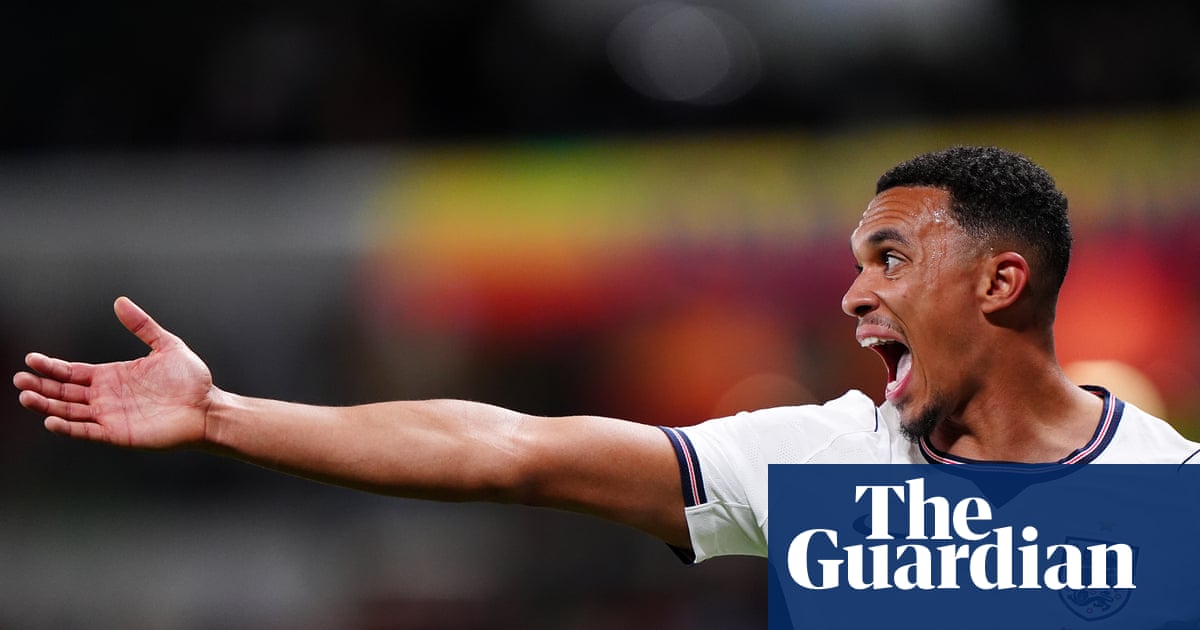
Thomas Tuchel is still overthinking Trent Alexander-Arnold
2 days, 15 hours ago
Ashley Sanchez's 20-goal NWSL season creates a massive USWNT tactical puzzle
2 days, 21 hours agoMore Analysis
Scotland's attacking promise died in the 11th minute against Switzerland
2 days, 12 hours ago
Scotland fans are already losing their minds over the Pocognoli era
2 days, 12 hours ago
Tuchel got his win in Prague, but Trent and VAR are still causing arguments
2 days, 15 hours ago
Thomas Tuchel is still overthinking Trent Alexander-Arnold
2 days, 15 hours ago
Dominik Szoboszlai targeted in Belfast as Hungary's Nations League slumps
3 days ago