
Folarin Balogun's red card exposes the fragility of Pochettino's USA system
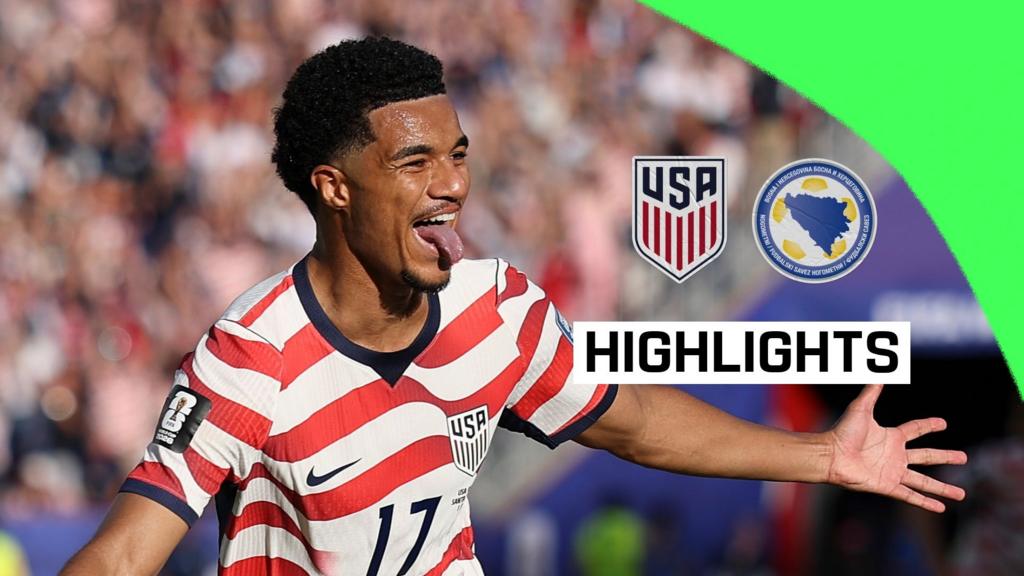
The Santa Clara Standoff
An expected goals difference of 1.85 to 0.12 in a World Cup knockout match usually suggests a comfortable lead. Yet, the United States retreated to the Levi's Stadium dressing room with just a fragile 1-0 advantage against Bosnia and Herzegovina. The single goal, scored by Folarin Balogun in the 45th minute, was the only tangible reward for a half of absolute control before the second half descended into a grueling survival exercise.
Pochettino's team ultimately secured their passage to the last 16. The match ended 1-0 in Santa Clara, but the victory was marred by self-inflicted wounds. Balogun's subsequent dismissal left his teammates to defend a slender lead under intense pressure.
For the first 45 minutes, the tactical plan was executed to near-perfection. The US choked the Bosnian buildup, forcing turnovers in high areas and cycling possession with speed. But the inability to put the game out of reach remains a persistent issue.
Against stronger opposition in the knockout rounds, such profligacy will be punished. The first half showed the potential of Pochettino's ideas, but the second half revealed how quickly the team can lose control. It was a victory that raised as many questions as it answered.
Deconstructing Pochettino's Asymmetric Mechanics
The core of Pochettino's tactical setup lies in its asymmetric shape during the buildup phase. Nominal left-back Antonee Robinson pushed high and wide, effectively operating as a traditional winger. This movement allowed Christian Pulisic to drift inside into the left half-space, forming a central overload.
On the opposite flank, Joe Scally remained deeper, tucking inside to form a back three alongside Chris Richards and Tim Ream. This shape allowed the United States to dominate the midfield channels. Bosnia's mid-block, organized in a defensive 5-4-1, struggled to account for the movement of Johnny Cardoso and Weston McKennie.
Cardoso occupied the deeper pivot space, completing 89% of his passes and circulating the ball quickly to the half-spaces. McKennie acted as the vertical runner, pushing into the box to support Balogun. The structural asymmetry created numerical advantages in central areas.
By pulling the Bosnian central midfielders out of position, the US opened passing lanes directly into the final third. Pulisic and Yunus Musah constantly rotated positions, making it difficult for the Bosnian backline to track their runs. This fluid movement pinned the opponent deep within their own defensive third.
However, the system requires absolute physical commitment from the central midfielders. When McKennie pushed forward, Cardoso was often left covering massive areas of the pitch alone. Bosnia's rare counter-attacking opportunities came when Cardoso was bypassed during transition phases.
A more clinical opponent would have exploited these temporary vacuums in the center of the pitch. The passing network map illustrates this asymmetry clearly. Ream and Richards exchanged short passes before launching diagonal balls to Robinson on the left touchline.
Robinson's high positioning forced Bosnia's right wing-back to drop deep, creating space for Pulisic in the channel. The strategy worked, but it relied heavily on Robinson's recovery pace to handle transitions. If the left-back is caught out of position, the entire defensive structure is exposed.
The 45th-Minute Breakthrough and Early Dominance
The opening goal was a direct product of this tactical pressure. The US won the ball back in the middle third after Cardoso intercepted a loose pass from Haris Hajradinovic. McKennie immediately received the ball and played a first-time vertical pass to Pulisic.
Pulisic turned his marker and drove toward the penalty area before feeding a slide-rule pass to Balogun. Balogun's movement was superb, darting between the two Bosnian center-backs. He took one touch to set himself and fired a low shot past goalkeeper Nikola Vasilj.
It was a clinical finish that rewarded the team's persistent attacking play. As reported in the BBC Sport match broadcast, the forward's goal seemed to set the stage for a routine victory. The stadium erupted, and the tactical superiority of the US was clear to everyone in attendance.
Statistically, the first half was a total mismatch. The US completed 284 passes to Bosnia's 98, controlling 68% of the ball. They registered nine shots, with four on target, while limiting the visitors to a single long-range effort that sailed wide.
The pressing triggers were set high, with the US front line forcing turnovers within six seconds of losing possession. Yet, the scoreline remained dangerously close. Tim Weah missed a clear chance from close range in the 30th minute after a cross from Robinson.
Balogun himself had a shot blocked after a clever turn inside the box. The failure to secure a second goal kept Bosnia alive in a match they had no right to be in. This inefficiency in front of goal has plagued the US under Pochettino.
While the buildup play is structured and fluid, the final action often lacks composure. The team created three big chances in the first half but converted only one. In knockout football, converting these moments is the difference between progression and elimination.
The Red Card and the Shift to Survival Mode
The dynamics of the match changed completely in the 62nd minute. Balogun, who had been a constant threat, let his frustration boil over during a physical duel. After a tangle with Bosnian defender Dennis Hadzikadunic, Balogun reacted aggressively and was dismissed.
This moment of madness turned a controlled tactical performance into a chaotic defensive stand. The physical altercation that led to the red card, as detailed in the BBC coverage of the game, left the US playing with ten men for the final half-hour. Pochettino was forced to abandon his attacking blueprint immediately.
The manager withdrew Weah and introduced central defender Miles Robinson to transition to a low-block 5-3-1 system. Pulisic was left as the lone outlet, isolated upfront. The possession statistics flipped instantly, with Bosnia taking control of the ball and pushing their fullbacks high.
The US defensive block dropped deep, defending the width of their own penalty box. Richards and Ream marshaled the central areas, winning key headers and blocking crosses. Bosnia struggled to create high-quality chances despite having the extra man.
Their possession was slow and predictable, playing into the hands of the compact American defense. However, the decision to drop so deep was a risky gamble by Pochettino. By relinquishing all central presence, the US invited wave after wave of Bosnian crosses.
Matt Turner was forced to make two important saves from aerial duels in the closing minutes. The strategy worked, but it felt unnecessarily tense against a limited opponent. The team survived, but it was a grueling finish that exposed their lack of composure under pressure.
The Midfield Load and Second-Half Fatigue
Playing with ten men exposed the physical toll of Pochettino's demanding system. McKennie and Cardoso had to run double shifts to cover the half-spaces. Musah's energy in possession was sorely missed after he was substituted to add defensive depth.
The midfield unit grew increasingly fatigued, leading to unforced turnovers and loose touches. In the final twenty minutes, the US completion rate in possession dropped to just 64%. They were unable to retain the ball for longer than three passes, constantly clearing it long to Pulisic.
This lack of ball retention put immense pressure on the back three. A more sophisticated opponent would have manipulated the spaces between the midfield and defensive lines. Pochettino's refusal to use his remaining substitutions earlier was also questionable.
Aaronson and de la Torre remained on the bench while McKennie clearly struggled with fatigue. The lack of fresh legs in the middle of the pitch almost cost them in stoppage time. The US survived, but the physical hangover of this match will affect their next outing.
The defensive discipline shown by the players was commendable. Ream's positioning was excellent, reading the game to intercept three low crosses. Scally also performed well in the back three, showing his versatility. But the tactical trade-off of playing without an outlet meant the team was entirely reliant on defensive resilience.
The Round of 16 Conundrum Without Balogun
The immediate consequence of Balogun's suspension is a massive tactical headache for the Round of 16. Balogun's ability to stretch defenses with runs in behind is central to Pochettino's system. He occupies center-backs, creating the space that Pulisic and McKennie exploit.
Without him, the team lacks a direct vertical threat at the tip of the attack. Ricardo Pepi is the natural replacement, but he offers a different profile. Pepi is more of a traditional box striker, preferring to link play and arrive late in the area.
He does not possess the same raw speed or movement in transition as Balogun. If Pepi starts, Pochettino must adjust the passing patterns to ensure the team can still progress the ball effectively. The tactical adjustments will need to be made quickly on the training pitch.
Another option is deploying Pulisic as a false nine, with Brenden Aaronson or Haji Wright entering the lineup on the wing. This would allow the US to maintain a fluid front three but would rob the team of Pulisic's effectiveness from the left channel. It is a compromise that could disrupt the attacking chemistry developed during the group stage.
The coaching staff must also address the disciplinary issues that resurfaced in Santa Clara. Balogun's red card was a failure of emotional control under pressure. In the high-stakes environment of a World Cup knockout stage, such mistakes are fatal.
Pochettino must address this lack of discipline if the team is to progress further. The victory over Bosnia showed that the US can dominate games structurally. The first-half performance was a clear reflection of the tactical work done on the training pitch.
But the second-half collapse into survival mode shows how quickly that structure can fall apart. The Round of 16 will test whether Pochettino can solve these structural and disciplinary flaws in time. Without their starting striker, the road ahead looks significantly steeper.
Official Liverpool FC Liverbird Scarf
The classic fan scarf to show your support for the Reds.
Frequently Asked Questions
Who scored the winning goal for the USA against Bosnia?
Why did the US struggle in the second half against Bosnia?
How does Mauricio Pochettino set up the USA team's defense?
What roles do Johnny Cardoso and Weston McKennie play in the US midfield?
What is the main weakness of Pochettino's asymmetric midfield system?
More Coverage

Scotland's attacking promise died in the 11th minute against Switzerland
23 hours ago
England win in Prague but Thomas Tuchel still has tactical puzzles to solve
1 day, 2 hours ago
Ashley Sanchez's 20-goal NWSL season creates a massive USWNT tactical puzzle
1 day, 8 hours ago
Ashley Sanchez is scoring at will, but where does she fit under Emma Hayes?
1 day, 8 hours ago
Northern Ireland bullied Hungary in Belfast, but missed chances cost them
1 day, 17 hours ago
Man City got caught and Mauricio Pochettino wants his lost trophies back
2 days, 2 hours agoMore Analysis
Man City got caught and Mauricio Pochettino wants his lost trophies back
2 days, 2 hours ago
Pedro Gallese collision highlights Cavan Sullivan's fiery US debut
3 days, 22 hours agoMan City guilty verdict and England's Wembley wobble (Sep 21–Sep 27, 2026)
4 days ago
Christian Pulisic is finally finding peace and purpose at AC Milan
1 week, 2 days agoWhy the USMNT 2026 World Cup Hype is Hitting a Reality Wall
1 week, 3 days ago