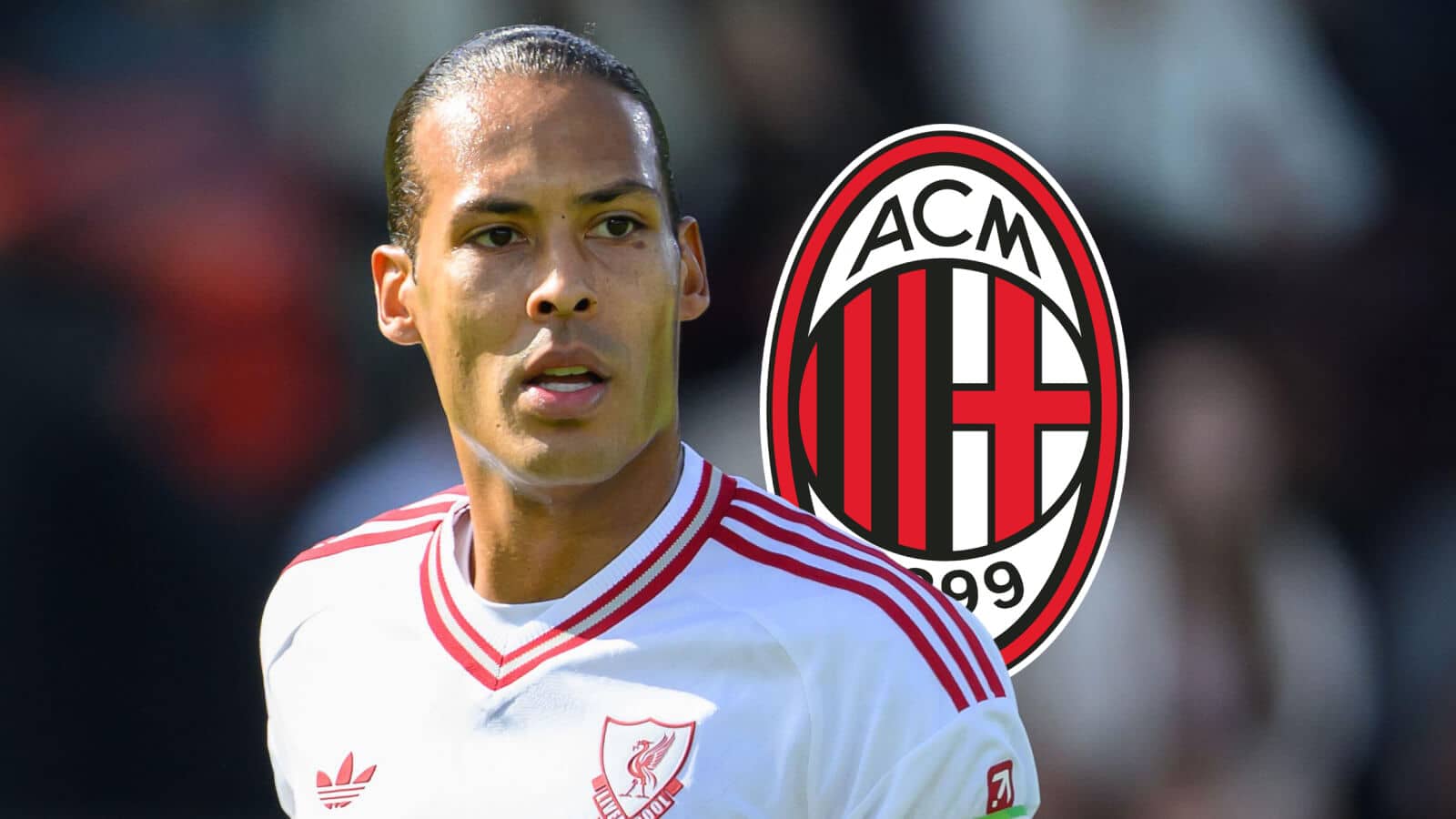
FIFA's Balogun farce proves Howard Webb's worst refereeing fears right
The Political Reprieve That Shattered Officiating Credibility
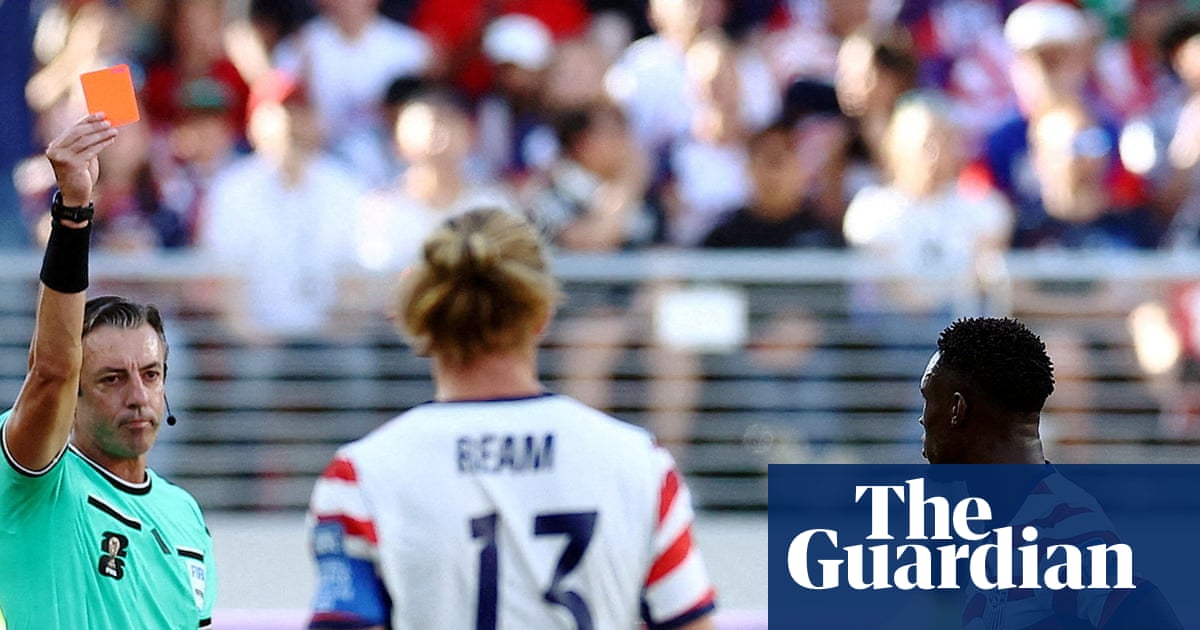
When an official pulls out a red card, the contract with the spectator is absolute. A rule was broken, a punishment was dealt, and the match proceeds under a uniform legal framework. That foundational contract collapsed during the World Cup when USA striker Folarin Balogun escaped a mandatory suspension through executive backroom intervention.
Speaking ahead of the new Premier League campaign on August 19, 2026, English football's chief refereeing officer Howard Webb made no attempt to disguise his anger over FIFA's disciplinary committee suspending Balogun's ban following direct pressure from US president Donald Trump. It was a rare moment of blunt, public criticism from domestic refereeing leadership against the global governing body.
blockquote>“What do we know? We know for sure that a red card was shown. I understand why it was given. We know that there was pressure placed by a politician on to Fifa, because that was admitted. And we know that the suspension was taken away for that particular tournament and suspended through a process which seemingly didn’t exist before the tournament started.”
Webb is right to be alarmed. Premier League chief executive Richard Masters echoed those concerns, pointing out how the scandal overshadowed Spain’s brilliant tournament victory and England’s agonizing semi-final defeat. Football was left arguing about political favors instead of tactical brilliance.
blockquote>“We should be talking about looking back on the World Cup and the football that was played, and Spain being obviously the best team and England’s agonising semi-final defeat. We’re not. We’re talking about other issues. I think that’s a huge shame. The Balogun issue … is very difficult to comprehend really when you look at it.”
When governing bodies construct arbitrary loopholes for elite names, they destroy the illusion of neutral officiating. Player behavior on the pitch is governed by predictable consequences. Once athletes realize that disciplinary outcomes hinge on political muscle rather than the rulebook, game management becomes an exercise in cynicism.
Referees rely on authority, not physical force. When FIFA undermines that authority at the highest level, it sends a message to every player on the pitch. Officiating stops being an impartial standard and becomes a negotiable political exercise.
From Human Error to Paranoia: The Social Media Trap
Webb correctly identified the cultural rot taking hold across modern football fandom. In previous decades, a missed offside or a soft penalty was discussed as human error. Today, every mistake is instantly framed as corrupt.
blockquote>“Decisions were previously viewed as correct or incorrect, based on your judgment. Far too often now decisions are viewed as correct or corrupt by people who want to type all over social media. They try to draw inferences around decisions that they don’t agree with and draw a motivation behind that decision which is borne out of no facts, no evidence.”
This breakdown in trust manifests directly on the pitch. Watch how players react to a simple foul in the central third, swarming the referee rather than resetting their defensive shape. Midfielders scream for bookings and signal for video reviews before the ball has even stopped rolling.
The paranoia feeds on itself. When supporters watch replays frame-by-frame on social media, they search for hidden motives rather than split-second biomechanics. A referee misjudging a sliding challenge is no longer seen as a miscue; it is branded as an active agenda against a club.
FIFA's capitulation on the Balogun red card gave those conspiratorial voices valid receipts. If a World Cup dismissal can be erased through presidential pressure, why should any fan believe a subjective handball call at Stockley Park is unbiased? Equal enforcement is the only shield referees possess, and FIFA willingly threw it away.
When institutional credibility erodes, refereeing decisions cease to be accepted as final. Every yellow card becomes a talking point, every VAR delay fuels outrage, and match officials are forced onto the defensive before kickoff.
Pro Ref and the Limits of Cosmetic Transparency
To combat this deepening crisis, English refereeing has unveiled a series of structural adjustments for the new season, beginning with a complete rebrand from PGMOL to Pro Ref. The organization has committed to publishing weekly assessments from an independent Key Match Incident panel alongside in-game audio feeds.
Rebranding an officiating body does not improve decision-making on the pitch. Changing an acronym from PGMOL to Pro Ref alters nothing about referee training, positioning, or real-time assessment under pressure. It is corporate re-skinning meant to project progress without altering fundamental mechanics.
Publishing panel reports days after a match concludes offers post-hoc transparency, but it provides zero tangible remedies for clubs. A written admission on a Tuesday does not restore three points lost to an improper penalty on a Saturday. It transforms officiating analysis into post-match content production rather than elite enforcement.
The technical overhaul extends to Stockley Park, where Pro Ref has expanded its pool of dedicated video assistant referees. The explicit target is reducing intervention delays, which averaged 41 seconds per check last season. Streamlined semi-automatic offside protocols have also been introduced to prevent agonizing multi-minute reviews over tight offside lines.
blockquote>“I’d rather have missed interventions than over-interventions. I’d rather VAR not get involved wrongly to rectify something that wasn’t wrong in the first place, because that’s a damaging effect on the game.”
Speed is desirable, but speed without accuracy is dangerous. Webb explicitly stated that he prefers missed interventions to erroneous over-interventions. Yet setting the VAR threshold too high creates a blind spot where obvious mistakes stand uncorrected simply to protect the broadcast flow.
This creates a tactical paradox for referees on the field. When VAR operates with a high intervention threshold, on-field referees often delay blowing their whistle on tight calls, assuming video reviews will catch errors. If Stockley Park then refuses to intervene to maintain speed metrics, clear fouls slip through uncorrected.
The Set-Piece Grappling Directive and Tactical Consequences
The most immediate tactical shift for the 2026-27 season lies in how set pieces will be officiated inside the penalty box. Webb warned that referees will penalize shirt-pulling and persistent holding far more aggressively from opening weekend onwards.
blockquote>“More situations will be penalised, not only in August or September, but throughout the season. [But] I’m not going to commit to say we’re going to go from here to penalising lots of contact. Contact is still part of the game, we still maintain a high threshold, but this time next year, all being well, we’ll be able to reflect on a season where more offences have been penalised.”
Modern set-piece routines are built on physical disruption. Set-piece coaches design intricate blocking schemes where defenders intentionally impede zonal markers to create free headers for target men. Corner deliveries are frequently targeted at the back post specifically to exploit refereeing reluctance to whistle grappling in crowded boxes.
If Pro Ref referees actually enforce the laws of the game on dead-ball situations, penalty counts will spike dramatically. Here is how teams must adjust their defensive structures to avoid giving away easy spot-kicks:
- Abandon heavy man-marking schemes in favor of strict zonal coverage to minimize physical contact inside the six-yard box.
- Adjust defensive line positioning on wide free-kicks, stepping up earlier to avoid penalty box scuffles.
- Modify blocker roles on attacking corners, relying on body positioning and screen angles rather than arm extensions and shirt-pulling.
Managers who fail to adapt to this directive will pay an immediate price. Center-backs accustomed to grabbing jerseys during corner scrambles will concede easy penalties. Tactical discipline during dead-ball phases will become as vital as open-play pressing triggers.
Set-piece specialists will test refereeing thresholds early in the campaign. In the opening rounds, expect attackers to intentionally exaggerate contact when held, forcing officials to decide whether their pre-season warnings were serious or merely theatrical.
However, skepticism is warranted. Refereeing bodies routinely announce aggressive points of emphasis every August, only for enforcement to soften by late autumn. If referees stop awarding set-piece penalties by November, teams that adapted early will feel punished for playing by the rules while aggressive holdouts profit.
Why Fixing Refereeing Requires Absolute Structural Integrity
Transparency measures, audio releases, and technical directives are useful tools, but they cannot cure a refereeing culture damaged by political cowardice at the top. When FIFA allows political intervention to override field discipline, domestic officiating bodies face an uphill struggle to maintain credibility.
Howard Webb and Richard Masters are right to express deep concern over the Balogun scandal, but expressing concern is insufficient. Football needs officiating bodies willing to uphold the rulebook without fear, favor, or political concession.
The health of the game depends on absolute impartiality across every competition layer. From grassroots matches to World Cup knockout ties, players and supporters must believe that rules apply equally regardless of reputation or political stature.
English football enters the new season at a dangerous crossroads. If Pro Ref's new transparency measures fail to deliver consistent enforcement, fan cynicism will reach a point of no return. Restoring faith requires uncompromising discipline on the pitch and total immunity to political pressure off it.
Amazon Fire TV Stick 4K streaming device with Alexa Voice Remote (includes TV controls), Dolby Vision
Unlock every match from the Premier League to the World Cup in stunning 4K.
Frequently Asked Questions
What is the FIFA Folarin Balogun scandal?
Why did Howard Webb criticize FIFA regarding Folarin Balogun?
Who is Howard Webb and what is his current role?
How did Richard Masters react to the FIFA Balogun scandal?
How is social media changing perceptions of referee decisions?
More Coverage

Man United players eye millions in compensation after Man City guilty verdict
10 hours ago
Abu Dhabi's investment threats won't save Man City from their guilty verdict
22 hours ago
Carlos Baleba returns to action as Man Utd face midfield injury sweat
23 hours ago
Zidane's France debut exposed structural issues talent cannot fix
1 day, 3 hours ago
Chiesa ready for Liverpool exit as Serie A trio prepare January moves
1 day, 3 hours ago
Arsenal freezing Emirates expansion reveals KSE's real priorities
1 day, 4 hours agoMore Analysis
Zidane's France debut exposed structural issues talent cannot fix
1 day, 3 hours ago
The Tennent's Sixes is back and modern sports science would hate it
1 day, 10 hours ago
Man City's £900m scandal casts a long shadow over the A-League launch
3 days, 19 hours ago
Thomas Tuchel is still overthinking Trent Alexander-Arnold
4 days, 1 hour ago
Why Ruben Amorim is misusing Goncalo Ramos at AC Milan
4 days, 14 hours ago