
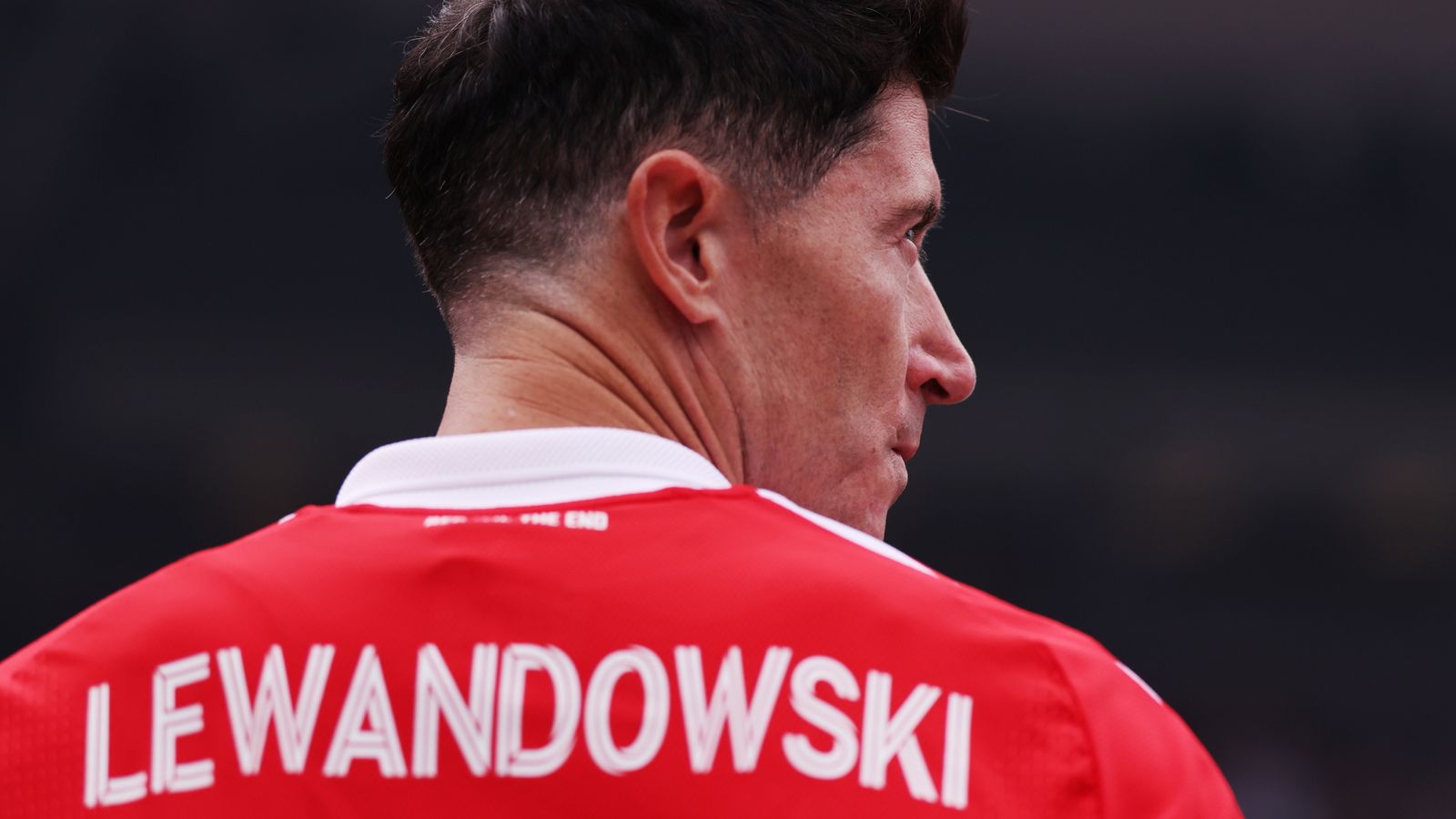
Chicago Fire finally look like a serious club with Robert Lewandowski
Moving Past the Banter Era in Chicago
Chicago is a sports town with zero patience for mediocrity. When the Bears play or the Bulls start winning, the entire city rallies. Earlier this year, the White Sox made the play-offs and halted local life in its tracks.
For over a decade, Chicago Fire had no seat at that table. The club was widely seen as an operational punchline across North American soccer. They consistently operated with a top-10 budget while delivering bottom-table misery year after year.
Supporters grew tired of empty promises and revolving coaching doors. The club missed the postseason for eight consecutive seasons before breaking through last year. Now, they are back, qualifying two years in a row for the first time since 2009.
That turnaround did not happen by accident. In an interview with Sky Sports, sporting director Gregg Broughton detailed how the organization shifted from panic spending to disciplined squad construction. The 50-year-old Englishman arrived with a resume shaped at Luton Town, Norwich City, Bodo/Glimt, and Blackburn Rovers.
Broughton knew the club needed structural stability before chasing silverware. The front office opened a brand new training ground to lift daily preparation standards. Next comes a purpose-built stadium set to open in the summer of 2028, giving the franchise an urban home of its own.
New facilities alone do not win matches. Plenty of wealthy clubs own pristine pitches and still drop points every weekend. What matters is organizational alignment, shared accountability, and a recruitment room in sync with the coach.
Head coach and director of football Gregg Berhalter runs the technical side, while Broughton oversees long-term roster construction. That partnership functions smoothly because the boundaries are crystal clear. Broughton holds a UEFA Pro Licence himself, yet he has zero ambition to coach on the touchline.
Broughton noted this dynamic prevents power struggles: "It allows me to sit there and have the football conversations with him, while also knowing that I am not after his job." In a league where front-office politics often derail projects, that clarity provides an immediate edge.
The Lewandowski Standard in the Locker Room
Signing a global icon in MLS can easily backfire. Cynics initially wondered if Robert Lewandowski arrived in Chicago merely to collect a comfortable final payday. After all, the league's history features plenty of decorated veterans who treated North America as a paid vacation.
Lewandowski proved those doubts wrong within weeks. The Polish striker has already delivered nine goals, including three strikes across his last two appearances leading into the postseason. He remains one of the sharpest penalty-box operators in world football.
Watch his movement off the ball. He waits for an opposing defender to glance toward play before darting into the blind spot behind the shoulder. That anticipation creates lethal chances from routine crosses.
Yet his daily habits carry even greater weight for Chicago's younger players. Broughton saw that firsthand during a regular-season road trip to face New England. Several academy prospects had traveled with the first team, terrified of making eye contact with a Champions League winner.
Lewandowski noticed their nerves immediately. Rather than keeping to himself, he walked down the aisle and shook hands with every single teenager. That gesture removed the tension and set a collective tone for the entire squad.
His dedication on the return flight showed why he reached the pinnacle of European football. While others rested, the striker pulled his seat up beside Berhalter to study clips:
"The moment the plane was in the air, Robert was going through every single clip for an hour and a half because he is meticulous, not only about his own performance but the performance of the team too."
That obsessive drive filters directly down to the rest of the roster. Young wingers know they cannot hide during video analysis sessions. When your primary goalscorer dissects footage on an airplane tray table, slacking off is no longer an option.
The commercial returns have matched the sporting lift. Chicago is home to a massive Polish community, and Lewandowski has added thousands of ticket buyers to the home gate. That support follows the team on the road, with Fire and Poland shirts filling stadiums in Toronto and New York.
General manager Zayne Thomajan managed the relocation smoothly, ensuring Lewandowski's family adjusted without distraction. Club president Dave Baldwin placed billboards across the city before the contract was even signed. The buzz was bold, calculated, and backed by immediate production on the pitch.
Finding Value in the Chaos of MLS Transitions
Lewandowski provides elite finishing, but he cannot solve the tactical turbulence inherent to North American soccer. MLS matches are notoriously open and chaotic compared to structured European leagues. Strict roster rules mean top-end talent often shares the pitch with developing domestic players, creating unpredictable turnovers.
Broughton saw that structural quirk as a recruiting opportunity rather than a handicap. As he noted in his discussion with Sky Sports, the open nature of the league dictates recruitment priorities:
"MLS has big imbalances in certain areas of the field. That means more turnovers, more transitions. And that puts more demand on the physical output."
Most foreign executives try to impose slow possession models that crumble in high-transition games. Chicago chose the opposite route. The club built what Broughton claims is the largest analytics team in MLS to scout players tailored specifically for frantic open-field play.
Head of recruitment Michael Stephens and head of strategy Eddie Rock began hunting in non-traditional selling markets. They searched for undervalued talent in competitions where high-volume running is not heavily prioritized. By projecting how those players would handle increased athletic demands, Chicago found market bargains that wealthier rivals overlooked.
The recruitment drive produced immediate gems across the spine of the team:
- Mbekezeli Mbokazi arrived from Orlando Pirates and emerged as the highest-performing central defender in MLS under internal models.
- Dje D'Avilla arrived from the Portuguese second division to inject recovery speed into transition phases.
- Eddie Rock used his mastery of MLS roster mechanisms to fit both international signings under the cap.
- Darcy Norman, who won the World Cup with Germany and Champions League with Bayern Munich, designed programs to sustain their conditioning.
Norman monitors fatigue markers to keep the squad sharp through summer heat and cross-country flights. That conditioning ensures Chicago does not wilt during the final fifteen minutes of matches.
Broughton believes this joined-up approach maximizes every dollar spent. When analytics uncovers value and performance staff keep players fit, the coaching staff can execute an aggressive tactical plan with conviction. It turns an unpredictable league into a manageable puzzle.
The Charlotte Test and the Reality of Playoff Football
For all the front-office planning, knockout soccer exposes every flaw. Sunday's play-off clash against Charlotte presents an immediate test for Chicago's roster construction. Knockout matches in November rarely reward theory; they punish momentary lapses.
Chicago's setup carries genuine risk. Lewandowski is a brilliant predator, but he cannot press opposing defenders for ninety straight minutes. When his defensive work rate dips, opposing midfielders find clean passing lanes forward, placing enormous pressure on Mbokazi and the backline.
Berhalter must prove he can adapt when an opponent disrupts Chicago's initial game plan. In past knockout environments, his teams occasionally struggled when physical opponents bypassed midfield traps with direct balls over the top. If Charlotte absorb pressure and strike quickly into wide channels, Chicago could easily find themselves chasing the match.
Statistical models look great in boardrooms, but they do not stop deflected set-pieces or bad bounces. Knockout soccer tests mental resolve under pressure. Chicago supporters remember years of defensive collapses, and postseason tension can spread quickly if things go wrong early.
Broughton navigated similar cultural hurdles at Bodo/Glimt before turning that Arctic outfit into Norwegian champions. His goal in Chicago is establishing a resilient identity that reflects the city's blue-collar work ethic. He wants the Fire debated in neighborhood bars alongside the Bears, Bulls, and White Sox.
Winning on Sunday would validate this analytical rebuild. Losing would leave supporters questioning whether an aging superstar and clever scouting can truly deliver a championship. The front office built a modern football operation, but the postseason demands ruthless execution.
Adidas Unisex Adults' Club Soccer Ball
Train like the pros with a durable ball built for every backyard match.
Frequently Asked Questions
How do Gregg Berhalter and Gregg Broughton divide leadership at Chicago Fire?
How many goals has Robert Lewandowski scored for Chicago Fire?
When did Chicago Fire last make back-to-back MLS playoff appearances?
When is Chicago Fire's new stadium scheduled to open?
What clubs did Gregg Broughton work for before Chicago Fire?
More Coverage
Rodolfo Cota knocked around as Red Bulls friendly descends into chaos
1 day, 8 hours ago
England finally have the tactical blueprint to win the Nations League
1 day, 11 hours ago
Why Arsenal's £60m benchwarmer exposes their broken January transfer plan
2 days, 16 hours ago
Poch built the engine and Jose burned it, but neither was the best
2 days, 20 hours ago
Top 10: Top Moments
6 days, 1 hour ago
The EFL Trophy group stage just delivered a brutal tactical reality check
6 days, 9 hours agoMore Analysis
Rodolfo Cota knocked around as Red Bulls friendly descends into chaos
1 day, 8 hours ago
England finally have the tactical blueprint to win the Nations League
1 day, 11 hours ago
Why Arsenal's £60m benchwarmer exposes their broken January transfer plan
2 days, 16 hours ago
Poch built the engine and Jose burned it, but neither was the best
2 days, 20 hours ago
Top 10: Top Moments
6 days, 1 hour ago