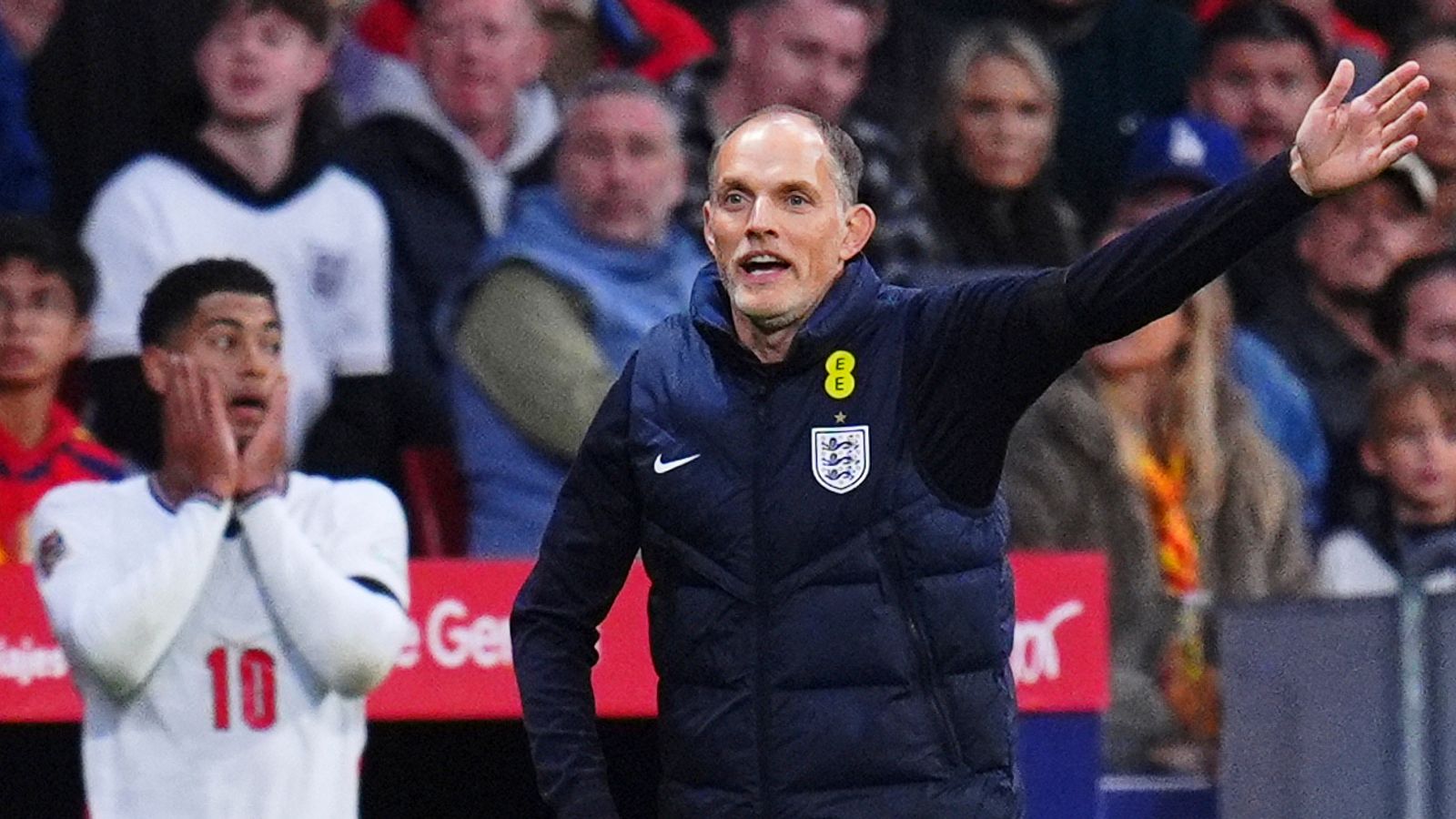
The Madrid Statement
Going into Madrid and beating Spain 3-2 is not something you fluke. Snapping a 43-game unbeaten run on Spanish soil requires a coherent tactical setup rather than blind tournament luck. England did not bother trying to imitate Spain's patient passing circuits, opting instead for sheer physical disruption.
Thomas Tuchel unleashed an aggressively direct gameplan that caught Luis de la Fuente's side off balance. England pressed high from the opening whistle, snapped into physical challenges, and refused to let Spain dictate tempo. As the Sky Sports match report detailed, this was England leaning into their traditional athletic strengths to rattle the world champions.
The set-piece routine for England's second goal showcased precision planning straight from the Premier League playbook. Two Arsenal teammates combined neatly inside a crowded penalty area, exposing Spain's zonal frailties with coordinated movement. Set pieces have become a defining weapon for club contenders, and England finally executed them with elite conviction.
Harry Kane looked every inch the reigning Ballon d'Or winner leading the line. In the days before kickoff, Spanish players queued up in press conferences to argue that Lamine Yamal deserved the award ahead of him. Kane quieted the Santiago Bernabéu crowd immediately, leaving away fans chanting that their captain is the best in the world.
Kane won and converted the opening penalty with clinical technique. That strike required serious mental resolve after his painful spot-kick miss against Spain back in September. Beyond his finish, Kane orchestrated England's entire third goal by dropping off the front line and combining fluidly with Jude Bellingham.
Tuchel Outgrows the Argentina Habit
The most significant tactical evolution was Tuchel's refusal to panic when momentum swung against his side. At the World Cup, we saw him repeatedly flinch in high-stakes moments. Against Argentina in the semi-final, he panicked on 72 minutes by shifting into a passive back five that invited endless pressure and triggered defeat.
He adopted a similarly defensive stance during the tournament's last-16 win over Mexico, throwing on Dan Burn on 75 minutes. Tuchel referenced that cagey finish after the whistle in Madrid, describing England's second-half rear-guard as "The Azteca reloaded." Yet the tactical execution this time showed far greater maturity.
"The Azteca reloaded," he said.
When Elliot Anderson received a straight red card near the 65-minute mark, Tuchel resisted the urge to bring on extra defenders. He did not retreat into a bunker or compromise England's midfield balance. There was no panic on the touchline and no immediate wave of defensive substitutions.
Instead, Jude Bellingham vacated the number ten role and dropped back to plug Anderson's spot in central midfield. That tactical adjustment preserved England's four-man backline while maintaining enough midfield presence to contest second balls. Tuchel showed immense faith in his defensive unit by asking them to hold off the world's most creative attack without retreating into a shell.
England did not make their first substitution until ten minutes from full-time. Dan Burn was withheld until the 89th minute, and even then, he entered as a direct replacement for an exhausted defender rather than an extra centre-back. By refusing to retreat into a back five, Tuchel maintained structural composure and earned the total trust of supporters.
The Flank Blueprint: Hall and White
Full-back selection has been England's most turbulent tactical dilemma over the past twelve months. Ben White was England's sixth starting right-back across their last 11 outings, an absurd rotation extending back to the World Cup knockout phase. In Madrid, both flanks finally delivered world-class defensive balance.
On the left flank, Lewis Hall produced a career-defining performance against Lamine Yamal. Hall had previously impressed against Yamal at St James' Park in the Champions League, but Newcastle's seven-goal collapse in the second leg left lingering skepticism. Hall emphatically buried those doubts across ninety minutes of defensive mastery.
Hall made two exceptional penalty-box interventions right before half-time, dispossessing Yamal and Mikel Merino in rapid succession. Going forward, he recorded five dribbles to relieve pressure and push Spanish defenders deep into their own territory. Even in stoppage time, he showed tremendous composure to win a goal-kick off Alex Baena.
His performance locks down England's starting left-back role and makes his omission from the World Cup roster look increasingly bizarre. On the opposite flank, Ben White completed an equally remarkable redemption arc. While scoring England's third goal was a memorable highlight, his defining contribution arrived at 84 minutes.
With Nico Williams sprinting clean through on goal, White tracked back and executed a flawless sliding challenge as the last defender. It was reminiscent of Djed Spence's heroic intervention against Argentina, only this time England protected their lead until the final whistle. After facing hostility and boos upon returning to the squad, White has made the right-back role his own.
Self-Inflicted Chaos and the March Prediction
England's victory was a triumph, but we cannot ignore the blatant operational flaws that nearly ruined the evening. Roy Keane hailed the first-half display as "perfect" during the interval broadcast, but the closing stages were uncomfortably frantic. Throwing away two goals from a commanding 3-0 cushion reveals serious discipline issues.
Individual errors almost wrecked sixty-five minutes of tactical superiority. Jarell Quansah endured several clumsy moments under Spanish pressing, while Anthony Gordon committed careless turnovers that exposed England's defensive transitions. Anderson's reckless challenge compounded those mistakes, forcing his teammates to survive twenty-five minutes of intense pressure with ten men.
In goal, James Trafford delivered a mixed audition for the number one jersey. He produced a razor-sharp double save in the closing stages, reacting brilliantly to push away a deflected second shot. Tuchel was effusive in his post-match praise for Trafford's passing range and distribution under pressure.
Nevertheless, Trafford has conceded four goals in two meetings against Spain during this group stage. Jordan Pickford has never let his country down in tournament football, meaning Trafford remains an apprentice rather than a replacement. The Everton goalkeeper will keep his gloves when the Nations League quarter-finals kick off in March.
England topped their group to secure seeded status for the quarter-finals. The official draw takes place this Friday, November 20 at 11am, with two-legged ties scheduled for March 25 to 27 and March 28 to 30. As the post-match breakdown indicated, Tuchel now possesses four months to refine this dynamic tactical framework.
The tactical evidence points directly to England taking another major step forward in the spring. Three key factors explain why Tuchel's side are positioned to succeed:
- The aggressive front-foot pressing structure and Premier League set-piece routines reliably destabilize continental opponents.
- Lewis Hall and Ben White give England their most defensively disciplined full-back pairing since the World Cup cycle began.
- Tuchel's commitment to maintaining a back four prevents the psychological collapse that derailed previous tournament campaigns.
England will comfortably advance through their two-legged March quarter-final tie regardless of who they draw on Friday. Tuchel has finally learned to trust his players in a back four rather than retreating in panic. Back England with high confidence to punch their ticket to the Nations League Finals.