
MARTIN ØDEGAARD
Arsenal Captain vs His Former Club
He was supposed to be the next Zidane. Real Madrid signed him at 16 — the most hyped teenager in football. It never worked out. But Ødegaard's journey from Bernabéu reject to Arsenal captain is one of football's great redemption arcs — and the UCL quarter-final against Real Madrid is the most loaded storyline of the season.
Player Profile
| Full Name | Martin Ødegaard |
| Date of Birth | 17 December 1998 |
| Birthplace | Drammen, Norway |
| Nationality | Norwegian |
| Position | Attacking Midfielder / No. 10 |
| Real Madrid | Joined Jan 2015 (age 16) |
| Loan Clubs | Heerenveen, Vitesse, Real Sociedad (2016–21) |
| Arsenal | Loan Jan 2021 → Permanent Aug 2021 |
Trophies & Achievements
- ◆ Premier League Golden Boot contender 2024-25
- ◆ Arsenal player of the season — multiple years
- ◆ Norway captain — record international caps
- ◆ Real Sociedad: Europa League group stage breakthrough
- ◆ Top 10 Ballon d'Or finish 2024
- ◆ Arsenal UCL quarter-final 2026 — the Bernabéu return
The Real Madrid Chapter — The Story That Defines This Tie
January 2015 → August 2021 — six years, five loan spells, and a journey that ended without a single first-team league appearance for Madrid
The Next Big Thing
Real Madrid signed a 16-year-old Martin Ødegaard from Norwegian club Strømsgodset in January 2015. The transfer fee was €4 million. The hype was enormous. European clubs including Liverpool and Bayern Munich had courted him. Choosing Real Madrid felt like destiny. Jose Mourinho attended his presentation. The tabloids called him the next Zidane.
The Loan Odyssey
Heerenveen. Vitesse. Real Sociedad. Year after year, Ødegaard was sent out on loan while Real's Bernabéu waited for a version of him that never materialised under Florentino Pérez's regime. At Sociedad, something clicked — he became one of La Liga's best players during the 2020-21 season. Madrid brought him back. Then loaned him to Arsenal.
Real Madrid's Greatest Mistake
Arsenal made the loan permanent for £30 million. Real Madrid agreed. Within two seasons, Ødegaard was Arsenal captain, one of the Premier League's best players, and a Ballon d'Or contender. Within three seasons, he was leading Arsenal back to the Bernabéu in the UCL quarter-final. The Bernabéu sold him. The Emirates made him a legend.
"He came to us as a boy. He returns as an Arsenal captain leading a UCL quarter-final."
This is the story. This is why the Arsenal vs Real Madrid tie carries more narrative weight than any other UCL matchup in 2026.
UCL 2025-26 Campaign
Ødegaard has been Arsenal's most creative player throughout the 2025-26 UCL campaign. His chance creation — key passes, through balls, crosses from the left half-space — has set up goals that justified every penny of his £30m permanent fee. The quarter-final against Real Madrid will be the biggest test of his career on the biggest stage he has played on since leaving the Bernabéu.
Arsenal's Heartbeat — How the Team Functions Through Ødegaard
When you watch Arsenal with data on your screen, one pattern is overwhelming: everything creative goes through Ødegaard. Pass completion above 88% in UCL games. Progressive passes per 90 among the highest in the competition. Chance creation from the half-space — that left-of-centre zone where Arteta has designed him to operate — is his signature.
But it is not just the numbers. It is the effect on his teammates. Saka plays better when Ødegaard is available. Martinelli finds space more often. Havertz scores more frequently. He is the connector — the player who links the defensive recovery with the attacking transition, who makes the pattern run at speed.
When Ødegaard is absent — injured or suspended — Arsenal's goal output drops noticeably. The correlation is as close to 1:1 as you get in modern football statistics. He is not just important to Arsenal. He is Arsenal's attacking system made flesh.
Pass Completion (UCL 2025-26)
88%+ pass completion in UCL games — elite for an attacking midfielder who takes risks with progressive passes. He does not just keep it simple; he keeps it accurate under pressure, making him a reliable option for teammates in tight situations at the Bernabéu.
Progressive Passes
Ødegaard's progressive pass numbers place him in the top tier of UCL attacking midfielders. He consistently breaks lines with passes that advance Arsenal's attack — not sideways, not backwards, but forward into dangerous areas where Saka and Martinelli can receive on the run.
Free-Kick Threat
Ødegaard's delivery from set pieces — free kicks and corners — adds another dimension. Arsenal have worked extensively on set-piece routines under Arteta, and Ødegaard is often the delivery man. In tight knockout ties, a set piece goal can be decisive. Real Madrid's wall will be working on this.
Playing Style
Deep-Lying Playmaker
Ødegaard drops deeper than a traditional No. 10 to receive under pressure and turn. His ability to receive between the lines, spin, and play forward in one movement is what separates him from other creative midfielders. He does not need space — he creates it through timing and body orientation.
Pressing Triggers
Arteta's press requires a midfielder who knows when to trigger it. Ødegaard is Arsenal's press initiator from an advanced position — he reads when Real Madrid's defenders are under pressure and signals the front line to push up. His defensive work rate is often underrated, but it is foundational to Arsenal's game.
Late Runs into the Box
One of Ødegaard's most dangerous attributes is his timing of late runs. From what appears to be a midfield position, he arrives in the penalty area at pace — untracked by a midfield that has been drawn to Rice or Havertz. He has scored numerous goals this way for Arsenal, and it will be a key tactical wrinkle for Arteta to exploit at the Bernabéu.
vs Real Madrid — Exploiting the Spaces
The Tactical Blueprint
Real Madrid's defensive structure is built around Tchouaméni sitting at the base of midfield, with Carvajal pushing high at right-back. This creates a gap — the space between Carvajal's attack position and the defensive line. Ødegaard, operating in the left half-space, is perfectly positioned to exploit this channel. His combination with Saka and Rice could drag Real's midfield across and open the right side.
The other opportunity is transitional. Real Madrid commit many players forward. When Arsenal win the ball, Ødegaard's release ball — played first time into Saka or Martinelli in behind — before Madrid can recover is their greatest counter-attacking threat. It requires Ødegaard to be brave, quick in thought, and precise under pressure. He has all three.
The Emotional Subtext
Ødegaard has spoken publicly about his time at Real Madrid with measured diplomacy. But every professional wants to prove they were right to leave, or that a club was wrong to let them go. Standing in the Bernabéu as Arsenal's captain and scorer could be the single defining moment of his career. The motivation is unstated but absolute.
Awareness of Real's Defensive Shape
Having trained at Real Madrid's Valdebebas facility for six years, Ødegaard understands their patterns intimately. He knows the defensive triggers, the shape in transition, the spaces that open when Vinicius pushes high. This institutional knowledge — rarely quantifiable — could be Arsenal's edge in the tie.
The Bernabéu Crowd
The Bernabéu crowd will give Ødegaard a warm reception — he is a former player, respected and genuinely admired by the Madrid faithful who remember him fondly. But that warmth could turn quickly if he starts well. Playing in front of 80,000 who remember you as a teenager is an entirely different psychological challenge.
Latest Martin Ødegaard News
Arsenal latest: Odegaard not selected by Norway - will he make cup final?
Arsenal latest: Odegaard, Timber, Kepa - Arteta gives cup final team news
Arsenal latest: Odegaard set to return for Arsenal at Southampton
Arsenal told to ‘cash in’ on Martin Odegaard and fund world-class £78m winger signing
Arsenal latest: Odegaard sets potential injury return date
Arsenal ‘preparing €35m package’ for Moroccan star to play ‘alongside Martin Odegaard’ – report
Thierry Henry makes Arsenal Champions League claim and reveals biggest weakness
Thierry Henry makes Arsenal Champions League claim and highlights biggest weakness
Is Martin Odegaard injured this weekend? Injury latest on Arsenal captain as Premier League leaders face Bournemouth
Eberechi Eze and Martin Odegaard injury updates ahead of Arsenal vs Bournemouth
Related Content

Why Martin Odegaard and Premier League Stars Are Obsessed With VR
1 day, 23 hours ago
Martin Ødegaard Has Finally Unlocked Arsenal's Killer Instinct
4 weeks, 1 day ago

Martin Odegaard's full recovery gives Arsenal the edge in Champions League
1 month ago
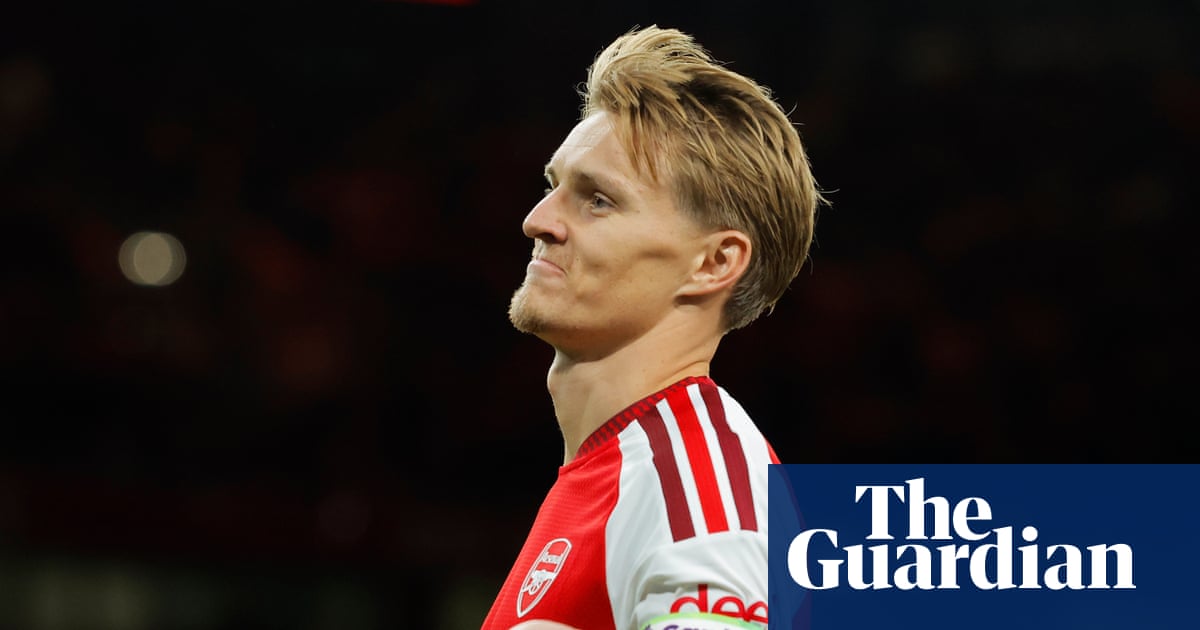
Martin Odegaard looks like himself again as Arsenal cruise past Coventry
1 month, 2 weeks ago

Why Martin Odegaard’s private life is the least of Arsenal’s worries
2 months, 3 weeks ago

Martin Odegaard faces a career-defining test against Declan Rice
2 months, 4 weeks ago
Arsenal’s internal battle at the World Cup: Odegaard vs Rice
2 months, 4 weeks ago

How Declan Rice can shut down Martin Ødegaard and send England through
2 months, 4 weeks ago
Why Norway's World Cup dreams rest on Odegaard's fragile shoulders
3 months, 1 week ago

Arsenal's transfer window hinges on a weird Martin Odegaard theory
4 months ago
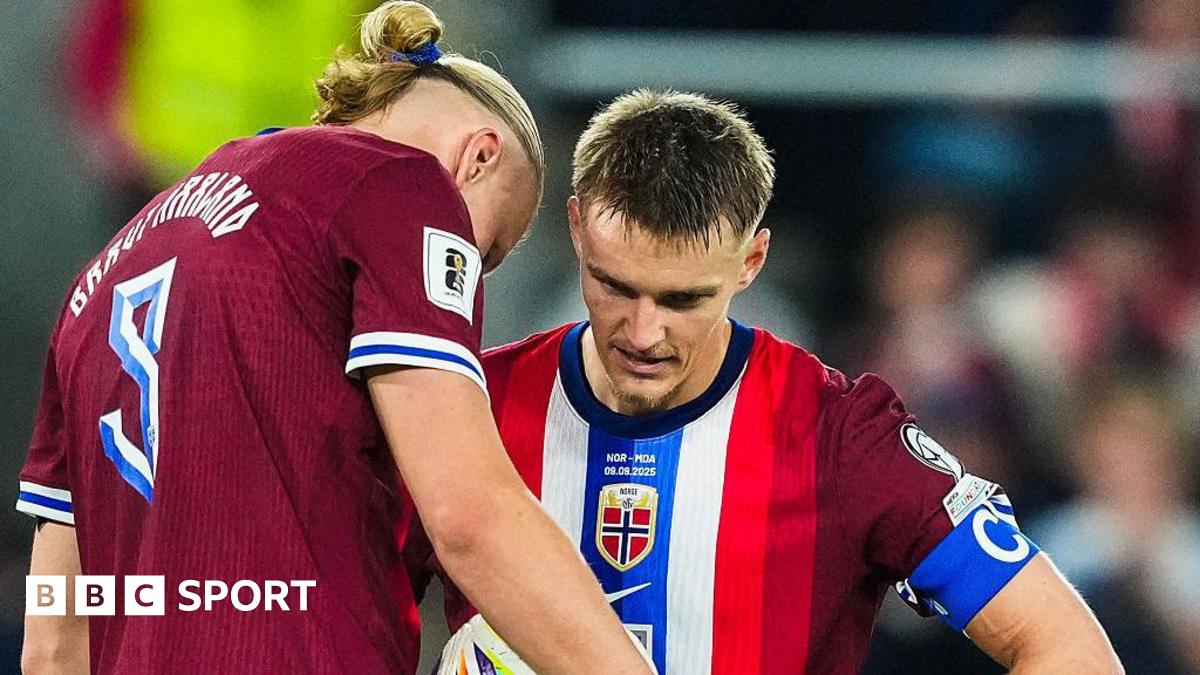
Martin Odegaard takes Norway armband as 2026 World Cup approaches
4 months, 2 weeks ago
Martin Odegaard is carrying the weight of a nation into the World Cup
4 months, 2 weeks ago