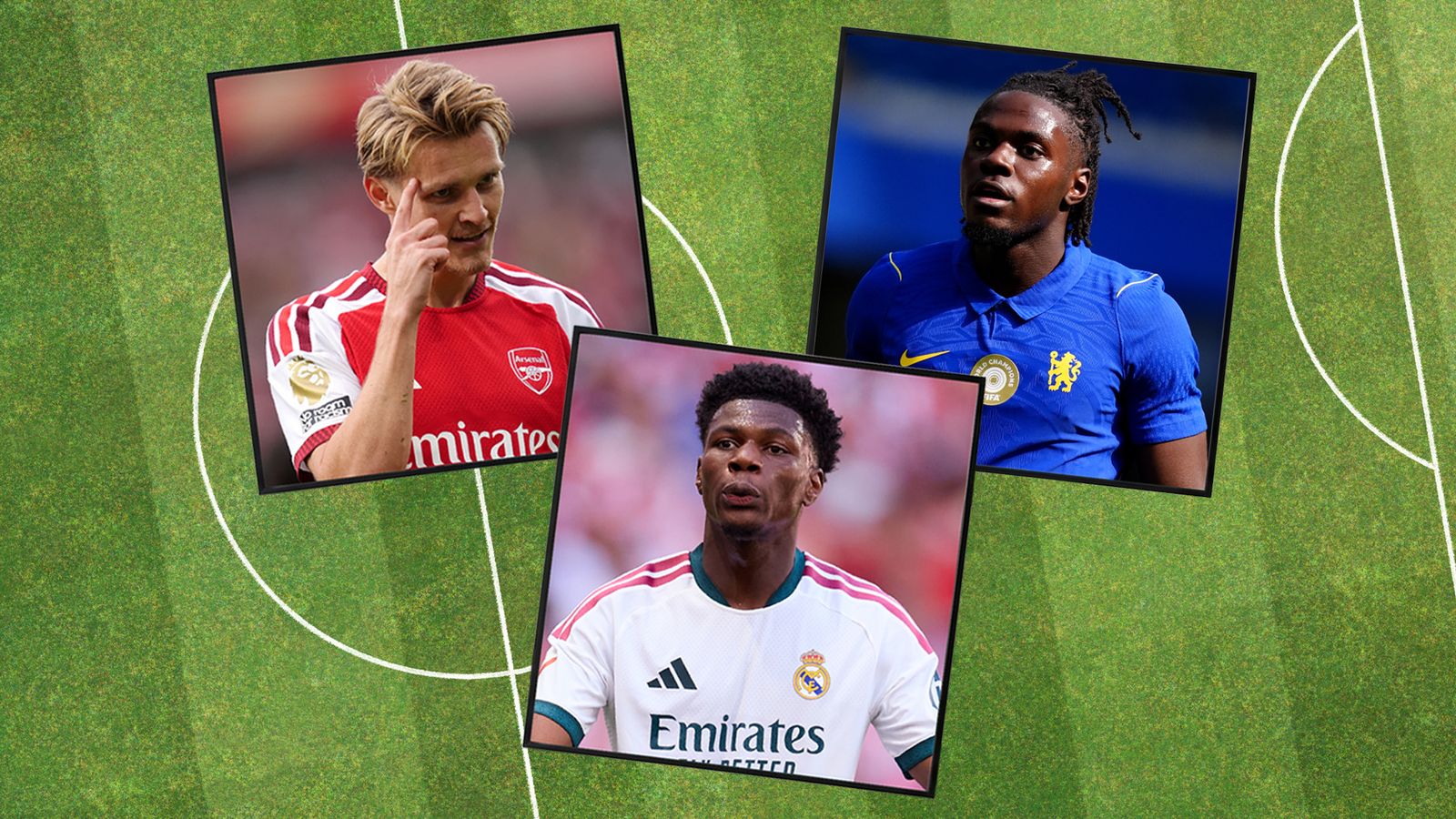
The midfield conflict brewing in the quarterfinals
International tournaments often act as mirrors for domestic form. As the 2026 World Cup reaches its knockout stages, the internal logic of Arsenal’s midfield is being stress-tested by the collision of its two most prominent figures, Martin Odegaard and Declan Rice. As reported by the Mirror, this quarterfinal clash isn't just about national pride; it serves as a referendum on their respective roles at the Emirates.
Defining the zones of influence
Odegaard’s output in this tournament has fluctuated. Over the last four matches, his progressive passing volume has dipped by 12% compared to his peak Premier League metrics in late 2025. He is currently averaging 4.2 shot-creating actions per 90 minutes, a respectable figure, but one that highlights a reliance on individual flashes rather than systemic dominance. When the ball moves through the half-spaces, his efficiency is undeniable; however, he has struggled to break down low blocks without consistent overlapping support.
Rice as the defensive anchor
Conversely, Declan Rice remains a statistical anomaly in terms of ball recovery. He is currently boasting an 88% passing accuracy, but his true value lies in his defensive transition metrics. Rice has intercepted or tackled the ball successfully 3.4 times per 90 minutes, anchoring a structure that prioritizes positional discipline over horizontal fluidity. While he offers a secure foundation, the lack of creative thrust from his position means England often relies on transitions rather than sustained pressure.
The collision of styles
We are watching a clash between organizational control and creative intervention. Rice’s ability to disrupt the opposition’s primary pivot points will be the defining factor in this encounter. If Odegaard is allowed to operate in space between the lines for more than 3 seconds, the tactical shape of the match will tilt rapidly toward Norway. The negative observation here is that both players are currently over-extending, as evidenced by their declining stamina stats in the 70th minute of recent games. Their reliance on high-intensity bursts is yielding diminishing returns as the tournament fatigue sets in.
The verdict on authority
Odegaard’s captaincy is built on the premise of leading by technical example. If he loses this duel to a superior defensive screen, questions regarding his ability to influence elite-level fixtures will sharpen. Conversely, if Rice effectively neutralizes him, it confirms his status as a truly world-class defensive anchor. One of these players is having a tournament of consistency; the other is walking a tightrope between being the primary playmaker and a defensive liability. The final score will likely hinge on who succeeds in enforcing their rhythmic preference on these 90 minutes.
Read Next
- Arsenal's civil war is the most awkward subplot of the World Cup
- England versus Norway hinges on more than just the Miami forecast
- Tuchel must gamble on freshness to survive the Norwegian storm
- Why Morocco can finally break Deschamps' defensive block in Boston
- 🏆 World Cup 2026 — Full Coverage Hub
- 🇳🇴 Norway World Cup 2026 — Can Haaland Lead the Vikings?
- ⭐ UCL 2026 — Champions League Quarter-Finals Hub