Eased Into Neutral: How Arsenal Dismantled Coventry
Sky Sports kicked off the new Premier League campaign by trailing its massive slate of 1,500 live matches this season. That translates to 3,000 hours of football, or 125 continuous days slumping in a chair gorging on highlights and VAR disputes. For Arsenal, opening night was a far simpler affair than the relentless marathon ahead.
Mikel Arteta’s squad began their title defense by putting down newly promoted Coventry City with minimal fuss. The 3-0 win at a chilly Emirates Stadium felt less like a high-stakes league match and more like a team testing out updated software in neutral. Arsenal controlled every phase without ever needing to drop into top gear.
Coventry entered the evening as champions of the Championship, but Frank Lampard’s side quickly found themselves outmatched by top-flight speed. The gulf in sharpness was evident from the opening exchanges. Coventry struggled to bypass Arsenal's initial press or maintain possession beyond three passes.
The opening goal arrived after just 15 minutes through a crisp three-beat sequence. Christos Tzolis won a heavy block-tackle against Milan van Ewijk right on the touchline, spilling the ball toward Riccardo Calafiori. Calafiori immediately swept a hard, low pass across the edge of the penalty box into Kai Havertz.
Havertz met the pass with a first-time left-foot volley so effortless he looked like he was wearing leather parlour slippers. The finish set the tone for an evening where Arsenal operated with casual authority. Coventry barely had time to adjust before their defensive structure buckled again.
The Return of the Pass That Makes the Pass
With no headline attacking signing arriving during the summer transfer window, all eyes naturally turned to Martin Odegaard. The captain spent much of last season looking like an injury-addled shadow of his former self. Restoring his physical rhythm is central to Arsenal's tactical blueprint this year.
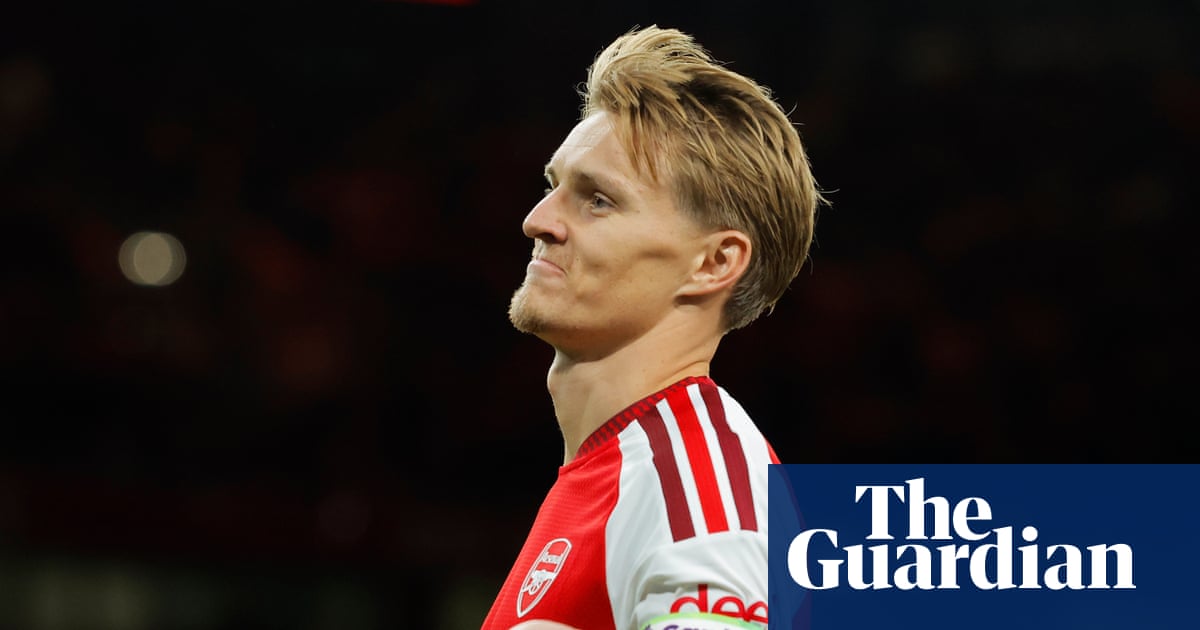
For 75 minutes on Friday, Odegaard showed encouraging signs that his former self is resurfacing. As Barney Ronay observed in The Guardian, Odegaard resumed his role as Arsenal's smoothing agent and primary tempo controller. He operated as footballing WD-40, lubricating every attacking rotation.
Odegaard logged 72 touches and completed 55 passes, constantly twitching the threads just behind the front line. His spatial awareness opened up central lanes that had remained stagnant during his long absence. When Odegaard is fluid, Arsenal’s entire build-up settles into a predictable, rhythmic groove.
Arsenal’s second goal was a classic demonstration of that subtle playmaking influence. Declan Rice provided the explosive engine with a driving central run, but Odegaard provided the sharp opening spark. His quick, nudged pass created the precise fraction of space needed to shift the ball wide for the decisive cross.
Even more encouraging for Arteta was the revival of the right-side telepathy between Odegaard and Bukayo Saka. Just before half-time, the pair exchanged six rapid passes in a tight pocket on the wing. That sharp combination play freed Rice for a shot that whistled just wide of the post.
That sense of play between Odegaard and Saka has been missing for months. Their ability to invent solutions in crowded areas gives Arsenal an extra dimension. When those two are connected, defenses are forced to overcommit to the right flank, leaving space elsewhere on the pitch.
A Comical Finish and Lingering Striking Rust
The headline moment arrived in the 48th minute when Odegaard added Arsenal's third goal. The build-up showcased his intelligence, as he triggered the move from deep, delivered a delayed pass to Ben White, and drifted into open space inside the box. Everything up to the final touch was textbook playmaking.
The finish itself, however, was pure comedy. Odegaard sidled up to the ball at an awkward angle and delivered a miskicked power-stub directly into the turf. The ball bounced weirdly to the left of Coventry goalkeeper Carl Rushworth, who clawed helplessly at the air like a cat chasing a shadow on a wall.
Odegaard laughed as he celebrated his first Emirates goal since last December. Yet as noted in Guardian match reporting, that scuffed strike revealed clear mechanical rust in his ball-striking technique. Striking through a ball cleanly requires full ankle torque, something that often lags behind basic sprinting conditioning after lower-limb injuries.
While the goal counted on the scoreboard, serious analysts should not ignore the scuffed contact. A miskick against a passive Coventry side goes in, but against Manchester City or Real Madrid, those scuffed chances disappear. Odegaard still needs time before his ball-striking matches his spatial intuition.
It is also worth noting that Coventry provided virtually no physical examination. Frank Lampard's team allowed Odegaard to drift into half-spaces without putting a single body on him. He was never forced into a violent deceleration or an aggressive 50-50 challenge.
Until Odegaard absorbs heavy contact against a top-tier pressing side, questions about his full durability remain unanswered. Easing back against promoted opposition is a helpful stepping stone, but it is not a true stress test of joint stability under pressure.
Squad Depth, Executive Ninjas, and the Road Ahead
On the touchline, Mikel Arteta and Frank Lampard provided an entertaining visual side-show. Both managers stood for 90 minutes in identical outfits: black slacks, black knitted mock-turtleneck sweaters, and white-soled black trainers. They looked less like competing tacticians and more like an advance team for an executive ninja golf retreat.
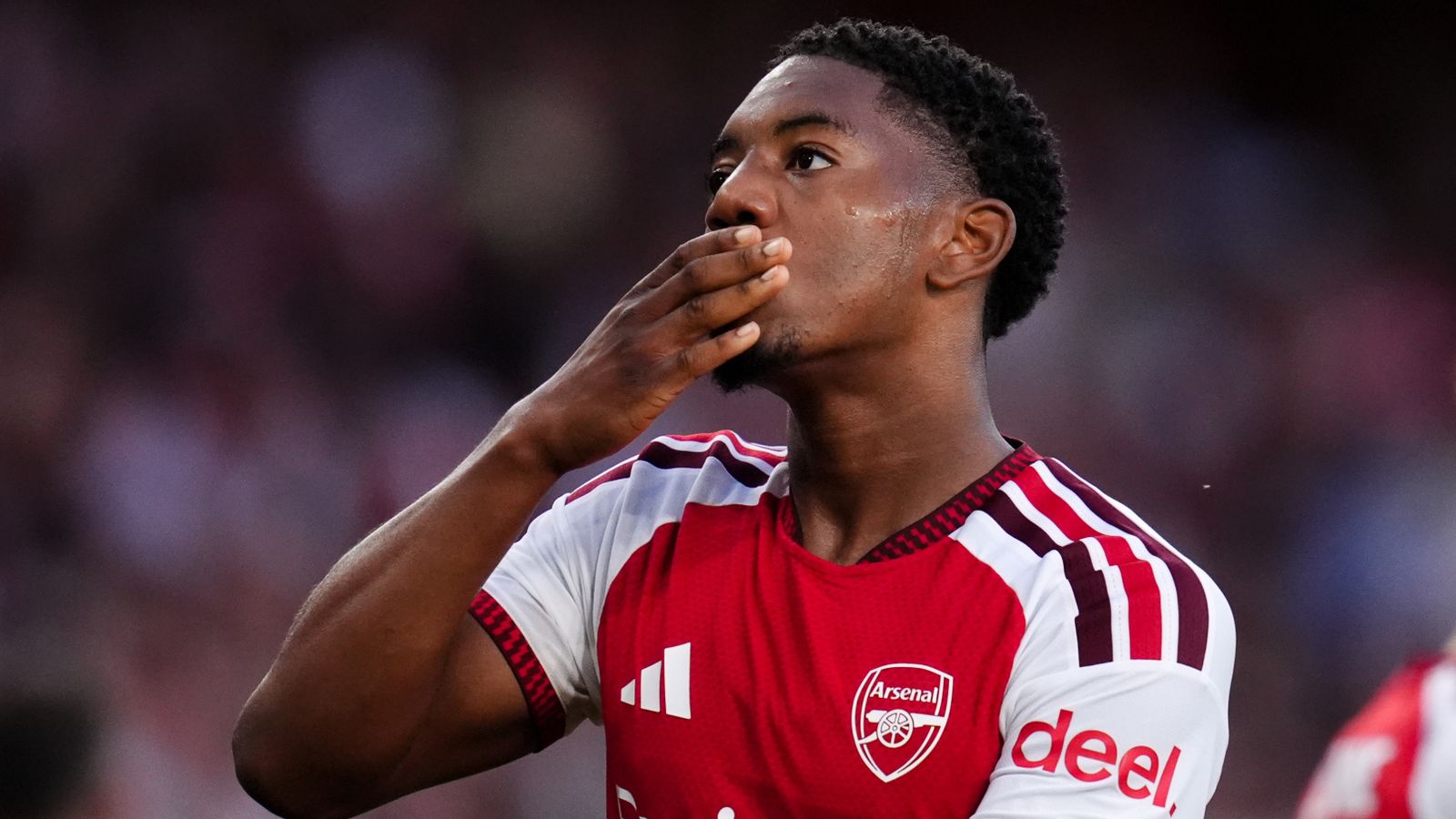
Behind the sartorial quirk lay a stark contrast in squad depth. While Lampard searched for answers, Arteta watched teenager Myles Lewis-Skelly put in another commanding midfield performance. Lewis-Skelly played with tigerish aggression, breaking up play and barely misplacing a pass all evening.
Lewis-Skelly’s composure was no fluke. He had previously delivered a stellar performance against the champions of Europe, proving he can handle heavy responsibilities. His emergence as a reliable central option gives Arteta genuine flexibility to rest senior starters when the calendar tightens.
Winning a title requires relentless consistency, but retaining one demands finding deeper gears. Arsenal’s objective this season is clear: win matches cleanly and make routine fixtures far less stressful. On Friday night, stage one of that plan was executed flawlessly.
Managing altered gravity after a title win is never simple. Former captains like Roy Keane preach serial victory as a form of self-harm, where winning must be followed by immediate self-flagellation. Arteta's approach appears far more methodical, emphasizing pattern execution and physical preservation over raw emotion.
The upcoming winter months will present far tougher hurdles than a home tie against Coventry. Fixtures will pile up, injuries will test the bench, and tactical adjustments will be required. But with Odegaard regaining his movement patterns and young talents stepping up, Arsenal look equipped for the grind.
Friday night was not a final declaration of dominance, but it was a solid foundation. If Odegaard can refine his striking mechanics while maintaining his spatial intelligence, Arsenal’s midfield machine will run as smoothly as ever. For now, Gunners fans can enjoy a quiet, painless start to a very long season.
Read Next
- Arsenal look ready to dominate, but Arteta's summer moves carry real risk
- Coventry's £130m summer makeover was exposed by Arsenal in 49 minutes
- Arteta confirms Lewis-Skelly is staying as Arsenal prepare for Coventry opener
- Arsenal's title defense faces immediate test with William Saliba out injured
- 🇳🇴 Norway World Cup 2026 — Can Haaland Lead the Vikings?
- ⭐ UCL 2026 — Champions League Quarter-Finals Hub