Medical Clearance: Odegaard Shakes Off Long-Term Fitness Concerns
Martin Odegaard is back at full fitness.
The timing could not be more critical for Mikel Arteta's squad.
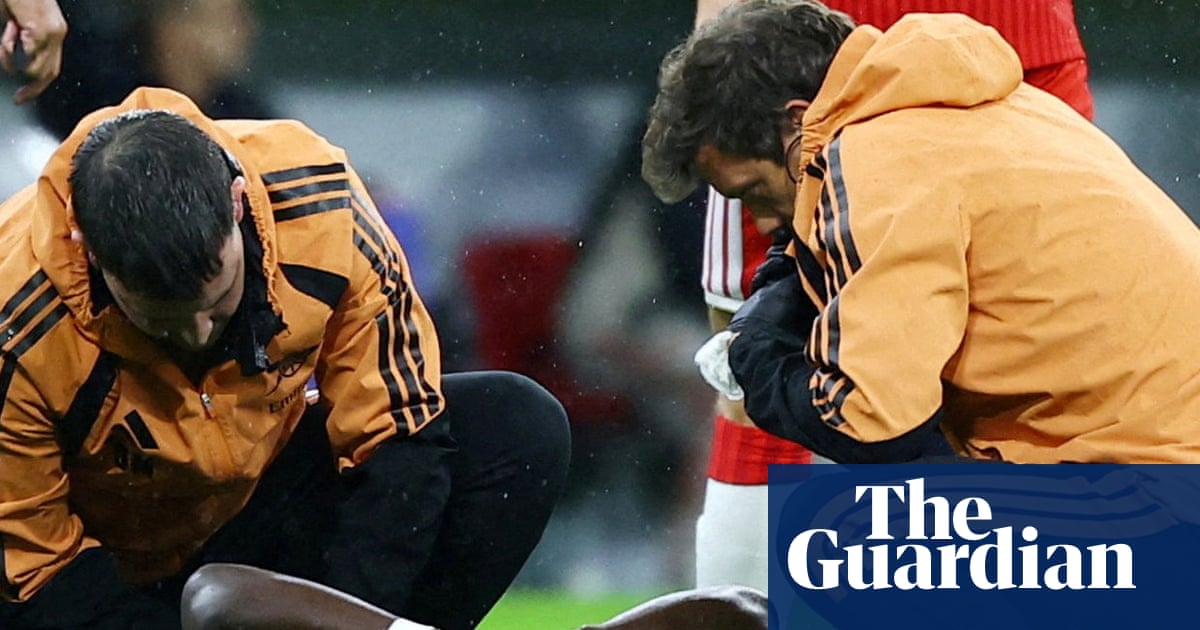
After a frustrating 2025-26 campaign blighted by recurring joint and muscular injuries, the Norwegian captain has completed a full medical rehabilitation program.
According to fitness updates detailed in BBC Sport's Champions League preview, Odegaard enters the new season without physical limitations.
That clean bill of health removes a major tactical question mark hovering over Arsenal's midfield.
During his repeated injury absences last year, Arsenal struggled to break down rigid defensive blocks.
The team relied heavily on secondary creators, which choked vertical ball progression through central channels.
Now, Odegaard's return to peak physical condition restores Arsenal's primary press-breaker.
He has reclaimed his position as the tactical engine in Arteta's high-pressing system.
His lateral acceleration and movement between the lines are sharp again.
Arsenal's medical staff spent months refining his training loads to prevent secondary soft-tissue strains.
The captain looks completely unburdened on the pitch.
He is driving the tempo in early domestic fixtures with renewed physical sharpness.
His recovery gives Arsenal the midfield orchestrator they lacked during key spells last season.
After a difficult season for Martin Odegaard last year with injuries, he has started this one very well. The Norwegian can dominate games, and his team - more confident now - will need him to do that.
Data Breakdown: How Odegaard's Health Shifted European Odds
Odegaard's fitness clearance has immediately altered statistical projections for the upcoming European campaign.
Data analysts at Opta now place Arsenal as overall favourites to lift the trophy with a 20.4% win probability.
That projection edges Bayern Munich at 20.0%, while two-time defending champions Paris Saint-Germain trail at 7.3%.
Arsenal's underlying strength remains their suffocating defensive organization.
Football expert Julien Laurens noted that Arteta's squad possesses the best defense in Europe by far.
Yet defensive solidity alone does not guarantee European silverware.
Arsenal learned that harsh lesson last season when they reached their first Champions League final since 2005-06, only to lose to Barcelona.
When opponents pack their penalty area, Odegaard's open-play vision is the tool that breaks stubborn defensive lines.
Without his incisive passing, Arsenal can look static and predictable in possession.
His physical availability is not merely a tactical preference.
It is the structural requirement for their entire attacking output.
Fortunately for Arteta, the fixture calendar provides space for Odegaard to build match fitness without immediate exhaustion.
As Opta power rankings show, Arsenal drew Real Madrid and Bayern Munich from pot one, but balanced those fixtures against Sabah and Slovan Bratislava.
Sabah and Slovan Bratislava are the two lowest-ranked sides in the entire competition.
That favourable draw enables Arteta to manage his captain's workload during the early league phase.
It gives the medical team room to rotate him before knockout pressure intensifies in January.
Tactical Workload: Managing Physical Strain Across Europe
The primary task facing Arsenal's medical department is load management across a congested calendar.
With the Champions League final scheduled for 5 June in Madrid, Arteta cannot afford to overwork his skipper during autumn.
Odegaard covers tremendous distance during ninety minutes.
He initiates the forward press while repeatedly dropping deep to build play from the back.
That demanding style exerts massive stress on his ankles and knees.
If his minute volume is not carefully regulated, previous joint issues could easily resurface during winter fixture congestion.
Competitors across the continent are already grappling with physical fatigue.
Luis Enrique's Paris Saint-Germain have endured an irregular start to their Ligue 1 campaign due to relentless pressing requirements.
Meanwhile, Manchester City landed the most grueling fixture list of any English club.
Pep Guardiola's squad must navigate matches against Barcelona, PSG, and 24th-ranked Napoli in the league phase.
City will be forced into frequent squad rotation just to prevent soft-tissue injuries.
Arsenal must adopt an equally disciplined rotation strategy around Odegaard.
Protecting his physical longevity for spring knockout rounds is far more important than starting him in every group fixture.
Managing his minutes against lower-ranked opponents like Sabah will keep his body fresh for elite tests.
Arsenal have found a way to win regularly, and with that off their shoulders, players feel a release that will make them play better.
Strategic Verdict: European Contenders and Rival Fitness
Odegaard's return to peak form comes as rival superstars across Europe begin their own quest for glory.
Jude Bellingham is thriving in a specialized number ten role under Jose Mourinho at Real Madrid following an impressive World Cup.
In Serie A, Nico Paz has become the creative engine for Cesc Fabregas's entertaining Como squad.
In France, Khvicha Kvaratskhelia remains PSG's primary offensive weapon on the left wing.
Over in Italy, Donyell Malen is averaging nearly a goal per game as a lone striker for Gian Piero Gasperini's Roma after leaving Aston Villa.
Meanwhile, Harry Kane continues his push for Ballon d'Or consideration at Bayern Munich.
Under Hansi Flick, Lamine Yamal is spearheading a high-intensity Barcelona side eager to defend their crown.
Emerging talents are also stepping into the spotlight.
Lens centre-back Ismaelo Ganiou has established himself as a dominant defensive prospect at 21 years old.
Shakhtar Donetsk are nurturing 20-year-old Brazilian forward Kaua Elias for future top-tier moves.
Debutants like Austrian side LASK, Norway's Viking, and Azerbaijan's Sabah bring tactical unpredictability to the tournament.
As highlighted by BBC Sport's panel, no rival possesses Arsenal's exact balance of elite defense and creative central control.
A healthy Odegaard raises Arsenal's ceiling from contenders to legitimate tournament benchmarks.
He provides the calm leadership needed in intimidating European away stadiums.
However, any physical regression would immediately expose Arsenal's lack of a direct replacement.
Arteta does not have another midfielder capable of replicating Odegaard's vision and pressing work rate.
That dependency makes his medical conditioning the single most decisive factor in Arsenal's season.
If the medical team keeps his joints and muscles healthy, Arsenal have every component required to claim their first Champions League title.
If old injuries re-emerge, European glory will slip away once again.
The Norwegian playmaker is fully recovered.
Now the real European test begins.
Read Next
- Arsenal fans are losing their minds over Arteta's unfinished transfer wishlist
- Arsenal look ready to win Europe, but PSG and Barca won't make it easy
- Arsenal enter Europe as champions but Naples will test their new swagger
- Arsenal just threw away their handbrake and the league is in big trouble
- 🇳🇴 Norway World Cup 2026 — Can Haaland Lead the Vikings?
- ⭐ UCL 2026 — Champions League Quarter-Finals Hub