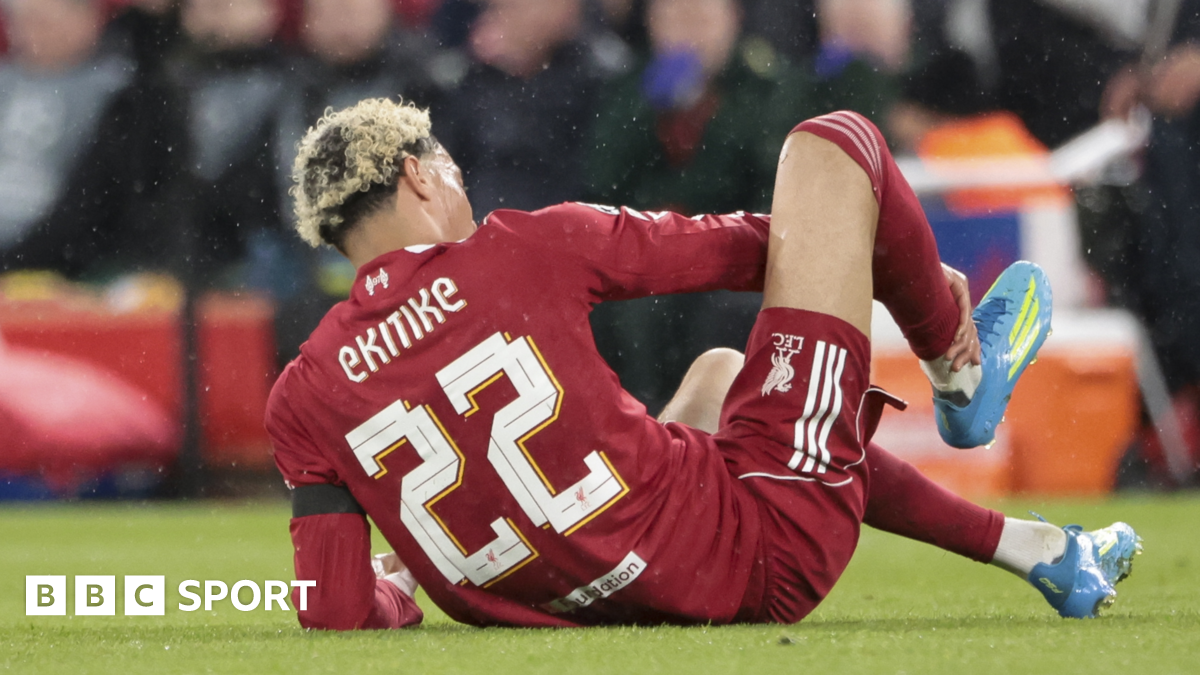
Elite medical staffs track player workloads with relentless caution. Every sprint, physical collision, and recovery window is logged on a digital dashboard. A club trainer will readily bench a hundred-million-pound attacker over modest hamstring fatigue.
That caution makes mid-season exhibition football unthinkable today. Yet for decades, governing bodies assembled all-star teams right in the middle of club campaigns.
That era is completely over. Modern medical departments and corporate boards treat superstar athletes as massive balance-sheet investments who cannot be exposed to unnecessary physical wear.
When marking Ronaldo was an extreme health hazard
Consider the reality of December 1997. Soren Colding, a right-back for Danish side Brondby, received a surprise summons from his national federation.
Denmark needed a representative for the Europe XI to play the Rest of the World in Marseille ahead of the World Cup draw. Established stars like Peter Schmeichel and the Laudrup brothers had backed out.
"The Laudrup brothers, Peter Schmeichel, there might have been some cancellations," Colding joked when looking back on the invitation. He was suddenly thrown into a locker room alongside Zinedine Zidane, Fernando Hierro, and Alessandro Costacurta.
The tactical instructions were practically surreal from a player fitness perspective. European manager Franz Beckenbauer greeted Colding with an immediate position change.
"He was pretty cool. He was saying, 'what is your position? Defender? OK, can you play left defender?' No problem - I'll play wherever you place me!" Colding recalled. He was pushed out of position to mark Gabriel Batistuta and Ronaldo.
Pre-match physical conditioning was essentially nonexistent. Colding landed in France, picked up a massive bag of gear in his hotel room, and held a lone 45-minute training session alongside South African defender David Nyathi.
Forty-five minutes cannot prepare a defender's hamstrings or joints for elite international speed. Colding watched Batistuta warm up and quickly realized the physical test awaiting him the next evening.
Ronaldo was in the most dangerous physical form on earth. The 23-year-old Brazilian forward had just moved to Inter Milan after delivering 47 goals in 49 games during a blistering campaign for Barcelona.
Colding had already seen that athletic explosion up close. He faced Ronaldo when Denmark's under-21 team fell 5-1 to Brazil in Florianopolis before the 1996 Olympics.
Facing him again in Marseille proved just as overwhelming. Ronaldo showed extraordinary acceleration, terrifying deceleration, and raw power that left defenders grasping at air.
Rest of the World cruised to a 5-2 victory in front of 38,000 spectators. Ronaldo struck twice and supplied three assists, while Batistuta added two goals of his own.
For defenders on the pitch, every defensive challenge carried intense physical anxiety. Easing off meant conceding goals, while lunging in aggressively risked tearing an opponent's knee ligaments.
As documented in a BBC Sport retrospective, Colding grappled with that tension during every challenge.
"You start thinking what if you injured some of them. You are a defender, you don't want goals against you, so you have to fight - that's how I am."
Colding competed hard, but his defending was nowhere near sharp enough to slow Ronaldo down. The mismatch proved how hazardous it was to put unconditioned defenders against explosive attackers in exhibition play.
Maradona and the high-stakes Wembley gamble
The Marseille clash belonged to an established exhibition tradition. FIFA staged all-star matches as early as 1963, when 100,000 supporters packed Wembley for the Football Association centenary fixture.
Legends like Eusebio, Zico, and Roberto Baggio regularly participated in testimonial and charity dates. Physical preservation was an afterthought for organizers.
The most glaring physical gamble unfolded in August 1987. Football agent Jon Smith arranged for Diego Maradona to fly to London for the Football League centenary match.
Maradona was paid around £250,000 and flown directly from Naples on a private jet just fourteen months after the 1986 World Cup. Napoli allowed the trip because both club and country wanted positive media coverage in England.
Tension inside the stadium remained severe. When Smith introduced Maradona to Football League manager Bobby Robson, Robson famously quipped, "I'm not shaking that hand!" before shaking the other one.
Robson's team earned a 3-0 win behind two goals from Bryan Robson and a Norman Whiteside strike. Maradona survived ninety minutes without injury, but risking an elite superstar on a mid-season flight was breathtakingly dangerous.
The Nou Camp tsunami benefit and the end of an era
The final major showcase of this type occurred in February 2005. A Ronaldinho XI faced an Andriy Shevchenko XI at Camp Nou to raise relief funds following the 2004 tsunami.
The combined rosters featured a terrifying concentration of physical value on a single pitch:
- Shevchenko's squad included Zinedine Zidane, David Beckham, Alessandro Del Piero, Thierry Henry, Raul, Paolo Maldini, and Steven Gerrard.
- Ronaldinho's squad featured Ronaldo, Kaka, Cafu, Adriano, Javier Zanetti, Didier Drogba, Samuel Eto'o, and Southampton forward Henri Camara.
Ronaldinho's side won 6-3, with Camara scoring twice alongside goals from Del Piero and Gianfranco Zola. Spectators witnessed a high-scoring showcase of attacking talent.
Beneath the goals, club medical departments were sweating through their shirts. Pushing that volume of sprint volume and joint stress onto elite legs mid-season was completely indefensible.
Why corporate ownership closed the treatment room doors
Over the following two decades, football economics underwent a total transformation. The arrival of corporate conglomerates, sovereign wealth funds, and private equity investors ended casual exhibition fixtures forever.
Players are no longer paid modest weekly sums. They are multimillion-pound operational assets whose physical availability determines club valuations and tournament prize money.
Agent Jon Smith explained why the modern game permanently closed the door on these friendlies. The financial risk of a physical setback simply breaks the entire business model.
"It wouldn't happen now because the business of football is so much bigger, you can't risk the players - if they get injured playing for their country, that annoys everybody. But beyond that they are owned by big corporations and in some cases countries, so you just wouldn't allow your player to go out and do that."
When stars earn upwards of £100,000 per week, medical directors cannot sanction meaningless minutes. A torn muscle or damaged meniscus in an exhibition match represents an unacceptable corporate loss.
European clubs already clash with national associations over standard qualification matches. Exposing top players to an unsanctioned exhibition would spark immediate fury from chief executives.
Today, sports scientists monitor workload spikes with extreme precision. The casual preparation Colding experienced in Marseille looks like a relic from an entirely different sport.
Colding went on to earn 27 caps for Denmark, playing in the 1998 World Cup and Euro 2000. He still stores his Europe XI match shirt inside his home garage.
"Now, to come up with the idea to make a game like this, in combination with the draw, I think everyone will say you are crazy," Colding told BBC Sport.
His children still struggle to believe he shared a pitch with Ronaldo and Batistuta. Those memories remain extraordinary, but modern medical risk management guarantees the World XI will never return.