
Sebastien Pocognoli's Scotland experiment is already falling apart

The St Gallen capitulation
International football is ruthless when a manager chooses dogma over reality. On Monday night in St Gallen, Sebastien Pocognoli saw his entire tactical setup torn to shreds by an opponent barely breaking a sweat.
Switzerland handed Scotland a humiliating 4-0 thrashing that felt even worse than the final scoreline suggested. This was not some golden generation of Swiss football firing on every cylinder.
Swiss boss Murat Yakin was actually without a whole battalion of his first-choice heavy hitters. Instead, Yakin fielded six starters who had six caps or fewer to their names. Incredibly, three of those untested Swiss players ended up on the scoresheet before the night was finished.
Scotland were a disjointed, chaotic mess from the opening exchanges. Pocognoli demanded high intensity and aggressive pressing, but his players repeatedly charged forward like individuals without a coherent plan. Whenever Scotland stepped out of shape, the Swiss sliced straight through the vacated turf with effortless passing.
The defensive shape repeatedly broke down, leaving enormous gaps for runners to exploit on simple turnovers. It made Scotland look like a soft touch against a Swiss B side operating comfortably in third gear.
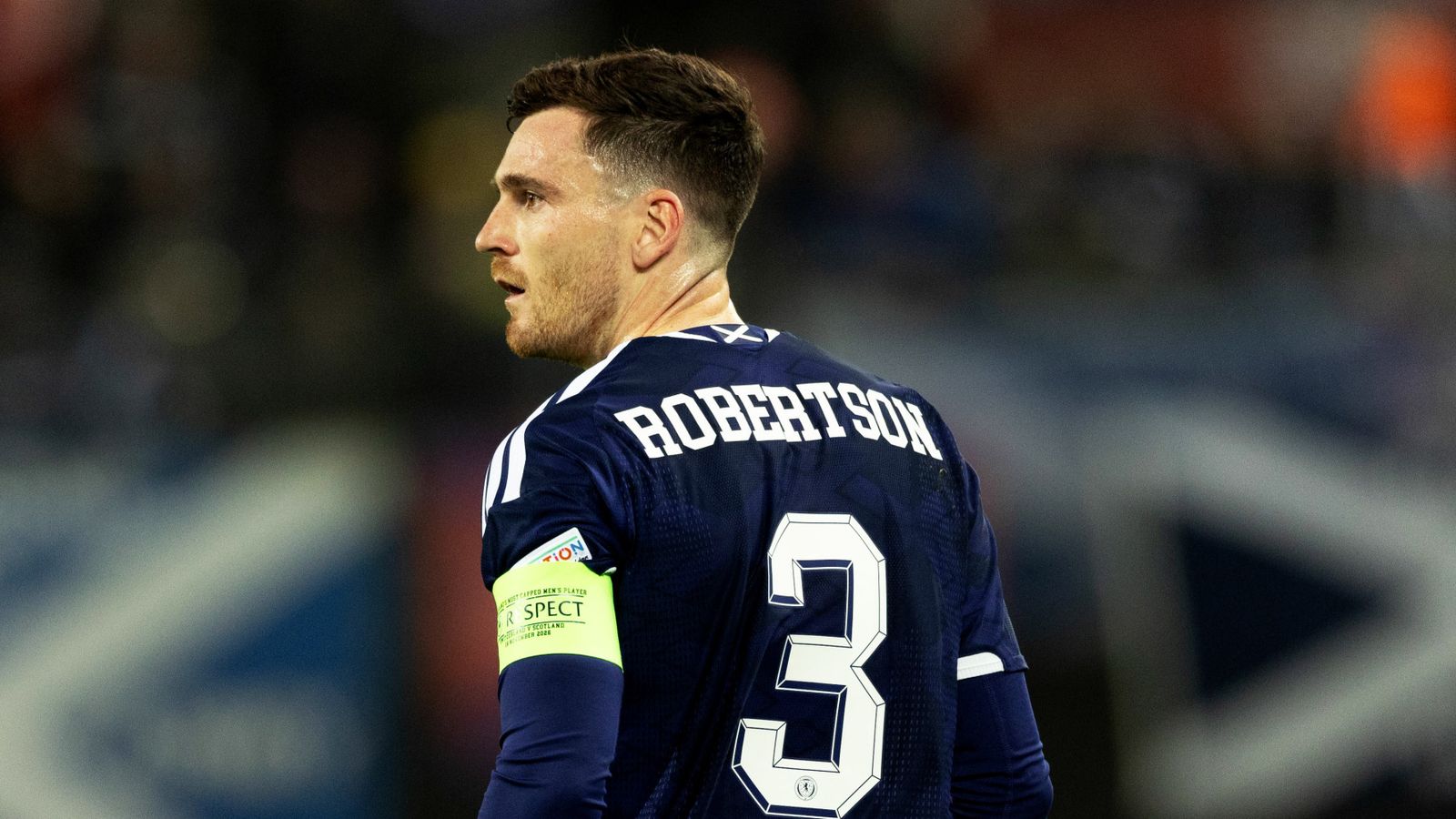
The blowout ruined what should have been a landmark milestone for Andy Robertson. The left-back eclipsed Kenny Dalglish to become the most capped men's player in Scottish history. Yet instead of celebrating a historic achievement, Robertson spent ninety minutes chasing shadows and clearing danger.
Pocognoli attempted to mount a strange defense in his post-match briefing. He claimed the 4-0 margin was harsh, pointing specifically to glaring misses from Lewis Ferguson and Scott McTominay. Both of those chances arrived when Scotland were already trailing 3-0 and the contest was dead.
Clinging to second-half misses when you are already three down is desperate spin. As BBC Sport reporting made clear, Scotland were second best in every phase of play. Switzerland dictated the tempo, controlled the channels, and strolled across the finish line at a canter.
Why the high-pressing blueprint is collapsing
High-intensity pressing requires telepathic understanding and months of meticulous drilling. In the compressed schedule of international camps, Pocognoli has attempted to implement an aggressive system that his players simply cannot pull off.
When two or three Scottish players surge forward to press, the rest of the unit hesitates and sits deep. That disconnect tears open gaping voids right through central midfield. Opposing sides do not even need complex patterns to bypass the initial chase.
The attacking numbers under the Belgian are genuinely shocking. Across his first six fixtures in charge, Scotland have managed a miserable return of just five goals. To make that total look even worse, two of those five came directly from the penalty spot.
That leaves three open-play goals from nearly six hundred minutes of international football. For a setup supposed to prioritize front-foot aggression, that is an embarrassing return. The team struggles to generate sustained pressure because buildup play is ponderous and easily read.
St Gallen was merely the latest chapter in an increasingly grim autumn. As noted in post-match coverage, Scotland have failed to produce a convincing performance in any match throughout this Nations League campaign. The signs of decay have been flashing red for weeks.
On Friday night, Scotland scraped past North Macedonia with a stodgy 2-1 win that fools nobody. That scratchy victory followed a sobering Hampden defeat against Slovenia, where Robertson frankly conceded the squad were out-played and out-fought. Papering over cracks with a scruffy home win only delayed Monday's reckoning.
Pocognoli insisted on Monday that critics should look past the scoreboard to the attitude of his players, calling them brilliant, brave, and on the front foot. But bravery without structural discipline is a fast track to disaster. Leaving honest defenders exposed against competent European opposition is managerial negligence.
The Belgian seems convinced that sheer work rate can compensate for positional flaws. The reality on the pitch shows a squad burdened by confusion rather than inspired by ambition.
Senior players fire their warning shots
When dressing rooms lose conviction in a coaching regime, the public messaging changes quickly. In the damp aftermath of St Gallen, Scotland's most experienced leaders stopped offering polite excuses.
Robertson was blunt when asked about the manager's constant appeals for patience. The record-breaker delivered a verdict that cut straight through the official Hampden line:
"You do not have time in international football."
That was an unambiguous message from the dressing room to the technical area. Pocognoli keeps pleading for time to embed his complex ideas, but international calendars offer no such luxury. March brings tournament qualifiers, and players know that drifting into spring will cost them dearly.
John McGinn sounded equally exasperated when pressed on whether the squad was heading in the right direction under Pocognoli. His five-word response was chilling in its honesty:
"Impossible for me to say yes."
Hearing established internationals speaking with such bare candor is almost unheard of in modern football. McGinn and Robertson are seasoned pros who understand the explosive impact of their statements. When key figures fire distress flares like that on live television, trust has collapsed.
McGinn recalled that Scotland had endured dark moments before, specifically pointing to the painful 4-0 loss to Russia in 2019 under Steve Clarke. That night in Moscow, Scotland capitulated by conceding four goals in a bewildering spell of 27 minutes. Yet the parallel exposes the fundamental problem facing Pocognoli.
Clarke had decades of top-tier experience and the hard-earned tactical nous needed to solve defensive collapses. Pocognoli is a young coach without that track record, currently lacking the tools to reverse a tailspin. Where Clarke adjusted his setup to grind out results, Pocognoli appears trapped by his own tactical stubbornness.
Former Scotland internationals analyzing Monday's rout observed that current players did not look like they were busting a gut in the second half. That is the most alarming indictment a squad can face. When players suspect a tactical blueprint leaves them helpless, their collective intensity drops off a cliff.
Hampden's boardroom gamble and the March deadline
The crisis engulfing the national team is not solely Pocognoli's fault. Chief executive Ian Maxwell and chief football officer Craig Mulholland staked their institutional reputations on this hire.
A few short months ago, Hampden executives paraded the Belgian around the national stadium with enormous fanfare. They boasted of beating several competing clubs to land their man, framing the appointment as an analytical coup. They treated recommendations from an external data agency as infallible gospel.
Proprietary models and recruitment metrics can highlight interesting trends, but they cannot measure human chemistry or tactical flexibility under duress. Maxwell, Mulholland, and SFA president Mike Mulraney bought into an abstract presentation while ignoring how rigid Pocognoli's philosophy truly was. Now the Tartan Army are booing the very process they were told to applaud.
Scottish football history offers harsh warnings for managers who refuse to bend their principles. Recent history in Glasgow provides textbook examples of tactical stubbornness backfiring:
- Russell Martin arrived at Rangers preaching strict possession dogma and was swiftly shown the door when results cratered.
- Wilfried Nancy tried to impose dogmatic tactical theories at Celtic and suffered a rapid exit after domestic struggles.
- Sebastien Pocognoli is now repeating the exact same errors with the national side.
Steve Clarke never fell into that trap. Clarke accepted that international football demands pragmatic compromises, building a stubborn unit that fought for every yard. That pragmatic approach yielded three major tournament qualifications and poured millions of pounds into the association's coffers.
Those qualification windfalls provided the vital cash needed to support grassroots football across the country. Missing out on major tournaments would shutter that revenue stream overnight. SFA chiefs know that failure on the pitch directly starves the game at the grassroots level.
Wild rumors suggesting Pocognoli earns twice Clarke's salary may be complete nonsense, but the Belgian is certainly providing zero value for his wages. As BBC match analysis stressed, the SFA cannot afford to let this slide continue into the new year. An emergency honesty session between senior players and Hampden suits is now essential.
The European Championship qualification campaign begins in March, and the draw makes reaching the finals look like a gimme. But with the current drift, Scotland are on course to bungle what should be an open goal. Pocognoli must abandon his broken pressing experiment right now, or Hampden must find someone who will.
Read Next
- Why Sebastien Pocognoli's Scotland project is already falling apart
- Scotland Cannot Fix Their Attack With Louis van Gaal Memories
- Top 10: Top Moments
- England beating Spain was pure chaos and peak coronary football
- 🏴 Scotland World Cup 2026 — Tartan Army Hub
- 🇧🇷 WC 2026 Group C — Brazil, Morocco, Scotland, Haiti
- 🏆 UEFA Nations League Final Four 2026 Hub — June 4-8, Lisbon
EA SPORTS FC 25 Standard Edition
The definitive football gaming experience for PS5.
Frequently Asked Questions
What milestone did Andy Robertson achieve against Switzerland?
What was the final score between Scotland and Switzerland?
Why is Sebastien Pocognoli's pressing system failing with Scotland?
How did Sebastien Pocognoli defend Scotland's defeat to Switzerland?
How many goals has Scotland scored under Sebastien Pocognoli?
More Coverage
Why Sebastien Pocognoli's Scotland project is already falling apart
4 hours ago
England beating Spain was pure chaos and peak coronary football
12 hours ago
Romelu Lukaku leaves Belgium with 94 goals and an uncomfortable truth
14 hours ago
Why Jude Bellingham is already running the England dressing room
23 hours ago
Ranking the 10 moments that defined England's wild 3-2 win in Madrid
1 day ago
Top 10: Top Moments
1 day, 1 hour agoMore Analysis
Why Sebastien Pocognoli's Scotland project is already falling apart
4 hours ago
England beating Spain was pure chaos and peak coronary football
12 hours ago
Romelu Lukaku leaves Belgium with 94 goals and an uncomfortable truth
14 hours ago
Why Jude Bellingham is already running the England dressing room
23 hours ago
Ranking the 10 moments that defined England's wild 3-2 win in Madrid
1 day ago