Zurich has spent years sidestepping tough regulatory challenges. That comfort zone evaporated this morning during the Cop31 climate summit in Turkey. Five activist and research groups submitted a blistering petition to the United Nations Framework Convention on Climate Change.
The dossier calls for Fifa to be stripped of its signatory status under the UN Sports for Climate Action Framework. This is the governing body's most sensitive political crisis since the reform era began. The complainants insist football’s leadership talks about sustainability while actively engineering the opposite outcome.
As The Guardian reported, the formal petition argues that football's rulers have amassed a clear "record of failure". The challenge arrives at a delicate moment. Athletes at Cop31 are presenting first-hand testimony regarding how environmental disruption is already shutting down grassroots and professional sport.
Tournament bloat breaks the carbon math
The tactical blueprint of modern football management is built on relentless calendar expansion. More matches mean more broadcast inventory, larger hospitality suites, and inflated ticket sales. That commercial equation works on a balance sheet, but it disintegrates under emissions scrutiny.
Look at the operational numbers from this past summer. The men's World Cup expanded from 64 matches in Qatar to 104 matches spread across 16 cities in three nations. The complainants describe that tournament directly as "the most polluting World Cup ever".
Teams, broadcast crews, and millions of supporters crisscrossed North America via multi-leg domestic flights. The environmental toll of that scheduling setup was completely predictable. Yet Zurich treated the bloated schedule as a victory rather than a warning sign.
The forward calendar offers no tactical retreat. For the 2030 tournament, Fifa plans to hold games across six countries spanning three different continents. That structure could feature 64 teams and dozens of cross-continental flights.
Under the UN Framework, signatories agreed to cut their greenhouse gas emissions by 50% by 2030. You do not need an advanced engineering degree to spot the contradiction. Doubling flight paths across oceans is completely incompatible with cutting operational emissions in half.
Commercial interests override the 2021 strategy
Fifa unveiled its official sustainability strategy back in 2021. That document promised net-zero operations by 2040 alongside the 2030 midway checkpoint. The policy looked polished on stage, yet it lacked actionable execution details.
The five organisations dissect that weakness with clinical precision. In their submission, they observe:
"that strategy is not clear on how exactly these targets will be achieved. The evidence indicates that Fifa has expanded, rather than reduced, its emissions in the years since, principally by choosing to expand the footprint of its major tournaments."
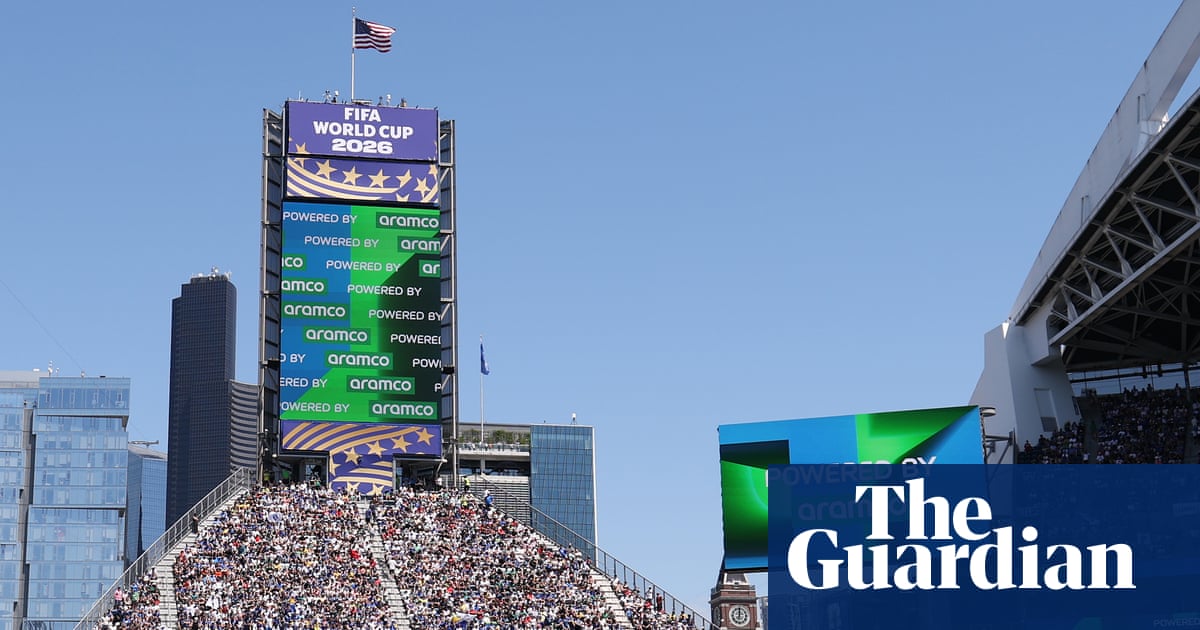
Instead of reining in high-carbon operations, Zurich went shopping for fresh commercial revenue. The resulting commercial agreement with Aramco marks the sharpest pivot yet. Signing the Saudi Arabian state-owned firm as a "major worldwide partner" shattered any pretense of environmental alignment.
Aramco is the largest oil producer in the world. The petition labels the enterprise the planet's "largest historic corporate polluter". Tying the world's most popular sport to an oil producer sends an unmistakable signal about institutional priorities.
Fans watching next year's women's World Cup will confront this reality directly. The complainants warn that Aramco branding will appear continuously across television feeds and perimeter boards worldwide. The commercial apparatus operates as a high-visibility marketing screen for fossil extraction.
Fifa claims to champion progressive environmental ideals while accepting sponsorship cheques from the sector driving the crisis. It is a cynical double-pivot. In any competitive fixture, attempting to play two opposing systems simultaneously leaves the entire midfield exposed.
The five-group offensive at Cop31
The coalition pressing this case is not composed of casual observers. It includes the New Weather Institute, the New Weather Institute Sweden, Fossil Free Football, Scientists for Global Responsibility, and FairSquare. They have targeted the specific regulatory wording of the UN pact.
The Sports for Climate Action Framework was designed to encourage sporting bodies to "work together to achieve a climate-resilient future". Under its terms, members must also "partner with key stakeholders to deliver joint climate action". More importantly, the agreement contains an explicit enforcement mechanism.
Signatories face expulsion if their "sincerity in participation or ability to participate is a cause for concern". That clause provides the foundation for the current legal strike. The coalition argues that bad-faith participation undermines the entire global sporting community.
According to the investigation in The Guardian, the five groups sent their findings straight to senior executives at the UNFCCC secretariat. Their central argument cuts directly to institutional credibility:
"being a signatory of the Framework means making a commitment to both organisational climate progress and climate leadership. On the basis of the facts laid out below, we assert that Fifa has a record of failure on each of these key commitments."
Fifa declined to provide immediate substantive answers when approached for comment, while Aramco declined to comment entirely. That silence speaks volumes. When confronted with concrete operational data, football's governing house invariably retreats behind closed doors.
What to watch for as the United Nations weighs its decision
The coming weeks will test the administrative nerve of UN climate officials. Historically, international frameworks have treated sports organisations with kid gloves. Retaining famous logos on committee banners was prioritized over enforcing strict benchmarks.
That approach no longer works. If the UNFCCC allows Zurich to stay enrolled while expanding flight routes and promoting oil production, the entire framework becomes meaningless. Other sporting bodies will take note and ignore their own reduction goals.
Key tactical markers will signal how this showdown develops:
- The preliminary response from the UNFCCC secretariat during the remaining sessions at Cop31.
- Whether player unions and prominent athletes echo the complaints filed by the five NGOs.
- How commercial broadcast partners address the growing discomfort surrounding Aramco perimeter advertising.
- Fifa's inevitable attempt to water down emissions accounting before the 2030 tournament cycle begins.
Keep a close watch on delegate meetings in Turkey. Athletes are speaking to delegates right now about flooded training grounds, dangerous summer heatwaves, and canceled competitions. Their lived reality contrasts sharply with the executive luxury of Zurich's tournament planners.
The pressure is building from grassroots supporters too. Fans are sick of being told to recycle plastic cups while administrators schedule transcontinental flights for dozens of squads. The hypocrisy is insulting, and the data presented by Scientists for Global Responsibility exposes every flaw in the narrative.
The final verdict: Zurich is about to lose its green shield
Fifa has weathered countless financial and political scandals by waiting for news cycles to turn. They believe this storm will blow over once Cop31 wraps up. They are misreading the room.
The evidence compiled by FairSquare, Fossil Free Football, and their partners leaves zero room for plausible deniability. The match data from this past summer cannot be erased. Expanding to 104 matches, planning a six-nation tournament across three continents for 2030, and partnering with Aramco violates every tenet of the framework.
My prediction is unambiguous. The United Nations Framework Convention on Climate Change will launch a formal compliance inquiry into Fifa's status before the calendar turns. They cannot afford to let Zurich mock their targets.
Fifa will not voluntarily cancel the Aramco partnership or reduce the 2030 match schedule. Because of that stubbornness, the UN will be forced to suspend or revoke their signatory standing. Football’s rulers will finally be stripped of their greenwashing credentials, forced to stand in the public spotlight without their favorite corporate alibi.