The Structural Friction of Bramall Lane
The Chesterfield Coroner's Court is currently hosting a hearing that exposes the structural friction inside women's football. On Tuesday, July 7, 2026, former Sheffield United manager Jonathan Morgan took the stand to defend his conduct. What has emerged is a forensic look at a club buckling under the weight of rapid professionalization.
The timeline begins in February 2023. Sheffield United Women were stuck in a Championship relegation battle, having won only one of the 10 games they played before Morgan's arrival. The club was desperate to secure its second-tier status.
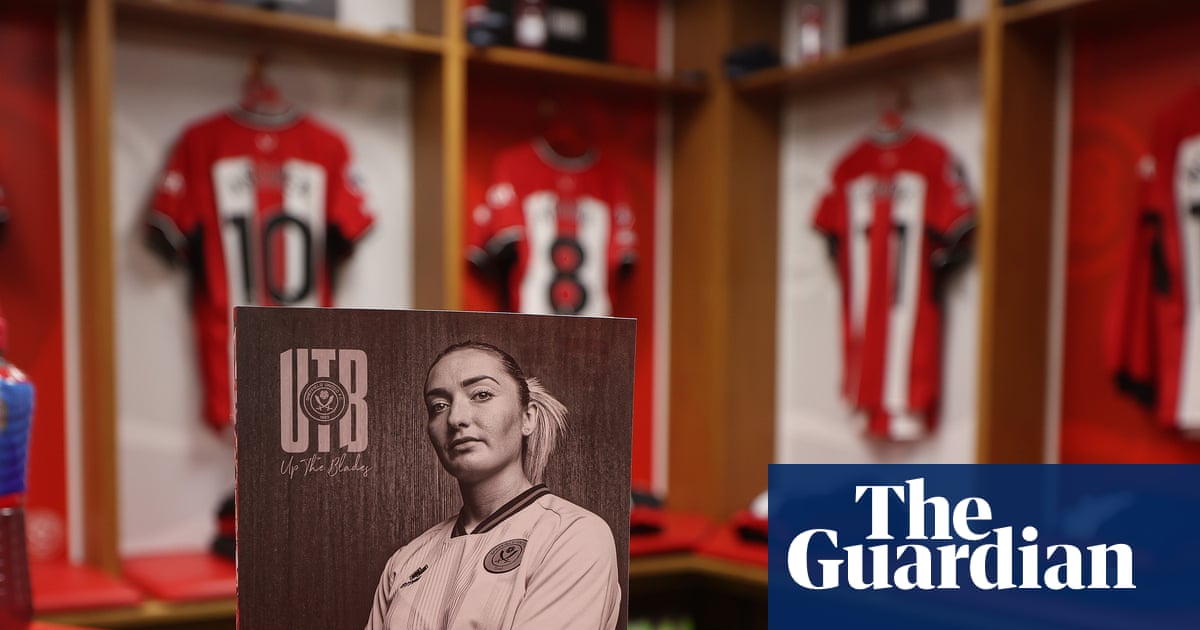
Morgan was brought in to salvage the season, inherit a frustrated squad, and build toward a professionalized future. Midfielder Maddy Cusack, who died aged 27 on September 20, 2023, was the vice-captain. She was the heart of the team's transition play.
Yet her role was complicated by off-pitch logistics. She was trying to balance a full-time playing contract with her existing role in the club's marketing department. The dual roles clashed, creating massive scheduling stress.
When a club is in a relegation fight, every decision is magnified. Players are pushed to physical and emotional limits. This pressure cooker is where the lack of institutional safety nets becomes fatal.
As Sky Sports reported from the inquest, the transition to full-time status was a significant source of strain. Championship clubs often operate on shoestring budgets. They demand professional performance while lacking the organizational structures of top-tier clubs.
This mismatch is where the system broke down. The squad was caught between semi-professional resources and professional expectations. It was a recipe for structural failure.
The Witness Box and the Management Strategy
Morgan represented himself at the inquest, with his sister Holly Morgan asking questions. He argued that he supported Cusack by securing the maximum possible salary within their tight budget. He pointed to her vice-captaincy as proof of a positive relationship.
Morgan's sister Holly questioned him on his defensive efforts. He stated that he had provided Cusack with the maximum possible salary from the budget. This focus on contract figures highlights the manager's transactional view of player support.
But the courtroom testimony revealed deep friction. The court heard allegations about Morgan's verbal interactions with Cusack. He admitted to calling her "bottom heavy" during a meeting with the team's physiotherapist.
Morgan defended this as a purely athletic observation, claiming he was referring to her muscular leg power and energy burn during sprints. The impact on Cusack, however, was highly damaging, reportedly leading her to skip breakfast and perform extra runs. The physiological pressure was immense.
Morgan also addressed his comment of "here come the girlfriends," directed at Cusack and her teammate and partner Grace Riglar. He characterized this as a "tongue-in-cheek" remark. He denied calling Cusack a "psycho" from the sidelines during his time at Leicester City.
The 'psycho' accusation stems from his time at Leicester City, where they had previously worked together. Cusack had reportedly carried that anxiety into her time at Bramall Lane. The past relationship had already set a tone of tension.
Yet Riglar's previous testimony paints a picture of constant mind games and squad isolation. The manager's defensive strategy was further questioned regarding his comments to the Football Association. In an FA interview transcript following Cusack's death, Morgan labeled the midfielder "generally a liar."
He stood by this statement in court, claiming he used the phrase because he believed she omitted information to her family about the support he had provided her. This claim clashes sharply with her mother Deborah Cusack's testimony, which described Morgan as her daughter's "nemesis." The emotional distance between the manager's perspective and the family's reality is vast.
Calling a deceased player 'generally a liar' is an extraordinary courtroom strategy. It demonstrates a manager fighting to protect his career at the expense of player legacy. This defensive posture will be remembered as one of the inquest's most striking moments.
Institutional Failures in Player Welfare
The inquest has highlighted a lack of administrative support at Sheffield United. When Cusack submitted a GP sick note for mental health in September 2023, Morgan did not contact the club's HR department. Instead, he spoke to the team doctor, Dr. Subhashis Basu.
Morgan told the court he assumed Dr. Basu would handle the situation, effectively delegating the duty of care. This decision reflects a wider organizational void. Morgan admitted to the coroner that he was unaware of the club's work-related stress policies.
He had received no training on managing stress in the workplace prior to Cusack's death. The club transitioned to professional contracts without educating its management staff on basic employment welfare. The coaching staff was left to manage complex mental health issues with zero administrative guidance.
As the BBC reported, former teammate Nina Wilson gave evidence detailing a toxic environment. Wilson testified that she had attempted to raise alarms before the tragedy, describing the club's atmosphere as one where players were left feeling ostracized and isolated. Wilson stated directly that she believed Cusack's death was preventable.
This testimony challenges the narrative of a fully supportive club environment. The friction between the manager and players was not an isolated tactical issue. It was the product of a club structure that concentrated power in the manager's hands while providing zero independent avenues for player complaints.
When a manager controls both your contract value and your daily selection, speaking out becomes a career risk. This structural flaw exists in many clubs across the pyramid. It leaves players vulnerable to unchecked authority.
The testimony of teammate Nina Wilson is particularly damning. She showed that players felt they could not raise concerns without facing isolation. The dressing room was divided and silenced by the management team.
The Structural Reckoning of the Championship
The growth of women's football has outpaced the development of its off-pitch administrative bodies. Championship clubs are pushed to professionalize to keep pace with the WSL, but they often do so by simply demanding full-time hours without providing the necessary resources. The coaching staff are forced to act as managers, welfare officers, and front-office negotiators all at once.
This is a major tactical error in club management. A manager cannot be the sole point of contact for a player's contract, selection, and mental health support. The roles are inherently in conflict.
The pressure to survive a relegation battle, combined with a lack of training on work-related stress, makes this system highly volatile. Real journalism requires identifying these failures. Sheffield United's management team failed to build a safe environment for their players.
There was a complete failure to recognize that Cusack was massively stressed by the relegation fight. The coaching staff simply saw it as normal squad frustration. They missed the warning signs of a player in crisis.
They allowed a toxic atmosphere to persist, where concerns were ignored or dismissed as squad frustration. The loss of sensitive medical data, which was also mentioned in court, further highlights the administrative chaos at the club. The institutional breakdown was total.
The Verdict: What Happens Next?
The Chesterfield Coroner's Court will conclude its hearing soon, but the implications for the wider game are already clear. The coroner is highly likely to issue a Regulation 28 Prevention of Future Deaths report. This report will force the FA and leagues to implement strict, mandatory regulations on player welfare structures.
My prediction is that the FA will be forced to mandate independent player liaison officers for all professional and semi-professional clubs. These officers must operate completely outside the sporting director and coaching hierarchies. Managers must no longer have sole control over player welfare channels.
This change will be resisted by cash-strapped Championship clubs, but it is a necessary expense to prevent future tragedies. The transition to professionalism cannot just be about contract hours and pitch quality. It must include the administrative backbone that protects the human beings on the pitch.
Until the FA mandates independent reporting lines and proper management training, the system will remain broken. The Maddy Cusack inquest has laid bare the cost of that failure. The game cannot afford to ignore this warning.