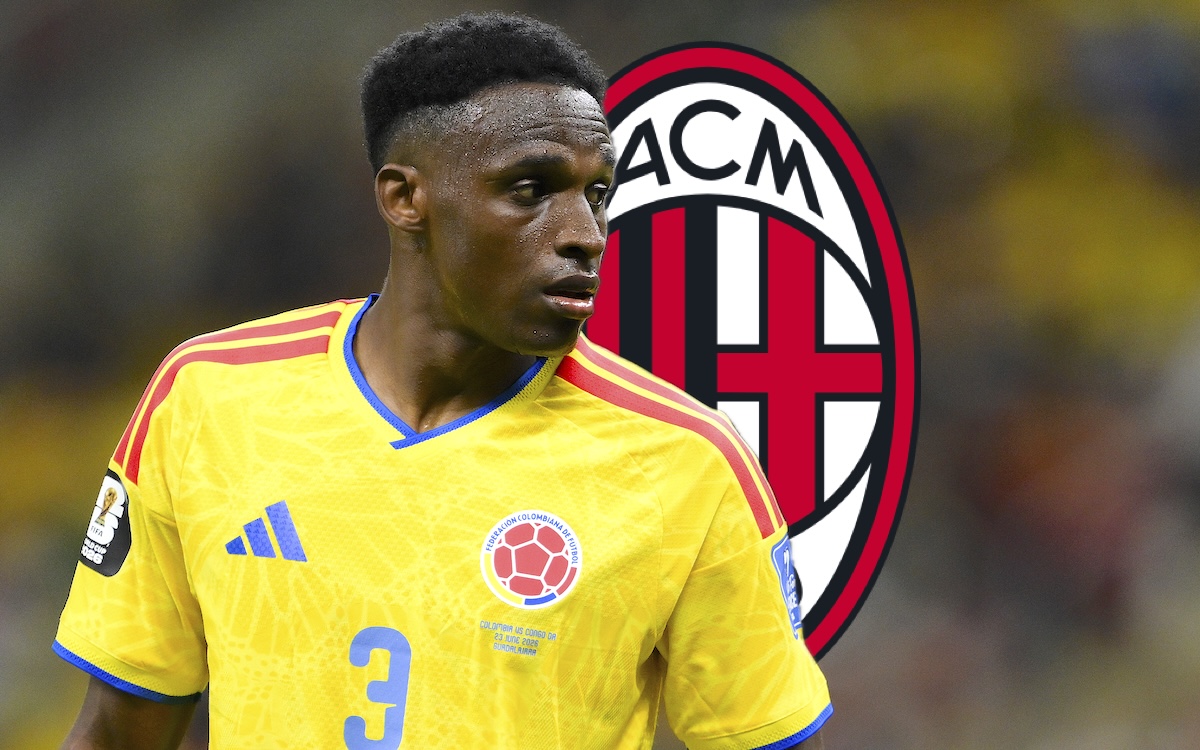
Why Jesse Marsch benched Alphonso Davies against Morocco
The Tactical Deconstruction of Canada's World Cup Run
When the official team sheets were submitted at NRG Stadium in Houston, the immediate talking point was the omission of Alphonso Davies from Canada's starting XI. While a nagging hamstring strain has hampered him, Jesse Marsch's decision to bench his captain is a cold tactical calculation rather than a simple medical concession. Marsch knows that playing Davies in a game of this magnitude is a high-wire act.
Canada’s tournament progression has forced Marsch to modify his traditional high-pressing framework. In their opening Group B fixture on June 12, Canada salvaged a 1-1 draw against Bosnia and Herzegovina through a late Cyle Larin equalizer in the 79th minute. That match exposed the defensive limitations of Marsch's initial system.
Marsch’s defensive line that day pressed high, registering a Passes Per Defensive Action (PPDA) of 8.2. However, Bosnia repeatedly exploited the massive space behind Canada's central defenders. Jovo Lukić’s opening goal in the 21st minute was a direct consequence of this structural vulnerability.
Six days later, Canada secured their first-ever World Cup victory — a 6-0 dismantling of Qatar. While Jonathan David’s hat-trick dominated the post-match analysis, Canada's defensive structure remained dangerously open. They surrendered multiple transitions that a higher-caliber opponent would have punished.
The tactical bill came due on June 23 against Switzerland. The Swiss dismantled Canada's open midfield in a 2-1 defeat, easily bypassing the double pivot of Stephen Eustáquio and Nathan Saliba. Switzerland registered a clear 1.45 xG, demonstrating how easily Marsch’s vertical style could be turned against his own team.
Switzerland’s vertical progression bypassed the Canadian midfield in just three passes, exposing the defense. Marsch’s reliance on high-energy pressing backfired against structured opposition. The lessons from that defeat were clear: defend deep or go home.
Faced with elimination, Marsch adapted his approach for the Round of 32 against South Africa on June 28 at SoFi Stadium. Canada abandoned their aggressive high press. They dropped into a compact mid-block, reducing their defensive line height by nearly 15 yards to protect the space behind them.
The adjustment yielded defensive stability at the expense of offensive output. Canada limited South Africa to a minor 0.42 xG, but struggled to generate clear-cut opportunities, finishing with a modest 0.74 xG. The breakthrough only arrived in the 92nd minute when Stephen Eustáquio scored from distance.
The Midfield Battleground in Houston
Morocco presents a far more complex structural puzzle than South Africa. Under Mohamed Ouahbi, the North Africans employ a fluid 4-3-3 shape that transforms into a 2-3-5 in possession. Their positional play focuses on creating overloads in the half-spaces.
The core of Morocco's tactical threat is their technically superior midfield unit. In their Round of 32 victory over the Netherlands, midfielders Azzedine Ounahi and Bilal El Khannouss operated in the pockets behind the Dutch midfield line. This allowed Morocco to dictate the tempo of the match.
Morocco completed 88% of their passes in the final third during the second half of that match. They maintained possession, circulating the ball until they could isolate the Dutch full-backs. Brahim Díaz frequently inverted from the right flank, adding to the central overload.
Morocco's victory over the Netherlands was not just about control, but patience. They waited until the 88th minute to find their equalizer, showing immense mental fortitude. When the match went to penalties, Yassine Bounou’s experience secured their spot in the next round.
If Canada attempts to play their standard transitional style, they will be bypassed. An aggressive press would simply expand the distances between Canada's midfield and defensive lines. Marsch recognized this danger, making major adjustments to his starting selection.
Niko Sigur and Ali Ahmed enter the starting lineup to join Eustáquio in a compact midfield unit. Sigur, playing in a deeper role, provides the defensive discipline that Saliba lacked against Switzerland. His presence allows Eustáquio to press slightly higher when the trigger is pulled.
Ali Ahmed provides the defensive work rate needed to cover the half-spaces when Morocco rotates possession. This midfield setup is designed to deny Morocco the quick, short passing combinations they rely on. It is a defensive barrier intended to force Morocco's play into wide areas.
Neutralizing the Moroccan Rotation
Morocco’s rotations are designed to pull central midfielders out of position. When El Khannouss drops deep to collect the ball, Ounahi advances into the space he vacated. Canada must counter this with zonal hand-overs rather than man-marking.
Eustáquio and Sigur must communicate constantly to ensure they do not leave the central zone undefended. If one midfielder is drawn out, the other must drop deep to protect the space in front of the center-backs. This discipline will determine Canada's defensive viability.
Ali Ahmed’s positioning on the left side of the midfield will also be critical. He must tuck inside to help squeeze the space for Díaz. This leaves the wide areas open, but Marsch is willing to accept that risk to protect the center.
The Davies Dilemma and the Hakimi Threat
Benching Alphonso Davies is a bold decision that directly addresses Canada’s left-sided defensive vulnerability. Davies is a world-class athlete, but his defensive positioning remains erratic. His natural instinct is to push high up the pitch, leaving his center-back partner isolated.
Morocco’s right side is anchored by Achraf Hakimi, one of the most dangerous attacking full-backs in modern football. Allowing Hakimi to run into space behind Canada’s left-back would be disastrous. It would force the center-backs to cover wide, opening space in the penalty box.
To mitigate this threat, Marsch selected Richie Laryea at left-back. Laryea is a more conservative defender who excels in 1v1 defensive duels. His positioning is disciplined, and he rarely commits to forward runs without cover.
Laryea's primary instruction will be to track Hakimi’s overlapping runs and prevent him from reaching the byline. This assignment requires defensive concentration over attacking flair. Davies does not possess the defensive habits required for this specific role.
The defensive changes also extend to the center of Canada's backline. Luc de Fougerolles starts in place of Derek Cornelius, partnering Moïse Bombito. De Fougerolles offers superior recovery speed, which is critical against Morocco's quick attackers.
De Fougerolles’ inclusion is also a response to Morocco’s crossing accuracy. In the Dutch game, Morocco delivered 18 crosses, targeting the back post. Cornelius struggled with spatial awareness in similar situations against Switzerland, making de Fougerolles the safer option.
Bombito and de Fougerolles must remain compact, refusing to be dragged out of position by Díaz’s movement. If Hakimi bypasses Laryea, de Fougerolles must slide over quickly to cover the space. This requires flawless coordination between the young defender and Laryea.
Sigur will also play a role in this defensive rotation. When Hakimi pushes high, Sigur can drop into the defensive line to create a temporary back five. This tactical flexibility allows Canada to match Morocco's numbers without pulling their center-backs out of the penalty box.
The Offensive Sacrifice and the Second-Half Spark
While the defensive benefits of this setup are clear, the offensive cost is significant. Without Davies’ speed, Canada loses their primary outlet for rapid counter-attacks. The transition from defense to attack will be slower and more methodical.
Jonathan David and Tani Oluwaseyi will be isolated upfront. Against South Africa, the lack of service to the forwards was evident. David was forced to drop deep to collect the ball, leaving no presence in the box.
Maxime Crépeau’s distribution must be precise to bypass Morocco's initial press. If Crépeau resorts to long, aimless clearances, Morocco’s center-backs, Issa Diop and Redouane Halhal, will dominate the aerial duels. Canada needs to find Ahmed and Sigur on the half-turn to build possession.
Oluwaseyi’s physical presence will be needed to hold up the ball and allow the midfield to join the attack. However, if Canada cannot transition quickly, Morocco will have time to set their defensive block. Breaking down Morocco's organized defense in a slow build-up is a difficult task.
This is where Marsch’s secondary game plan becomes critical. By keeping the match tight in the first hour, Canada hopes to tire the Moroccan defenders. The hot conditions at NRG Stadium will take a physical toll on both teams.
In the second half, Marsch can introduce a fresh Alphonso Davies. Facing a fatigued Hakimi and Noussair Mazraoui, Davies can exploit the tired legs with his speed. This substitution could completely change the dynamic of the match.
It is a strategy that relies on defensive perfection in the first half. If Canada concedes early, they will be forced to abandon their defensive shape. They do not possess the creative passing quality to break down a compact Moroccan defense that has a lead to protect.
This represents a massive gamble for Marsch. He is sacrificing Canada’s offensive identity in the hope of neutralizing Morocco’s strengths. It is a cold, calculated decision that prioritizes survival over spectacle.
As fans monitor the lineups on Sky Sports, they will witness a team playing at its tactical limit. Canada is no longer the naive, high-pressing team of the group stage. They have evolved into a pragmatic unit, willing to suffer to achieve success.
Whether this evolution is sufficient to overcome Morocco is the defining question of Canada's tournament. The tactical battle between Marsch’s defensive block and Ouahbi’s half-space attackers will decide the match. It is a chess match played at high intensity, where a single mistake will prove fatal.
Canada’s World Cup campaign has been defined by these small, tactical adjustments. The team has shown a maturity that few expected before the tournament began. They have embraced the grind of knockout football, proving they belong on this stage.
If they succeed, Marsch’s decision to bench Davies will be hailed as a masterstroke. If they fail, it will be criticized as an over-engineered mistake. Regardless of the outcome, it demonstrates a manager who is unafraid to make the hard choices.
Read Next
- Why Sofyan Amrabat is proving Jason Wilcox wrong at the World Cup
- Thomas Tuchel is taking a massive tactical risk with Declan Rice at the Azteca
- Tuchel’s cold-blooded England are built to ruin Mexico’s Azteca party
- England's right-back mess is about to catch up with them at the Azteca
- 🏆 World Cup 2026 — Full Coverage Hub
- 🇨🇦 Canada World Cup 2026 — Les Rouges Hub
- 🇲🇦 Morocco World Cup 2026 — Atlas Lions Hub
- 🇨🇦 WC 2026 Group B — Canada, Switzerland, Qatar
- 🇧🇷 WC 2026 Group C — Brazil, Morocco, Scotland, Haiti
Pep Guardiola: The Evolution by Marti Perarnau
Dive deep into the mind of the Premier League's most tactical mastermind.
Frequently Asked Questions
Why was Alphonso Davies benched against Morocco?
How did Canada adapt their tactics against South Africa?
Who scored the winning goal for Canada against South Africa?
What weaknesses did Switzerland exploit against Canada?
What tactical system does Morocco's manager Mohamed Ouahbi use?
More Coverage

John McGinn is running out of time to fix Scotland's midfield
an hour ago
Jurgen Klopp called out AfD idiocy, but Germany's pitch problems are real
18 hours ago
Scotland's attacking promise died in the 11th minute against Switzerland
3 days, 5 hours ago
England win in Prague but Thomas Tuchel still has tactical puzzles to solve
3 days, 8 hours ago
Ashley Sanchez's 20-goal NWSL season creates a massive USWNT tactical puzzle
3 days, 14 hours ago
Ashley Sanchez is scoring at will, but where does she fit under Emma Hayes?
3 days, 14 hours agoMore Analysis
Morocco and Senegal are Africa's only real 2026 World Cup heavyweights
1 week, 6 days ago
Morocco choked, Cameroon crashed the party, and Michaely Bihina is a god
1 month, 2 weeks ago
WAFCON 2026 kicks off under a cloud of injury doubts
2 months, 1 week ago
Morocco 2026 is here and the battle for African women's football supremacy is wide open
2 months, 1 week ago
Morocco takes the baton as the real work for 2030 begins
2 months, 1 week ago