
England's right-back mess is about to catch up with them at the Azteca
The High-Altitude Crucible of the Azteca
England travel to Mexico City to face Mexico in the World Cup Round of 16. The Estadio Azteca stands at 7,200 feet above sea level, a height that punishes squad depth and tactical inefficiencies. In thin air, recovery times double and muscular fatigue sets in by the hour mark.
Thomas Tuchel's side enters this environment with a self-inflicted structural fracture. The narrow escape against the Democratic Republic of Congo on Wednesday exposed a squad completely out of balance. Had Harry Kane not rescued England, they would already be booking flights back to London. The 2-1 victory at Atlanta Stadium was a warning, not a triumph.
The seventh-minute opener by Brian Cipenga was the direct result of a systemic failure. Djed Spence, playing out of position at right-back, was dragged inside by the movement of striker Silas Mvumpa. This opened a passing lane that Silas exploited with a simple diagonal ball.
Cipenga had yards of space to control and finish past Jordan Pickford. Spence looked lost, unsure of his tracking responsibilities or when to press. That moment reflected the larger defensive crisis Tuchel created when selecting this squad.
Tuchel chose to leave Trent Alexander-Arnold out of the World Cup squad entirely. He chose defensive security over elite ball-progression, focusing on Alexander-Arnold's defensive liabilities rather than his passing range.
Then Tino Livramento withdrew with an injury before the tournament began. Instead of selecting a natural right-back to replace him, Tuchel called up center-back Trevoh Chalobah.
This decision left England with zero fit, natural right-backs once Reece James suffered a hamstring injury in the group stage. The squad was suddenly stripped of width and defensive stability on the right flank.
Carragher's Tactical Warning
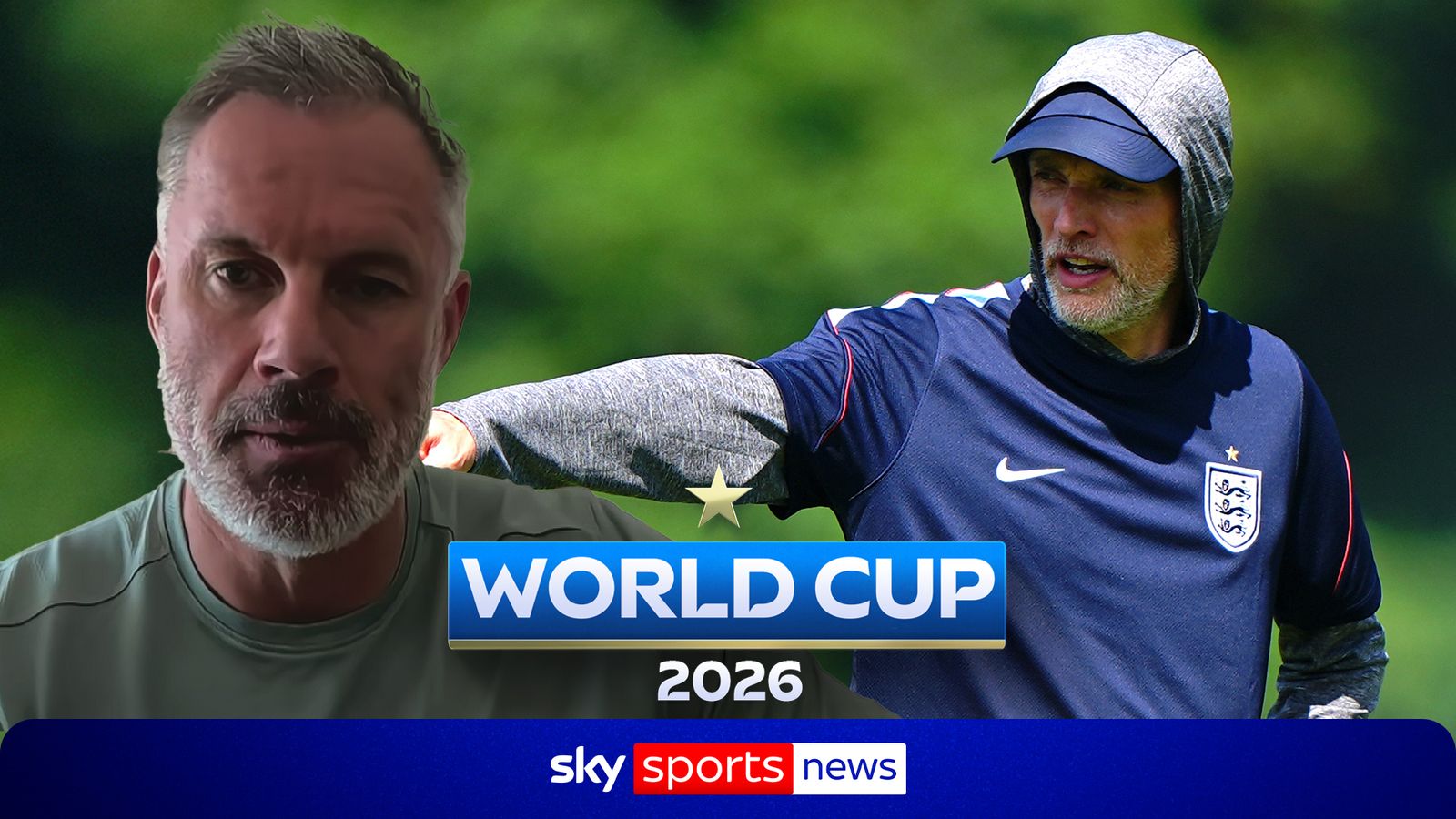
Speaking on Sky Sports, former England defender Jamie Carragher was scathing about this squad management. He noted that Tuchel's right-back selections had left the team completely exposed. In his tactical breakdown, Jamie Carragher noted on Sky Sports that the squad balance was fundamentally flawed. Carragher did not mince his words, calling the decisions around the position a major error. He summarized the situation bluntly:
"It's not been right"
The statistics back up Carragher's concerns. Against DR Congo, England conceded five progressive passes down their right flank in the first half alone.
Spence completed just 72 percent of his passes, repeatedly turning the ball over under minimal pressure. Without a natural right-back to stretch the pitch, Bukayo Saka was forced to receive the ball with his back to goal. The attacking output on the right wing plummeted as a result.
Tuchel's tactical system relies on asymmetric full-backs. Under his guidance, the left-back often pushes high to form a front five in possession, while the right-back tucks inside to form a back three.
This build-up structure requires a right-back who is comfortable defending large spaces and passing under pressure. Neither Spence nor Chalobah fits this profile.
Spence is a converted left-back who lacks the defensive instincts to play as a tucked-in right-back. Chalobah is a pure center-back who lacks the mobility to defend elite wingers in wide areas. This mismatch leaves England vulnerable to quick diagonal transitions.
The Folly of the Declan Rice Solution
Some commentators have suggested moving Declan Rice to right-back to solve the crisis. Rice has the physical attributes and defensive discipline to play the role. But Carragher has strongly opposed this suggestion.
Moving Rice out of the double pivot would create a far larger problem in the center of the pitch. Rice is England's primary defensive screen, averaging 3.4 tackles and 2.1 interceptions per 90 minutes in this tournament. Removing him from midfield would leave Ezri Konsa or Marc Guéhi completely unprotected against Mexico's central runners.
Without Rice anchoring the midfield, England's defensive block would collapse. Conor Gallagher is a high-energy presser but lacks the positional discipline to hold the center alone.
If Bellingham is forced to drop deep to assist in build-up, England lose their main connection to Harry Kane. The team would be split in two, with a disconnected front four and an exposed backline. The Rice solution is a tactical band-aid that would cause a systemic hemorrhage.
Let's look at the tape from the Atlanta Stadium. In the 34th minute, DR Congo executed a simple pressing trap. They allowed the ball to go to Spence at right-back, then closed down his passing lanes to Rice and Gallagher.
Spence was forced to play a risky long ball down the line to Saka, which was easily intercepted. This sequence occurred four times in the first half. It showed that DR Congo had identified Spence as the weak link in England's build-up.
Mexico's coaching staff will have watched that footage with great interest. They will prepare similar pressing traps for the match at the Azteca. This was the core of Carragher's warning about the squad's defense, highlighting that the right-back crisis would ripple through the entire team.
The passing network diagrams from Wednesday's match show a massive gap on the right side of the pitch. Rice was forced to cover extra ground to help Spence, leaving the left side of the midfield vacant. This allowed DR Congo to launch counter-attacks through the center.
England's midfield, which should be their greatest strength, was pulled apart trying to cover for the right-back position. It is a domino effect that disrupts every department of the team. A simple squad selection error has created a tactical headache that affects the entire pitch.
The Real Toll of the Azteca
Playing at the Azteca requires a smart approach to energy conservation. Teams cannot afford to play a high-pressing game for 90 minutes. The altitude makes it difficult to recover after high-intensity sprints.
Players must be selective about when they run and when they hold their positions. In this environment, structural organization is more important than ever. If England are disorganized and forced to chase the ball, they will tire rapidly.
A stable defensive line with Konsa at right-back would allow England to control the game. This stability helps them avoid burning through their energy reserves.
England's historical record in high-altitude matches is poor. The 1970 World Cup in Mexico saw the team struggle with the heat and altitude, eventually crashing out to West Germany. More recently, English teams have struggled when playing in South American venues at high elevations.
The physical toll of these conditions cannot be overstated. Players experience a reduction in oxygen uptake, which affects decision-making and technical execution as the match progresses.
In the final twenty minutes of the game, mental fatigue leads to defensive lapses. Having a reliable, defensively sound lineup is the best defense against these errors.
Let's look at the midfield partnership of Rice and Conor Gallagher. Against DR Congo, Gallagher struggled to find his positioning. He was caught between helping Spence on the right and supporting Bellingham in attack.
Gallagher completed only 22 passes in his 60 minutes on the pitch before being replaced by Kobbie Mainoo. Mainoo provided more composure on the ball, completing 94 percent of his passes.
But even with Mainoo's composure, the midfield was still vulnerable because of the lack of defensive stability behind them. If the right-back cannot win his individual duels, the midfielders must drop deep to help, which kills England's transition game.
Stabilizing the Right Flank: The Case for Ezri Konsa
Carragher's proposed alternative is much more sensible. He argues that Ezri Konsa should start at right-back instead. Konsa is primarily a center-back but has experience playing on the right for Aston Villa.
He possesses the defensive positioning and recovery speed needed to handle Mexico's wingers. While Konsa will not provide the attacking output of a natural wing-back, his selection would allow England to stabilize their defensive shape.
With Konsa at right-back, England can transition into a solid back three in possession. This would allow the left-back to push high and support Marcus Rashford or Anthony Gordon on the wing. It also keeps Rice in his optimal midfield role.
England can build a defensive block that is difficult to break down, which is essential when playing at altitude. In the Azteca, survival depends on compact defensive lines and minimizing running distance. Conserving energy through structural stability is the only way to advance.
The right-back crisis also paralyzes England's wingers. Bukayo Saka has looked isolated in the tournament, starved of underlapping runs or overlapping support.
Against DR Congo, Saka received only three passes in the attacking third during the first half. When a winger is isolated, the opponent can double-team him easily.
Saka was repeatedly forced to play backward passes to Spence, halting England's momentum. This lack of variation makes England's attack predictable and easy to defend.
Tuchel was forced to search for answers in the second half against DR Congo. The introduction of Anthony Gordon in the 61st minute changed the dynamic of the match. Gordon's direct running and willingness to stretch the defense created space inside for Kane.
Gordon assisted both of Kane's goals, first with a low cross after beating his man, and then with a cutback in the 86th minute. But relying on individual moments of brilliance from wingers is not a sustainable strategy.
Against a well-organized Mexican defense, England will need collective attacking patterns, not just individual rescue acts. The current system is too reliant on individual quality.
Philosophical Rigidness Over Squad Depth
Tuchel's selections represent a clear choice. He has prioritized team unity and tactical obedience over individual talent. The omission of creative players like Trent Alexander-Arnold and Cole Palmer has drawn heavy criticism.
Tuchel appears to view these players as defensive liabilities rather than attacking assets. In a tournament setting, this cautious approach can backfire when injuries strike.
By building a squad with so little specialized depth, Tuchel has left himself with no margin for error. A single injury to Reece James has thrown the entire defensive structure into chaos.
The injury to Jarell Quansah has compounded the problem. Quansah was another option who could have played as a defensive right-back in a back three.
With Quansah unavailable, Tuchel has been forced to improvise with Djed Spence. Spence is a talented player, but he is being asked to play a role that does not suit his strengths.
Asking a player to adapt to a new position in the middle of a World Cup knockout stage is a recipe for disaster. It exposes the player to unfair criticism and damages team confidence.
Javier Aguirre's Mexico team will be backed by a fanatical crowd of over 80,000 spectators. They will use the atmosphere and the altitude to pressure England from the opening whistle.
Mexico's tactical setup is designed to create overloads in wide areas. They will look to isolate England's right-back in one-on-one situations. César Huerta is a tricky winger who loves to run at defenders.
If he is matched against Spence, he will look to exploit Spence's defensive weaknesses. If he is matched against Konsa, it will be a much tighter contest. Konsa's physical strength and defensive discipline make him a tough opponent for any winger.
The left-back position also has its challenges. Nico O'Reilly started against DR Congo and had a decent game, but he is young and inexperienced at this level.
If England have weaknesses at both full-back positions, they will be easily dismantled by a team with Mexico's attacking quality. Tuchel must decide whether to play it safe or take risks.
In a knockout match at the Azteca, safety must come first. A solid, compact defensive line is the only way to silence the crowd and control the tempo of the game.
Harry Kane's performance against DR Congo was a masterclass in efficiency. He had only four touches inside the opposition box, but he scored twice. Kane is currently playing at a world-class level, with 72 goals for club and country this season.
But Kane cannot win matches alone if he is starved of service. The lack of service from the right flank forces Kane to drop deep to retrieve the ball.
When Kane drops deep, there is no central threat in the box. This makes it easy for opposition center-backs to defend against England's attacks. Having a balanced team that can deliver crosses from both flanks is essential to getting the best out of Kane.
To survive the Estadio Azteca and advance to the quarterfinals, Tuchel must adjust his tactical approach. He cannot afford to repeat the selection mistakes of the DR Congo match. The upcoming match requires a pragmatic game plan that prioritizes defensive stability and energy conservation.
Tuchel must make the necessary tactical adjustments to secure the flank. The standard international blueprint will not work in these conditions.
If Tuchel remains stubborn and refuses to adapt, England's World Cup run will end in the thin air of Mexico City. The manager's tactical identity crisis has already cost England their defensive stability.
Tomorrow night, we will see if Tuchel can learn from his mistakes or if his rigidness will prove fatal. The margin for error is gone. The Azteca does not forgive mistakes, and Mexico is waiting.
- Deploy Ezri Konsa at right-back to establish defensive stability and form a back three in possession.
- Keep Declan Rice in central midfield to protect the backline and control the tempo of the game.
- Start Anthony Gordon on the left wing to provide natural width and directness from the opening whistle.
- Instruct Bukayo Saka to tuck inside as an inside forward, allowing Konsa to cover the wider space conservatively.
Read Next
- Why England's World Cup run could end in the thin air of the Azteca
- England's secret hotel plan has already blown up in Mexico City
- England fans are dreaming of July 19 but a Mexico trap is waiting
- Thomas Tuchel's chemistry experiment is failing England at the worst moment
- 🏆 World Cup 2026 — Full Coverage Hub
- 🏴 England World Cup 2026 — Three Lions Hub
Fire TV Stick 4K streaming device, Wi-Fi 6, includes Alexa Voice Remote (includes TV controls)
Catch every Premier League and World Cup match live in gorgeous 4K.
Frequently Asked Questions
Why is England facing a right-back crisis at the World Cup?
How does the Estadio Azteca's altitude affect England?
What tactical error led to DR Congo's goal against England?
Who criticized Thomas Tuchel's right-back selections?
How does Thomas Tuchel's tactical system use full-backs?
More Coverage

Jurgen Klopp called out AfD idiocy, but Germany's pitch problems are real
13 hours ago
Scotland's attacking promise died in the 11th minute against Switzerland
3 days, 1 hour ago
England win in Prague but Thomas Tuchel still has tactical puzzles to solve
3 days, 3 hours ago
Tuchel got his win in Prague, but Trent and VAR are still causing arguments
3 days, 4 hours ago
Thomas Tuchel is still overthinking Trent Alexander-Arnold
3 days, 4 hours ago
Ashley Sanchez's 20-goal NWSL season creates a massive USWNT tactical puzzle
3 days, 10 hours agoMore Analysis
England win in Prague but Thomas Tuchel still has tactical puzzles to solve
3 days, 3 hours ago
Tuchel got his win in Prague, but Trent and VAR are still causing arguments
3 days, 4 hours ago
Thomas Tuchel is still overthinking Trent Alexander-Arnold
3 days, 4 hours ago
Thomas Tuchel is playing with fire after England's Wembley disaster
3 days, 13 hours ago
Sarina Wiegman dropping Toone and Kelly is a massive gamble for the Lionesses
3 days, 17 hours ago