
Tuchel should use a low block to neutralise Mexico's Azteca advantage
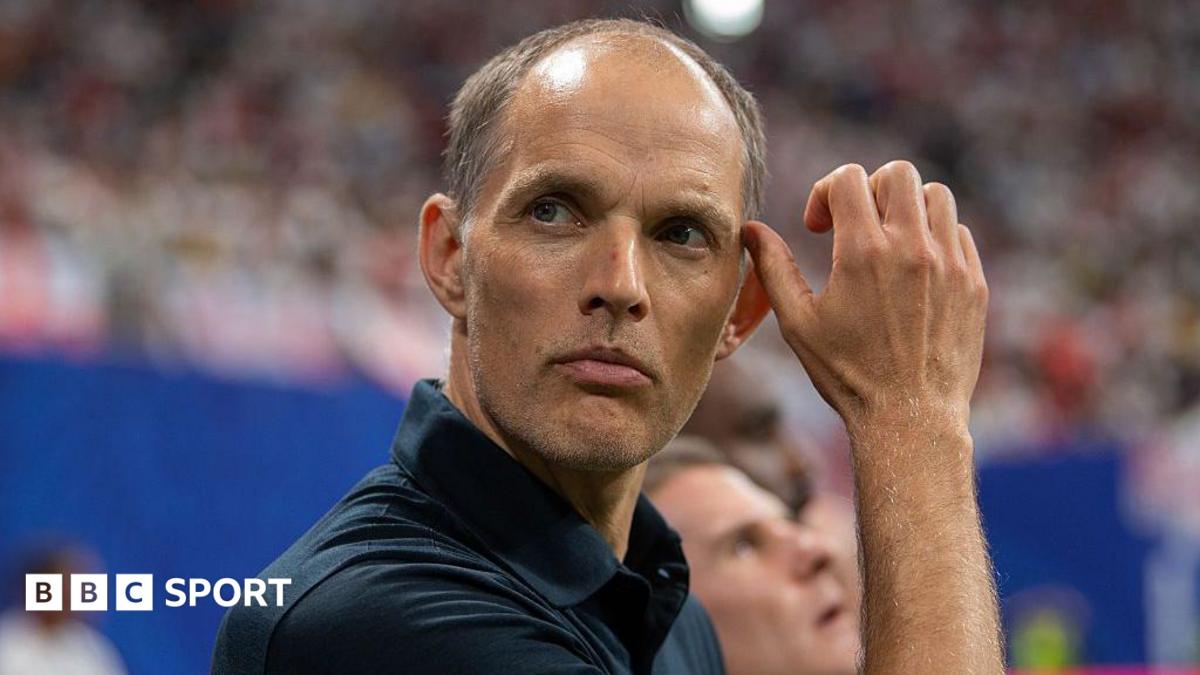
The High-Altitude Trap in Mexico City
English football has spent decades building a complex relationship with the Estadio Azteca. The mention of Mexico City evokes images of Diego Maradona slaloming through defenders in 1986, or Sir Alf Ramsey's squad losing their grip on the Jules Rimet trophy in 1970. But when England walk out to face Mexico in the round of 16 on Sunday night, the primary opponent will not be historical anxiety.
It will be the simple physics of playing 7,220 feet above sea level. Thinner air changes everything about elite football. At high altitude, muscle fatigue sets in earlier, recovery times between sprints lengthen, and the simple act of breathing becomes an active obstacle.
Midfielder Jordan Henderson admitted that the first ten minutes of training in Mexico City was a severe physical shock. Thomas Tuchel has already acknowledged feeling the effects himself, noting a persistent headache and disrupted sleep patterns during England's short preparation window. Entering this cauldron without a clear plan to manage physical energy is a recipe for athletic disaster.
Tuchel's team arrived in Mexico City only on Friday evening, leaving them virtually no time to adapt to the thin air. They spent the previous weeks playing in the climate-controlled comfort of Atlanta and Dallas. Moving from those comfortable environments straight into the thin air of the Azteca requires a complete tactical recalibration.
If Tuchel attempts to implement his standard high-pressing system, his players will simply run out of oxygen before the half-time whistle blows. The host nation is in a state of absolute fever pitch. Fans have already surrounded England's hotel, trying to disrupt their sleep with car horns and sirens.
This is a repeat of the treatment they gave Ecuador in the previous round. On the pitch, Javier Aguirre's side has been the most impressive unit at this tournament. They have won every match so far without conceding a single goal.
They enter the knockout phase on the back of a convincing 2-0 victory over Ecuador, a match where they ruthlessly exposed their opponent's high press. As BBC Sport reported, the home crowd will turn the Azteca into a hostile cauldron. Mexico has lost only two competitive matches out of 88 at their spiritual home.
Deconstructing Mexico's Deep Build-Up
To understand why a high press is dangerous for England, one must look at how Aguirre's Mexico constructs their play from the back. During their 2-0 defeat of Ecuador, Mexico utilised a highly structured 4-2-4 deep build-up. In goal-kick situations, the central defenders split wide to the edges of the penalty area, while the goalkeeper advanced to act as a active fifth defender.
Two holding midfielders dropped deep to create a passing screen, forming a highly flexible 5-2 base. This shape is specifically designed to bait the opposition into pressing high up the pitch. When Ecuador attempted to press this structure with a standard front two, they were immediately outnumbered.
The numerical advantage allowed Mexico's goalkeeper and defenders to play short, crisp passes around the pressing forwards. Once the first line of the press was bypassed, Mexico quickly targeted their direct attackers in wide areas. This build-up pattern is identical to the one DR Congo used to trouble England in the round of 32.
In that match, England struggled to press a similar base, frequently leaving Declan Rice and Marcus Rashford to cover massive distances to support the front press. Asking Rice to repeat those lung-bursting runs at the Azteca is a massive risk. The Arsenal midfielder is already carrying reported hamstring pain, and forcing him to sprint across the thin air of Mexico City to press a 5-2 base is tactical folly.
When England attempted this against DR Congo, the distances between their pressing lines stretched to over thirty yards. DR Congo easily played through the gaps, forcing England to rely on a late Harry Kane goal to rescue a unconvincing 2-1 victory. If Aguirre's technical midfielders get that same space, they will pick Tuchel's side apart.
England's defensive flaws have been visible throughout this tournament. The most damning indictment came during the group stage, where a compact Ghana side held the Three Lions to a drab 0-0 draw. In that match, Ghana simply sat in a deep, passive 4-5-1 shape and refused to chase the ball.
England dominated possession but completely lacked the creativity to break through the low block. Now, Tuchel must consider whether he should adopt the very tactic that has frustrated his team. Using the low block could be the key to defeating the hosts.
Setting the Board with a Passive 4-5-1
Adopting a low block does not mean England are admitting inferiority. Instead, it is a pragmatic method of controlling the space and the physical demands of the match. Bayern Munich assistant coach Rene Maric perfectly described this dynamic, explaining that the defending team always 'sets the board' and forces the attacking side to play the game on their terms.
"Basically, the defending team 'sets the board' and the attacking team plays the game." — Rene Maric, Bayern Munich assistant coach
By retreating into a passive mid-to-low block, England can neutralise Mexico's numerical advantage in build-up and protect their own physical energy. A compact 4-5-1 out-of-possession shape is the logical solution. By packing the midfield with a five-man line, England can protect the central spaces and restrict the passing lanes to Mexico's forwards.
This defensive structure reduces the average sprint distance for England's players by almost forty percent compared to a high press. Rather than chasing the ball deep in Mexico's half, England can allow Aguirre's defenders to keep possession in non-threatening areas. This approach will force Mexico to carry the ball forward, moving them out of their defensive comfort zone.
This tactic also directly targets Mexico's greatest strength: their fast starts. In this tournament, Mexico has been highly dangerous in the opening fifteen minutes of both halves. They look to use the home crowd's energy to press high, force early turnovers, and establish a lead.
Tuchel acknowledged this pattern, stating that the first fifteen minutes of the match will be the toughest physical challenge for England. By sitting in a disciplined low block during this opening storm, England can deaden the game, quieten the Azteca crowd, and build defensive stability. Once the initial pressure fades, England can exploit the space behind Mexico's advancing lines.
As discussed in the preview on BBC Sport, England's squad has been built with similar profiles on the wings. Tuchel can start Anthony Gordon or Bukayo Saka to defend diligently, then introduce Marcus Rashford or Noni Madueke in the second half. These substitutions will provide fresh legs to lead counter-attacks against a tiring Mexican defence, without altering the team's defensive structure.
Managing the Tempo to Silence the Azteca
To make this defensive plan work, England must be comfortable playing a slow, deliberate style when they do have the ball. In altitude, turning the ball over in transition is extremely costly. A single misplaced pass in midfield forces the team to sprint back to defend, wasting precious energy.
England must use long, patient sequences of sideways passing in their own half to rest in possession. These slow spells will frustrate the hosts and draw whistled protests from the home fans, shifting the psychological pressure onto Mexico. This does not mean England should abandon attacking ambition.
It means they must pick their moments with extreme discipline. When Mexico commits players forward to break down the block, spaces will inevitably open up on the flanks. With Jude Bellingham operating as a box-to-box engine and Harry Kane dropping deep to distribute, England have the technical quality to launch direct counters.
One sharp, vertical pass into the path of a sprinting winger can circumvent Mexico's entire team structure. England's historic failures at the Azteca were often the result of tactical stubbornness. In 1970, Ramsey refused to adapt to the heat and altitude, making substitutions that destroyed England's defensive shape.
In 1986, the team was tactically undone by the genius of Maradona and the physical toll of the midday heat. Today, Tuchel has the opportunity to write a different narrative. By embracing a defensive low block, he can turn a physical disadvantage into a tactical trap, frustrating the hosts and booking England's place in the quarter-finals.
Read Next
- Thomas Tuchel faces his first major tactical test as England meet Mexico
- Tuchel's tactical geometry is about to clash with the Azteca heat
- Tuchel must slow the game down if England are to survive the Azteca
- Why Mexico will exploit Thomas Tuchel's right-back crisis at the Azteca
- 🏆 World Cup 2026 — Full Coverage Hub
- 🇲🇽 Mexico World Cup 2026 — El Tri Hub
adidas MLS League Soccer Ball
Match-ball looks with a friendly training-ball price tag.
Frequently Asked Questions
Why is the high altitude at Estadio Azteca a problem for England?
When did the England squad arrive in Mexico City for the match?
What is Mexico's competitive record at the Estadio Azteca?
How did Mexico's fans attempt to disrupt England's preparation?
How does Javier Aguirre's Mexico set up its build-up play from the back?
More Coverage

Arsenal need an instant response against Leeds after the Brighton disaster
14 minutes ago
Bukayo Saka blew Croatia away, but his real challenge under Tuchel is ahead
2 hours ago
Jude Bellingham is already running world football and Real Madrid knows it
2 hours ago
This Week in Football: England Rampant and City Fallout (Sep 28–Oct 04, 2026)
1 day, 3 hours ago
Thomas Tuchel's England just sent a message in Rijeka
1 day, 8 hours ago
Why Scotland will finally break their goal drought in Skopje tonight
1 day, 11 hours agoMore Analysis
Bukayo Saka blew Croatia away, but his real challenge under Tuchel is ahead
2 hours ago
Jude Bellingham is already running world football and Real Madrid knows it
2 hours ago
This Week in Football: England Rampant and City Fallout (Sep 28–Oct 04, 2026)
1 day, 3 hours ago
Thomas Tuchel's England just sent a message in Rijeka
1 day, 8 hours ago
England win in Prague but Thomas Tuchel still has tactical puzzles to solve
5 days, 5 hours ago