
Tuchel must slow the game down if England are to survive the Azteca
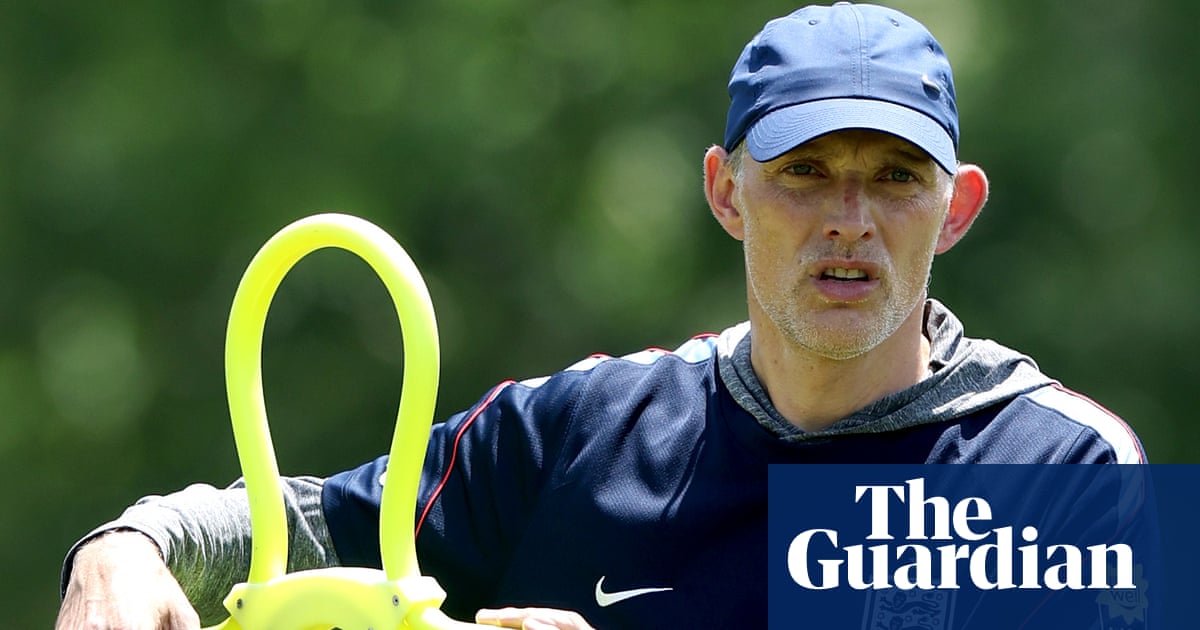
The Azteca Cauldron and the Thin Air
England's path through this World Cup has arrived at its most hostile junction. On Sunday in Mexico City, Thomas Tuchel's side faces a round-of-16 clash against the host nation that will test their structural discipline to the limit. The atmosphere inside the stadium will be unforgiving, fueled by the local support that has been building since the hosts booked their place in the knockout rounds.
According to The Guardian's preview of the match, a frantic energy has gripped the country since they defeated Ecuador to set up this meeting. That momentum, combined with the physical environment of Mexico City, presents a tactical problem that Tuchel must solve immediately. If England play with the same lack of control they showed in their group stage match, they will not survive the afternoon.
The defining factor of this fixture is the altitude. The Estadio Azteca sits at 2,240 meters above sea level.
This is not a minor detail that players can simply run through with enough determination. The physics of the football change at this height because the air is thinner.
Thin air means less drag on the ball. Passes travel faster through the air and do not bend as they do at sea level.
A cross field diagonal pass that is perfectly weighted in London will fly past the winger and out of play in Mexico City. Goalkeepers will find their long punts traveling an extra ten yards, forcing defensive lines to drop deeper to avoid being caught by sudden bounces.
The physiological impact on the human body is even more severe. At high altitude, the oxygen intake per breath is reduced, meaning muscles fatigue much faster.
Players cannot sustain repeated high-intensity sprints without experiencing long recovery periods. A team that relies on constant pressing will find itself physically spent long before the final whistle.
The Lesson of the Group Stage Chaos
England's recent performance against DR Congo was a display of tactical disorganization. They allowed the game to become stretched, with midfielders chasing transitions and leaving massive spaces behind them. In the group stage, individual quality rescued a poor collective structure, but that formula will fail against Mexico.
Tuchel is known for his commitment to positional play and controlled build-up. Yet, his team looked rattled and frantic during their final group game. The lack of midfield compression allowed DR Congo to counter-attack at will, exposing the central defenders to isolated running duels.
If England allow a similar transition-heavy game to develop on Sunday, Mexico will exploit it ruthlessly. The Mexican team is designed to play at pace, using quick vertical passes to feed their direct wingers. They will look to trigger their press when England's midfielders attempt difficult turn-and-run plays in the center of the pitch.
Tactical discipline is the only shield against the thin air. Tuchel must instruct his side to restrict their running and focus on ball retention. Possession must be used as a defensive mechanism to rest, keeping the ball moving at a slow tempo to tire out the Mexican press.
This approach requires players to accept a slower pace. The urge to force vertical play must be suppressed in favor of sideways and backward safety passes. By keeping the pitch small and compact, England can limit the distance their midfielders have to travel to recover the ball.
We must also look at the physical toll of this tournament environment. England's players have spent the season playing high-intensity football in Europe. Asking them to suddenly press for ninety minutes in these conditions is a recipe for physical collapse.
Learning from Deschamps' Philadelphia Warning
We have already seen what happens when a European giant fails to adapt to extreme North American conditions. In their recent match in Philadelphia, France scraped past Paraguay with a 1-0 victory. That performance was played at a walking pace, but it lacked any structural intent.
In the suffocating 38°C heat of that match, the French players looked exhausted and devoid of ideas. Didier Deschamps appeared content to let his side drift through the game, relying on individual moments rather than tactical coordination. While they advanced, the performance was a warning of how physical conditions can destroy a team's game plan.
Tuchel cannot afford to mimic Deschamps' passive approach. While a slower tempo is necessary to survive the altitude, it must be an active, controlled possession rather than defensive stagnation. As noted in pre-match tactical briefings, passive defending in a low block will simply invite Mexico to push their full-backs high and overload the box.
The key difference lies in the press resistance of the midfield. France struggled to break Paraguay's mid-block because their passing was too slow to shift the defensive lines. England must move the ball with sharp, short passes, using third-man runs to break the first line of the Mexican press without committing too many players forward.
The selection of the midfield three will be key to this strategy. Tuchel needs players who excel in tight spaces and can retain the ball under physical pressure. Runners who rely on large spaces to exploit will find themselves isolated and out of breath after their first three recovery runs.
Furthermore, England must establish a rest defense that is completely secure. When they have the ball in Mexico's half, the defensive line must squeeze up, but not so high that they are vulnerable to the long ball. The spacing between the lines must be kept under five yards to prevent Mexico from exploiting the middle of the pitch.
Mexico's Pressing Triggers and the Azteca Crowd
Mexico's victory over Ecuador on Tuesday night showed how they use their home advantage. They did not win through superior technical quality, but through sheer intensity and physical dominance. They pressed in packs, using the energy of the crowd to fuel their defensive transitions.
In the Azteca, that intensity is amplified. The crowd reacts to every positive action, creating a wave of momentum that can overwhelm visiting teams. Mexico will look to start the game at a frantic pace, hoping to catch England cold in the opening twenty minutes.
England must survive this initial storm by refusing to engage in a physical battle. When Mexico press high, England's build-up must remain calm, utilizing the goalkeeper as an extra outfield player to create passing angles. Any panic clearing of the ball will simply return possession to Mexico and sustain the pressure.
We must also consider set pieces. In thin air, set pieces become highly unpredictable. Free kicks from distance can be struck with immense power, and the ball's straight flight path makes it difficult for goalkeepers to judge the trajectory.
England's defensive wall must be disciplined, and the goalkeeper must position himself conservatively. Any defensive errors during dead-ball situations will be punished instantly by a team accustomed to the flight of the ball.
Defending corners will also require zonal discipline. Because the ball travels faster, cross trajectories will be flatter and more dangerous. England's defenders must attack the ball rather than waiting for it to drop, preventing Mexican attackers from getting clean runs at the near post.
Moreover, the choice of goalkeeper is paramount. Tuchel must select a keeper who is comfortable coming off his line to intercept overweighted through balls. The altitude makes these long balls travel further, meaning the keeper must act as a sweeper to protect his deep defensive line.
The Tactical Roadmap to the Quarter-Finals
To win this match, Tuchel must implement a clear three-stage plan. The first phase must focus on absolute control during the first thirty minutes. England should starve Mexico of the ball, aiming for a high possession percentage even if it means generating few shots.
The second phase involves exploiting the spaces that will inevitably open up as Mexico's press tires. As the altitude takes its toll on both sides, the game will stretch. England must use quick, direct transitions only when the opponent's counter-press is broken.
Finally, the substitution strategy must be executed with precision. Tuchel cannot wait until the 80th minute to make changes.
Midfielders must be rotated by the hour mark to maintain energy levels in the center of the pitch. Fresh legs in the wide areas will also be necessary to track Mexico's advancing full-backs.
This match is a direct test of Tuchel's tactical credentials. The frantic display against DR Congo was a warning, but the Azteca is an exam that cannot be failed. If England cannot control the tempo, their World Cup campaign will end in the Mexican thin air.
The coaching staff must also prepare for the mental challenge of the Azteca. When the crowd roars and the referee makes a controversial decision, England cannot afford the emotional reaction they showed in the group stages. Calm heads, compact lines, and slow passing sequences are the only path to the quarter-finals.
Read Next
- Why Mexico will exploit Thomas Tuchel's right-back crisis at the Azteca
- Thomas Tuchel is taking a massive tactical risk with Declan Rice at the Azteca
- England are walking into Javier Aguirre's trap at the Azteca
- How England can exploit Spain's high line in their biggest test yet
- 🏆 World Cup 2026 — Full Coverage Hub
- 🏴 England World Cup 2026 — Three Lions Hub
- 🇲🇽 Mexico World Cup 2026 — El Tri Hub
PUMA Orbita 6 PL Thrill MS Soccer Ball
A budget-friendly piece of the Premier League.
Frequently Asked Questions
How does the altitude at Estadio Azteca affect football matches?
Why is England playing Mexico in the World Cup round of 16?
What tactics does Mexico use under their current setup?
How did England perform in their World Cup group stage matches?
How should Thomas Tuchel prepare England tactically for the Azteca match?
More Coverage
Amorim's Milan laboratory is turning outcast stats into genuine depth
9 hours ago
John McGinn is running out of time to fix Scotland's midfield
13 hours ago
Jurgen Klopp called out AfD idiocy, but Germany's pitch problems are real
1 day, 6 hours ago
Scotland's attacking promise died in the 11th minute against Switzerland
3 days, 17 hours ago
England win in Prague but Thomas Tuchel still has tactical puzzles to solve
3 days, 20 hours ago
Tuchel got his win in Prague, but Trent and VAR are still causing arguments
3 days, 21 hours agoMore Analysis
England win in Prague but Thomas Tuchel still has tactical puzzles to solve
3 days, 20 hours ago
Tuchel got his win in Prague, but Trent and VAR are still causing arguments
3 days, 21 hours ago
Thomas Tuchel is still overthinking Trent Alexander-Arnold
3 days, 21 hours ago
Thomas Tuchel is playing with fire after England's Wembley disaster
4 days, 6 hours ago
Sarina Wiegman dropping Toone and Kelly is a massive gamble for the Lionesses
4 days, 10 hours ago