England are exactly three wins away from lifting the 2027 Nations League trophy. That is the stark arithmetic facing Thomas Tuchel after the knockout draw mapped out the path to the final. It looks clean on paper, but tournament football rarely follows a tidy script.
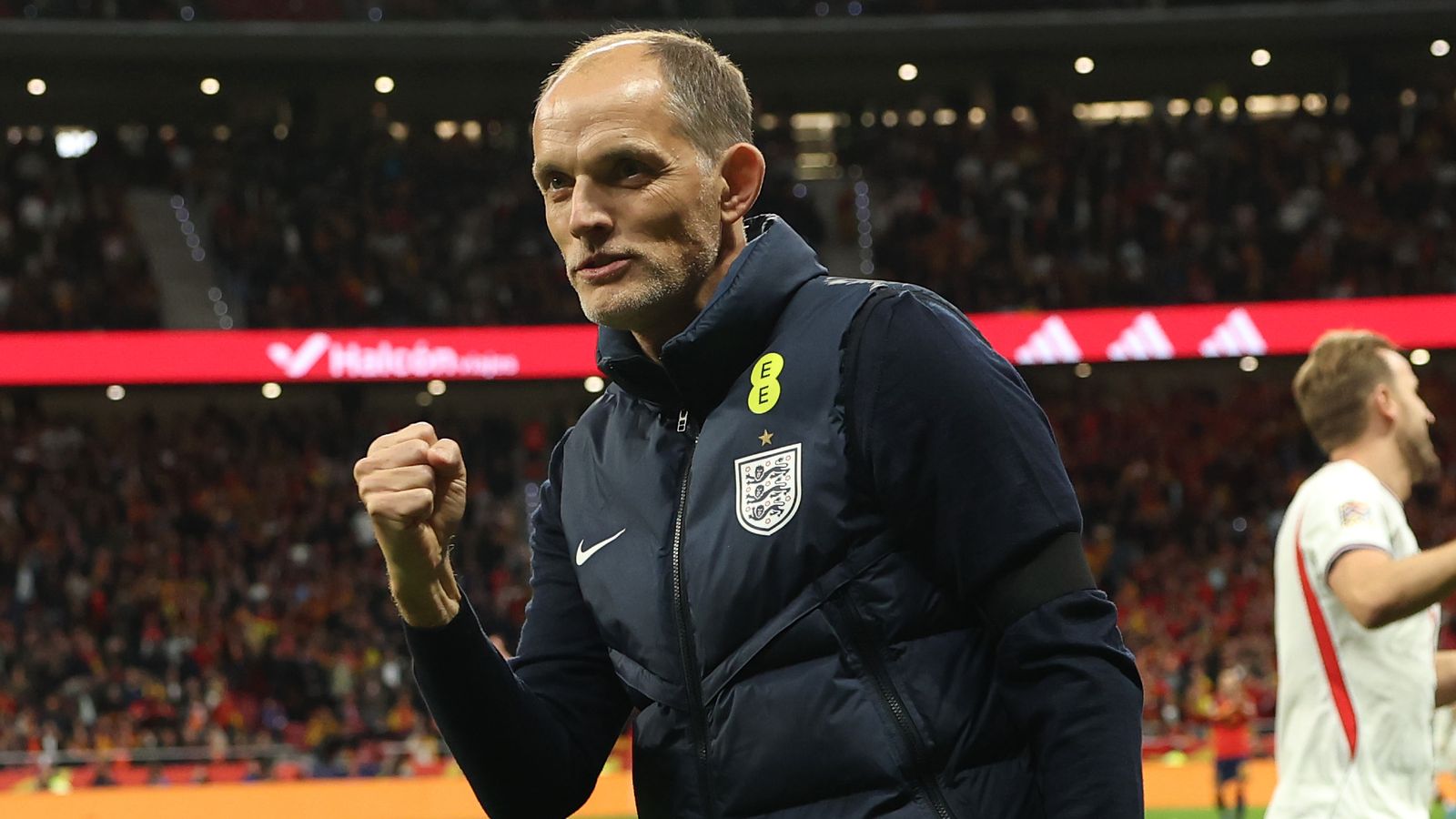
Securing top seeding required a chaotic 3-2 victory over Spain in Madrid during group play. That single result fundamentally altered England's knockout route. It handed Tuchel's squad a seeded position and earned them a decisive second leg at Wembley.
Yet that scoreline in Madrid exposed an underlying tactical contradiction. Scoring three goals away against the reigning world champions proved England's finishing efficiency under pressure. Conceding twice in that same match highlighted persistent defensive instability when protecting a lead.
As Sky Sports reported, England now face Norway in a two-legged quarter-final tie in March. The margins at this level are unforgiving. One defensive lapse can erase six months of positive group-stage momentum.
Norway and the Anatomy of a Three-Goal Fightback
Norway did not reach the quarter-finals through passive containment. They booked their place in the last eight by overturning a 2-0 deficit against Denmark to win 3-2. That dramatic comeback eliminated the Danes and underlined Norway's attacking potency.
Overcoming a two-goal deficit in international football requires high attacking output. Norway scored three unanswered goals under direct elimination pressure. That comeback demonstrated remarkable psychological resilience once match states become chaotic.
The tactical engine of that Norwegian side rests on Erling Haaland and Martin Odegaard. Odegaard dictates tempo and threads progressive passes through central channels. Haaland provides elite vertical runs that stretch opposing center-backs into uncomfortable recovery sprints.
However, the underlying data reveals an obvious vulnerability. Shipping two early goals to Denmark proved Norway's defensive structure can be broken open before their midfield establishes rhythm. If England press aggressively in the opening 20 minutes, Norway's backline tends to cough up cheap possession.
The 72-Hour Turnaround Between Oslo and London
The calendar introduces a brutal physical test for both squads. The first leg takes place in Norway between March 25 and March 27. The return leg at Wembley arrives immediately between March 28 and March 30.
That schedule leaves an operational recovery window of barely 72 hours between the two fixtures. International travel and tactical prep must happen on the fly. Squad depth and substitution timing will dictate which team sustains energy in the second half at Wembley.
Playing the second leg at home remains England's primary statistical edge. Teams chasing an aggregate deficit away from home are forced into high-risk tactical shapes. At Wembley, England can dictate match tempo and control possession from deeper zones.
Still, Tuchel cannot afford a passive approach in the away fixture. Entering the second leg with an aggregate deficit against Haaland and Odegaard invites immense transition danger. England must control midfield territory in Oslo to silence the home crowd early.
The Semi-Final Gauntlet: Belgium's Floor vs Germany's Ceiling
Should England eliminate Norway, the semi-final presents an immediate escalation in tactical difficulty. The draw pairs England with the winner of Belgium against Germany. Both potential opponents arrive with contrasting tournament profiles.
Belgium earned their quarter-final berth by finishing runners-up in Group A1. They rely on defensive solidity and controlled ball circulation. Their progression was built on minimizing unforced errors rather than blowing teams off the pitch.
Germany, by comparison, demolished Group A2 by inflicting a 5-0 defeat on the Netherlands. A five-goal shutout against a fellow quarter-finalist is a statistical outlier of the highest order. It reveals an offensive ceiling that no other team matched during the group phase.
A five-goal margin against top-tier European opposition demonstrates devastating counter-pressing execution. Germany did not just beat the Dutch; they dismantled their build-up patterns completely. Meeting that level of attacking output in a single-elimination semi-final is a daunting prospect.
Contrasting Knockout Profiles and Matchup Demands
The stylistic gap between Belgium and Germany creates an acute preparation dilemma for England's coaching staff. Against Belgium, England would face a disciplined mid-block that demands patient wing rotation and sharp combination play. Against Germany, the central challenge shifts to counter-press resistance and rest defense.
Germany's five-goal explosion suggests they will aggressively target space vacated by England's advancing full-backs. Given that England surrendered two goals in Madrid, defensive balance against transition-heavy opposition remains an unresolved question. Tuchel must prove his defensive unit will not buckle under elite pressure.
Bracket Asymmetry and the Route to June 2027
The draw produced an unmistakable imbalance across the tournament bracket. As detailed by Sky Sports, the opposite half features world champions Spain meeting France, while the Netherlands clash with tournament holders Portugal.
Here is how the four quarter-final ties line up across the tournament:
- England vs Norway
- Belgium vs Germany
- Spain vs France
- Netherlands vs Portugal
The opposite half holds an extraordinary concentration of championship pedigree. Spain enter as reigning world champions, while Portugal hold the Nations League trophy. France and the Netherlands provide further elite knockout experience.
By finishing top of their group, England successfully avoided Spain, France, and Portugal until a potential final in June. That is a massive structural win. Yet assuming England's path is easy ignores the specific tactical traps posed by Norway and Germany.
The Tournament Finale in June 2027
The final tournament will take place between June 9 and June 13, 2027. That condensed five-day window features two semi-finals, a third-place play-off, and the championship decider. Navigating that tournament requires tactical versatility and fresh legs.
There is also a significant institutional incentive embedded in the regulations. The four semi-finalists will be invited to submit bids to host the final tournament. Qualifying for the final four gives England an opportunity to bring the trophy decider to home soil.
That hosting incentive raises the stakes for the March showdown against Norway. Advancing secures a potential home tournament bid and two marquee fixtures in June. Falling in the quarter-finals ends the campaign early and invites severe scrutiny on Tuchel's setup.
Tactical Reality Check: Why Numbers Challenge the Narrative
On paper, England are positioned perfectly to contend for their first Nations League crown. Three victories separate them from the trophy. However, deeper analysis of the numbers reveals warning signs that cannot be swept aside.
The 3-2 victory in Madrid proved England can outscore elite opposition in hostile territory. But allowing two goals in that same fixture confirmed that England's defensive perimeter is far from impenetrable. A backline that ships two goals cannot afford loose touches against Haaland.
At the same time, Germany's 5-0 hammering of the Netherlands proves that England's prospective semi-final opponents possess frightening attacking sharpness. If England survive Norway only to encounter a German attack clicking at that rate, defensive errors will prove fatal.
Norway's three-goal turnaround against Denmark also showed how fast game states change when momentum flips. England must establish tactical control during the first 45 minutes in Oslo. Letting Odegaard dictate spacing in the attacking third will turn the second leg into an uphill battle.
Tuchel has the seeded spot, the home second leg, and an attack capable of scoring three in Madrid. But the numbers prove that England's road to the 2027 Nations League final is fraught with tactical pitfalls. Flawless game management is now mandatory.
Read Next
- England finally have the tactical blueprint to win the Nations League
- Why Jude Bellingham is already running the England dressing room
- Ranking the 10 moments that defined England's wild 3-2 win in Madrid
- Top 10: Top Moments
- 🏴 England World Cup 2026 — Three Lions Hub
- 🇳🇴 Norway World Cup 2026 — Can Haaland Lead the Vikings?
- 🏆 UEFA Nations League Final Four 2026 Hub — June 4-8, Lisbon