The Big Picture
Argentina arrived at the 2026 World Cup final looking to defend their throne, but they left the pitch in disgrace and defeat as Spain walked away with the trophy. While Spain celebrated their championship, Argentina's post-match actions sparked a global firestorm and triggered a massive governing-body response. The fallout from the post-final chaos will define the legacy of this squad far longer than the actual football they played in the tournament.
10. The South American Media Defense Shield
In the wake of international condemnation, certain sections of the Argentine press took a radically different view of their team's actions. Rather than joining the chorus of criticism, some domestic outlets chose to describe the squad as polite and respectful, a stance that drew disbelief from neutral observers worldwide. This provincial shielding highlights a deep cultural divide in how sportsmanship is evaluated under extreme pressure. It shows that local pundits are willing to defend the indefensible to protect national sporting icons. This local bias only deepens the rift between South American football culture and European observers who expect standard post-match etiquette.
9. The Final Defeat to Spain
Losing the biggest game in football is painful enough, but the manner of Argentina's defeat to Spain set the stage for the subsequent meltdown. Spain controlled the tempo of the match, exposing structural flaws in Argentina's aging midfield and leaving the South Americans chasing shadows. The frustration boiled over long before the final whistle, as key players resorted to petulant fouls instead of tactical adjustments. This loss marks the end of an era of absolute dominance and reveals a team that cannot handle losing with dignity. It was a tactical and emotional failure that shattered the aura of invincibility they had built since 2022.
8. The Post-Match Brawl
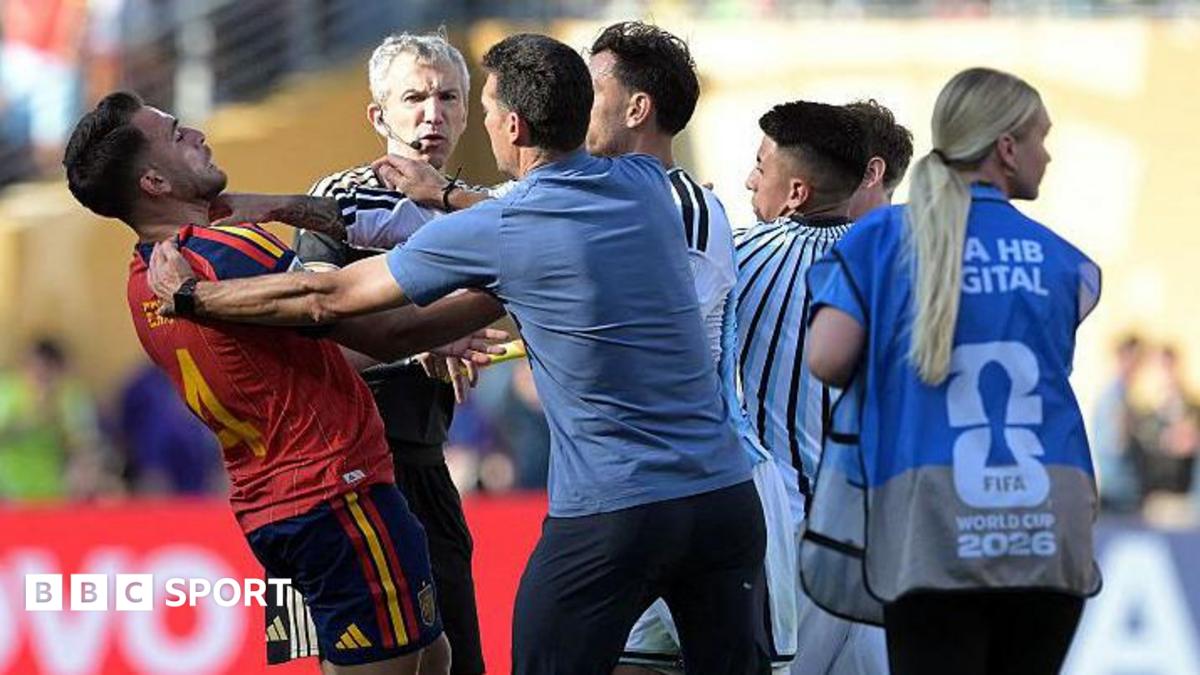
The immediate trigger for the FIFA investigation was the mass confrontation that erupted on the pitch seconds after the final whistle. Video footage showed players and coaching staff from both sides engaging in physical altercations, turning what should have been a celebration of football into a street fight. Argentina's squad led the charge, letting their anger at Spain's victory manifest in physical shoving matches and verbal abuse. This ugly scene tarnishes the reputation of the tournament and provides a terrible example to millions of young fans watching the broadcast. It was a complete breakdown of professional discipline that deservedly drew worldwide condemnation.
7. FIFA's Disciplinary Investigation
The governing body did not hesitate to step in, officially launching an inquiry into the post-match incident. According to reports, FIFA confirmed a full investigation into the ugly scenes to determine which individuals instigated the violence. The scope of this probe could lead to massive suspensions for key players, potentially disrupting Argentina's upcoming qualification matches. FIFA must act decisively here to prove that no team, regardless of their star power, is above the rules of basic decency. A weak response will only encourage similar behavior in future tournaments, making this a pivotal test for FIFA's disciplinary committee.
6. The Double Standard of "Respectful" Labels
The contrast between what the cameras captured and how the Argentina media described the team is jarring. While journalists at home claimed the players acted in a polite and respectful manner, the rest of the world saw raw footage of players throwing punches. This attempt to spin a physical altercation into a misunderstanding is a classic PR tactic that fails under minimal scrutiny. As reported by Mirror Football, the squad faced severe global backlash for their conduct. Relying on friendly domestic press to rewrite history does not work when the evidence is broadcast live to a global audience of billions.
5. The Leadership Deficit
Where were the cool heads when the chaos started? Argentina's veteran leaders, who have won every major trophy in the game, failed to restrain their younger teammates during the post-match melee. Instead of acting as peacemakers, several senior figures were seen participating in the shouting matches and escalating the tension. This lack of leadership on the pitch allowed a bad situation to become a disaster that now threatens the team's future. True champions show their character in defeat, and the failure of Argentina's captains to govern their dressing room in this moment is a black mark on their legacy.
4. The Threat of Key Player Suspensions
If FIFA's disciplinary panel decides to make an example of Argentina, the team could face long-term damage. Suspending key defensive players or starting midfielders for multiple international windows would derail their preparation for the next cycle. The squad does not have the depth to easily replace multiple first-team starters without a drop in performance. This investigation is not just a public relations issue; it is a direct threat to their sporting competitiveness over the next two years. A heavy-handed punishment from FIFA would force the coaching staff to blood untested youngsters in high-stakes matches.
3. The Global Backlash
Argentina's reputation as the bad boys of international football has been cemented by these actions. Football fans outside of South America have reacted with anger, calling for harsh penalties and accusing the team of being sore losers. This negative global perception will impact their commercial appeal and make them a hostile target in every stadium they visit. While the team often uses an us-against-the-world mentality to fuel their performances, this level of hostility can become exhausting. The squad must realize that winning matches does not grant them immunity from basic sporting ethics.
2. The Widening Continental Divide
This incident has reignited the cultural warfare between South American grit and European structure. Argentina's defenders argue that European teams and media are soft and do not understand the passion of South American football. Conversely, European critics view this defense as a pathetic excuse for unprofessional conduct that has no place in the modern game. This ideological divide ensures that there will be no middle ground or consensus on the incident. The clash of styles on the pitch has now spilled over into a clash of values off it, making future matches between these continents incredibly tense.
1. The Disciplinary Precedents
The number one talking point is how FIFA will handle this investigation relative to past incidents. In previous years, similar post-match brawls resulted in hefty fines and multi-match bans for individual players. If FIFA wants to clean up the image of the World Cup, they must hand down a severe punishment that serves as a real deterrent. A simple slap on the wrist will prove that the governing body is toothless when dealing with powerful football federations. This case will set the standard for player conduct in international football for the next decade.
Honorable Mentions
The coaching staff's failure to intervene on the pitch and the post-match comments from Spain's players both deserve mention. Spain's squad remained relatively quiet during the melee, focusing instead on celebrating their victory.
Meanwhile, Argentina's manager faced criticism for not controlling his players as the situation escalated. His passive stance did nothing to prevent the incident from becoming a global scandal.
Read Next
- The World Cup final failed the basic safety test
- Messi's desperate final act in Argentina's World Cup exit
- Messi and Yamal: The changing of the guard in New Jersey
- Spain's 2026 World Cup win wasn't just flair, it was arithmetic
- 🏆 World Cup 2026 — Full Coverage Hub
- 🇦🇷 Argentina World Cup 2026 — Defending Champions Hub