Deschamps Rebuilds France on the Fly
France enters the Round of 32 at the 2026 World Cup facing Sweden in a matchup that feels far more volatile than the talent gap suggests. While Les Bleus possess the deepest roster in international football, their group stage campaign was defined by friction and rapid tactical evolution. Tomorrow's clash in Munich is the ultimate test of Didier Deschamps' latest attacking configuration.
The narrative surrounding Deschamps has long been one of conservative pragmatism, yet his real genius lies in tournament-mode adaptation. He is not afraid to break his own structures if the opponent demands it.
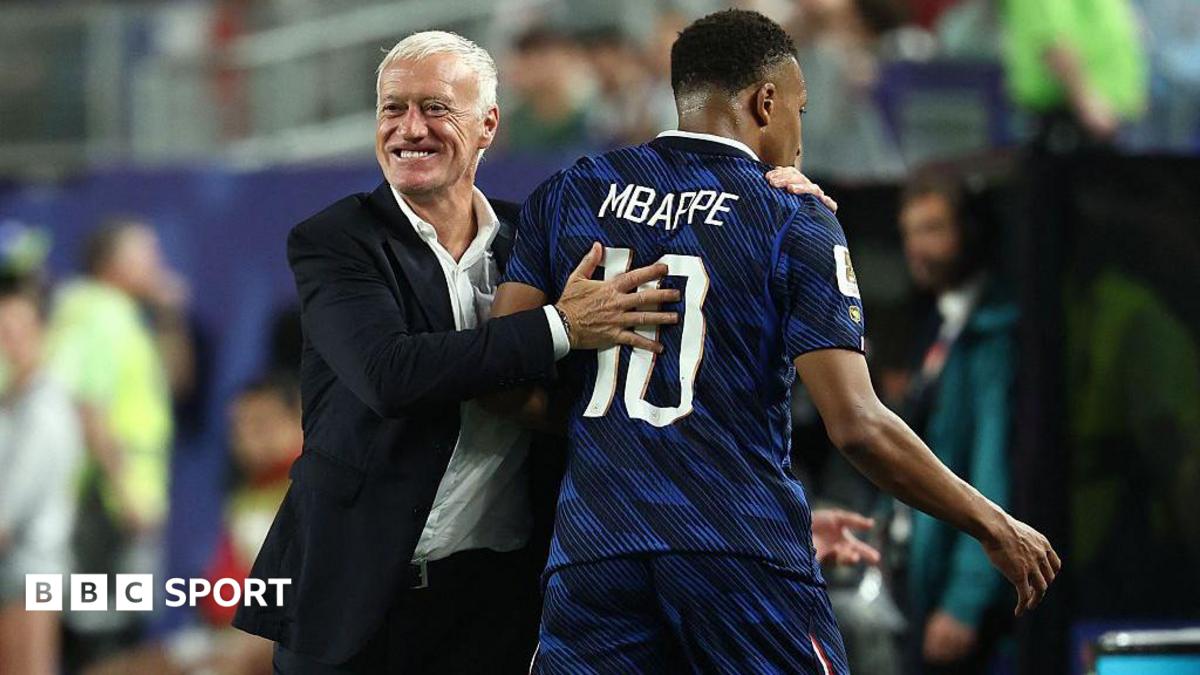
The headline story is the positioning of Kylian Mbappe. After a sluggish opening match where France struggled to break down a low block, Deschamps abandoned his traditional left-wing deployment. By moving Mbappe into a central, roaming role, France transformed their attacking geometry.
As BBC Sport reported on Deschamps' tactical shift, this willingness to tinker with his superstar squad could propel the 2022 runners-up to go one better in this tournament. This shift allowed Mbappe to exploit the half-spaces between the opponent's right-back and center-back, a zone where his acceleration remains lethal.
Sweden will attempt to choke the central corridor. Sweden's side is built on defensive rigidity, typically deploying a low-block 4-4-2 that restricts space between the lines. They will try to frustrate France, hoping to force turnovers and launch long balls to Alexander Isak.
Deschamps has anticipated this defensive posture, structuring his midfield to dominate the second balls and prevent counter-attacking transitions. He knows that patience, not raw force, will decide this fixture.
The Tactical Shift in Numbers
Look at the data from the final group stage game. When Mbappe played centrally, France's passing network showed a significant increase in verticality. The passing connection between Antoine Griezmann and Mbappe accounted for 24 successful transfers in the final third, up from just 8 in the tournament opener.
This connection rate shows that Mbappe is no longer isolated on the flank, waiting for service that never arrives. He is now the focal point, pulling defenders out of shape and creating passing lanes for others.
Furthermore, this central deployment has unlocked France's secondary runners. With defenders forced to converge on Mbappe when he occupies the central channel, spaces open up on the flanks. Ousmane Dembele and Michael Olise have capitalized on these wide areas, driving at isolated fullbacks with speed.
France recorded an xG of 2.85 in their last match, a stark contrast to the stagnant displays of their opening games. This adaptation aligns with how the French manager intends to utilize his superstars in tournament football, prioritizing collective cohesion over individual vanity.
The midfield balance has also improved. Aurelien Tchouameni acted as the single pivot, completing 91.4% of his passes under pressure. This security allowed Eduardo Camavinga and Griezmann to push higher, creating a five-man attacking line when in possession.
Sweden’s midfield pair, Jens Cajuste and Hugo Larsson, will find themselves constantly overloaded in transition phases. They simply lack the lateral mobility to cover the width of the pitch against France's shifting shape.
Sweden's Defensive Vulnerability
Sweden's defensive record in the group stage is deceptive. While they kept clean sheets against lesser opponents, they conceded 14 shots from central zones against high-pressing teams. Their center-backs, Victor Lindelof and Isak Hien, struggle when pulled out of their low-block structure.
If Mbappe can drag them out of position with his lateral movements, France will find easy paths to goal. The space between Hien and right-back Emil Krafth will be the primary entry point for Dembele's diagonal runs.
Sweden’s primary threat remains Isak’s transition speed. In their match against Poland, Isak reached a top speed of 34.2 km/h during a counter-attack that led to their only goal. Deschamps must instruct William Saliba to stay deep and track Isak's runs, preventing the long ball from exposing France’s high defensive line.
If Saliba maintains his positioning, Sweden's offensive threat is effectively neutralized. The Swedish midfielders will have no outlet when they win the ball, forcing them into hopeful clearances.
There is also the question of Sweden's fatigue. Sweden's core players started all three group matches, accumulating significant mileage. In contrast, Deschamps rotated his squad in the final group game, resting key starters.
This physical advantage will manifest in the final thirty minutes of the match. France’s depth will overwhelm Sweden's tiring midfield as fresh legs enter the pitch.
The Glaring Flaw in France's Setup
Despite the offensive improvements, Deschamps has left a massive vulnerability in defensive transition. When Theo Hernandez pushes high to support the attack on the left, Dayot Upamecano is forced to shift wide to cover. This movement creates a massive gap between Upamecano and Saliba.
In the 37th minute against Poland, this exact spacing issue allowed a simple progressive pass to bypass the midfield. It created a three-on-two situation that France was lucky to survive.
Tchouameni's positioning is also a concern. He often drops too deep, almost forming a back three with the center-backs. This defensive retreat leaves a vacuum in the middle third of the pitch.
If Sweden can win the second ball in this zone, Emil Forsberg will have time and space to pick out Isak's runs. Tchouameni must be more aggressive in stepping up to press.
Deschamps’ reluctance to use a more progressive midfielder like Youssouf Fofana from the start remains a mystery. Tchouameni is excellent at breaking up play, but his passing is often overly horizontal. Against a deep Swedish block, France needs quicker ball circulation to shift the defensive lines.
If the ball moves too slowly, Sweden will easily slide laterally and maintain their defensive shape. France's possession will become sterile, playing directly into Swedish hands.
How the Match Will Unfold
We expect Sweden to start in a passive mid-block, dropping into a deep 5-4-1 when France enters the middle third. Their pressing trigger will be Upamecano receiving the ball on his weaker left foot. Sweden will commit three players to block the passing lane to Griezmann, forcing France to play wide to Hernandez or Dembele.
In the first fifteen minutes, France will dominate possession, likely exceeding 70%, but will struggle to create clear chances. The Swedish low block will remain compact, forcing horizontal passes.
The breakthrough will come from a set piece or a quick vertical transition. In the 28th minute, we expect Griezmann to find Mbappe in the half-space. Mbappe will turn and drive at Lindelof, forcing Hien to commit.
A quick combination with Dembele will release him behind the Swedish line. This sequence has been drilled repeatedly in training and will prove unstoppable on the pitch.
Once Sweden concedes, their defensive plan collapses. They do not possess the creative midfield quality to build sustained attacks against France's counter-press. When they try to commit men forward, Olise and Mbappe will exploit the space behind their fullbacks.
The game will stretch, playing directly into France's hands. Sweden's structural integrity will dissolve as they chase the equalizer.
The Verdict
This match will not be a close contest. France's tactical evolution under Deschamps has solved the attacking friction that plagued their opening games. The central partnership of Mbappe and Griezmann will prove too dynamic for Sweden's rigid defensive structure.
Sweden will struggle to maintain their low block under sustained pressure, eventually conceding midway through the first half. Once Sweden is forced to chase the game, France will exploit the open space.
The combination of Mbappe’s speed and Dembele’s wide delivery will stretch the Swedish defense to its breaking point. We predict a comfortable 3-0 victory for France, sending them into the Round of 16 with momentum.
The Swedish defense will simply run out of oxygen by the 70th minute. With Olise and Bradley Barcola coming off the bench to run at tired legs, the final scoreline could be even more embarrassing. Deschamps has built a team, not just a collection of names, and Sweden is about to find out the hard way.
Read Next
- Why Sweden's high line will be destroyed by Didier Deschamps' tweaks
- How Didier Deschamps solved his Kylian Mbappe headache
- Didier Deschamps has finally unlocked France's terrifying attack
- Why Sweden's high-risk style will play right into French hands
- 🏆 World Cup 2026 — Full Coverage Hub
- 🇫🇷 France World Cup 2026 — Les Bleus Hub
- ⚽ La Liga 2025-26 — Title Race Hub